The Index / Paranormal
Flatwoods Monster Explained: What Really Happened in West Virginia in 1952?
On September 12, 1952, a group in Flatwoods, West Virginia said they saw a towering figure after a light fell from the sky. Here's what's documented and what isn't.
Topics: Flatwoods Monster, West Virginia, UFO History, Cryptids, 1952
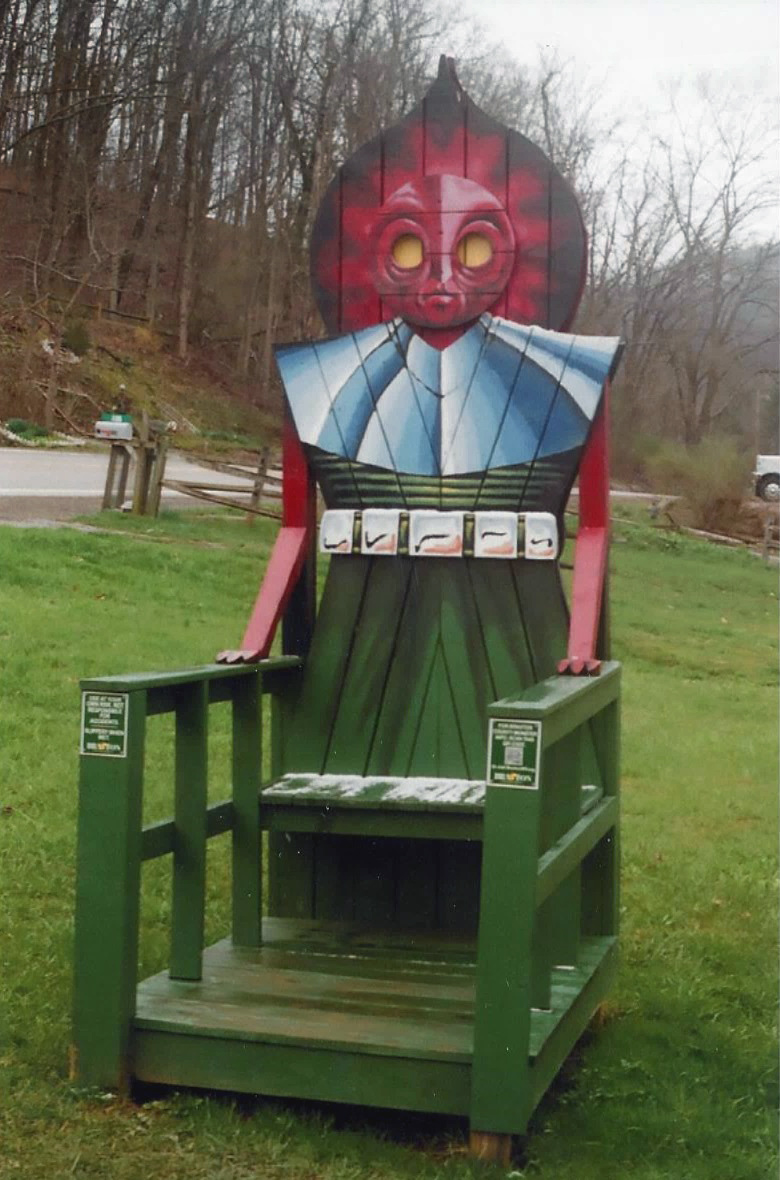
Don Woods (Folklore1) / Wikimedia Commons (CC BY-SA 4.0)
Something happened on a hillside outside Flatwoods, West Virginia, on the evening of September 12, 1952. Seven people climbed that hill after watching a bright light fall from the sky, and they came back down convinced they had seen something that should not exist. What that something actually was is where the story stops being simple.
The documented part is straightforward: a group of children, a mother, and a National Guardsman gave frightened, broadly consistent accounts of a towering figure to a small-town newspaper and, later, to a wire service that carried the story nationally. The undocumented part is everything people have layered on top of that core account in the seventy-plus years since — a green alien, a crashed saucer, a government cover-up. Sorting one from the other is the point of this article.
What Is the Flatwoods Monster?
The Flatwoods Monster, also called the Braxton County Monster, is the name given to a tall, unusual figure that a group of local residents said they encountered in the woods near Flatwoods, West Virginia, shortly after seeing what looked like a meteor or fireball land nearby. It’s one of the earliest and most influential American “occupant” cases — a UFO sighting that includes a reported being, not just a light in the sky — and it happened during one of the most intense years of UFO reporting in U.S. history.
No physical evidence of an extraterrestrial creature was ever recovered. What survives is witness testimony, contemporary news coverage, and a brief, unglamorous Air Force file.
What Happened on September 12, 1952?
Around 7:15 p.m., brothers Edward and Fred May and their friend Tommy Hyer were outside playing when they saw a bright object cross the sky and appear to descend toward a hilltop on a nearby farm owned by G. Bailey Fisher. The boys ran home to tell Kathleen May, Edward and Fred’s mother, what they’d seen.
Rather than dismiss it, May rounded up a small search party. Accounts of exactly who joined vary slightly between sources, but the group is generally given as Kathleen May, her sons, Tommy Hyer, National Guardsman Eugene Lemon, and several other local boys, including Neil Nunley and Ronnie Shaver, along with the family dog. Lemon, armed with a flashlight, led the group up the hill in the dark.
Near the top, the group reported seeing a pulsating red light through the trees. Lemon swept his flashlight toward a rustling sound to their side, and the beam caught something none of them expected: a large, pale-faced figure that appeared to hover or float just above the ground. Several witnesses said the group scattered immediately, and Lemon reportedly fainted or collapsed as they fled back down the hill. Some accounts describe a strong, unpleasant odor in the area, and several witnesses later said they felt nauseated or irritated in the throat, though the exact cause was never established.
There’s no dispute that something frightened seven people badly enough that a small-town editor thought it was worth sending someone to investigate the next day. What’s much harder to establish is exactly how much of the story solidified in the retelling over the following days, as reporters and, eventually, a national wire service picked it up.
What Did the Witnesses Actually See?
This is where the case gets genuinely interesting, because the “classic” Flatwoods Monster most people picture — tall, green, hooded, floating — is a composite built from several retellings rather than one clean, unanimous account.
The most detailed early version comes from Gray Barker, a West Virginia UFO investigator who interviewed witnesses shortly after the sighting and published an account in Fate magazine the following year. According to Barker’s telling, the figure stood roughly ten feet tall, with a large, pointed, hood-like shape framing a round, blood-red face. Eye-like features were said to glow with a greenish-orange light, and the body below was described as dark, possibly clothed in a pleated or skirt-like lower section. Witnesses disagreed on whether it had visible arms; some described small, claw-like hands held out in front of the figure.
Eugene Lemon’s own description, given close to the event, centered on a “man-like figure with a round, red face surrounded by a pointed, hood-like shape” — notably shorter on specific detail than the version that circulated later. Kathleen May, for her part, described something with small hands and a face she found difficult to make sense of in the dark, under stress, at a distance, lit only by a flashlight beam.
None of this should be read as a single, agreed-upon description locked in from the first moment. It’s a set of overlapping, sometimes contradictory impressions from frightened people who had seconds of visual contact in the dark.
Was the Flatwoods Monster Really Green?
The nickname “Green Monster” is old and genuinely tied to the case, but it’s worth being precise about what witnesses actually said versus what the label implies.
Early accounts describe the figure’s clothing or lower body as dark, and some witnesses associated a greenish tint with the glow around its face or eyes rather than describing green skin outright. Whether that greenish cast came from the creature itself, from ambient light, or from witnesses’ memories blending with later illustrations is not something the record settles cleanly. What is clear is that “green” became attached to the story early and has stuck ever since, reinforced by the modern illustrations, roadside signage, and the town’s own branding, which leans hard into a green, spade-headed figure as visual shorthand for the case.
The most consequential image in that visual history is the drawing commissioned not long after the sighting, when Kathleen May traveled to New York to appear on the television program We the People. A sketch artist worked from her description to produce what’s usually treated as the “original” Flatwoods Monster illustration — a tall, hooded, spade-faced figure that has been redrawn, reprinted, and adapted countless times since. That drawing did more to fix the creature’s now-familiar look in the public imagination than any single witness statement did.
Was the Light a Meteor?
Investigators who looked into Flatwoods, including skeptical researcher Joe Nickell, have pointed out that a meteor was independently reported crossing the sky over Maryland, Pennsylvania, and West Virginia that same evening — the same night, and roughly the same region, as the object the May brothers said they watched descend. That timing is a meaningful piece of context, though it doesn’t by itself prove the object the boys saw was that specific meteor rather than something else, such as a low-flying aircraft light or one of several red aircraft warning beacons reported to be visible from the area.
This piece of the story connects directly to a much bigger picture: 1952 wasn’t a quiet year for the sky over the United States. For the full context on why so many Americans were reporting unusual aerial objects that summer and fall, see our 1952 UFO wave explainer.
Could the Creature Have Been an Owl?
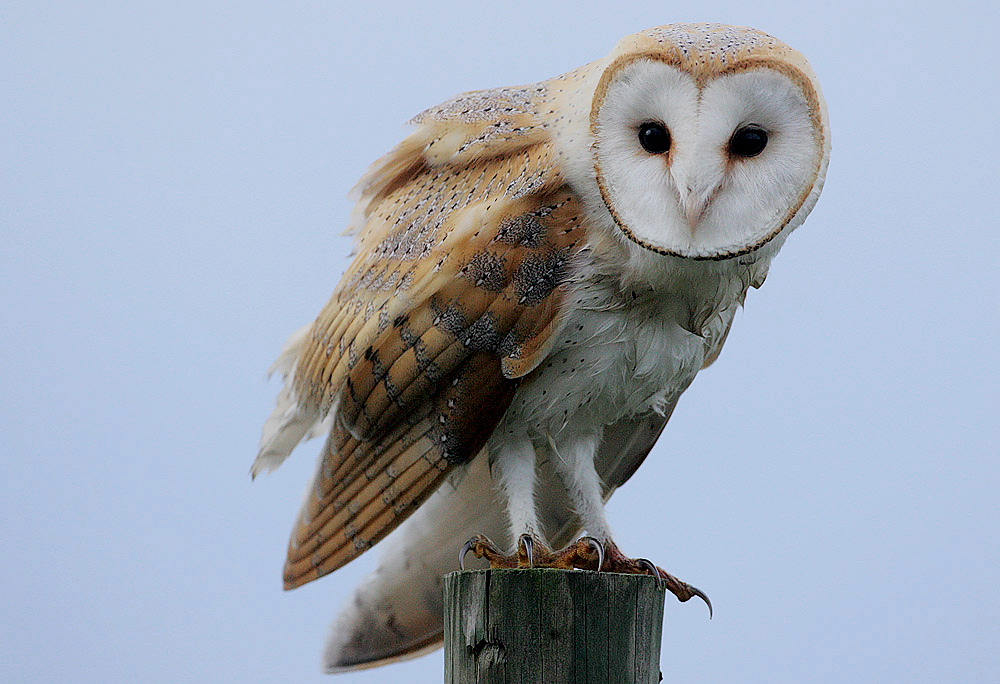
The most widely cited natural explanation for the figure itself, rather than the light, is that the search party startled a barn owl perched in a tree, and that fear, darkness, and a flashlight beam turned an ordinary animal into something monstrous in the retelling. Joe Nickell developed this explanation in detail after visiting the site and interviewing surviving witnesses in 2000, arguing that an owl’s silhouette, defensive posture, and vocalizations could plausibly account for several of the reported details.
That theory deserves more room than a paragraph can give it, including where it fits the witness accounts well and where it strains credulity. We’ve covered that in a dedicated piece: Could the Flatwoods Monster Have Been a Barn Owl?
What Did the Air Force Investigate?
Flatwoods reached the desk of the Air Force’s UFO investigation program in its first year of operation. The file that survives is thin: a project card summarizing the report and attributing the aerial light to a meteor, without any indication that investigators treated the reported creature as a separate phenomenon worth its own inquiry.
That distinction — between what the government looked into and what people commonly assume it looked into — is worth its own detailed treatment, because a lot of internet claims about “official” conclusions don’t hold up against the actual archival record. See Project Blue Book and the Flatwoods Monster for what the National Archives material actually shows.
Was the Flatwoods Monster an Alien?
There’s no verified physical evidence establishing that the Flatwoods Monster was an extraterrestrial being, a spacecraft occupant, or anything else of confirmed non-terrestrial origin. What exists is witness testimony collected under frightening, low-visibility conditions, a meteor report that plausibly explains the initial light, a government file that treated the case as unremarkable enough to close quickly, and a natural-history explanation that fits a meaningful portion of the description without accounting for every detail anyone has ever attached to the story.
That’s a genuinely unsatisfying answer if you want a clean yes or no. It’s also the most honest one the evidence supports.
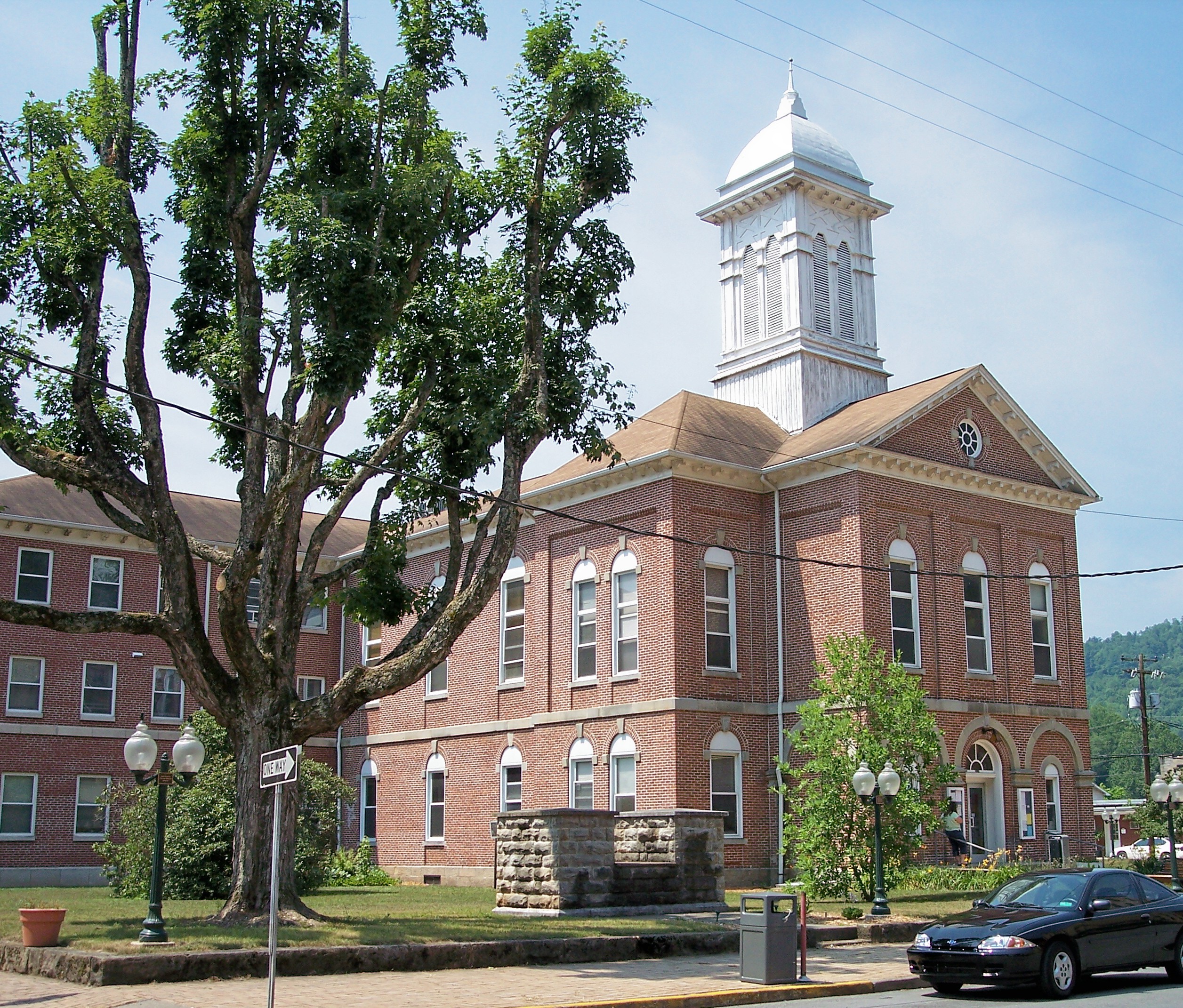
The Braxton County Courthouse in Sutton, West Virginia, near where the 1952 sighting took place. Tim Kiser, Wikimedia Commons (CC BY-SA 2.5).
How a UFO Report Became West Virginia Folklore
Whatever actually happened on that hillside, the story didn’t stay a regional curiosity. Gray Barker’s writing and the Associated Press wire coverage carried it nationally within days, and West Virginia has spent the decades since turning a frightening evening into a piece of regional identity. Flatwoods now has a small Flatwoods Monster Museum in nearby Sutton, an annual convention devoted to the case, and a set of oversized monster-shaped chairs scattered around town that have become minor tourist landmarks. Local branding leans into the “Green Monster” nickname without much hesitation.
That shift, from frightened eyewitness report to civic mascot, is itself a useful lens on how American paranormal folklore works. A story doesn’t need to be resolved to become beloved. It just needs to be strange enough, and specific enough, that people want somewhere to put a chair shaped like it.
West Virginia would produce a second, even more famous paranormal legend fourteen years later, when reports of a winged figure near Point Pleasant gave rise to the Mothman story. The two cases share a state and a certain regional flavor, but they emerged from entirely separate incidents, witnesses, and decades — there’s no documented connection between them beyond geography and a shared appetite, on the part of both towns, for turning an unexplained night into a landmark.
Why the Flatwoods Monster Is Usually Called a Cryptid
It’s a little odd, on reflection, that a story built around a fallen object, a pulsating light, and reported physical symptoms gets filed under “cryptid” — a term more commonly reserved for creatures like Bigfoot or the Loch Ness Monster — rather than treated purely as a UFO case. Part of the reason is presentation: the reported being had a physical form, described dimensions, and a face, which makes it easy to slot alongside other reported monsters regardless of its aerial origin story. Cryptozoology and ufology have always overlapped more than either field’s tidy definitions suggest, and Flatwoods sits squarely in that overlap. It’s simultaneously one of the more famous entries in both traditions.
Is the Flatwoods Monster Real?
If the question is whether people in Flatwoods, West Virginia, genuinely reported a frightening encounter on September 12, 1952 — yes, without much doubt. Multiple named witnesses gave broadly consistent accounts to contemporary reporters, and nobody has seriously argued the whole thing was invented from nothing.
If the question is whether an actual unknown creature, of terrestrial or extraterrestrial origin, was physically present on that hillside — the evidence doesn’t get you there. What’s left is an unusually well-documented case of ordinary events (a meteor, startled witnesses, a disturbed nocturnal animal, adrenaline, darkness) combining into a story that’s outlasted nearly everyone who lived through it.
Frequently Asked Questions
What is the Flatwoods Monster? A tall, unusual figure that a group of West Virginia residents reported seeing on September 12, 1952, shortly after watching a bright object descend toward a nearby hilltop. It’s one of the most famous early American UFO “occupant” cases.
What happened at Flatwoods in 1952? Three boys saw a fireball-like object appear to land on a local farm. A search party that included Kathleen May and National Guardsman Eugene Lemon investigated and reported encountering a large, pale-faced figure, after which the group fled.
Was the Flatwoods Monster green? Witness descriptions varied. Some associated a greenish tint with the figure’s glowing eyes or face rather than its skin. The strong “Green Monster” association comes largely from later illustrations, retellings, and local branding rather than one uniform original description.
Could the Flatwoods Monster have been an owl? That’s the leading natural explanation, developed most fully by skeptical investigator Joe Nickell, who argued that a startled barn owl in darkness could account for several reported features. It fits some details better than others — see our dedicated analysis.
Did the government investigate the Flatwoods Monster? The Air Force’s early UFO program logged the case and attributed the aerial light to a meteor. There’s no archival evidence it treated the reported creature as a separate object of investigation. Full detail in our Project Blue Book article.
Is the Flatwoods Monster related to Mothman? No documented connection exists. Both are West Virginia paranormal legends, but Mothman emerged from separate 1966 sightings near Point Pleasant, roughly 90 miles and fourteen years removed from Flatwoods.
Is the Flatwoods Monster real? The witness reports and contemporary news coverage are real and well documented. Whether an actual creature was present is unverified — the evidence supports a combination of a meteor, a startled animal, and frightened, adrenaline-affected observers as the most plausible explanation.