The Index / Unsolved Cases
The Bermuda Triangle Explained: Disappearances, Myths, and What Really Happened
Flight 19, the USS Cyclops, and the rest of the Bermuda Triangle's famous cases have documented, largely mundane explanations. The 'mystery' was built by two writers, not the evidence.
Topics: Bermuda Triangle, Flight 19, USS Cyclops, Unsolved Mysteries, Paranormal
There is no scientific consensus that ships and planes vanish inside a triangular patch of the Atlantic at a higher rate than anywhere else on Earth — and the U.S. Board on Geographic Names doesn’t even recognize “Bermuda Triangle” as an official place name, because there’s no evidence distinguishing it from any other well-traveled stretch of ocean. What actually happened is a handful of real disappearances, mostly explainable through weather, navigation error, and known hazards, got compiled, exaggerated, and in some documented cases outright invented by two 20th-century writers building a magazine story and then a bestselling book.
Where the “Triangle” Is Supposed to Be
There’s no fixed, agreed-upon boundary for the Bermuda Triangle, and that’s itself informative. The original loose description placed it roughly between Florida, Bermuda, and Puerto Rico, an area of about 1.3 million square kilometers. Later writers have redrawn the boundaries repeatedly and inconsistently, with some versions stretching the “triangle” to nearly three times that size, occasionally extending as far as the Azores or the coast of Ireland. When a mystery’s geographic boundaries shift depending on which incident a given author wants to include, that’s a warning sign about how the case was assembled in the first place — the region isn’t defined by any oceanographic, geological, or navigational feature; it’s defined by whichever incidents a writer wanted to count.
Where the Name Actually Came From
The phrase “Bermuda Triangle” originates with writer Vincent Gaddis, who used it as the title of a 1964 article, “The Deadly Bermuda Triangle,” published in the pulp magazine Argosy. Gaddis compiled a list of disappearances dating back to the 19th century and presented them as a connected pattern. Charles Berlitz, of the Berlitz language-school family, took the concept much further in his 1974 book The Bermuda Triangle, which sold tens of millions of copies and did more than any other single work to fix the “unexplained supernatural danger zone” framing in public imagination. Both writers were working in a popular, sensationalized nonfiction tradition, not a peer-reviewed or rigorously fact-checked one — a distinction that matters enormously for how much weight their specific claims about individual cases deserve.
The Famous Cases, and What’s Actually Documented
Flight 19, the case most closely associated with the legend, involved five Navy TBM Avenger torpedo bombers that departed Fort Lauderdale on December 5, 1945, for a training exercise, and never returned.
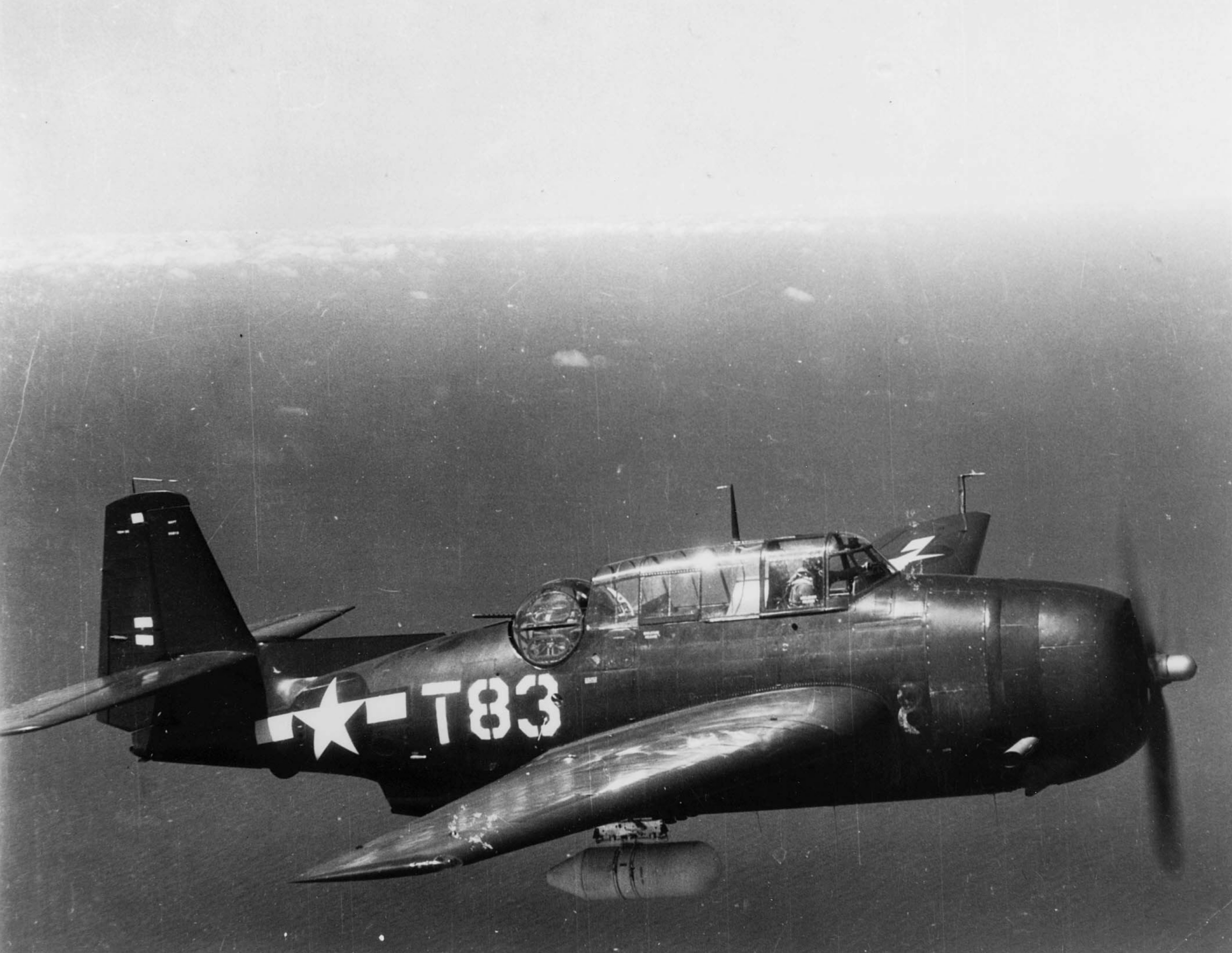
A Navy TBM Avenger of the same type flown by Flight 19, photographed in 1945. U.S. Navy / Public Domain, via Wikimedia Commons. The Navy’s own investigation attributed the loss to navigational error compounding into the aircraft running out of fuel over open water, not to any unexplained phenomenon — flight leader Lieutenant Charles Taylor is documented to have become disoriented about his position partway through the exercise, and worsening weather conditions later that day compounded the difficulty of any rescue. A PBM Mariner flying boat sent to search for the missing squadron also vanished the same night, in weather conditions consistent with a documented in-flight explosion risk that type of aircraft was known to carry.
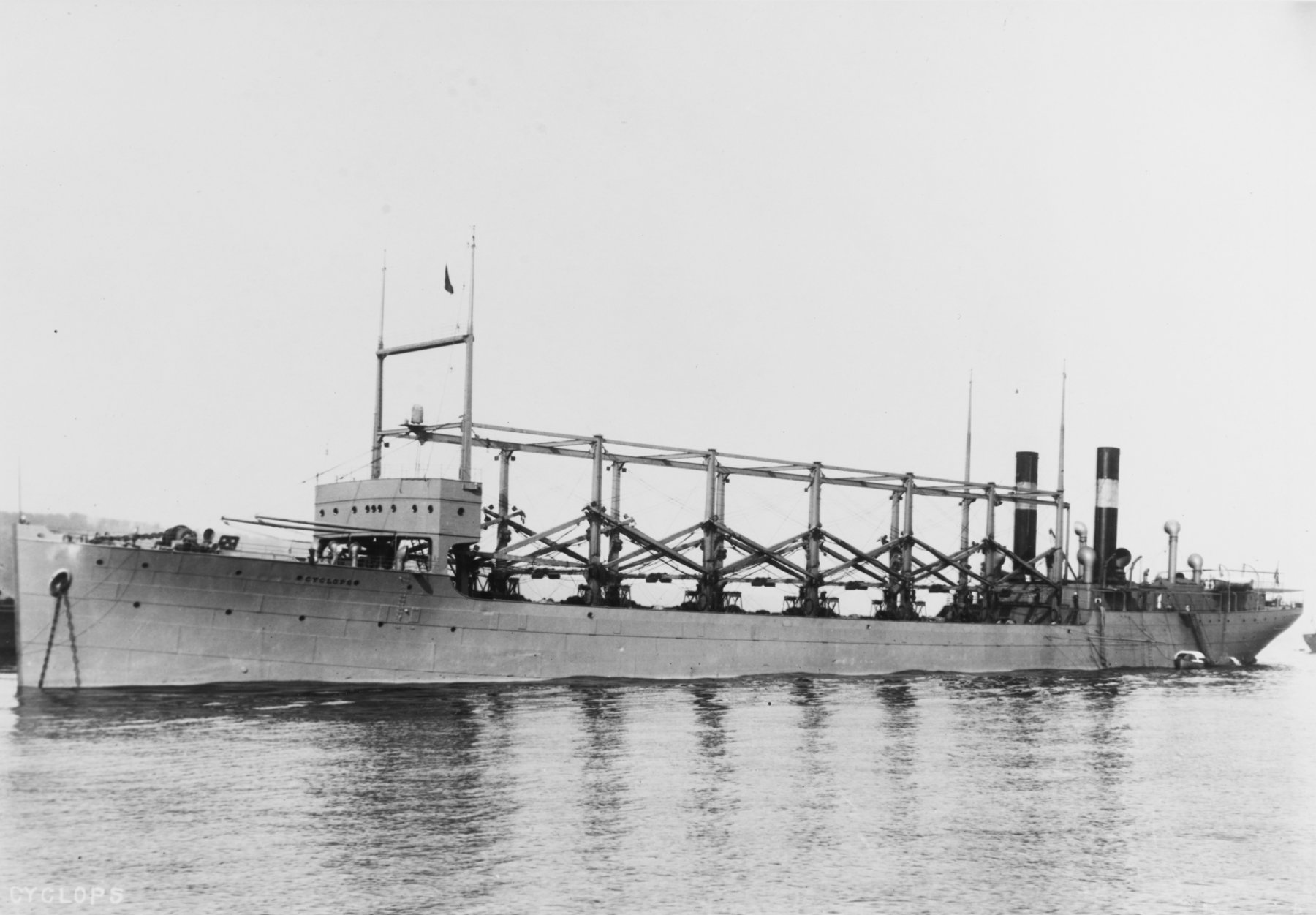
USS Cyclops, a Navy collier carrying manganese ore, disappeared sometime after departing port in March 1918 with 306 crew aboard — still the largest single loss of life in U.S. Navy history outside of direct combat. No single cause has ever been conclusively established, but the leading candidates are entirely mundane: structural failure from overloading is considered especially plausible, since two sister ships built to the same design were separately lost under comparable loading conditions, and a sudden storm remains a live possibility as well.
Star Tiger (January 1948) and Star Ariel (January 1949) were both British South American Airways Avro Tudor IV aircraft that disappeared on separate transatlantic legs. Both aircraft were, by documented accounts, operating close to the outer limits of their fuel range on the specific routes flown, meaning a relatively minor equipment fault or navigational error could plausibly have left them unable to reach their destination with no margin for error or effective distress signal.
Marine Sulphur Queen, a tanker that vanished in 1963, is frequently cited in Triangle literature — Larry Kusche’s later investigation into cases like this one repeatedly found writers had reported incidents with key qualifying details omitted, such as poor structural condition of the vessel, that made a mundane loss considerably less mysterious once accounted for.
Larry Kusche’s Investigation
Reference librarian and pilot Larry Kusche undertook the most systematic fact-check the legend has ever received, published as The Bermuda Triangle Mystery — Solved in 1975. Kusche went directly to primary sources — the Coast Guard, the Navy, Lloyd’s of London, contemporary newspaper archives — for each widely cited case. He documented a consistent pattern of exaggeration and factual error across the popular accounts: incidents where weather conditions were downplayed or omitted, cases where a vessel’s actual last known position was outside the claimed “Triangle” boundaries entirely, and in at least one case he could find no evidence a claimed incident had ever happened at all. In one memorably specific finding, Kusche traced a supposedly mysterious disappearance to a straightforward mix-up between two ports that happened to share the same name, one in the Pacific and one in the Atlantic, three thousand miles apart — the “disappearance” simply reflected an author’s research error, not a missing ship.
Weather, the Gulf Stream, and Compass Variation
Several ordinary environmental factors do meaningfully complicate ship and aircraft navigation in this stretch of ocean, without requiring anything unexplained. The Gulf Stream runs directly through the region as a powerful, fast-moving current capable of pushing a disabled vessel a significant distance from its last reported position in a relatively short time, potentially confusing later search efforts. The area also sits along a heavily used hurricane track, and prior to the era of weather satellites, ships and aircraft had drastically less advance warning of fast-developing severe weather than they do today. Separately, the difference between magnetic north and true north — compass variation, a well-understood and centuries-old navigational phenomenon that shifts depending on location — has occasionally been cited as a source of confusion for navigators unfamiliar with the specific correction needed in this region, though this is a routine, well-documented calculation rather than an anomaly unique to the Triangle.
The Methane Hydrate Theory
One frequently repeated “scientific” explanation deserves specific scrutiny rather than blanket acceptance: the idea that large releases of methane gas from undersea hydrate deposits could reduce water density enough to sink a ship rapidly, with the gas cloud additionally capable of disabling aircraft engines above. Laboratory-scale experiments have demonstrated the basic physical mechanism can work on small model ships, and methane hydrate deposits genuinely exist on continental shelves in the region, including the well-studied Blake Ridge formation off the southeastern United States. But the U.S. Geological Survey’s own assessment is that no large-scale methane hydrate release is believed to have occurred anywhere in the Bermuda Triangle region for roughly the past 15,000 years — meaning the mechanism is physically plausible in principle but has no evidence connecting it to any actual documented Triangle disappearance.
What the Coast Guard and NOAA Actually Say
Both agencies’ publicly stated positions attribute the region’s disappearances to entirely ordinary factors: hurricanes and sudden Gulf Stream-driven weather shifts, hazardous shallow reef areas around the Bahamas and Florida Keys that have claimed vessels for centuries, and the simple statistical reality that this is one of the busier stretches of ocean and airspace in the world, meaning it will generate a higher absolute number of incidents than remote areas purely through greater traffic volume. Neither the Coast Guard nor NOAA endorses the idea that the region is more genuinely dangerous per transit than comparably trafficked ocean areas elsewhere, and Lloyd’s of London — an insurer with direct financial incentive to price risk accurately — doesn’t charge elevated premiums for vessels transiting the area, a strong practical indicator that the underwriting industry itself doesn’t treat the “Triangle” as a statistically distinct hazard zone.
Frequently Asked Questions
Is the Bermuda Triangle real? As a defined geographic hazard zone with an elevated disappearance rate, no credible evidence supports that. As a real region of ocean where several genuine, largely explainable disappearances occurred, yes.
What happened to Flight 19? The Navy’s official investigation attributed the loss to navigational error and subsequent fuel exhaustion, compounded by deteriorating weather during the search.
Who invented the term “Bermuda Triangle”? Writer Vincent Gaddis, in a 1964 magazine article. Charles Berlitz’s bestselling 1974 book significantly expanded the legend’s popular reach.
Did Larry Kusche debunk the Bermuda Triangle? His 1975 investigation found extensive factual errors, omissions, and at least one apparently fabricated case among the popular Triangle literature, tracing several claimed incidents to ordinary, explainable causes.
Is there a scientific explanation for the disappearances? Mostly yes — weather, the Gulf Stream, navigational error, and known maritime hazards account for the documented cases. The methane hydrate theory is physically plausible but has no evidence tying it to any actual Triangle incident.
What do NOAA and the Coast Guard say about the Bermuda Triangle? Both attribute regional disappearances to ordinary environmental and navigational factors rather than any unexplained cause, and note the area’s high traffic volume as a factor in its raw incident count.
Does Lloyd’s of London charge more to insure ships crossing the Bermuda Triangle? No, which is a strong practical signal that the insurance industry doesn’t treat the region as statistically more dangerous than comparable well-traveled waters.

_-_19-N-13451.jpg)