The Index / Cryptids & Legends
Bigfoot Explained: The History, Evidence, Hoaxes, and Why Sasquatch Endures
The word 'Bigfoot' traces to a 1958 California logging site and, per the finder's own family, carved wooden feet. Here's the documented history behind America's most famous cryptid.
Topics: Bigfoot, Sasquatch, Patterson-Gimlin Film, Cryptid, Paranormal
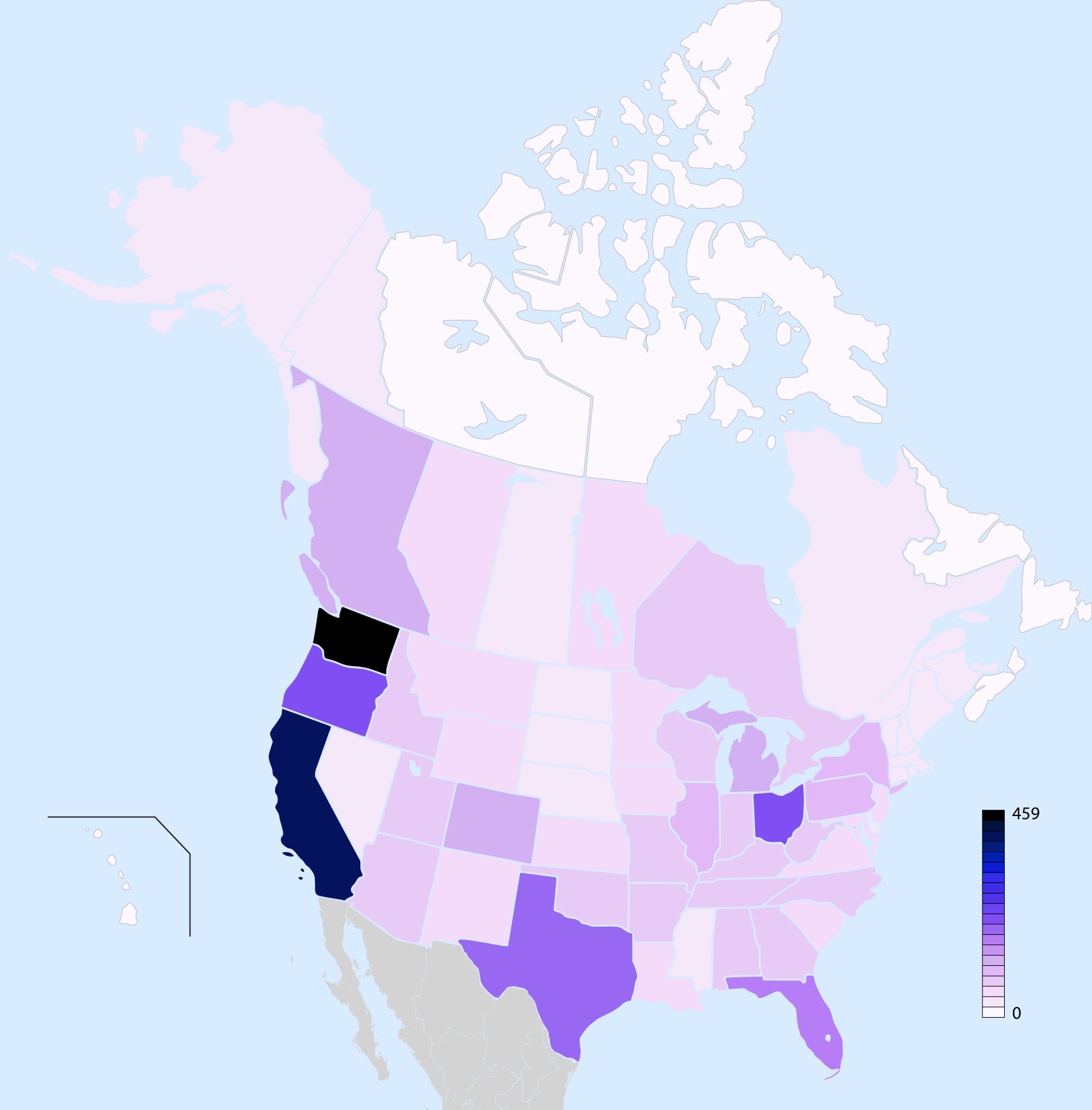
The word “Bigfoot” is younger than most people assume — it dates to a specific 1958 newspaper column about a specific set of oversized footprints found at a specific logging site in Northern California. The man widely credited with creating those footprints, Ray Wallace, was revealed after his 2002 death to have kept carved wooden feet consistent with at least some of the Bluff Creek-area prints found over the following years. That doesn’t settle the broader question of whether every Bigfoot report has a mundane origin — it does mean the word’s own origin story is considerably more documented, and more human-made, than the legend built on top of it.
Word Origins: Sasquatch and Bigfoot
“Sasquatch” predates “Bigfoot” by roughly three decades and has a distinct, separately documented origin: it’s an anglicized version of a Halkomelem (Coast Salish) word, commonly rendered as “sasq’ets,” roughly meaning “wild man,” introduced to wider English usage in the late 1920s by a Canadian schoolteacher compiling Indigenous accounts from British Columbia. “Bigfoot” itself only enters the vocabulary in 1958.
The 1958 Bluff Creek Tracks
In August 1958, Jerry Crew, a bulldozer operator working a logging road near Bluff Creek in Humboldt County, California, found a series of unusually large footprints — reportedly around 16 inches long — impressed in the dirt around his equipment. Crew and his coworkers, initially treating it as a prank by an unknown culprit, began referring to whoever was responsible as “Big Foot.” The story reached wider audiences when Humboldt Times columnist Andrew Genzoli covered it in an October 1958 front-page piece, condensing the nickname to the single word “Bigfoot” that stuck from then on. A widely circulated photograph of Crew holding a plaster cast of one footprint became one of the era’s most recognizable images connected to the case.
Ray Wallace: A Documented Hoax Connection
Ray Wallace, who operated logging equipment in the Bluff Creek area around the same period, has been directly connected to at least some of the region’s footprint evidence. After Wallace’s death in 2002, his family came forward with a pair of carved wooden feet, stating that Wallace had used them to fabricate footprints in the area, including some from the original 1958 discoveries and the years immediately following. This is a well-documented, family-confirmed hoax connection for at least a portion of the foundational track evidence — it doesn’t automatically explain every later footprint find across North America over the following decades, but it does mean the specific tracks that gave the phenomenon its name have a credible fabrication explanation attached to them.
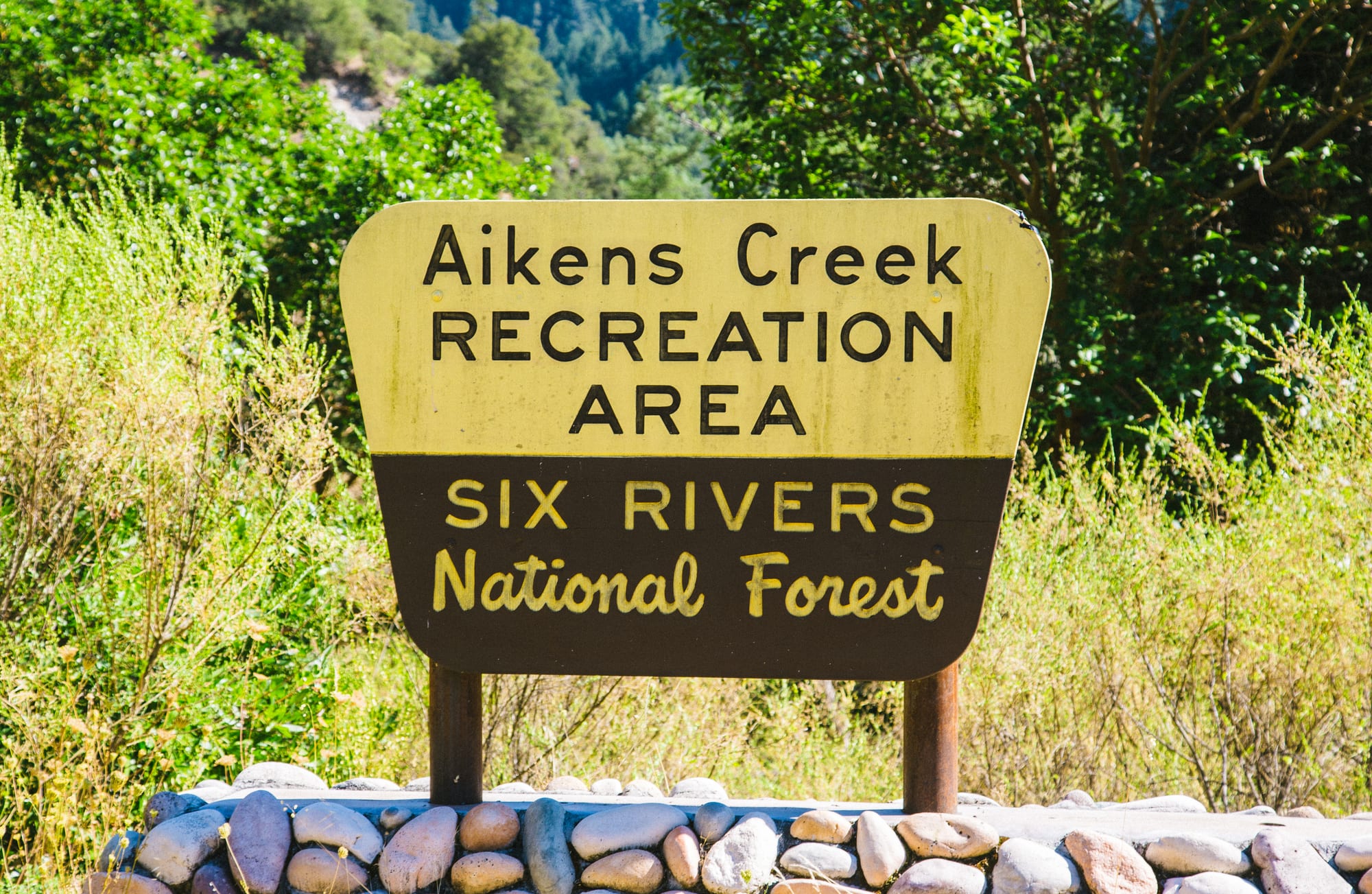
Aikens Creek Recreation Area in Six Rivers National Forest, near Bluff Creek. Photo by Tony Webster via Wikimedia Commons, licensed CC BY 2.0; resized and compressed.
The Patterson-Gimlin Film
The single most famous piece of purported Bigfoot evidence is a 59.5-second, 16mm color film shot on October 20, 1967, along Bluff Creek by Roger Patterson and Robert Gimlin, showing a large, dark-haired, bipedal figure walking across a creek bed before turning briefly toward the camera. Patterson and Gimlin made plaster casts of footprints at the site immediately afterward, with some researchers describing a pressure-ridge pattern in the casts consistent with what could be dermal ridge detail — a claim that remains genuinely disputed rather than independently confirmed as evidence of a non-human primate track.
The film’s authenticity has been argued over for more than fifty years without reaching a resolved consensus. Supporters point to details like visible muscle movement and weight-shifting gait that they argue would be difficult to replicate in a 1960s-era costume. Skeptics point to apparent costume seams visible in some frames, inconsistencies some analysts have identified in lighting and proportions, and a specific, detailed 1998 claim from a man named Bob Heironimus, who stated he had worn a costume for Patterson at the site — an account investigated at length in Greg Long’s 2004 book The Making of Bigfoot, which also documented independently verified inconsistencies in statements made by both Patterson and Gimlin about their own history. Heironimus’s account is a serious, researched claim, not a fringe one — but it hasn’t produced universal agreement either, and the film’s authenticity remains a genuinely contested question rather than one with a single settled answer.
Capturing Bigfoot Revisits the Film in 2026
The Patterson-Gimlin story is receiving a major new documentary treatment in Marq Evans’ Capturing Bigfoot.
The documentary premiered at SXSW in March 2026 and is scheduled for release in select U.S. theaters on October 20, 2026, according to the official release announcement, exactly 59 years after Patterson and Gimlin shot their famous film. XYZ Films describes the documentary as an examination of Patterson’s pursuit of Bigfoot, told through people directly connected to the story, including Roger Patterson’s son Clint Patterson, Bob Gimlin, Bob Heironimus, Greg Long, Jeff Meldrum and others.
Its central new element is a reel of 16mm film discovered in a safe decades after the original event. The documentary’s marketing says that the material changes the understanding of the Patterson-Gimlin story. That is a promotional claim, not something Morbid Index is treating as proof that Bigfoot exists — or as proof that every disputed question around the 1967 footage has suddenly been settled.
The official documentary site frames the film as a story about family, legacy, broken friendships and belief as much as a cryptid investigation. SIFF’s screening description says the newly found material prompted Clint Patterson to investigate long-running claims, grudges and contradictions surrounding his father’s film.
That is a useful development for the history of Bigfoot culture because it returns attention to the people, records and competing accounts around the most famous piece of evidence in the legend.
It does not change the evidentiary standard.
A documentary, a newly recovered reel or a persuasive interpretation can add historical context. None of those things automatically establish an unknown North American primate as a biological species.
Hair, DNA, and What Testing Has Actually Shown
The most rigorous scientific test of purported Bigfoot physical evidence came from a 2014 peer-reviewed study led by Oxford geneticist Bryan Sykes, published in Proceedings of the Royal Society B. Sykes’s team successfully sequenced DNA from 30 hair samples submitted globally as belonging to Bigfoot, Yeti, or similar “anomalous primates.” Every successfully sequenced sample matched known mammals, including bears, horses, cattle and one human, with no sample matching an unknown primate. Two Himalayan samples produced a tentative bear-related result. Later research showed that the short DNA sequence was insufficient to establish an unknown or hybrid bear. The study doesn’t prove Bigfoot doesn’t exist — no negative result of this kind logically can — but it found zero genetic support across a global sample set specifically submitted as the strongest available physical evidence.
The Ecological Argument
Beyond individual pieces of contested evidence, wildlife biologists have raised a structural objection to Bigfoot’s plausibility as an undiscovered large mammal species: a breeding population large enough to sustain itself across generations, spread widely enough to generate reports across most of North America, would be expected to leave far more conclusive physical evidence than has ever been produced — recovered remains, roadkill, a body from natural death, clear trail-camera captures from the now-enormous number of cameras deployed across North American forests for wildlife research and hunting, or genuine breeding-population-consistent genetic material. Large mammal species, even genuinely elusive ones, don’t typically evade this kind of cumulative modern detection effort indefinitely once search and camera-trap coverage reaches the density it has in recent decades.
Misidentification and Bears
A substantial share of individual Bigfoot sighting reports are plausibly explained by misidentified black bears, particularly bears observed briefly, at a distance, in poor light, or standing upright on their hind legs — a posture bears do adopt periodically to get a better look or smell at something, and one that can genuinely create a fleeting bipedal, humanlike silhouette to an unprepared observer. Combined with the psychological effects of an unexpected, brief wilderness encounter (adrenaline, limited observation time, and the tendency of memory to fill gaps with expectation), an ordinary bear sighting under specific conditions is a considerably more economical explanation for many individual reports than an unknown hominid.
Indigenous Traditions: Related, But Not One Single Myth
It’s important to be precise here rather than flattening a wide range of distinct cultural material into one generic “Bigfoot legend.” Many Indigenous nations across the Pacific Northwest and beyond have their own separate, long-standing oral traditions describing large, human-like wilderness beings — but these traditions vary significantly by nation, carry their own specific cultural and spiritual meaning within each community, and shouldn’t be treated as interchangeable regional variants of a single cryptozoological creature or as raw “evidence” supporting a zoological Bigfoot claim. Doing that both misrepresents the specific cultural content of each tradition and imports a modern American pop-culture framework onto material that existed on its own terms long before “Bigfoot” was coined in a 1958 newspaper column. It’s meaningfully different from how the wendigo functions as a specific, distinct tradition within specific Algonquian-speaking nations — treating either as generic “cryptid” material erases what actually matters about them culturally.
Why the Legend Endures
Bigfoot’s cultural staying power doesn’t require any of the physical evidence to hold up. It combines a genuinely vast, still-remote search area across North American wilderness (making “not yet found” a permanently plausible-sounding claim regardless of search intensity), a famous piece of ambiguous film footage that’s never been definitively resolved either way, an active and organized enthusiast/investigator community that continues generating new reported sightings, and a folk-monster tradition with genuine emotional appeal — the possibility of an intelligent, elusive being still out there in the diminishing wild places of the continent taps into something beyond simple belief in cryptozoology.
Frequently Asked Questions
Is Bigfoot real? No confirmed physical, genetic, or photographic evidence supports an unknown large primate species in North America. The most rigorous scientific test, a 2014 DNA study, found zero genetic support across a global sample of purported physical evidence.
What is Sasquatch? An anglicized version of a Coast Salish word meaning roughly “wild man,” introduced to English in the late 1920s — a distinct, earlier term from “Bigfoot,” which originates in 1958.
What is the Patterson-Gimlin film? A 1967 16mm film shot at Bluff Creek, California, showing a large bipedal figure, widely considered the single most significant piece of purported Bigfoot evidence. Its authenticity remains genuinely disputed after more than fifty years of analysis.
What is Capturing Bigfoot? A 2026 documentary directed by Marq Evans about Roger Patterson, the Patterson-Gimlin film and the people whose lives became tied to it. The film incorporates a later-discovered reel of 16mm material and is scheduled for release in select U.S. theaters on October 20, 2026.
Does the new documentary prove Bigfoot exists? No. The documentary adds new archival material and testimony to the history of the Patterson-Gimlin case. That is not the same thing as independent biological proof of an unknown primate species.
Has Bigfoot DNA ever been found? No. A comprehensive 2014 peer-reviewed genetic study of 30 successfully sequenced hair samples submitted as Bigfoot or similar cryptid evidence identified known mammals rather than an unknown primate.
Why has no Bigfoot body been found? Wildlife biologists argue that a viable breeding population large enough to generate reports across such a wide range would be expected to produce far more conclusive physical evidence — remains, roadkill, clear camera-trap footage — than has ever materialized.
Are Bigfoot and Sasquatch the same thing? Functionally yes, in modern usage, though the terms have separate origins — “Sasquatch” from a 1920s anglicized Coast Salish word, “Bigfoot” from a 1958 California newspaper column.
Did someone really fake the original 1958 footprints? There’s a documented, family-confirmed connection between Ray Wallace and carved wooden feet used to fake at least some Bluff Creek-area tracks, revealed after his 2002 death.
Are Indigenous traditions about wilderness beings the same as the Bigfoot legend? No. Many Indigenous nations have their own distinct, culturally specific oral traditions about large human-like beings that predate and exist independently of the modern “Bigfoot” cryptid framework, and shouldn’t be treated as interchangeable with it.
Sources & further reading
- Wikipedia: Bigfoot (navigation/cross-reference)
- Wikipedia: Patterson–Gimlin film (navigation/cross-reference)
- Royal Society Proceedings B: Genetic analysis of hair samples attributed to yeti, bigfoot and other anomalous primates (Sykes et al., 2014)
- Royal Society Proceedings B: Himalayan bear genetics and the identity of the yeti (Lan et al., 2017)
- Capturing Bigfoot: official September 10, 2026 release announcement
- XYZ Films: Capturing Bigfoot
- Capturing Bigfoot: official documentary site
- SIFF: Capturing Bigfoot screening and synopsis



.jpg)