The Index / Cryptids & Legends
Jersey Devil Explained: The Pine Barrens Legend, the Leeds Family, and the 1909 Panic
The Jersey Devil legend traces to a real colonial-era Quaker printer, not a cursed 13th child. Here's the documented history behind New Jersey's most famous cryptid.
Topics: Jersey Devil, Leeds Devil, Pine Barrens, New Jersey Folklore, Cryptid
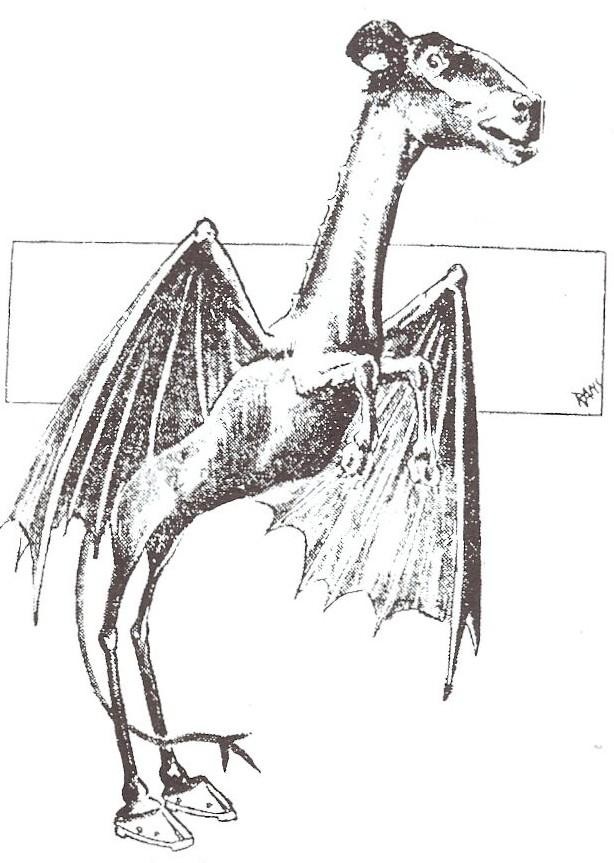
Philadelphia newspaper, 1909 / Wikimedia Commons (Public Domain)
The version of the Jersey Devil most people know involves a cursed thirteenth child, born with wings and hooves in 1735, who flew out of a Pine Barrens chimney and has haunted the woods ever since. Historians who’ve actually traced the legend’s paper trail have found something more interesting: a real eighteenth-century political feud between a Quaker printer and his own community, stretched and reshaped over two centuries into a monster story, then supercharged by a newspaper hoax in 1909.
The Pine Barrens Setting
The New Jersey Pine Barrens is a roughly 1.1-million-acre stretch of pine and oak forest, sandy soil, and cedar swamp covering much of the southern part of the state — sparsely populated for most of its history, home to small, isolated communities of loggers, charcoal burners, and glassmakers, and exactly the kind of remote landscape that tends to accumulate ghost stories and monster legends over generations. The Jersey Devil is the region’s signature legend, but it didn’t start out as a monster story at all.
Daniel Leeds and the Almanac Feud
The documented starting point is a real person: Daniel Leeds (1651–1720), an English-born Quaker who settled in West Jersey in the 1670s and became a surveyor, colonial official, and, from 1687 onward, publisher of an annual almanac. Quaker leaders objected almost immediately — Leeds’s almanac included astrological symbols and references that the Society of Friends considered improperly tied to pagan and occult tradition, at odds with the plain, unadorned religious practice Quakers valued. When Leeds refused to fall in line, the Philadelphia Yearly Meeting effectively disowned him.
The break got personal and public. Leeds converted to the Church of England, aligned himself politically with New Jersey’s unpopular royal governor, and began publishing pamphlets attacking his former Quaker community. Quaker writers hit back in kind — the Quaker printer Caleb Pusey published a 1701 tract with the full title Satan’s Harbinger Encountered, aimed directly at Leeds, accusing him in essentially religious terms of doing the devil’s work. That’s about as close as the documented record gets to an origin point: a real, bitter, printed public feud in which one side accused Daniel Leeds of being in league with Satan — decades before any story about a monster.
Titan Leeds, the Family Crest, and Benjamin Franklin
Daniel Leeds’s son Titan Leeds took over the family almanac business and, in 1728, began printing the Leeds family coat of arms on the cover — a crest featuring a wyvern, a two-legged winged dragon, a common heraldic device that had nothing to do with New Jersey folklore when the family adopted it.
Titan Leeds is also the target of one of Benjamin Franklin’s better-known publishing stunts. Franklin, launching his own competing Poor Richard’s Almanack in 1733, published a mock astrological prediction that Titan Leeds would die that October. When Leeds understandably objected in print that he was still alive, Franklin doubled down with the joke rather than dropping it, suggesting in later almanac entries that the “real” Titan Leeds had died as predicted and that whoever was now publishing under his name must be an impostor — or a ghost. It was satire aimed at a business rival, not a supernatural claim, but it added another layer of “something devilish about the Leeds name” to the public record, on top of the religious feud a generation earlier.
How the Legend Became a Monster Story
None of this — the almanac dispute, the wyvern crest, Franklin’s joke — mentions a winged, cloven-hoofed creature born to a cursed mother. That specific narrative, usually dated to 1735 and often naming “Mother Leeds” as a thirteenth child’s exasperated parent, doesn’t show up in the documented historical record from the colonial period. Historian Brian Regal, who has researched the legend’s origins in depth, traces the shift from a political grudge against a real family surname to a monster legend as a process that unfolded gradually through the eighteenth and nineteenth centuries, as the specific political context faded from public memory and the Leeds name and its “devil” association kept circulating on their own, detached from the original dispute, ready to be filled in with new folk narrative.
By the time the story reaches print in recognizable form, it’s already the nineteenth century: an 1859 piece in The Atlantic Monthly on the Pine Barrens is among the earliest print references identifiable to what was then usually called the “Leeds Devil,” reflecting oral tradition that had likely circulated regionally for some time before being written down. The “cursed thirteenth child” backstory, with its specific 1735 date, functions as the kind of origin myth that tends to accrete around a name and a vague sense of doom long after the actual reason for that doom has been forgotten.
The January 1909 Panic
A Philadelphia newspaper’s illustration of the Jersey Devil from the January 1909 panic — the sighting wave that did the most to fix the creature’s popular image. Source. Public Domain.
The Jersey Devil’s most dramatic documented episode is a manufactured media event, not a wilderness encounter. Beginning January 16, 1909, and continuing for roughly a week, newspapers across South Jersey and the Philadelphia area ran a flood of reader-submitted sightings — strange tracks in snow, a creature attacking a trolley car in Haddon Heights, alleged encounters at a social club in Camden — spread across more than thirty towns. Some schools closed and workers stayed home amid the coverage.
Central to the panic was Norman Jeffries, a former Philadelphia newspaperman turned publicist, who was promoting a struggling dime museum at Ninth and Arch Streets in Philadelphia. Jeffries fed sensational stories to newspapers competing hard for readers in an era with few standards for verifying reader-submitted monster reports, and on January 23 arranged for the creature’s “capture” in Fairmount Park. What went on display days later at the dime museum was a kangaroo, fitted with fake wings and painted with stripes — a hoax Jeffries himself later admitted to. The exhibit drew crowds for a short run before the museum’s financial troubles caught up with it regardless.
Behind the manufactured spectacle, some of the underlying reports were likely honest misidentifications rather than pure invention. Large, unfamiliar-looking birds — sandhill cranes and great blue herons, both capable of standing several feet tall with long necks and wide wingspans, and great horned owls, whose feather tufts can look horn-like at a glance in poor light — are the most commonly proposed natural explanations for genuine nighttime sightings that predated and outlasted Jeffries’s hoax. A newspaper environment primed by a week of front-page monster coverage will also reliably generate more reports of ordinary animals seen under startling circumstances, independent of any single hoaxer’s efforts.
Commodore Decatur and Joseph Bonaparte: Later Additions
Two other names get attached to the legend regularly: naval officer Stephen Decatur, said to have fired a cannonball at the creature during a visit to a Pine Barrens ironworks, and Joseph Bonaparte, Napoleon’s exiled brother, who lived on an estate in Bordentown, New Jersey, in the 1810s and 1820s and is said to have encountered the creature while hunting. Both stories are worth including as long-running parts of the legend’s texture — and worth being honest about their evidentiary status, which is thin. Neither anecdote can be traced to a contemporary account from Decatur’s or Bonaparte’s own lifetime; both read as later folk elaborations that attached recognizable, prestigious historical names to an already-circulating regional monster story, the same way public figures get pulled into other local legends after the fact. There’s no documented primary source establishing either encounter actually happened.
What the Standardized Creature Looks Like Today
The Jersey Devil’s now-familiar appearance — bipedal, roughly horse- or kangaroo-like body, bat-like wings, cloven hooves, a goat- or horse-like head, and a long, forked tail — is largely a twentieth-century standardization, consolidated through repeated newspaper illustration, pulp writing, and later popular culture rather than dating back to a single consistent colonial-era description. Earlier oral tradition was considerably less fixed about what, exactly, the “Leeds Devil” looked like.
Not the Same Category as Skinwalkers or Wendigo
It’s worth being direct about something the Jersey Devil legend doesn’t share with a number of other creatures sometimes lumped together in general “cryptid” roundups: it isn’t drawn from Indigenous spiritual tradition. Skinwalkers and the wendigo come out of specific Native belief systems that carry real religious and cultural weight for the communities they belong to, and folding them into the same casual “spooky monster” bucket as a colonial political grudge turned regional ghost story flattens a distinction that matters. The Jersey Devil’s roots are Anglo-colonial religious and commercial politics — a genuinely different kind of story, and one that shouldn’t be treated as interchangeable with those traditions.
Modern Culture
The legend has long since become regional civic identity as much as ghost story. New Jersey’s National Hockey League franchise adopted the name “New Jersey Devils” in 1982, cementing the Leeds Devil’s transformation from a nineteenth-century backwoods tale into recognizable statewide branding — a considerably tamer legacy than the 1909 panic that made the creature a household name in the first place.
Frequently Asked Questions
What is the Jersey Devil? A folklore creature associated with the New Jersey Pine Barrens, traditionally described as a winged, hooved, goat-headed figure, whose legend traces back to a real eighteenth-century political and religious feud involving the Leeds family rather than a single documented origin event.
Is the Jersey Devil based on a real family? Yes. Daniel Leeds, a Quaker printer disowned by his community over his almanac’s contents, and his son Titan Leeds, whose almanac carried a winged-dragon family crest, are the documented starting point historians have traced the legend to.
Was the Jersey Devil really born in 1735 to “Mother Leeds”? There’s no contemporary eighteenth-century documentation of that specific story. It appears to be a later folk narrative that developed around the Leeds name after the original political feud had faded from public memory.
What happened in the 1909 Jersey Devil panic? A week of widespread reported sightings across South Jersey and Philadelphia in January 1909, driven partly by genuine animal misidentifications and substantially amplified by a publicity hoax orchestrated by Norman Jeffries, who staged the “capture” of a kangaroo fitted with fake wings.
Did Commodore Stephen Decatur really shoot at the Jersey Devil? There’s no contemporary documentation supporting that story from Decatur’s own lifetime. It appears to be a later addition to the legend rather than a verified historical event.
What’s the natural explanation for Jersey Devil sightings? Large, unfamiliar birds — sandhill cranes, great blue herons, and great horned owls — are the most commonly proposed explanations for genuine nighttime encounters, on top of the deliberate 1909 hoax.
Is the Jersey Devil connected to Skinwalkers or the Wendigo? No. Those figures come from distinct Indigenous spiritual traditions with their own cultural context. The Jersey Devil’s origins are entirely separate, rooted in colonial-era Anglo-Quaker religious and political conflict.
Why is New Jersey’s NHL team called the Devils? The franchise adopted “New Jersey Devils” in 1982, drawing directly on the state’s most famous piece of regional folklore.
Sources & further reading
- Skeptical Inquirer: The Jersey Devil — The Real Story (Brian Regal, 2013)
- New Jersey Council for the Humanities: The Jersey Devil in Myth and History
- The Philadelphia Inquirer: The Jersey Devil, the tale of a viral story from 110 years ago
- Naval Historical Foundation: Seapower, Satire, and Superstition — Stephen Decatur and the Hunt for the Jersey Devil
- Wikipedia: Jersey Devil (navigation/cross-reference)