The Index / Cryptids & Legends
Loch Ness Monster Explained: Nessie, the Famous Photos, and What the Evidence Shows
The 1934 'Surgeon's Photograph' was admitted as a hoax in 1994. A 2019 eDNA survey found no evidence of an unknown reptile in the loch, but plenty of eel DNA.
Topics: Loch Ness Monster, Nessie, Cryptid, Scotland, Paranormal
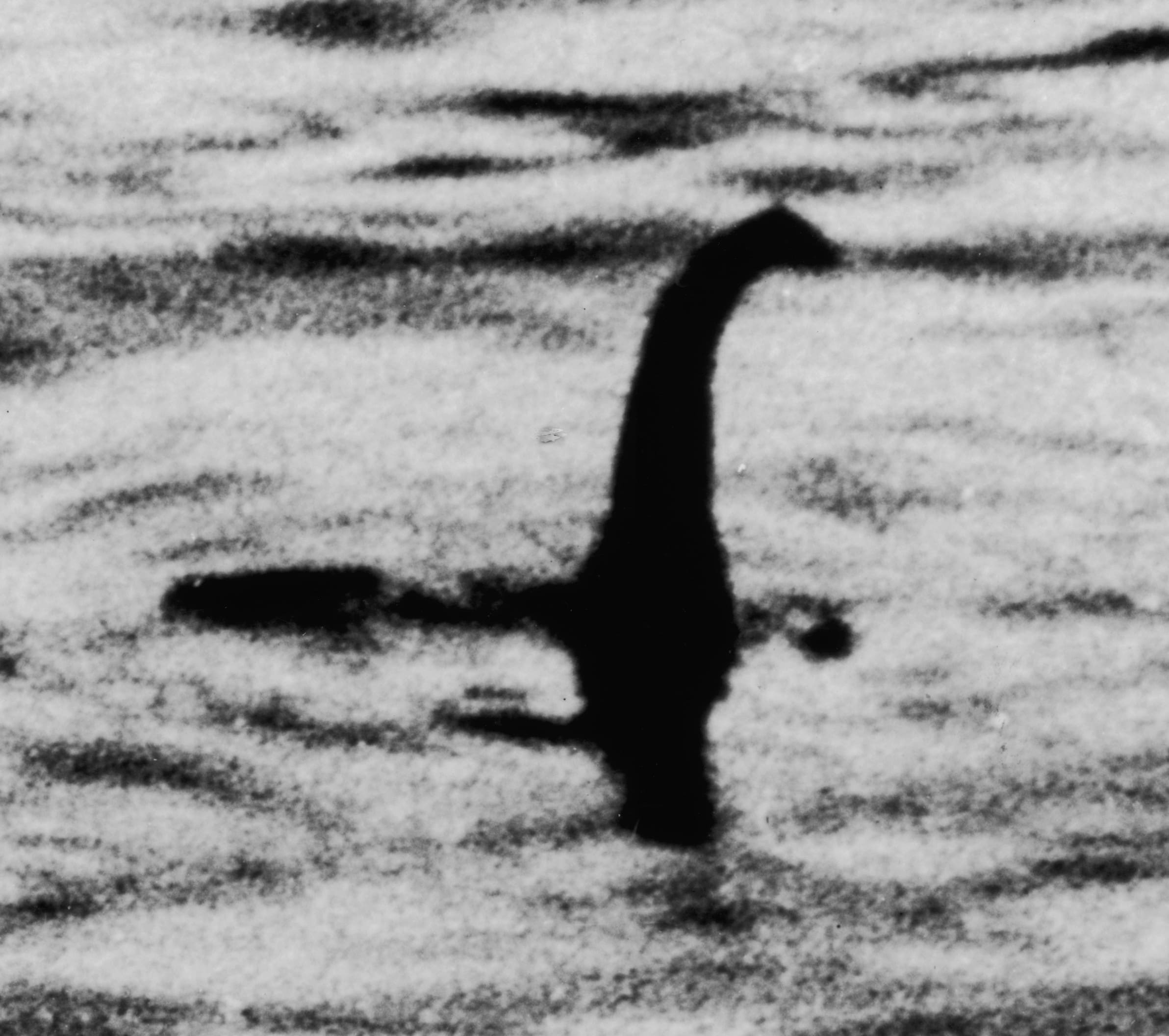
M.A. Wetherell, 1934 (Public Domain)
The single most famous image of the Loch Ness Monster — the long-necked silhouette rising from dark water, published in the Daily Mail in 1934 — was admitted to be a fabricated hoax by one of the men who helped stage it, sixty years after the fact. That’s not a fringe skeptical claim; it’s a confession, on the record, from a participant. It’s a useful place to start, because it says something important about how much of the modern Nessie legend rests on specific, individually documented human decisions rather than an accumulating weight of independent evidence.
Loch Ness Itself
Loch Ness is a large, deep freshwater loch in the Scottish Highlands, part of the Great Glen fault system, and among the largest bodies of freshwater in Great Britain by volume — its water is also notably peat-stained and dark, limiting underwater visibility considerably compared to a clear lake, a detail that matters for evaluating how reliable a brief surface or underwater sighting could realistically be.
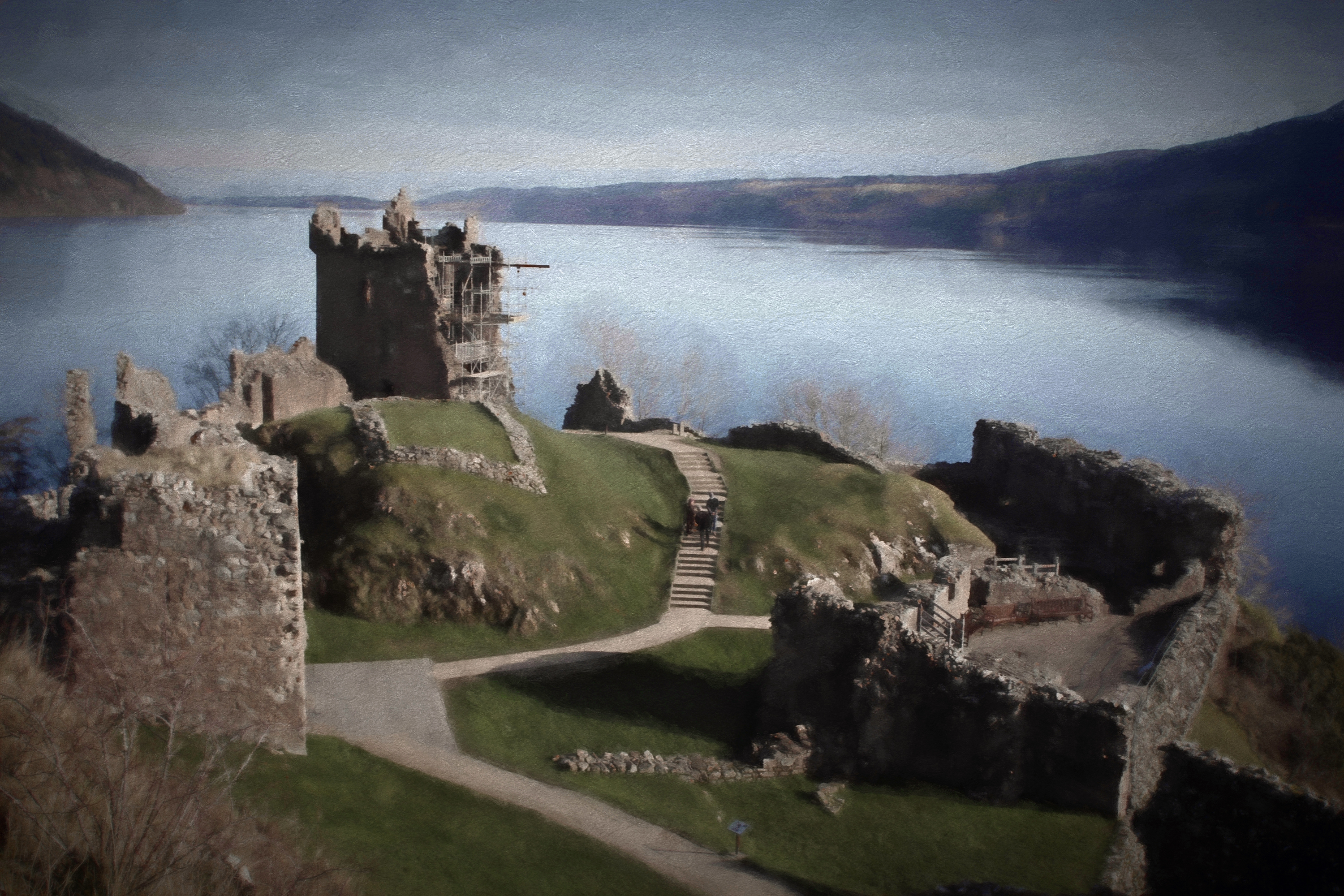
Urquhart Castle, overlooking Loch Ness — the vantage point from which many reported Nessie sightings have been made. BIG ALBERT, Wikimedia Commons (CC0).
St. Columba: Not Actually an Eyewitness Account of “Nessie”
The oldest story regularly cited as evidence for the Loch Ness Monster is an account involving the 6th-century Irish monk St. Columba, who reportedly encountered a water beast near the River Ness in 565 AD and commanded it, in the name of God, to leave a man it was threatening alone. This account survives through a biography of Columba written roughly a century after his death by Adomnán, Abbot of Iona — meaning it’s a secondhand hagiographical text, not a contemporary eyewitness record, written specifically to illustrate the saint’s spiritual authority. Encounters with dangerous water creatures are a common, recurring motif across early medieval saints’ biographies generally, used to demonstrate a saint’s power over nature and evil — treating this specific instance as a literal 6th-century sighting of the same creature reported in 1933 misreads the genre the source material actually belongs to.
The Modern Legend Begins: 1933
The contemporary Loch Ness Monster phenomenon effectively starts in 1933, when a new road built along the loch’s shore gave the public dramatically improved views of the water for the first time, coinciding with a wave of reported sightings. A widely cited early report describes George Spicer and his wife seeing an unfamiliar large creature cross the road in front of their car before entering the loch. That same year, Hugh Gray photographed what he described as an unusual creature in the water near Foyers — the image is genuinely ambiguous and has been proposed by different analysts to show anything from an unknown animal to, more mundanely, Gray’s own dog swimming with a stick, or an otter breaking the surface.
The Surgeon’s Photograph: A Confessed Hoax
The photograph that did more than any other single image to fix Nessie in global popular culture was published in the Daily Mail on April 21, 1934, credited to a London physician, Robert Kenneth Wilson, and became known as the “Surgeon’s Photograph.” Its real origin traces back to Marmaduke Wetherell, a big-game hunter the Daily Mail had previously hired to investigate the loch, who had been publicly embarrassed after supposed monster footprints he’d found were identified as coming from a mounted hippopotamus-foot umbrella stand. In 1994, Christopher Spurling — Wetherell’s stepson — confirmed in an interview that the photograph had been staged using a small model built onto a toy submarine, constructed specifically to salvage Wetherell’s reputation after the footprint embarrassment. That’s not speculation about the photo’s authenticity; it’s a direct, named confession describing exactly how and why the hoax was created.
Later Investigations: Film, Sonar, and a Retouched Photograph
Aeronautical engineer Tim Dinsdale filmed a moving shape on the loch’s surface in 1960; a 1966 analysis by a Royal Air Force intelligence photographic unit concluded the object in the footage was “probably animate” without being able to identify what it actually was — a genuinely inconclusive result, not a confirmation of an unknown creature.
American attorney and inventor Robert Rines led underwater expeditions in 1972 and 1975 that produced photographs some analysts described as showing large flipper-like appendages. That claim didn’t hold up under later scrutiny: investigations published in 1984 in Discover and Skeptical Inquirer magazines demonstrated that the widely circulated 1972 “flipper” images had been substantially retouched, with the distinctive diamond shape painted onto what the unretouched originals showed to be indistinct, ambiguous shapes.
A large-scale 1987 sonar operation, Operation Deepscan, deployed nineteen boats in a coordinated sweep across the loch specifically to search for a large unidentified object. It recorded several unexplained sonar contacts at the time, though none were ever conclusively identified as anything other than the kind of transient sonar returns (fish shoals, thermoclines, debris) that large-scale sonar sweeps of deep lakes routinely produce.
The 2019 eDNA Survey
The most methodologically rigorous recent investigation came in 2019, when geneticist Neil Gemmell led a team that collected roughly 250 water samples from across the loch, at varying depths, and sequenced the environmental DNA (eDNA) present — genetic material shed into the water by every organism living in or passing through it. The results identified DNA consistent with the loch’s known and expected residents, with no genetic material found that would indicate a large unknown reptile or any other unidentified large vertebrate species. The survey did find a substantial quantity of eel DNA, leading Gemmell’s team to note that Loch Ness eels reaching an unusually large size remains a plausible, though unconfirmed, explanation for at least some sightings — a considerably more modest conclusion than either “monster confirmed” or “monster definitively ruled out,” and worth representing that way rather than overstating in either direction.
The Plesiosaur Problem
The specific creature type most popularly associated with Nessie — a surviving plesiosaur, a marine reptile that went extinct roughly 66 million years ago along with the non-avian dinosaurs — runs into serious, well-established biological problems beyond the lack of physical evidence. Plesiosaurs were air-breathing reptiles, meaning a resident population would need to surface regularly and would be far more visible and reliably photographed than the ambiguous, occasional-sighting pattern Nessie reports actually show. A breeding population large enough to sustain itself across generations, in a single freshwater loch, over many decades of increasingly widespread search and observation effort, without producing a single conclusively identified body, bone, or unambiguous photograph, is difficult to reconcile with basic population biology — the same practical objection that applies to other undiscovered-large-animal cryptid claims.
Ordinary Misidentification
Loch Ness is a working, heavily used body of water, and several mundane phenomena plausibly account for a large share of reported sightings independent of any hoax: wave patterns and boat wakes under specific wind conditions can create apparent humps or moving shapes on the surface; floating logs and other debris, especially when partially waterlogged, can resemble a dark, irregular shape breaking the surface; and large fish, otters, and diving birds are all genuinely present in and around the loch and have each been separately proposed as explanations for specific individual reports over the decades.
How Tourism Shaped the Legend
It’s worth being direct about the economic dimension of the story, without suggesting every witness has been deliberately dishonest: Loch Ness tourism has been a substantial and continuously promoted regional industry since the 1930s, and the monster legend functions as one of Scotland’s most recognizable and commercially valuable pieces of folklore. That commercial incentive doesn’t retroactively invalidate any individual sighting, but it’s a genuine, documented factor in why the legend has been so consistently kept in public attention across nine decades, compared to less commercially useful folklore that’s faded from wider awareness over the same period.
Frequently Asked Questions
Is the Loch Ness Monster real? No confirmed physical, photographic, or genetic evidence supports an unknown large creature living in the loch. The most rigorous recent survey, a 2019 eDNA study, found no evidence consistent with an unidentified reptile.
Was the famous Loch Ness Monster photo a hoax? Yes. The 1934 “Surgeon’s Photograph” was confirmed as a staged hoax in a 1994 confession from Christopher Spurling, stepson of Marmaduke Wetherell, who described how it was constructed using a model on a toy submarine.
Did St. Columba really see the Loch Ness Monster? The often-cited 565 AD account comes from a hagiography written roughly a century after Columba’s death, following a common genre convention of saints defeating dangerous water creatures — not a firsthand eyewitness record of the same phenomenon reported in the 20th century.
What did the 2019 DNA study find? No genetic evidence of an unknown large reptile or other unidentified large vertebrate. It did find substantial eel DNA, leading researchers to note unusually large eels as one plausible partial explanation for some sightings.
Could the Loch Ness Monster be a surviving plesiosaur? That explanation faces serious biological problems: plesiosaurs were air-breathing reptiles that would need to surface regularly, and a viable breeding population would be difficult to reconcile with the loch’s small size and the lack of any conclusive body, bone, or unambiguous photograph after decades of searching.
What are the leading mundane explanations for sightings? Boat wakes and wave patterns, floating logs and debris, large eels, otters, and diving birds are the most commonly proposed ordinary explanations for individual reported sightings.
Were Robert Rines’s underwater “flipper” photos genuine? No. Independent 1984 investigations found the widely circulated images had been substantially retouched from ambiguous, indistinct originals.