The Index / Cryptids & Legends
Mothman Explained: The 1966 Point Pleasant Sightings and the Silver Bridge Myth
Two couples reported a winged, red-eyed creature near Point Pleasant in November 1966. The claim that it predicted the Silver Bridge collapse came later -- the bridge failed from a corroded eyebar, not a curse.
Topics: Mothman, Point Pleasant, Cryptid, Silver Bridge, West Virginia
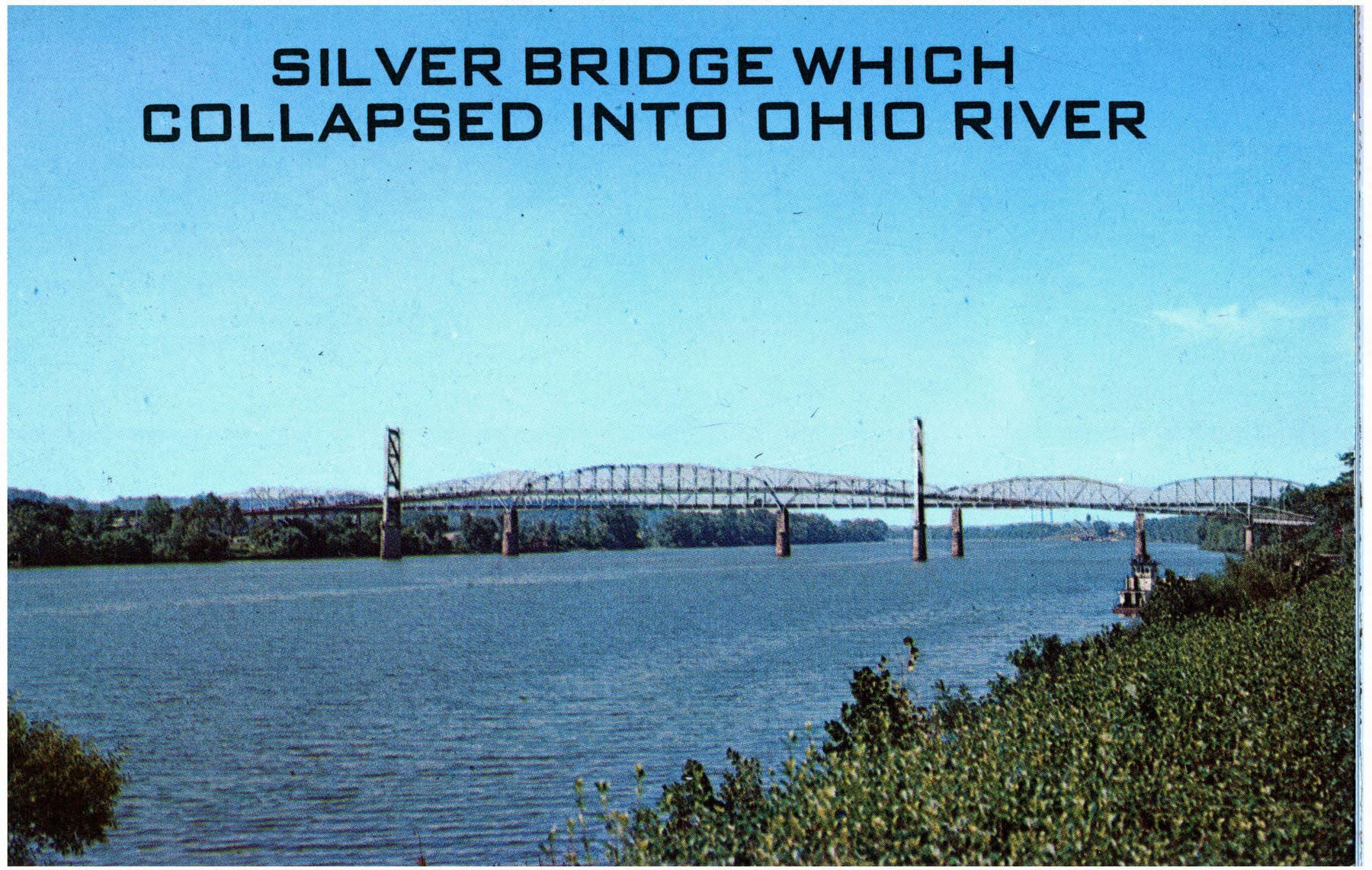
Public Domain, via Digital Public Library of America / Wikimedia Commons
Two couples driving near an abandoned WWII munitions site outside Point Pleasant, West Virginia, reported being chased by a large, winged, red-eyed creature on the night of November 15, 1966. That sighting is documented — it made the local paper within a day. What isn’t documented from that period is any claim that the creature predicted a disaster. The idea that Mothman foretold the collapse of the Silver Bridge more than a year later came from a book published in 1975, built around a bridge failure that engineers traced to a single corroded steel eyebar.
The Night of November 15, 1966
Roger and Linda Scarberry and Steve and Mary Mallette were driving near the TNT area, a former World War II munitions plant just north of Point Pleasant now part of the McClintic Wildlife Management Area, when they reported seeing a large, dark, man-shaped figure with wings. Linda Scarberry later described it as resembling a “slender, muscular man” roughly seven feet tall, with what she took to be wings folded against its back. All four witnesses reported the creature’s eyes glowed red, and said it pursued their car, keeping pace at speeds reportedly over 60 miles per hour, until they reached the Point Pleasant city limits. They went straight to the Mason County Sheriff’s office. The Point Pleasant Register ran the story the next day, November 16, under the headline “Couples See Man-Sized Bird … Creature … Something.”
How the Story Spread Locally
The Scarberry-Mallette account wasn’t an isolated report for long. In the days and weeks that followed, additional local sightings were reported around the same wooded, industrial stretch of land, and the story picked up national wire coverage soon after the initial local article ran. The TNT area itself was already an unusual place before any of this — a fenced former explosives manufacturing site riddled with domed concrete igloo bunkers once used to store munitions, since abandoned and partly reclaimed as a wildlife refuge. That combination of an eerie, restricted industrial landscape and a startling nighttime encounter is very likely part of why the story caught on as quickly as it did.
What a Seven-Foot Winged Creature Might Actually Have Been
Multiple wildlife researchers have proposed conventional explanations for what the witnesses saw, rather than treating the sightings as unexplainable by default. West Virginia University wildlife biologist Robert L. Smith suggested the creature may have been a sandhill crane that had wandered outside its normal migration range — a bird that can stand nearly as tall as a man, with a wingspan approaching seven feet and reddish coloring around the eyes. Researcher Joe Nickell has instead pointed to barred owls, arguing that the reported “glowing red eyes” match eyeshine, the reflective quality of many nocturnal animals’ eyes when caught in direct light, rather than anything self-luminous. Ornithologist Daniel A. Reed, examining regional bird migration data, argued that in accounts where witnesses didn’t specifically describe eyeshine, a great blue heron was statistically the more likely misidentification. A large snowy owl, shot locally around the same period and now on display at the Mothman Museum, is sometimes cited as a fourth possibility, since a snowy owl’s nearly five-foot wingspan and pale coloring could plausibly read as something stranger at night, at a distance, under stress.
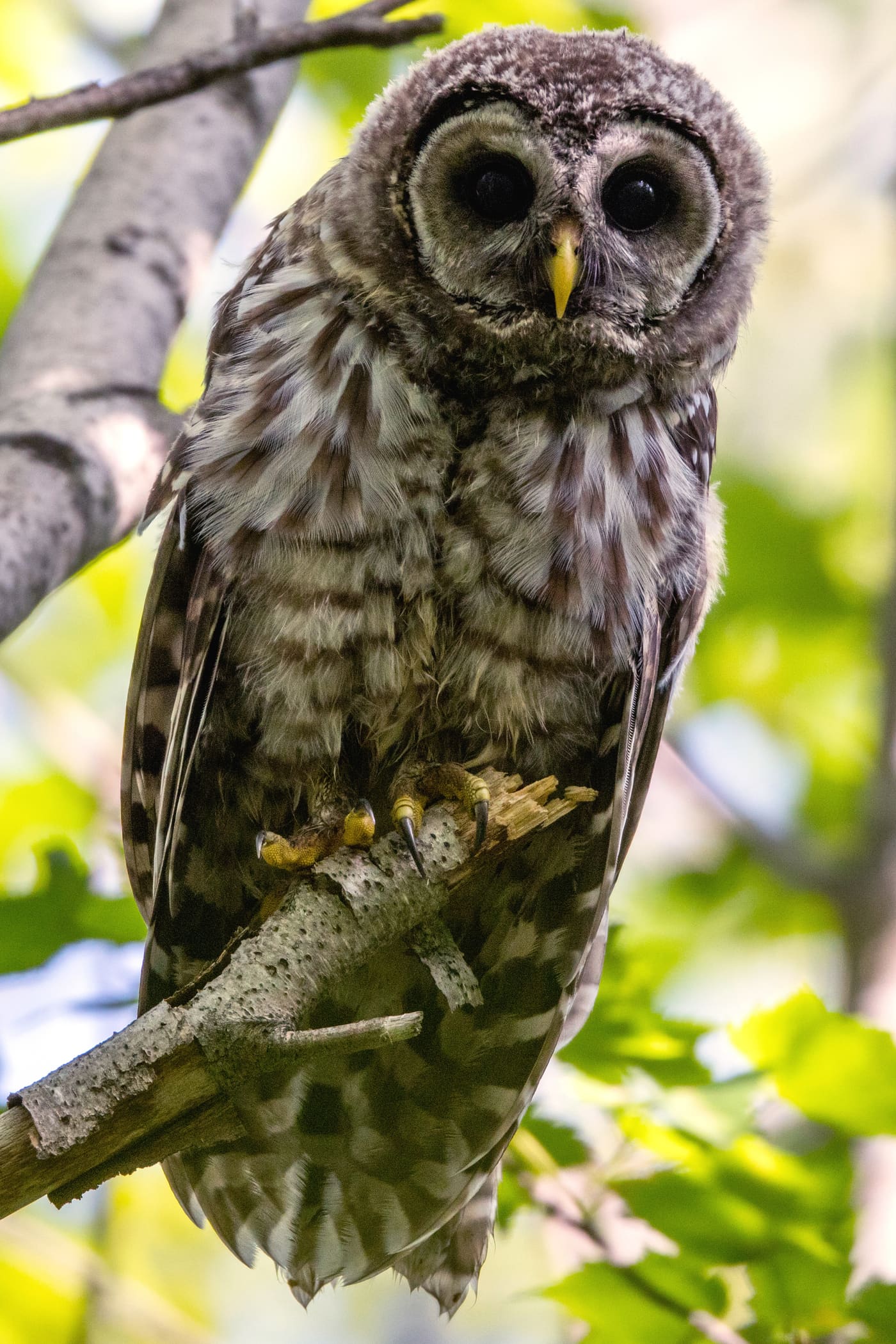
A barred owl. Researcher Joe Nickell has proposed that eyeshine from birds like this, not a supernatural entity, explains the “glowing red eyes” reported near Point Pleasant. Source. National Park Service / Will Greene, Public Domain.
None of these theories can be tested directly against the original 1966 encounter now, and no single explanation accounts for every detail every witness reported. What they demonstrate is that a large, unfamiliar nocturnal bird, seen briefly, at night, by people already alarmed, is a documented and unremarkable event that can plausibly produce an extraordinary-sounding account without requiring an unknown creature.
John Keel and the Book That Reshaped the Legend
Journalist John Keel spent time in Point Pleasant during the sighting period and later built on the case extensively in his 1975 book The Mothman Prophecies. Keel’s book connected the Mothman sightings to a wider web of claimed phenomena in the area, including UFO reports, unexplained premonitions, and visits from threatening strangers later folded into the broader “Men in Black” mythology. It’s worth being direct about what that means for the story’s reliability: these elaborated claims come from Keel’s own later synthesis, published nine years after the original sightings, not from the contemporary 1966 newspaper record. The Men in Black material in particular should be read as Keel’s paranormal interpretation layered onto the case afterward, not as something documented at the time by the original witnesses or local police.
The Silver Bridge Collapse
On December 15, 1967, just over a year after the sightings ended, the Silver Bridge connecting Point Pleasant, West Virginia, to Gallipolis, Ohio, collapsed into the Ohio River during evening rush-hour traffic, killing 46 people. It’s a real disaster with a well-documented engineering cause, established through a National Transportation Safety Board investigation: a single suspension-chain eyebar, identified as eyebar 330, failed due to stress corrosion and corrosion fatigue that had developed gradually across the bridge’s roughly 40 years in service. Once that eyebar fractured, the chain gave way, and the resulting structural failure brought the bridge down.
When Mothman and the Bridge Got Connected
There is no contemporary 1966 or 1967 reporting connecting the Mothman sightings to a warning about the bridge. That link entered the popular narrative afterward, primarily through Keel’s 1975 book, which framed the sightings, the area’s other reported strange phenomena, and the bridge collapse as parts of one interconnected event. It’s a compelling narrative structure, and it’s the version most people encounter today through films and retellings — but it inverts the actual timeline. The bridge’s failure has a specific, documented mechanical cause identified by structural engineers, unconnected to anything reported in the woods more than a year earlier. Treating the Mothman sightings as a predictive warning misrepresents both the sightings and the bridge disaster.
Point Pleasant Today
The Mothman legend is now a significant part of Point Pleasant’s identity rather than a source of local dread. A 12-foot stainless steel Mothman statue was unveiled in the town in 2003, and the Mothman Museum and Research Center, covering both the 1966 sightings and the Silver Bridge disaster, opened in 2006. The annual Mothman Festival, held each September since 2002, now draws an estimated 10,000 to 12,000 visitors a year — a striking transformation for a story that began with four frightened people reporting something to the sheriff.
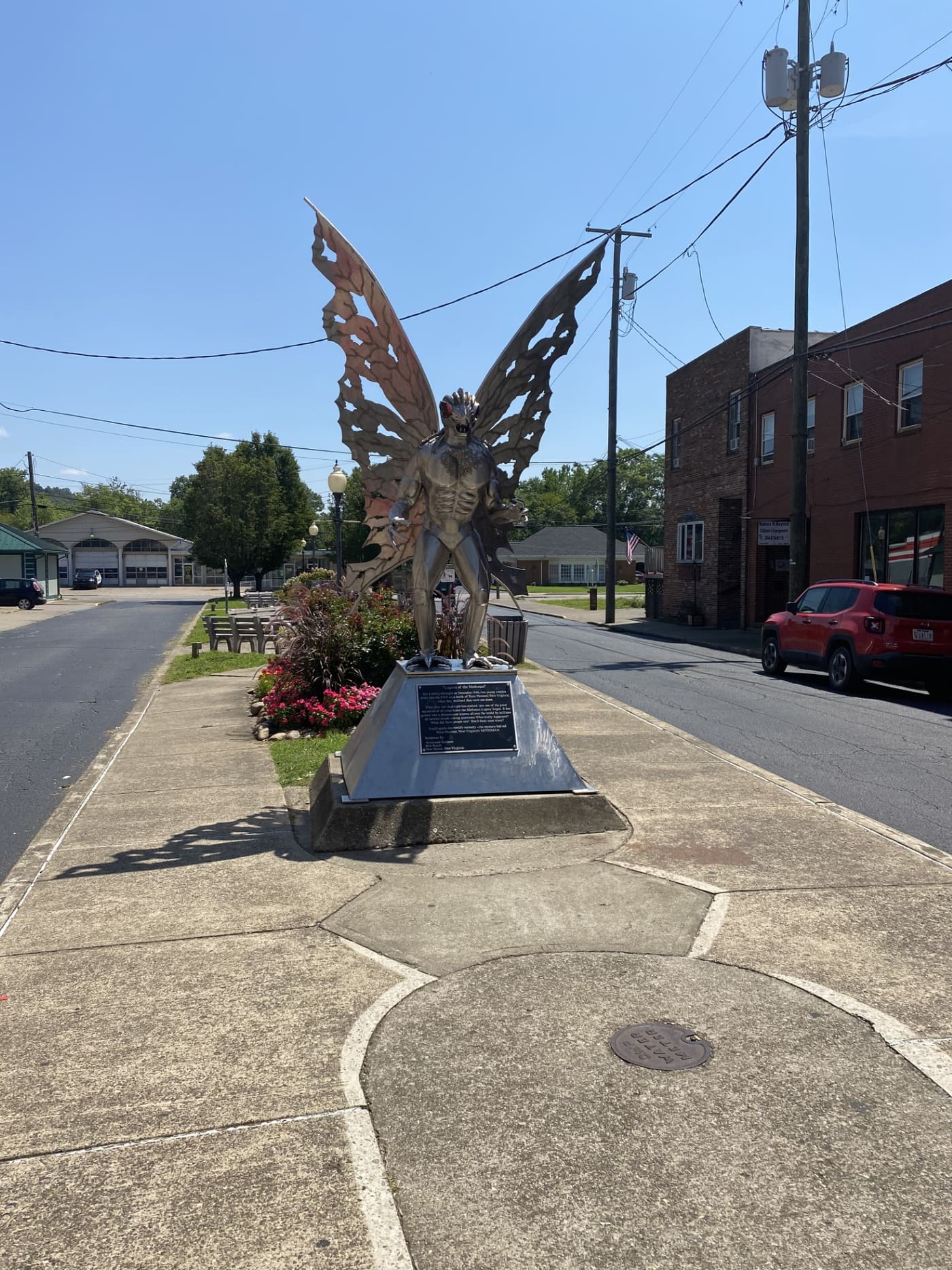
The Mothman statue in downtown Point Pleasant, unveiled in 2003. Source. Public domain (CC0).
What’s Documented, What Isn’t
Documented: the November 15, 1966, sighting and the Scarberry and Mallette families’ report to police; the Point Pleasant Register’s coverage beginning the next day; several credible natural-history explanations proposed by named researchers; and the Silver Bridge’s specific, engineering-verified structural failure in December 1967. Not documented from the original period: the Men in Black encounters, the broader paranormal web Keel constructed around the sightings, and any claim that the creature predicted or caused the bridge collapse. Those elements entered the story afterward and should be read as later paranormal interpretation, not established fact from 1966.
Mothman sits alongside other West Virginia-adjacent cryptid cases on this site, including the Flatwoods Monster, another 1950s regional sighting later given a grounded natural explanation, and it shares the same basic pattern of misidentified wildlife driving a cryptid legend that shows up in coverage of Bigfoot and the Jersey Devil.
Frequently Asked Questions
What is Mothman? A winged, red-eyed creature reported by multiple witnesses near Point Pleasant, West Virginia, starting in November 1966. No physical evidence has ever confirmed its existence; researchers have proposed several large-bird misidentifications as natural explanations.
When were the first Mothman sightings? The first widely reported and documented sighting was on November 15, 1966, by two couples, Roger and Linda Scarberry and Steve and Mary Mallette, near a former munitions site outside town.
Did Mothman cause the Silver Bridge collapse? No. The bridge’s collapse in December 1967 was caused by the failure of a single corroded suspension-chain eyebar, a mechanical cause confirmed by federal investigators. The idea that Mothman predicted or caused the disaster originated later, primarily through a 1975 book, not from any contemporary 1966-67 source.
Could Mothman have been an owl or crane? Several researchers have proposed this. A sandhill crane, a barred owl (with its eyeshine explaining the “glowing eyes”), a great blue heron, and a snowy owl shot locally around the same time have all been suggested as plausible misidentifications.
Is Point Pleasant’s Mothman story based on real witnesses? Yes. The original November 1966 report came from four named, real people who went directly to the county sheriff and were covered by the local newspaper within a day.
What did John Keel add to the legend? Keel’s 1975 book The Mothman Prophecies connected the sightings to UFO reports, premonitions, and Men in Black encounters, and linked the whole narrative to the Silver Bridge collapse. Those elaborations came from Keel’s later synthesis, not from the original 1966 witness accounts or contemporary reporting.

.jpg)

