Lore & Explained / Folklore
The Highgate Vampire Explained: How a London Cemetery Became a Modern Legend
In 1970, rival self-proclaimed vampire hunters, a televised exorcism claim, and a mob at the cemetery gates turned ghost sightings at Highgate into Britain's best-known modern vampire legend.
Topics: Highgate Vampire, Urban Legend, London, Folklore, Vampires
JohnArmagh, Wikimedia Commons (Public Domain)
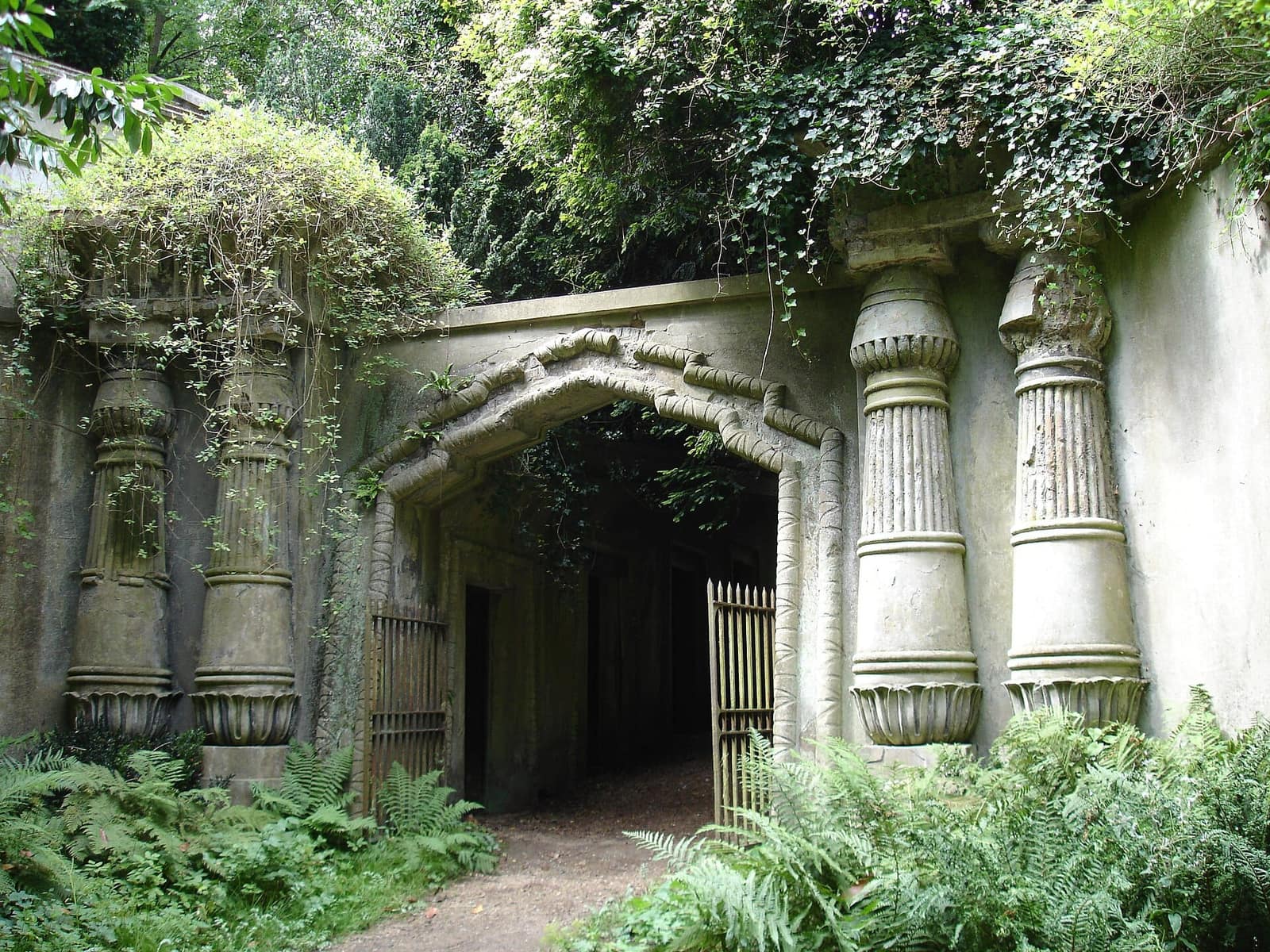
Highgate Cemetery in North London is a real Victorian cemetery, and in the winter of 1969 into 1970, people genuinely reported seeing something unusual there: a tall grey figure, glimpsed near the graves. What turned that into one of Britain’s most famous modern vampire legends wasn’t the sightings themselves. It was two rival self-proclaimed vampire hunters, a televised interview, and a mob that stormed the cemetery gates the same night it aired.
The First Sightings
The reports that started it all trace to a letter David Farrant sent to the local newspaper, the Hampstead and Highgate Express, published February 6, 1970. In it, Farrant described a “grey figure” he said he’d seen near the cemetery on Christmas Eve 1969. The letter prompted other locals to write in with their own accounts, and the descriptions multiplied and diversified quickly — a tall man in a hat, a woman dressed in white, even a phantom cyclist. This is a genuinely well-documented pattern in stories like this: an initial ambiguous sighting, published and publicized, tends to generate a wave of copycat and unrelated reports that get folded into the same narrative regardless of how well they actually match.
Enter the Vampire
Sean Manchester was the person who reframed the reported grey figure specifically as a vampire, rather than a generic ghost. His version of events, developed and elaborated over the following months, held that the figure was the reanimated corpse of an eighteenth-century nobleman, originally from Wallachia — the historical region associated with Vlad the Impaler and, through him, Bram Stoker’s Dracula — who had supposedly been brought to London and buried at Highgate before somehow being revived through modern occult practice. Manchester announced he intended to conduct a formal exorcism of the vampire.
The Night Everything Escalated
On Friday, March 13, 1970, British television network ITV broadcast interviews with both Manchester and Farrant, each describing the vampire threat and their competing plans to deal with it. The broadcast had an immediate, well-documented real-world effect: within hours, a large crowd — described in contemporary press accounts as a mob — climbed the walls and gates of the locked cemetery, despite police attempts to control the crowd, hoping to witness or participate in the hunt themselves. It’s a striking, concrete example of media coverage directly generating the exact kind of public spectacle it was reporting on.
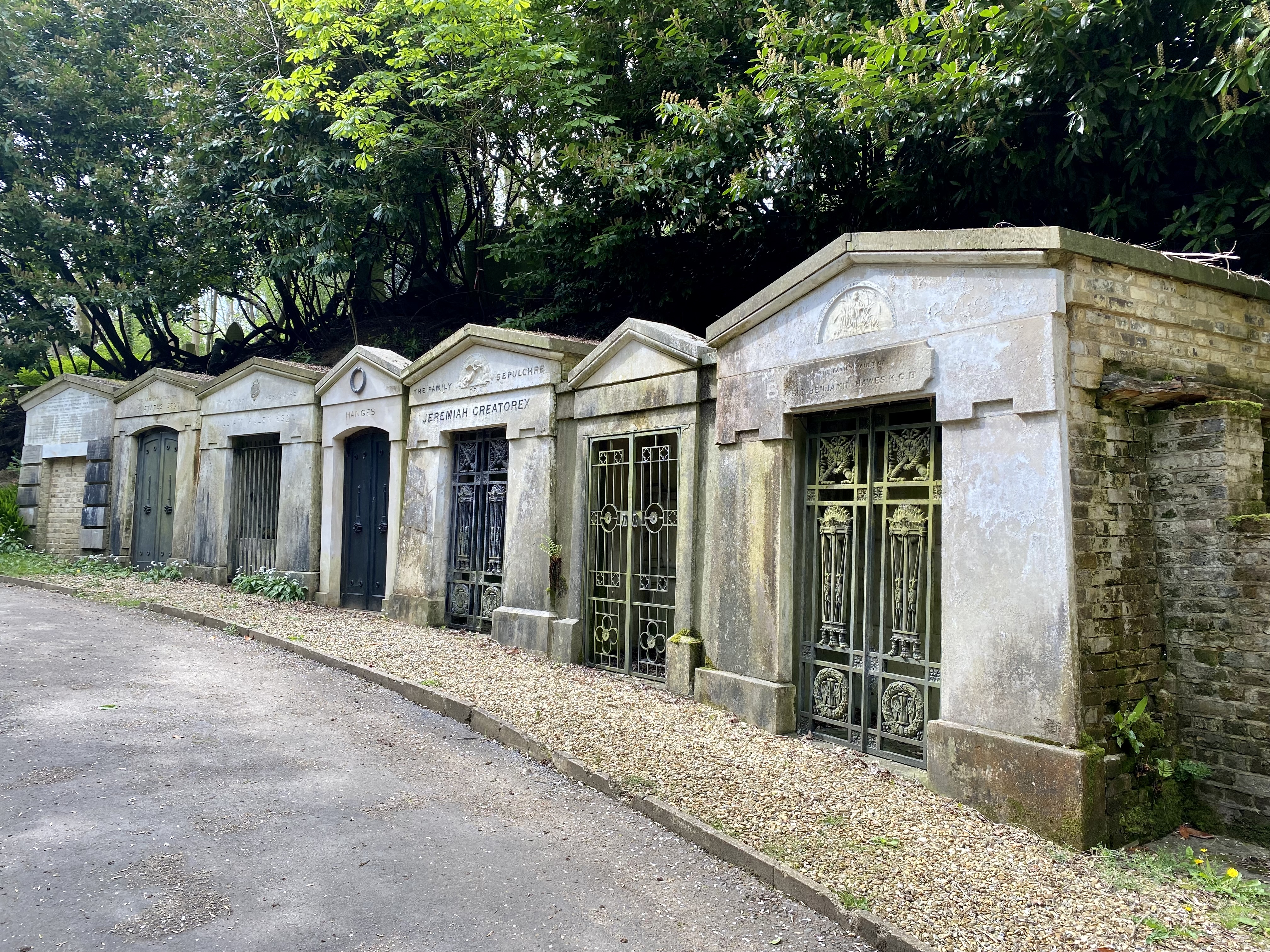
Catacombs at Highgate Cemetery, the kind of space at the center of the 1970 vandalism and later criminal conviction. No Swan So Fine, Wikimedia Commons (CC BY-SA 4.0).
Vandalism and a Criminal Conviction
The consequences went beyond a chaotic night. On August 1, 1970, charred and headless human remains were discovered near the cemetery’s catacombs, prompting police concern about black-magic-related activity in the area. Farrant was arrested that August, found carrying a crucifix and a wooden stake inside the cemetery, though the charges against him at that time were ultimately dismissed. The vandalism didn’t stop, and years later, in July 1974, Farrant was convicted and sentenced to four years and eight months in prison for offenses including damaging memorials and interfering with human remains at Highgate — vandalism he maintained at the time was the work of Satanist groups rather than his own doing.
Manchester, for his part, claimed that sometime after the August 1970 discovery, he and several companions broke into a family vault at the cemetery. His own account describes opening a coffin but ultimately being talked out of driving a stake through the body inside, leaving garlic and incense in the vault instead. This claim, like most of the specific supernatural details in the case, comes only from Manchester’s own retelling — there’s no independent documentation confirming what, if anything, happened inside that vault.
A Feud That Never Really Ended
Farrant and Manchester spent decades publicly contradicting and criticizing each other’s version of events, each positioning himself as the legitimate vampire hunter and the other as a fraud or a fantasist. Rumors circulated in the early 1970s that the two would settle their dispute directly in a “magicians’ duel” on nearby Parliament Hill on Friday, April 13, 1973; the event never actually took place. Their public rivalry continued for the rest of Farrant’s life — he died in April 2019 — and neither man’s account of the underlying events was ever independently verified.
How Folklorists Read the Case
The most thorough academic treatment of the Highgate Vampire comes from folklorist Bill Ellis, who examined the case in a 1993 article in the journal Folklore. Ellis approached it not as a question of whether a vampire was real, but as a case study in how a contemporary legend forms and spreads: an ambiguous initial sighting, amplified by media coverage, elaborated by figures with a personal or reputational stake in the story, and ultimately validated for participants by real, physical consequences — in this case, actual cemetery vandalism and an actual criminal conviction — that then get folded back into the legend as further “evidence.” That’s a meaningfully different frame than either “it was a real vampire” or “it was all a hoax,” and it’s the frame most serious historical treatments of the case now use.
What’s Documented, What Isn’t
Documented: the 1969–1970 sightings and the newspaper coverage that followed them, the March 1970 television broadcast and the crowd response it triggered, the August 1970 discovery of desecrated remains, Farrant’s 1974 conviction for cemetery vandalism, and the public rivalry between Farrant and Manchester that lasted for decades. Not documented, and resting entirely on the two men’s own accounts: the existence of an actual vampire, the specific Wallachian-nobleman backstory Manchester provided, and Manchester’s account of opening a coffin in the family vault. The cemetery itself, now managed by the Friends of Highgate Cemetery since 1975, generally avoids engaging with the vampire legend on its official tours, treating it as a separate matter from the site’s genuine architectural and historical significance.
Highgate’s transformation from a real cemetery into a modern vampire legend follows a pattern that shows up elsewhere in folklore coverage on this site — the way an ambiguous claim, once it gets media amplification and a self-interested narrator, calcifies into something treated as established fact. It’s the same dynamic behind the Bloody Mary mirror ritual and the Slender Man case, both stories that spread and solidified through repetition far faster than any actual evidence did. Dracula’s own real-world inspiration, Vlad the Impaler, is worth reading alongside this case too — Manchester’s Wallachian-nobleman backstory borrows directly from that same well-known association.
Frequently Asked Questions
Is the Highgate Vampire real? There’s no independent evidence of a supernatural entity. What’s documented is a real sequence of sightings, media coverage, cemetery vandalism, and a criminal conviction, all driven by two competing self-proclaimed vampire hunters.
Who were David Farrant and Sean Manchester? Rival figures who each claimed to be the legitimate investigator and hunter of the Highgate Vampire starting in 1970. Their public feud over who was right, and who was a fraud, continued for decades.
Was anyone actually convicted of a crime connected to this case? Yes. David Farrant was convicted in 1974 and sentenced to nearly five years in prison for offenses including damaging memorials and interfering with human remains at Highgate Cemetery.
Did Sean Manchester really open a coffin at Highgate? That’s Manchester’s own claim, made in his retelling of events after August 1970. There’s no independent documentation confirming it.
What does Highgate Cemetery say about the vampire legend today? The Friends of Highgate Cemetery, which has managed and restored the site since 1975, generally doesn’t engage with the vampire story on its official tours, treating the cemetery’s genuine historical and architectural significance as separate from the legend.