Lore & Explained / Folklore
Teke Teke Explained: The Japanese Urban Legend of the Woman Cut in Half
Teke Teke is a modern Japanese school legend about a legless spirit that drags itself on its arms. The railway accident said to have caused it has never been documented -- it's part of the story, not a confirmed event.
Topics: Teke Teke, Kashima Reiko, Japanese Folklore, Urban Legend, Japan
Wikimedia Commons contributor (CC BY 3.0)
Teke Teke is a modern Japanese school legend about a woman with no lower body who drags or races herself along on her arms, named for the sound she’s said to make while moving. The most common version of her origin story involves a specific woman, an assault, and a fatal train accident. None of that specific event has ever been documented as a real historical incident. It’s the legend’s own origin story, not a confirmed news event with a name, date, and place that anyone has actually verified.
What “Teke Teke” Means
The name is onomatopoeia, meant to represent the sound of her hands or arms striking the ground as she moves, sometimes described as impossibly fast — fast enough, in some tellings, to catch a moving car. Regional variants of the legend use different sound-based names for the same basic figure, including shaka shaka, pata pata, and kata kata, each mimicking a slightly different imagined sound of her movement. That kind of naming variation across regions is itself a strong sign of an orally transmitted, actively evolving legend rather than one fixed, original story with a single canonical name.
The Standard Modern Story
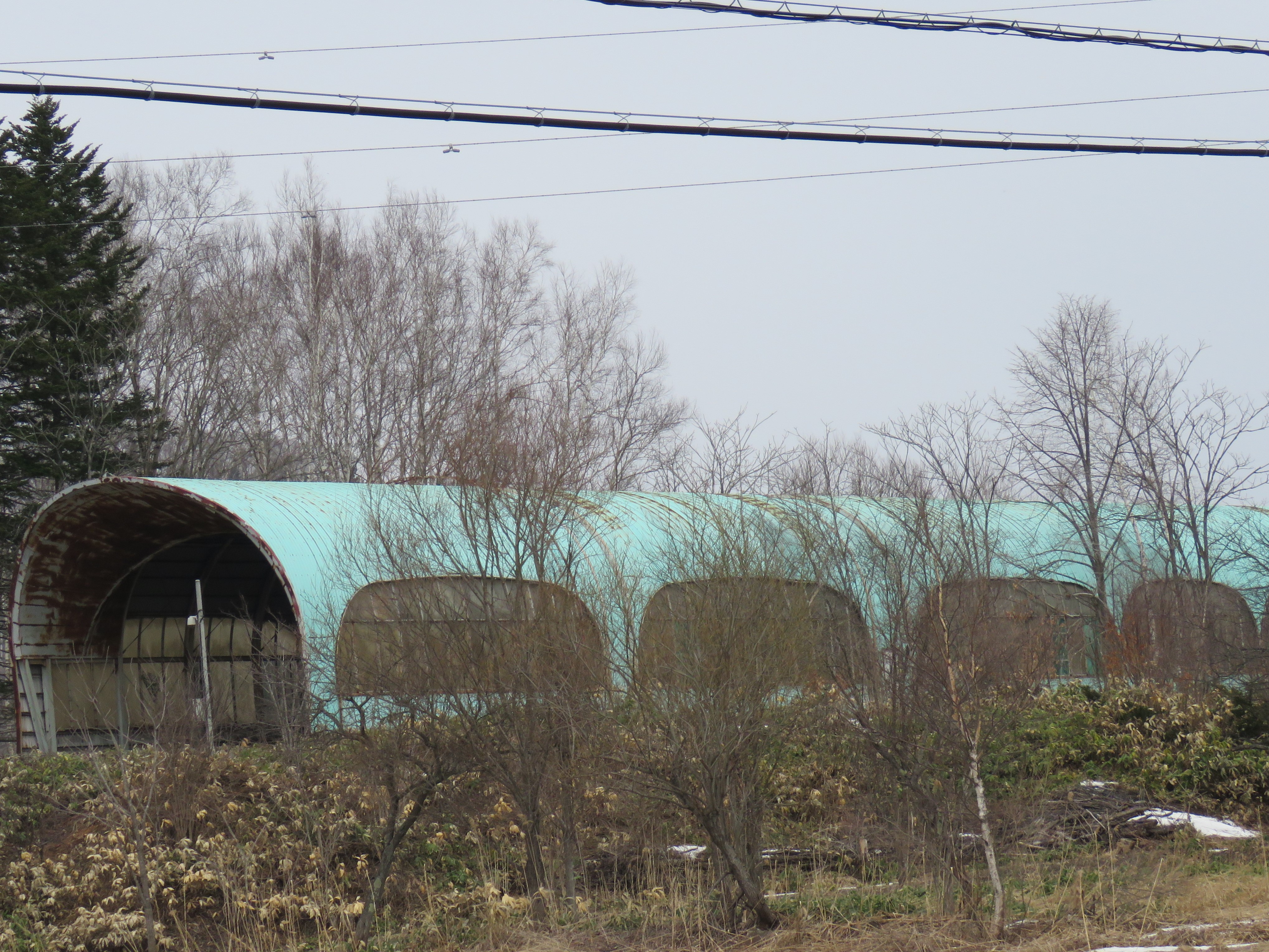
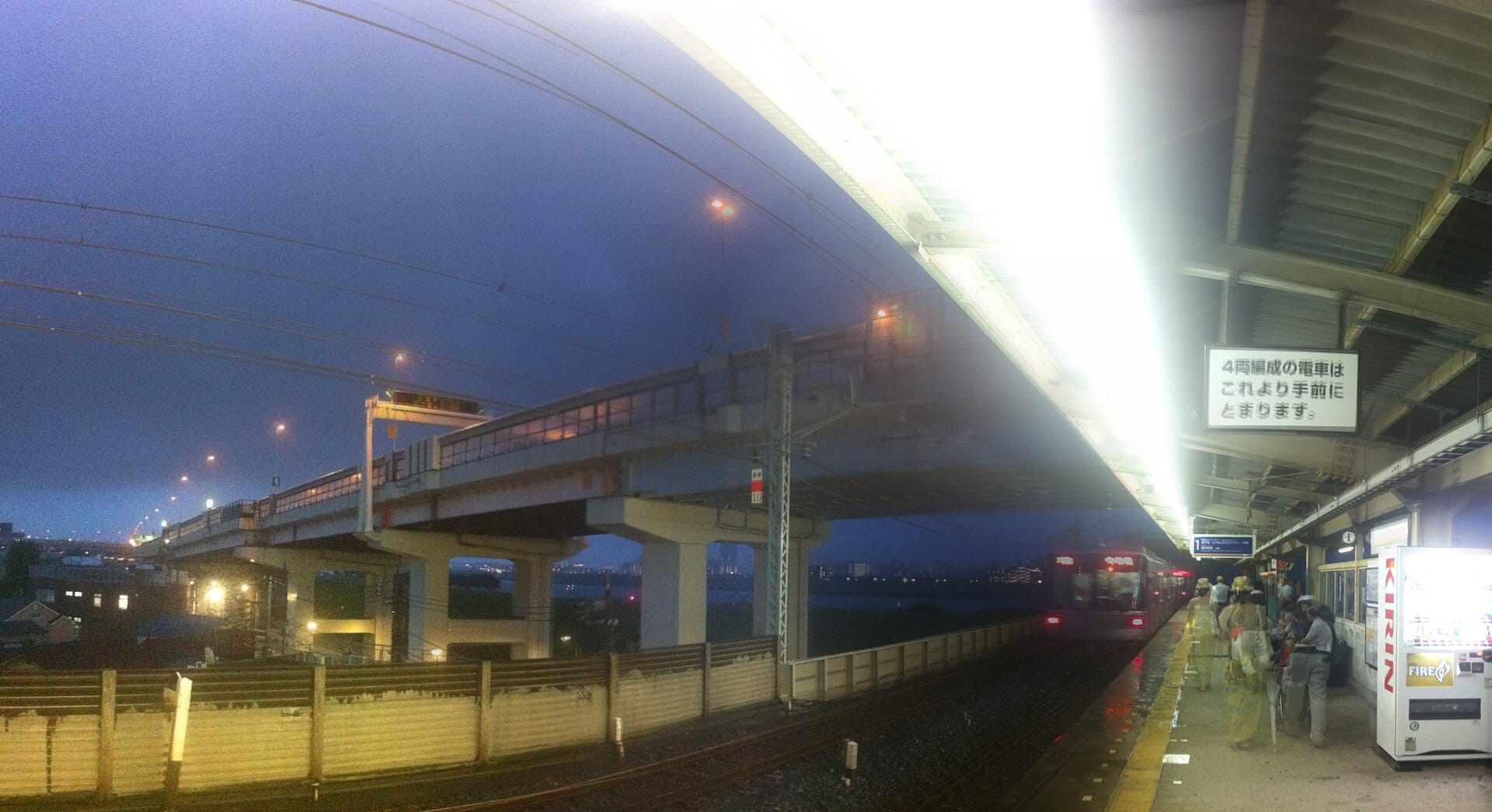
Railway infrastructure in Hokkaido, the region where the Kashima Reiko / Teke Teke origin story is traditionally set. Wikimedia Commons (CC BY-SA 4.0).
In the most commonly repeated version, a woman — most often named Kashima Reiko, described as an office worker in Hokkaido — is assaulted, in many versions specifically by American servicemen in the years following World War II. Fleeing or in despair afterward, she’s said to have jumped from a bridge onto railway tracks below, where an oncoming train severed her body at the waist. She’s said to now appear near train tracks, in bathrooms, or in schools, dragging her upper body along the ground and asking those she encounters unsettling questions, often centered on legs or body parts, with an implied threat if the wrong answer is given.
Kashima Reiko and Teke Teke Are Closely Tied, Not Cleanly Separate
Readers researching this legend online will run into both names, sometimes treated as identical and sometimes described slightly differently, and it’s worth being honest that the sourcing here doesn’t cleanly resolve which came first. Several specialist sources treat Kashima Reiko as effectively the predecessor figure whose railway-accident backstory was later absorbed directly into the broader Teke Teke legend, noting that one commonly told Kashima Reiko origin story is close to word-for-word identical to a standard Teke Teke origin. Other retellings treat the two names as fully interchangeable labels for the same figure from the start. What’s clear is that both names circulate for a legend built around the same core elements — a legless woman, a railway death, unsettling questions, and a serious risk implied for answering wrong — and that the boundary between “these are the same legend” and “these are two legends that merged” isn’t something existing popular sources settle with real precision.
No Documented Accident Behind the Story
This is the detail worth being most direct about. Despite the specificity of the legend’s backstory — a named woman, a specific region, a specific cause of death — no independently documented historical accident or crime has ever been confirmed as its source. Some retellings point to a 1935 Tokyo-area train accident involving a woman losing her legs as a possible real-world seed for the story, but this connection itself rests on retelling rather than confirmed contemporary reporting, and should be read as a claimed possible inspiration, not a verified historical event. Treating the legend’s specific backstory as documented fact, rather than as the legend’s own internal narrative, is a common and easy mistake to make given how concretely it’s usually told.
Regional Variants and Added Rules
Like most actively circulating school legends, Teke Teke has splintered into numerous regional and personal variants rather than existing as one fixed text. Some versions equip her with a sickle or scythe as a weapon; others describe her searching specifically for a set of legs to replace her own, sometimes turning victims into new Teke Teke figures themselves rather than simply killing them. English-language internet retellings have added specific, quiz-like survival rules not consistently present in earlier Japanese versions — commonly, a version in which answering “Do you need your legs?” with something like “I need them” is required to survive an encounter, alongside additional riddles involving the specific meaning of the kanji characters in Kashima Reiko’s name. These fixed, game-like rules are a recognizable feature of how English-language internet horror communities tend to formalize looser, more variable oral folklore into something that reads more like a structured challenge with clear win and lose conditions.
Not a Traditional Yokai
It’s worth separating Teke Teke clearly from older Japanese yokai tradition, a broad and genuinely ancient category of spirits, monsters, and supernatural beings with a documented history stretching back centuries. Teke Teke functions much more like what folklorists elsewhere call a contemporary legend: a story spread through modern social channels — originally schoolyard word of mouth, later international internet forums and video content — reflecting modern anxieties (train accidents, assault, urban danger) rather than continuing an older mythological tradition. This is the same distinction worth making for Kuchisake-onna, the slit-mouthed woman legend datable to a specific 1978-1979 panic rather than ancient folklore, despite a similar tendency for retellings to describe her as a timeless yokai.
Later Media
Teke Teke has appeared in Japanese horror films, most notably a 2009 film adaptation, along with various manga, video, and game treatments in the years since, cementing her place alongside other well-known modern Japanese horror figures. As with most film adaptations of active urban legends, these works are downstream popular culture built on the existing rumor, not documentation of it, and shouldn’t be treated as adding historical weight to the underlying story.
What’s Documented, What Isn’t
Documented: the legend’s active circulation among Japanese schoolchildren, its wide regional variation, and its uptake into English-language internet horror content with added, more rigid rules. Not documented: any specific historical assault, named victim, or railway death matching the story’s backstory. The legend is genuinely widespread and genuinely reflects real anxieties about trains, isolation, and assault, but its origin story is folklore, not a verified incident.
Teke Teke belongs alongside other modern legends built on unverifiable specific backstories covered on this site, including Bloody Mary, whose mirror-summoning ritual has similarly accumulated a range of competing, unconfirmed origin stories, and Slender Man, a legend whose actual documented origin is unusually precise specifically because it began online rather than through generations of oral retelling.
Frequently Asked Questions
Who is Teke Teke? A modern Japanese urban legend figure: a spirit with no lower body who moves on her hands or arms, said to appear especially near railways, schools, and bathrooms.
What does “teke teke” mean? It’s onomatopoeia representing the sound of her arms or hands hitting the ground as she moves.
Is Teke Teke based on a real person? No specific historical person or documented accident has ever been confirmed as the source. The legend’s backstory, including a named victim and a specific railway death, is part of the story itself, not verified history.
Is Kashima Reiko the same legend? The two names and stories are closely related and often treated as identical, though sourcing on whether they were originally two separate legends that merged, or the same legend under two names from early on, isn’t fully clear.
Is Teke Teke a yokai? No. She’s a modern contemporary legend, not part of the older, centuries-old yokai tradition, despite sometimes being described that way in casual retellings.
When did the legend begin? The story’s setting is often placed in the years following World War II, but the legend itself, as documented in school-rumor and later internet culture, appears to be a more modern development without a single confirmed starting date.
What happens in the story? Versions vary, but the core pattern involves encountering the legless spirit, often near a railway or in a bathroom, being asked an unsettling question, and facing an implied threat depending on how it’s answered.