The Index
Who Was Buried in the Colchester Vase?
A Roman urn from Colchester held the ashes of a man aged 40 or older. Isotope analysis suggests he may have grown up in what is now Italy or Spain.
Topics: Roman Britain, Ancient Burials, Colchester, Archaeology, Gladiators
Carole Raddato / Wikimedia Commons, CC BY-SA 2.0. Resized and converted to WebP.
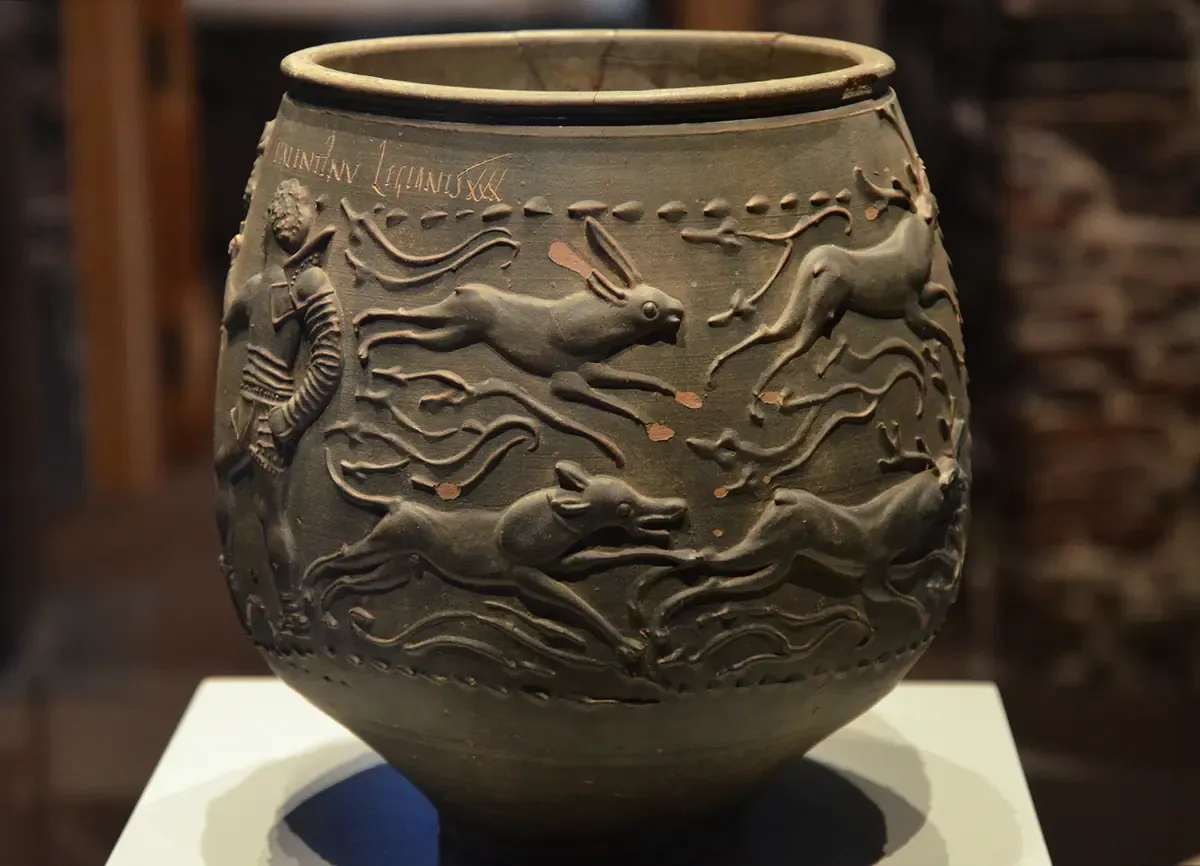
The Colchester Vase held the cremated remains of a man aged 40 or older. A 2026 study of his bones found chemical signatures consistent with parts of what are now Italy or Spain. The gladiators named on the pot are figures in its arena scenes, and the man’s identity remains unknown.
Where was the Colchester Vase found?
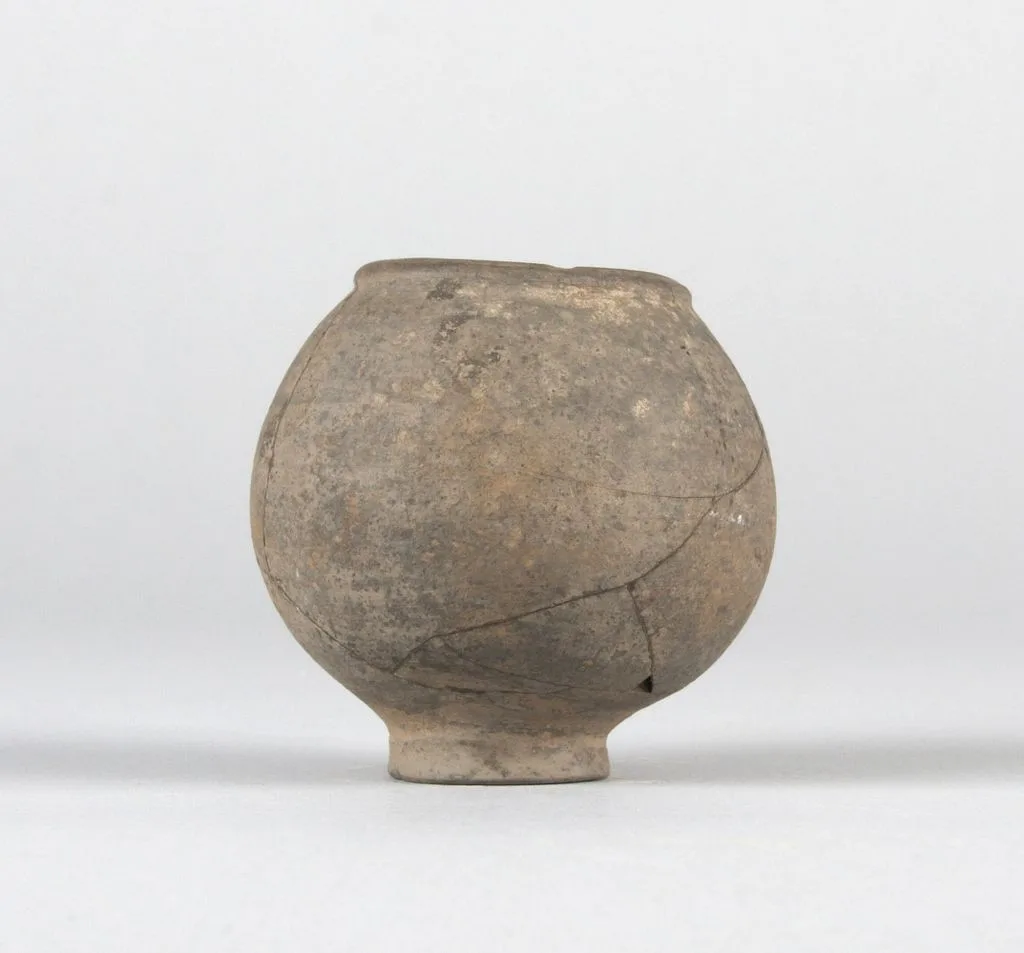
The vase came from a burial group of four vessels uncovered in 1853 in Colchester’s western cemetery. A study in Britannia dates its manufacture to around AD 160–200 and identifies it as the work of a local pottery industry. By the time the group went into the ground, the decorated vessel held the man’s cremated remains.
The distinction between a vessel and its contents matters. Archaeologists working on Wendover’s Roman Infant Burial: What the Jar and Two Dates Reveal likewise had to weigh evidence from a pot and a burial separately. A date or place established for a clay vessel cannot simply be applied to the person buried inside it.
What did the isotope study find?
The researchers examined cremated bone from 22 burials in Roman Colchester, then known as Camulodunum. They sampled the dense portion of the skull around the inner ear. Its inner layer preserves an early-childhood signal, while the outer bone can incorporate signals from later in life.
Strontium reflects the local geology through food and water. Two regions can share similar geological signatures, so a strontium match can leave several possibilities open. Lead provided a second line of evidence. Among the six individuals whose strontium ratios fell outside the expected local range, the man in the vase was the only one for whom both lines of evidence pointed toward Italy or Spain.
The result narrows the possible origins without identifying a hometown or a route to Britain. Evidence poses a similar problem in Westminster’s Roman Sarcophagus: Who Was Buried Inside?, where burial context offers clues about the occupant while leaving the person’s name unknown.
Was the man in the vase a gladiator?
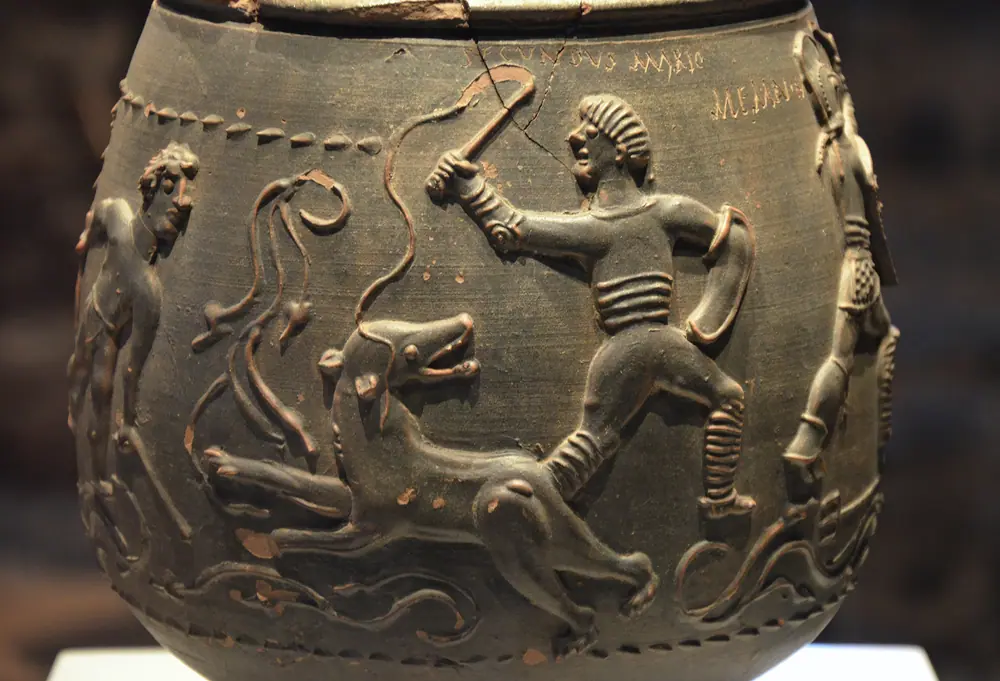
The pottery depicts several arena scenes. Two of the names incised below the rim, Memnon and Valentinus, belong to figures shown fighting. The Britannia team found that the lettering was cut before firing, which ties it to the original decoration. The names give context to what the pot shows and provide no identification for the man buried inside it.
Durham’s researchers put forward possibilities such as a trainer or a patron of the games. The bones and the vessel do not establish either role. An object in a grave can tell us something about the world its owner lived in, just as the objects in What Duurlig Nars Tomb 160 Reveals About the Xiongnu carry evidence of a wider network beyond the burial site. At Colchester, the local pottery and the man’s possible Mediterranean origins establish two distinct histories that met in one grave.
Sources
- Moore et al., Royal Society Open Science: Isotope analysis of the Colchester cremations
- Durham University: November 2026 research announcement
- Davis et al., Britannia: Gladiators at Roman Colchester and the vase
Frequently asked questions
Where was the Colchester Vase found?
The vase came from a burial group of four vessels uncovered in 1853 in Colchester’s western cemetery. A study in Britannia dates its manufacture to around AD 160–200 and identifies it as the work of a local pottery industry. By the time the group went into the ground, the decorated vessel held the man’s cremated remains.
What did the isotope study find?
The researchers examined cremated bone from 22 burials in Roman Colchester, then known as Camulodunum. They sampled the dense portion of the skull around the inner ear. Its inner layer preserves an early-childhood signal, while the outer bone can incorporate signals from later in life.