The Index
What Duurlig Nars Tomb 160 Reveals About the Xiongnu
An elite Xiongnu tomb in Mongolia held 413 finds, including a possibly Roman glass cup. Here’s what the objects reveal and what remains unknown.
Topics: Xiongnu, Mongolia, Archaeology, Ancient Burials
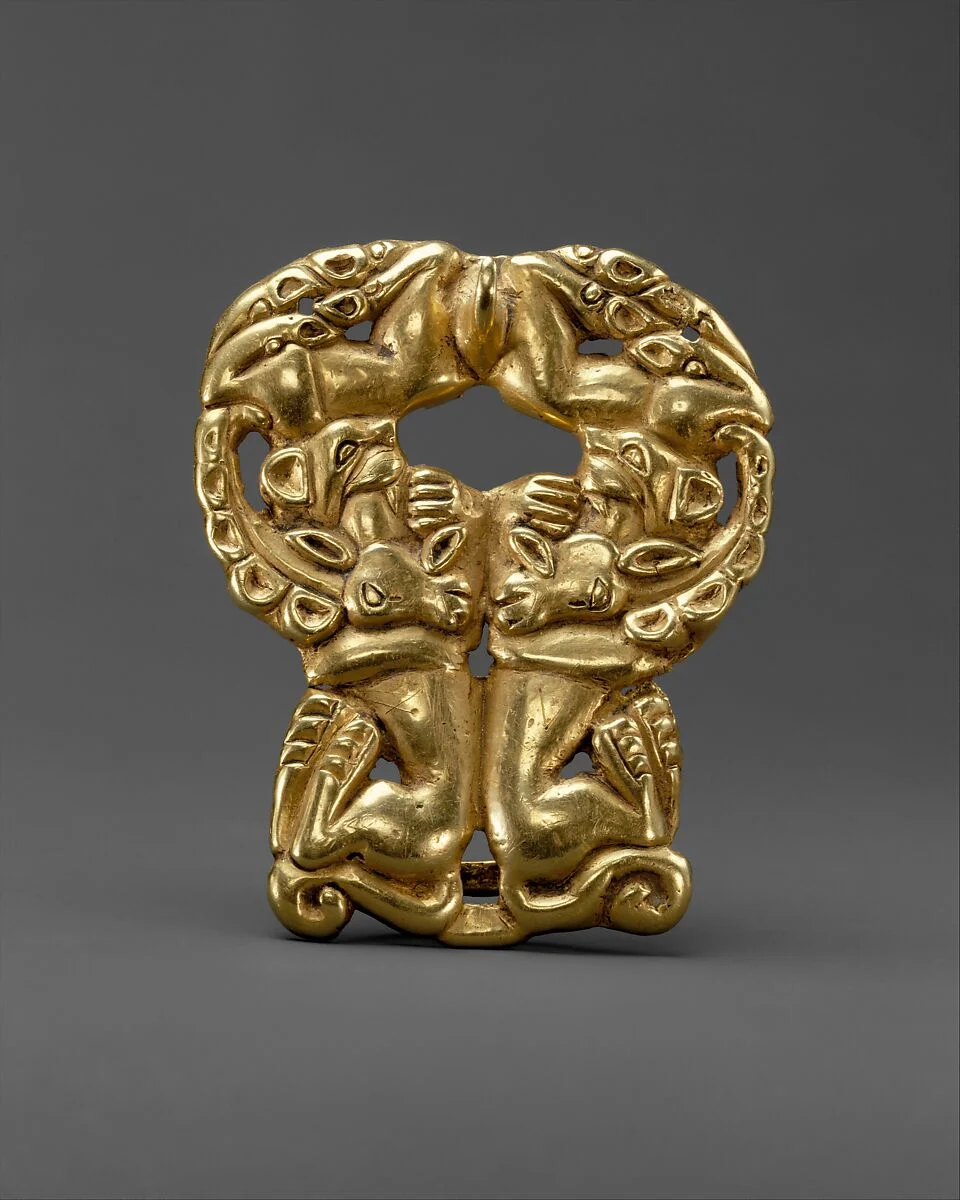
A clear glass cup with a handle was among 413 finds recovered from Tomb 160 at Duurlig Nars, an Xiongnu cemetery in Mongolia. The excavation team thinks the vessel may have been made in the Roman Empire. It has yet to confirm where the glass was made, and the person buried with it has yet to be identified. Jade and silver fittings offer two other ways to trace the connections behind this burial. See also documented dark history.
The National Museum of Korea announced the results on November 6, 2026, after four seasons of fieldwork that began in 2023. Its partners were the Mongolian Academy of Sciences’ Institute of Archaeology and the National Museum of Mongolia. The excavators place the burial in the late first or second century CE.
What the three groups of objects tell us
The glass cup raises a question about manufacture. The museum considers a maker in Roman territory plausible and plans to analyze the glass’s composition. A result may help narrow down a production region. Establishing where a vessel was made would still leave its journey to Mongolia unresolved.
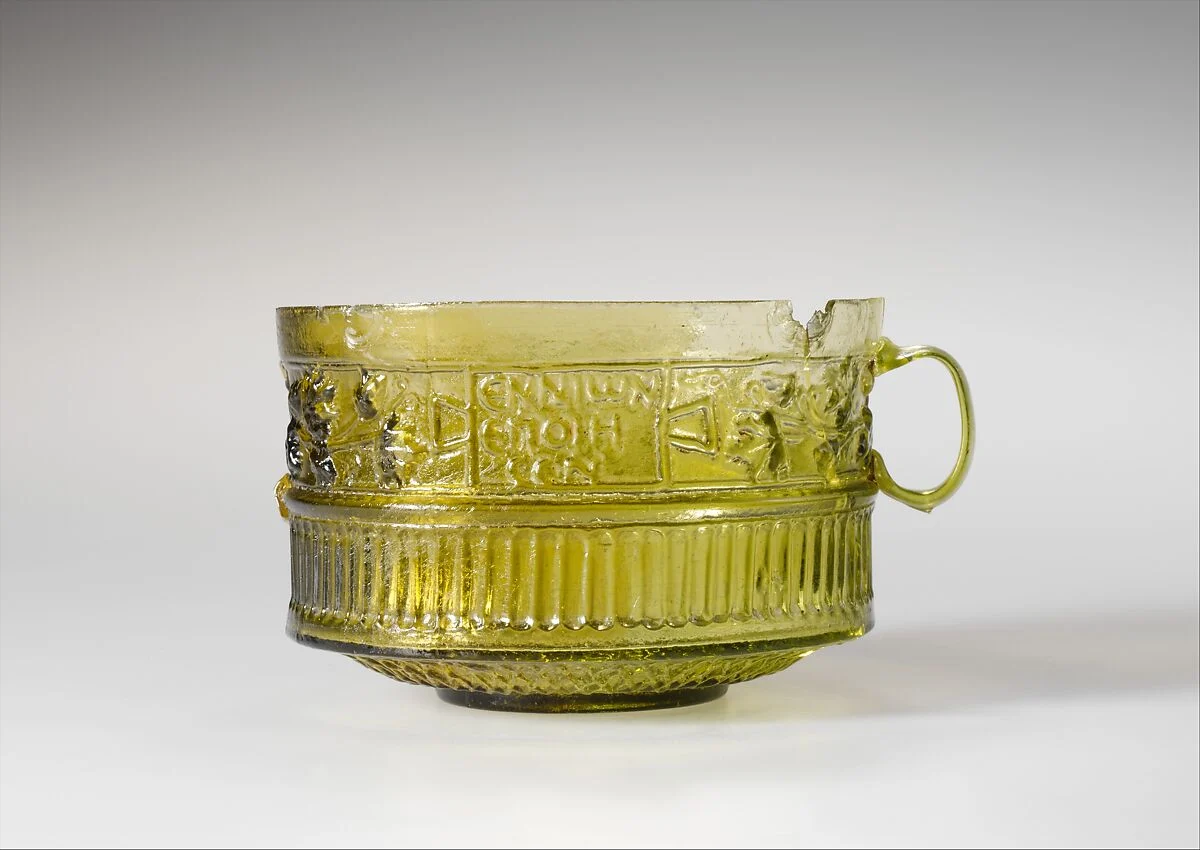
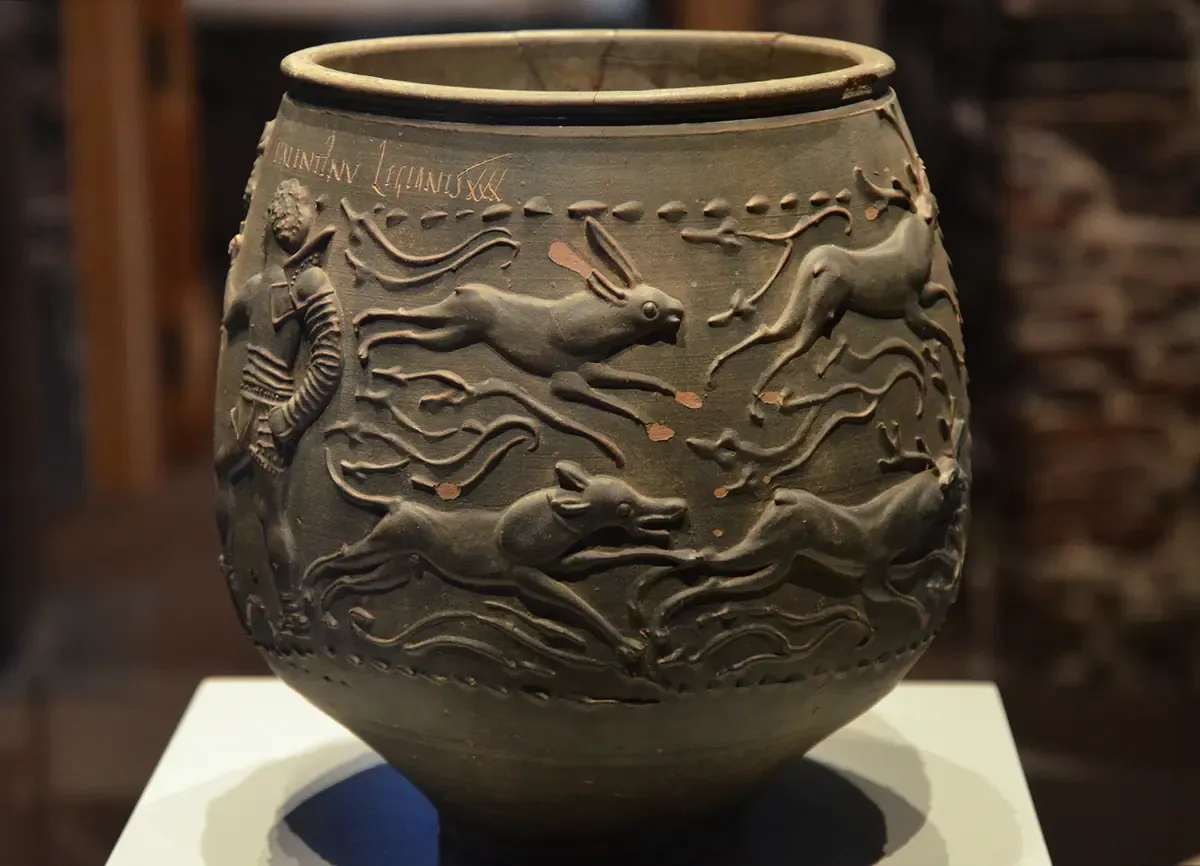
This cup is a comparison piece from The Met, made in the first half of the first century CE. The museum’s photograph is Open Access (CC0), Gift of J. Pierpont Morgan, 1917 (17.194.225).
Fifteen overlapping pieces of jade lay on the coffin floor. The excavators compare them with Han funerary jade discs, known as bi. The irregular outlines and engraved designs in Tomb 160 show how differently a familiar form could be used. A design can travel and change even when the object itself was made closer to the place where it was buried.
A silver horse-harness pendant gives the team a third clue, through comparison with other finds. Its gourd-like outline resembles pieces from Nangnang burials near present-day Pyongyang, including one from Seogam-ri Tomb 219. The example at Duurlig Nars has a quartz insert that sets it apart. The parallel connects the designs across regions. Where the pendant was made and how it changed hands are separate questions.
A huge grave with a small burial chamber
With its entrance passage, the tomb runs about 73 metres. The excavators removed nine successive deposits of stone and reached the bottom about 14.5 metres down. A lacquered carriage lay above the central burial, and a coffin was enclosed by two wooden chambers. See also Dorset’s Bride Stone and the Evidence for a Stone Age Tomb.
The scale and the carriage support the museum’s interpretation that the occupant belonged to the Xiongnu elite. The relatively small burial chamber is harder to explain. The museum suggests it may reflect changes late in the Xiongnu period, partly because smaller nearby graves investigated in 2019 share features with it. The excavators recovered teeth and hair and hope DNA analysis will help test whether the main burial and the satellite graves contain relatives.
How Tomb 160 fits into the wider cemetery
UNESCO inscribed the Xiongnu cemetery complexes in 2026. Duurlig Nars is one part of the wider property, which brings together burial complexes across Mongolia. UNESCO’s site description places horse equipment and vehicles within a wider tradition of elite burial. Tomb 160 gives researchers a specific set of finds they can compare with that broader record.
The excavation announcement links the objects to different traditions with different levels of confidence. The jade has a recognizable design precedent, the silver pendant has a parallel from a named tomb, and the possible Roman cup awaits testing. For another case where an artifact’s style and the identity of a person in a grave are separate questions, see our guide to the Griffin Warrior tomb and its sealstone.