The Index
Westminster's Roman Sarcophagus: Who Was Buried Inside?
A Roman coffin at Westminster Abbey held a medieval man. Why archaeologist Warwick Rodwell favors Abbot Ælfwig, what the dating proves, and what remains uncertain.
Topics: Westminster Abbey, Roman Britain, Anglo-Saxon England, Archaeology, Burial Identification
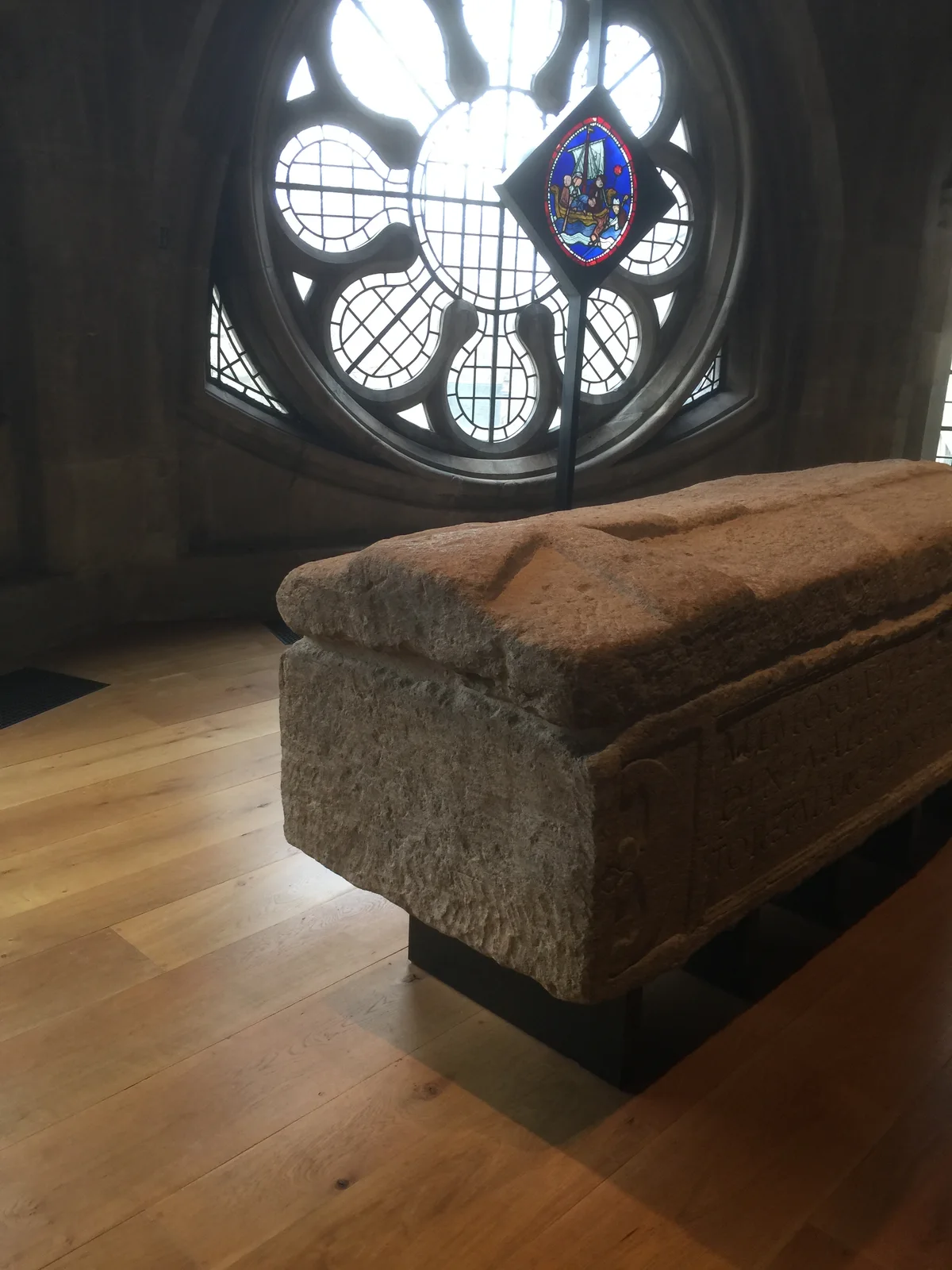
The man in Westminster Abbey’s Roman sarcophagus was medieval, and his name remains uncertain. Archaeologist Warwick Rodwell favors Abbot Ælfwig, who died around 1020, but identifies another viable candidate: his successor, Wulfnoth, who died in 1049. The Roman name carved on the coffin belongs to its earlier history.
The distinction matters as the case returns to attention in CNN’s November 2 reporting. This is a proposed identification from a recently published study, rather than a newly excavated skeleton or a confirmed match to a named individual.
Why does a medieval burial have a Roman name?
The coffin’s inscription commemorates Valerius Amandinus. The Roman Inscriptions of Britain catalogue records a dedication made for him by his sons, Valerius Superventor and Valerius Marcellus.
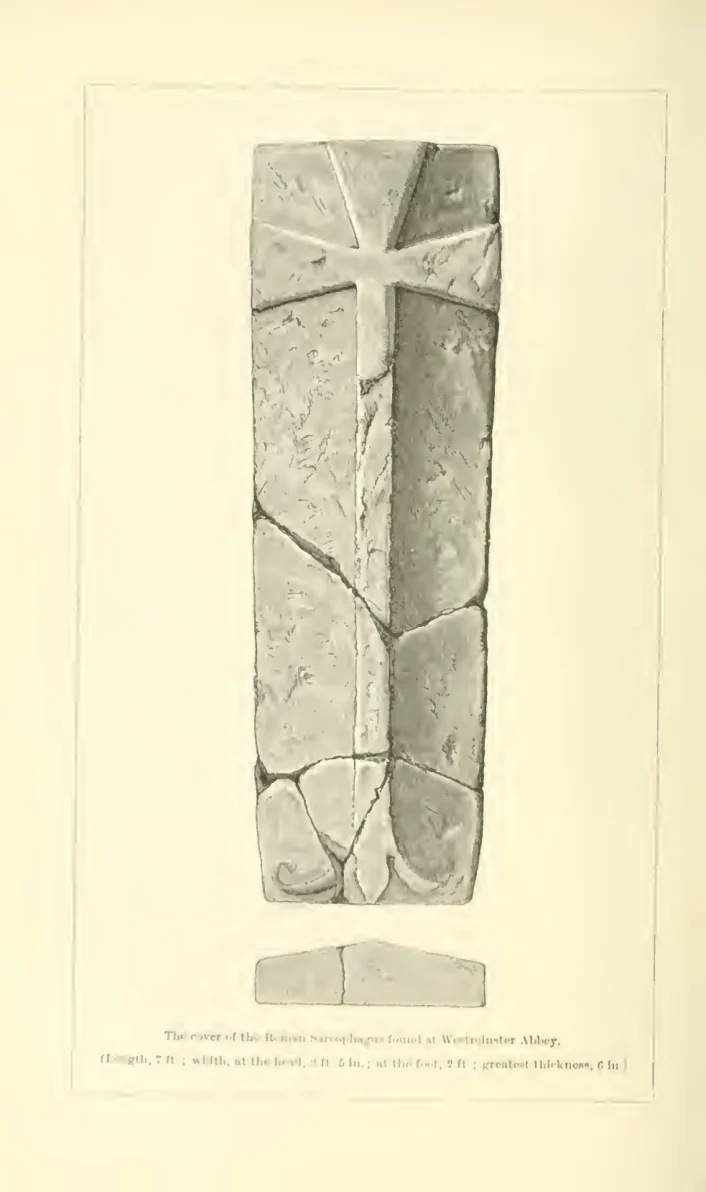
The stone container and the surviving burial belong to different periods. Westminster Abbey’s account dates the Roman association to around AD 300–400, while the large cross carved on the lid is Anglo-Saxon, from the 10th or 11th century. Someone reused the older coffin for a later interment.
What does the skeleton establish?
The Abbey reports that bone specialist James Young Langthorne of Pre-Construct Archaeology assessed the man as 35–49 years old, approximately 1.75 metres tall. Radiocarbon dating placed him in AD 987–1052, confirming a late Saxon burial rather than a Roman one.
Rodwell’s October 20 study gives that calibrated range at 95.4% probability. A date range can exclude the Roman period; it cannot, by itself, select a personal name.
Cleaning also exposed a sharply bounded deposit of lime on the stone coffin’s floor. Rodwell interprets this as the outline of a decayed wooden coffin placed inside the sarcophagus, with lime accompanying the body. The interpretation concerns burial practice, not evidence of a particular cause of death.
Why is Abbot Ælfwig the leading candidate?
The fine coffin and prominent cross suggest an important ecclesiastical burial. The Abbey explains that Ælfwig was already a Westminster monk before becoming abbot. That connection favors him in Rodwell’s assessment.
Wulfnoth nevertheless fits the broad chronology too. The birth dates of both men are unknown, and the age comparison depends on assumptions about how old each was when appointed. There is no surviving name-bearing object reported with the skeleton that settles the choice.
How did the coffin become a mystery?
The sarcophagus was encountered in 1820, before its better-known excavation on the Abbey’s North Green in 1869. Earlier interference broke the lid and disturbed the bones, complicating later interpretations.
The skeleton was studied during conservation in 2016. Rodwell’s 2026 paper brings that analysis together with the historical record. The proposed sequence includes medieval reuse, followed by relocation during Henry III’s rebuilding of the Abbey; those reconstructed movements should be distinguished from the laboratory date.
The coffin is displayed in the Queen’s Diamond Jubilee Galleries, according to the Abbey. Its Roman inscription and medieval cross make the reuse visible even while the occupant’s identity remains unresolved.
For a separate Westminster-associated identification dispute, our Princes in the Tower evidence guide examines the difference between a commemorated name and identified remains. More archaeological reporting is collected in the dark history archive.
Sources & further reading
- Warwick Rodwell — Westminster Abbey's Roman Sarcophagus and its Afterlife, published October 20, 2026
- Westminster Abbey — archaeological findings and two possible abbots, October 21, 2026
- Roman Inscriptions of Britain — RIB 16, the dedication to Valerius Amandinus
- CNN, via KESQ — renewed reporting on the skeleton's proposed identity, November 2, 2026