The Index
What Sutton Hoo’s Garden Field Sand Body Reveals
A shape in Suffolk’s acidic sand marks an Anglo-Saxon burial. See what Time Team found at Sutton Hoo and why a possible second burial remains uncertain.
Topics: Sutton Hoo, Anglo-Saxons, Archaeology, Ancient Burials, England
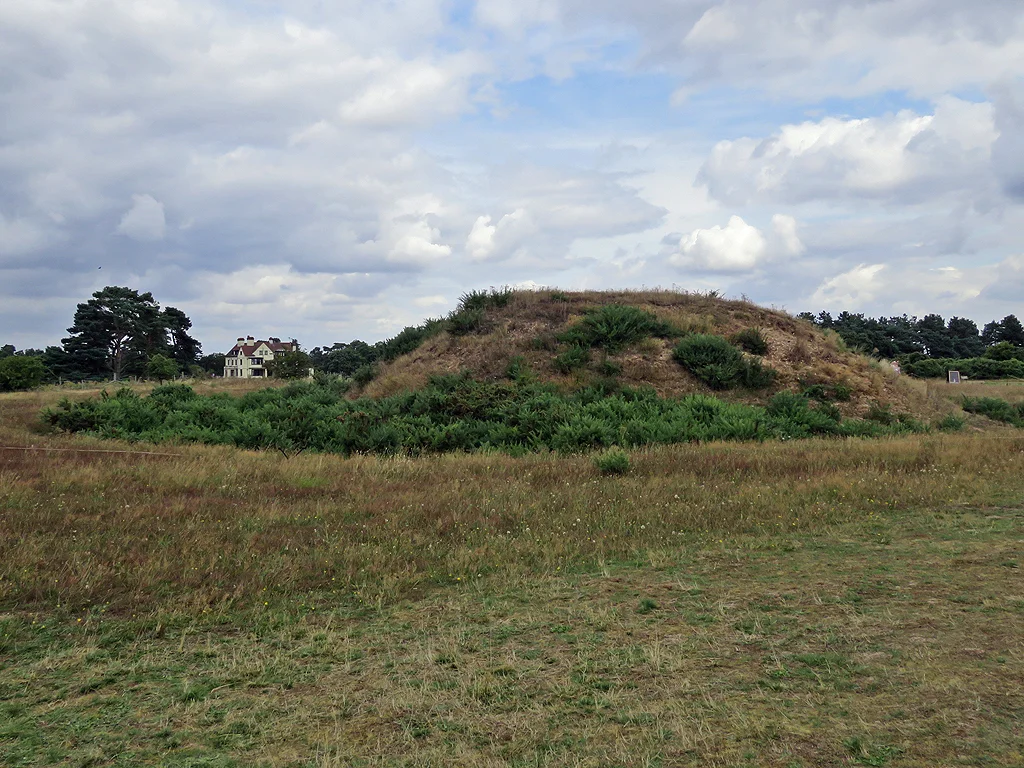
An Anglo-Saxon grave at Sutton Hoo in Suffolk held beads, tweezers, a knife, a brooch and a shape in the sand where a body had decomposed. Archaeologists call the shape a sand body. Time Team found it in the last week of its 2025 excavation in Garden Field. The National Trust revealed the find in November 2026 and said the team had also found signs of a possible second burial beneath it. See also documented dark history.
The grave belongs to a cemetery the team began investigating in 2024. Much of Sutton Hoo’s fame comes from its royal burial mounds, especially the ship burial in Mound 1. Garden Field gives archaeologists a chance to ask who else was buried in this landscape and how the cemetery relates to the mounds.
How a body leaves a shape in sand
Sutton Hoo’s acidic soil can break down bone as well as soft tissue. As a body decomposes, the surrounding sand can change colour and texture. Sometimes the altered sand preserves enough of the person’s outline for excavators to trace it. That’s the feature archaeologists describe as a sand body.
Excavators documented comparable traces at the site in the 1980s. Martin Carver’s report on the earlier excavations records differences in the colour and texture of the sand in and around burials. Those records help explain how a grave can be recognised once its skeleton has largely disappeared. The outline in Garden Field is evidence of a burial. The National Trust’s announcement gives no identification or cause of death.
What the objects and the layer below can tell us
The beads, tweezers, knife and brooch give specialists material to compare with objects from other Anglo-Saxon graves. In a cemetery whose age and extent are still under investigation, those comparisons can help narrow down when a grave was used. The November announcement lists the objects but gives no firm date for the individual burial.
The team also saw evidence below the burial that may point to another person. A lower feature by itself leaves the timing open. The excavators are considering whether two people could have been buried together or the grave could have been used at different times. Resolving that question depends on how the deposits relate to one another and which evidence can be securely associated with each burial. No relationship between the possible occupants has been established. See also Isle of Man Viking Finds and the Possible Double Burial.
Where the Garden Field grave fits at Sutton Hoo
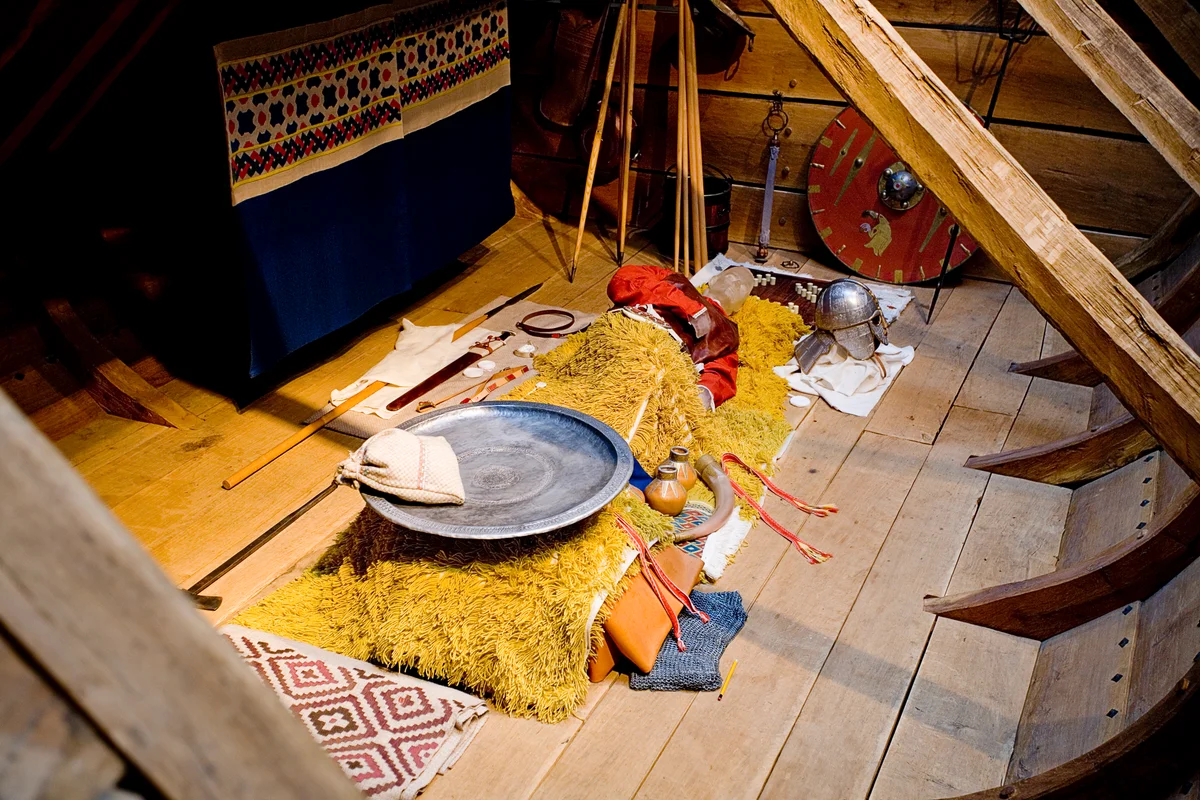
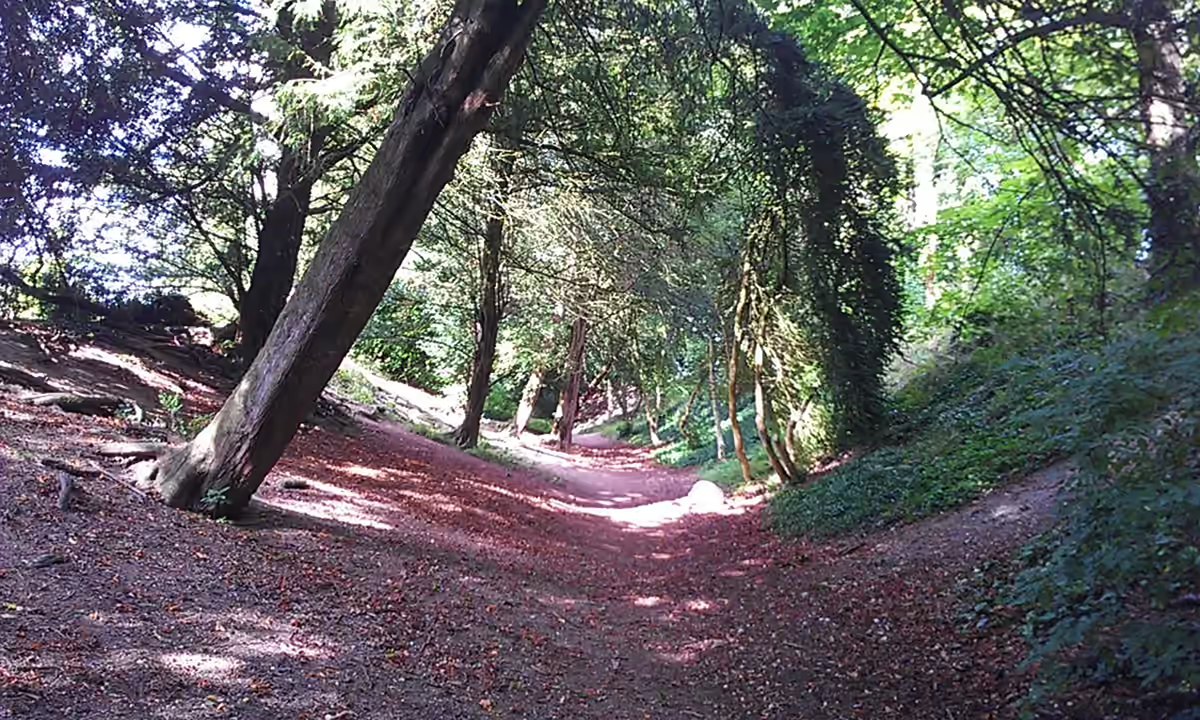
Reconstruction of the Mound 1 burial chamber at the Sutton Hoo Exhibition Hall. The replica objects illustrate the royal ship burial. Photo by Gernot Keller, resized and converted to WebP under CC BY-SA 2.5. The lead photograph shows Mound 2 under CC BY-SA 2.0.
The ship excavated in Mound 1 in 1939 belongs to a different part of the site. The royal mounds drew much of the early attention at Sutton Hoo, and the Garden Field excavation is helping fill in the history of the surrounding cemetery. In another recent excavation, at Grønhaug in Norway, archaeologists also had to work out how a burial related to an earlier feature beneath it. The evidence there came from a different place and period, but the underlying question is familiar: when did each layer form?
The sand outline establishes that a body once lay in the Garden Field grave. The objects and the evidence underneath still leave two open questions for the team: when the grave was used and how many people were buried there.