The Index / Dark History
Elizabeth Báthory: The True Story Behind the Blood Countess Legend
Elizabeth Báthory was investigated for servant deaths and confined without trial in 1611. The 'blood bathing' story didn't appear in print until over a century later.
Topics: Elizabeth Báthory, Blood Countess, Dark History, Hungary, 17th Century
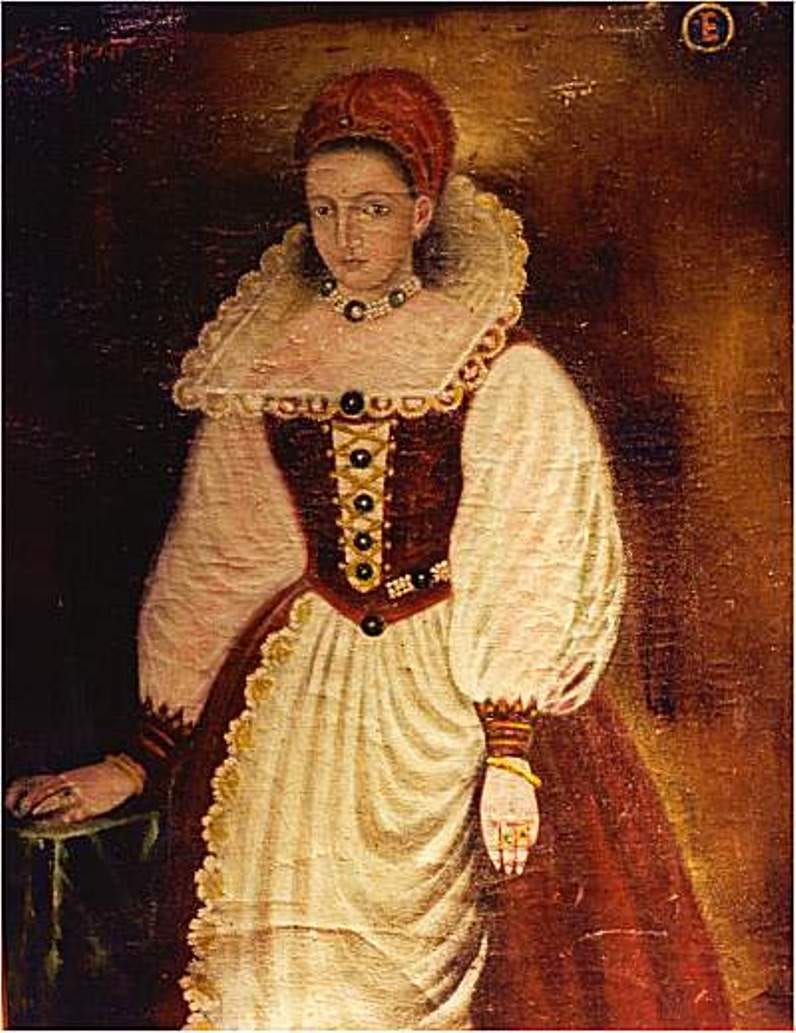
Public Domain, via Wikimedia Commons
Elizabeth Báthory was never formally, publicly tried. In late 1610, four of her servants were tried and executed for the deaths of women on her estates, and Báthory herself was confined to her castle for the remaining roughly three and a half years of her life without a comparable public proceeding. The claim most people know her for — that she bathed in the blood of murdered virgins to preserve her youth — doesn’t appear anywhere in the surviving trial testimony. It shows up in print for the first time more than a hundred years after she died.
A Powerful Hungarian Family
Elizabeth Báthory was born in 1560 into one of Hungary’s most powerful noble families; her uncle, Stephen Báthory, later became King of Poland. In 1575 she married Count Ferenc Nádasdy in an arrangement that consolidated substantial landholdings across Hungary and Transylvania, including Csejte Castle, given to her as a wedding gift. While Nádasdy spent much of his life on military campaigns against the Ottoman Empire, Báthory managed the couple’s estates directly, overseeing defense, village administration, and medical care for people living on her lands — a genuinely significant amount of independent authority for a noblewoman of the period. After Nádasdy died in 1604, she controlled several fortified properties outright, a position of independent power that reportedly concerned the Habsburg royal court.
The Investigation
The formal investigation into Báthory began after complaints from a Lutheran minister, István Magyari, made between 1602 and 1604. King Matthias II eventually assigned György Thurzó, the Palatine of Hungary, to look into the accusations. Thurzó directed two notaries to collect witness testimony starting in March 1610, and by the following year they had gathered more than 300 statements.
The political backdrop matters here, and historians treat it as genuinely complicated rather than a simple conspiracy. King Matthias owed Báthory a substantial debt that would be cancelled if she were formally convicted and her property confiscated, giving the crown a direct financial incentive to pursue the case. Thurzó separately had his own political ambitions that put him at odds with the Báthory family. At the same time, the investigation was launched by a Protestant minister against a Calvinist noblewoman, which complicates any theory that frames this purely as religious or dynastic persecution. Both self-interest on the investigators’ part and a genuine body of witness testimony can be true simultaneously, and separating them cleanly, four centuries later, isn’t fully possible.
What the Witnesses Actually Said
The testimony gathered falls into a few distinct categories worth keeping separate. Four servants — Dorottya Szentés, Ilona Jó, Katarína Benická, and János Újváry — were tortured before confessing and implicating Báthory directly; confessions extracted under torture carry an obvious and well-documented reliability problem. Separately, several individuals gave testimony without apparent coercion, including household officials and attendants, describing specific mistreatment of servants and young women in Báthory’s household. Other testimony was hearsay: people reporting what they’d heard secondhand, or describing visible injuries on victims without having witnessed how they occurred. At least one historian, Irma Szádeczky-Kardoss, has argued that some witnesses may have misrepresented ordinary sick or injured patients under Báthory’s care — a documented responsibility of a landowner in this period — as torture victims. Other scholars point out that multiple independent, seemingly uncoerced witnesses described broadly consistent patterns of abuse, which is harder to dismiss as pure misinterpretation. The honest summary is that the evidentiary record is genuinely mixed: some of it is compromised by torture and hearsay, and some of it is more credible, and a full accounting of what actually happened doesn’t cleanly resolve either way from what survives.
The Servants’ Trial
The four accused servants were tried on January 2 and January 7, 1611. Ilona Jó and Dorottya Szentés were executed by burning after having their fingers torn out beforehand. János Újváry, treated as less culpable due to his younger age, was beheaded before his body was burned. Katarína Benická received a life sentence, with evidence suggesting she had herself been abused by the others rather than acting as a primary perpetrator. A fifth figure, Erzsi Majorova, initially evaded capture before later being tried and executed by burning as well. All four of the primary accused reportedly confessed to acting on Báthory’s direct orders.
Why Báthory Was Never Publicly Tried
Rather than subjecting Báthory to a public trial that could have ended in execution, Thurzó negotiated directly with her surviving family — her son Paul and her sons-in-law — to avoid what one family member’s letter described as “eternal shame” to the Báthory name. Surviving correspondence suggests this arrangement was understood by the family as the lesser of two available outcomes. Officials reportedly considered sending her to a convent before ultimately settling on confinement at Csejte Castle instead, as public accusations against her continued to spread.
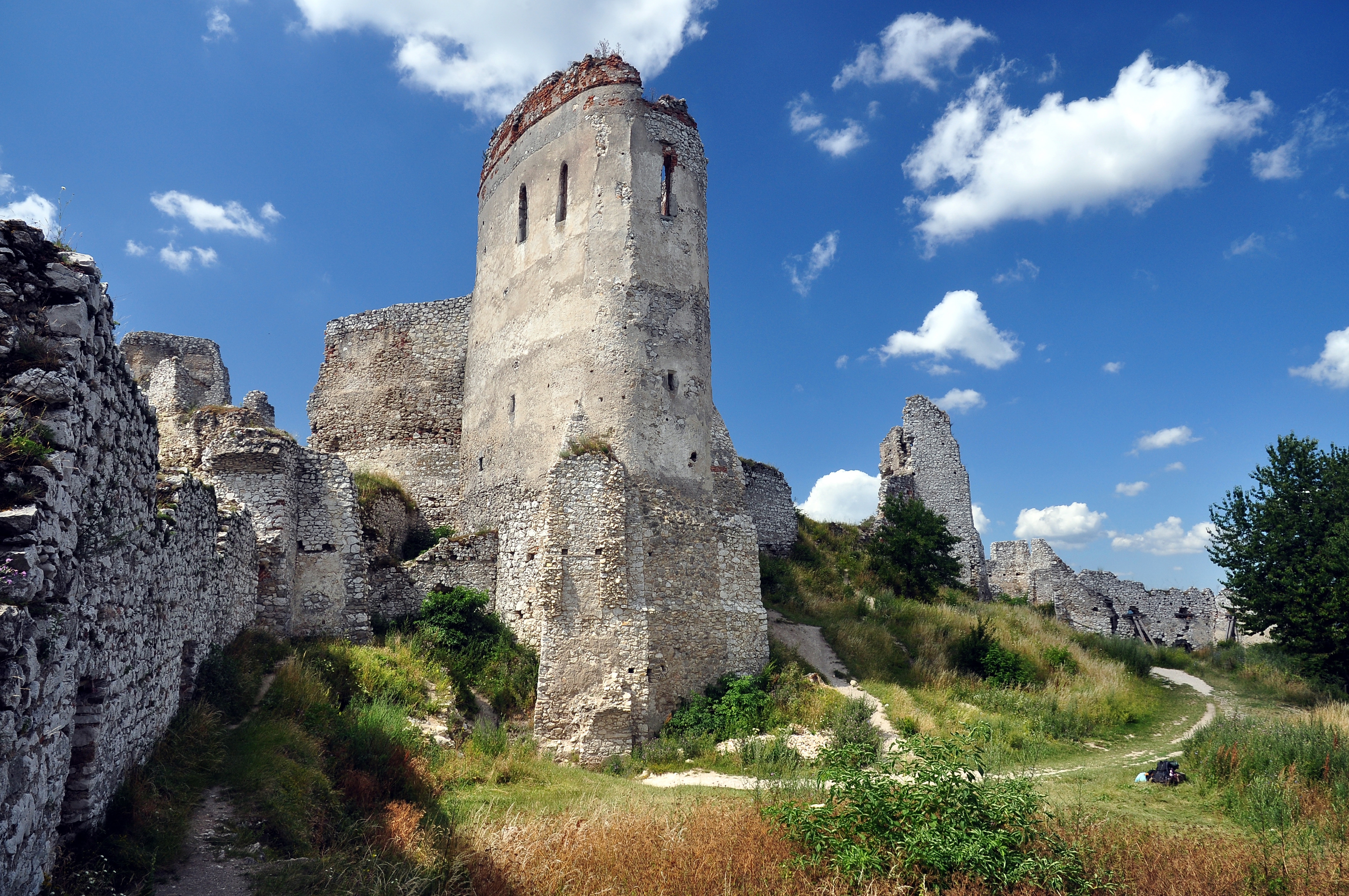
The ruins of Csejte Castle, where Báthory spent the final years of her life confined without a public trial. LMih, Wikimedia Commons (CC BY-SA 3.0).
Confinement and Death
Thurzó’s own account describes Báthory as sealed into a bricked room at Csejte. Later records, including a priest’s account from July 1614, suggest she actually retained some freedom of movement within the castle, closer to a strict house arrest than a literal walled-up imprisonment. She died on August 21, 1614, at 54, reportedly after complaining of cold hands, and was found dead in her sleep. She was initially buried at the church in Csejte in November 1614; objections from local villagers reportedly led to her remains being moved to a family crypt, though her final resting place is not known with certainty today.
Where the “650 Victims” Number Actually Comes From
This is one of the most widely repeated claims about Báthory, and it’s worth tracing directly because the sourcing is thin. The figure traces to testimony from a servant named Susannah, who claimed that a court official, Jakab Szilvássy, had seen the number recorded in one of Báthory’s private books. That book was never produced as evidence, and Szilvássy himself never referenced any such number in his own testimony. More grounded, if still imprecise, estimates come from castle staff: one castellan estimated at least 175 women had died at a single estate, while another put the figure between 200 and nearly 300 at the same location. These numbers apply to one property, not Báthory’s full documented activity, and researchers studying the case generally treat all of the specific victim counts, including 650, as unreliable — a mix of coerced testimony, hearsay, and figures that were never independently verified against any physical record.
The Blood-Bathing Story Isn’t in the Trial Record
This is the detail worth stating most plainly: none of the surviving 1611 trial testimony describes Báthory bathing in blood. The earliest identifiable source for that specific claim is a 1729 text, Tragica Historia, written by László Turóczi — more than a century after Báthory’s death, and well after the direct witnesses and participants were gone. A later, widely cited 1850 account by writer John Paget reads to modern historians more like a fictionalized retelling of local oral tradition than documented history. Most historians who’ve studied the case consider straightforward sadism, not a ritual blood bath aimed at preserving youth, the far more plausible explanation for whatever abuse actually occurred — a less mythic, more mundane explanation for real cruelty.
The Vampire Connection
Báthory’s reputation eventually absorbed epithets like “Blood Countess” and “Countess Dracula,” conflating her documented case with a completely separate vein of vampire folklore. Some writers have proposed she directly influenced Bram Stoker’s 1897 novel Dracula, but Stoker’s own surviving research notes provide no direct evidence supporting that specific connection. The overlap between her legend and vampire fiction appears to be more a case of two dark, blood-associated reputations merging in popular imagination over time than a documented line of literary influence.
Báthory’s case sits alongside Vlad the Impaler on this site as another real historical figure whose documented, disturbing record got layered over with a much more sensational vampire mythology after the fact, and it connects to the same pattern of legend formation covered in The Highgate Vampire. The early-modern culture of accusation and confession under torture that shaped her case is also the same broader climate examined in Malleus Maleficarum, from roughly the same period of European history.
Frequently Asked Questions
Was Elizabeth Báthory a serial killer? She was investigated and her servants were tried and executed for the deaths of women on her estates, and she was confined for the remainder of her life without a public trial. Whether she personally committed murder, as opposed to permitting or ordering abuse carried out by others, isn’t established with full certainty by the surviving record.
Did she bathe in blood? No contemporary trial testimony describes this. The claim first appears in print in 1729, more than a century after her death, and most historians consider it a later legend rather than documented fact.
How many people did she kill? Estimates in the historical record range widely, from around 175 to the widely repeated but poorly sourced figure of 650. None of these numbers can be verified with confidence; the 650 figure in particular traces to testimony describing a book that was never produced as evidence.
Was she a vampire? No. “Vampire” and “Blood Countess” are legendary and literary framings applied to her reputation well after her death, not part of the documented 1611 case against her.
Was she framed for political reasons? Political and financial motives were genuinely present — the king benefited financially from her conviction, and her investigator had his own rivalries with her family — but multiple witnesses also gave testimony describing real abuse. The case doesn’t reduce cleanly to either pure persecution or a fully proven, straightforward criminal record.
Why was she never formally tried? Her family negotiated privately with the investigating official to avoid a public trial and the shame it would bring to the Báthory name, resulting in confinement at her castle instead of a public judicial proceeding.