The Index / Dark History
Marie Laveau: The Real History of New Orleans' Voodoo Queen
Marie Laveau was a real New Orleans religious leader. Archival records reveal her family, Catholic life, Voudou practice, and the legends added after her death.
Topics: Marie Laveau, New Orleans, Louisiana Voudou, Creole History, American Horror Story
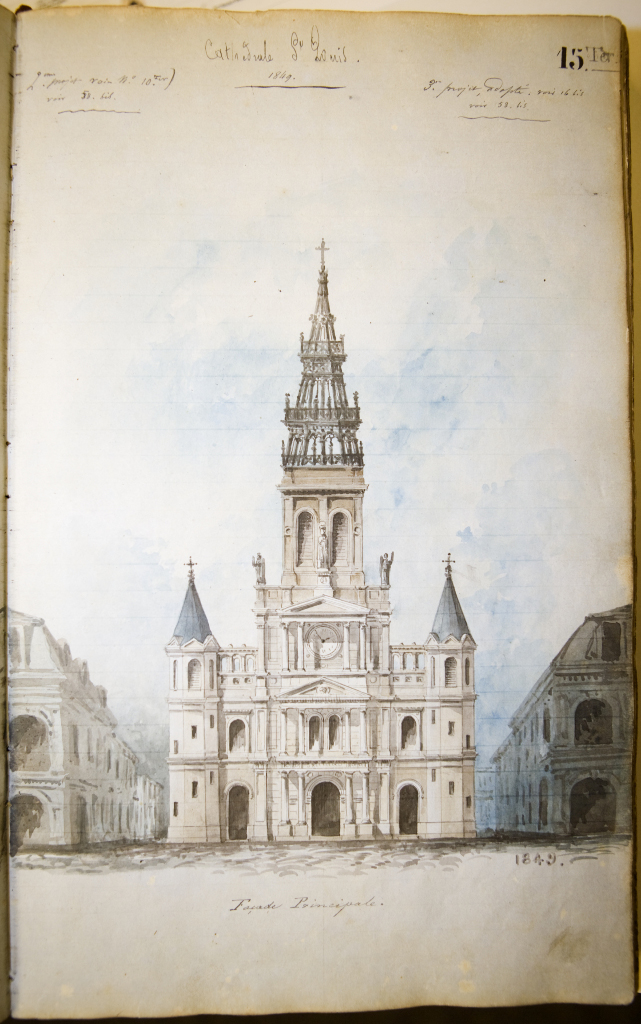
Jacques Nicolas Bussière de Pouilly (1849) / Wikimedia Commons (Public Domain)
Marie Laveau was real. She was born a free woman of color in New Orleans in 1801, became a leading figure in the city’s nineteenth-century Voudou community, remained a practicing Catholic, and died in 1881. The supernatural powers and elaborate conspiracies attached to her name are another matter. Baptismal, marriage, property, cemetery, and newspaper records establish a human life far more interesting than the stock “Voodoo Queen” of ghost tours.
Even the title needs care. It describes a role in a religious community and the public reputation that grew around it, not a monarchy or an occult rank with uniform powers. The woman in the records lived amid slavery, racial hierarchy, Catholic parish life, family losses, business pressures, and a multiracial spiritual world. Much of the legend was assembled by later writers who had no access to her voice.
A free child in a slave society
Historian Carolyn Morrow Long’s archival biography places Laveau’s birth on September 10, 1801, in New Orleans. A surviving baptismal record identifies the infant Maria, her free mother Marguerite, and her baptism at St. Louis Cathedral six days later. The record does not name her father. Later records and family research identify Charles Laveaux as the likely father, but it is misleading to present that name as if it appeared on the baptismal entry. Older biographies offered other birth years, sometimes making her nearly a century old at death; the baptismal evidence is the stronger anchor.
“Free” was a legal status, not an escape from the city’s racial order. Her mother and grandmother had lived within a society built on enslavement; her grandmother Catherine purchased her own freedom in 1795. The family history helps explain why simple labels such as “witch” or “healer” miss the conditions under which Laveau made a life.
The cathedral drawing above is from 1849, decades after her baptism. It is a view of a place connected to her documented Catholic life, not a portrait of her or a depiction of the building exactly as it stood in 1801.
Marriage, children, and the Widow Paris
On August 4, 1819, Laveau married Jacques Paris, a free carpenter of color from Saint-Domingue. Their marriage belongs to the paper trail, not to folklore. They had two daughters who died in childhood. Paris subsequently disappeared from New Orleans records or died; the surviving evidence does not settle every detail of his fate. Laveau was known afterward as the Widow Paris.
By the mid-1820s she was living with Louis Christophe Dominic Duminy de Glapion. Their long partnership lasted until his death in 1855. Long identifies seven children from that relationship, of whom two daughters survived to adulthood. The family lived on St. Ann Street in the French Quarter, in a house associated with Laveau’s grandmother. Financial trouble after Glapion’s death cut against the later image of a woman secretly ruling a wealthy city from a lavish mansion.
There is a harder fact in the property record: Long reports that Laveau herself bought and later sold two enslaved women. Her status as a free woman of color and her religious work do not erase her participation in slavery. Claims that her home operated as an Underground Railroad station are not supported by comparable documentation. Neither condemnation by caricature nor a comforting legend is an adequate substitute for the record.
What New Orleans Voudou meant
Louisiana Voudou developed in New Orleans through African-descended religious practice, Catholicism, and later influences brought by migrants from Saint-Domingue. It is related to Haitian Vodou, but the two are not interchangeable. Nor is Voudou a synonym for Satanism, “black magic,” or every form of folk magic. Long’s history of the tradition describes congregations, priestesses, saints, prayer, drumming, healing, and private consultations. It also distinguishes religious Voudou from hoodoo or rootwork, even though their practices could overlap in Louisiana.
Laveau’s Catholic life was neither a convenient disguise to assume nor proof that the accounts of her Voudou leadership must be false. The parish record shows baptism, marriage, and baptisms of her children. Contemporary descriptions also identify her as a Voudou leader. People could belong to both worlds in nineteenth-century New Orleans, and the overlap was part of the city’s religious history.
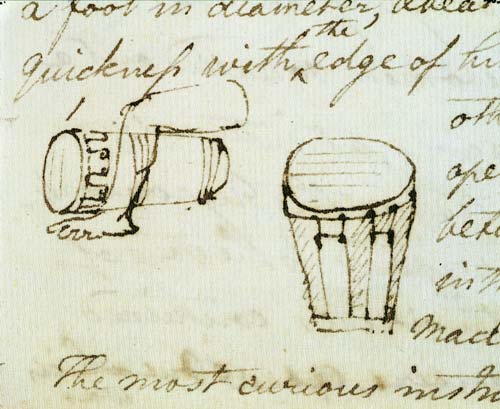
Benjamin Henry Latrobe sketched these drums in an 1819 notebook after observing music at Congo Square. The drawing documents a broader Black cultural space in Laveau’s New Orleans; it does not show her or a ceremony she led. Source. Benjamin Henry Latrobe / public domain, Public Domain Mark 1.0.
Congo Square, just outside the old French Quarter, was an important gathering place for enslaved and free Black New Orleanians. Its role is documented in the National Park Service’s historical nomination. That context matters, but the existence of gatherings there does not document every modern story that places Laveau at the center of a particular dance.
A leader whose reputation outran the records
Long describes Laveau as a leader who offered consultations and held ceremonies for a community crossing racial lines. Contemporary newspapers used titles such as “Priestess of the Voudous.” A report from 1871 described her visiting condemned prisoners, setting up Catholic altars and praying with them. These accounts support a public reputation for spiritual work and charity. They do not verify that she could control a court verdict, command spirits, or learn secrets by supernatural means.
The famous story that she worked as a hairdresser in wealthy homes may be plausible, and much later oral interviews remembered her that way. But research into that claim finds no surviving occupational record that proves it. The next layer of the story says she bought servants’ secrets and sold influence over judges. That makes a good thriller plot; it is not a documented explanation for her standing in the city.
The calendar did give her another powerful public association. St. John’s Eve, June 23, became an important night for New Orleans Voudou ceremonies on the shore of Lake Pontchartrain. Accounts credit Laveau with leading celebrations. Modern retellings often shift the scene to Bayou St. John, a waterway connected to the lake. The place is real; the exact route, participants, and rituals of every event ascribed to her are less securely recorded than the festival itself.
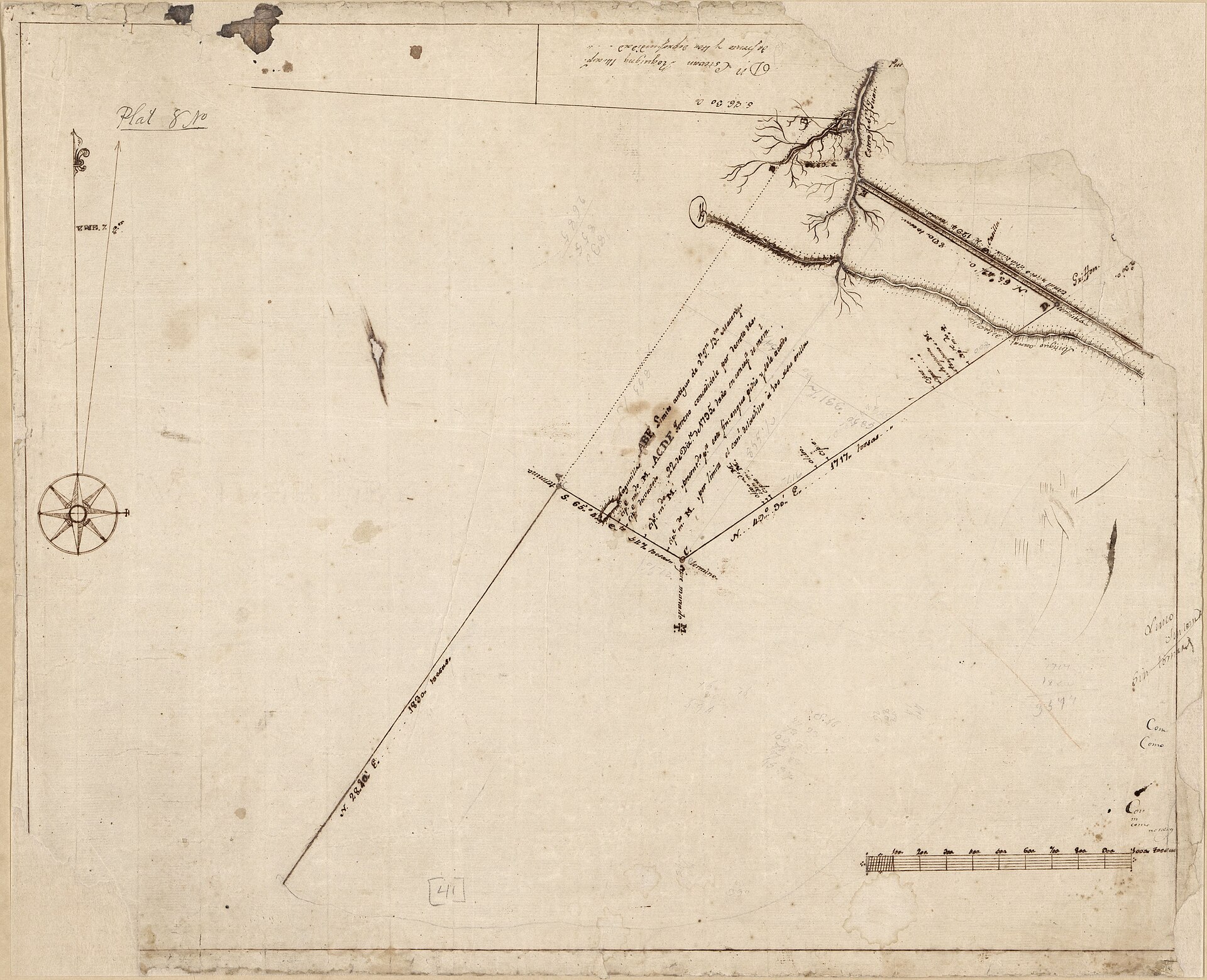
A 1795 survey of part of Bayou St. John, made before Laveau’s birth. It supplies geographical context, not proof of a specific ritual site. Charles Laveau Trudeau and Vicente Sebastián Pintado / Library of Congress, public domain, Public Domain Mark 1.0. The surveyor’s surname alone does not establish a family connection.
Stories also give her a great serpent called Zombi. Later accounts disagree about what kind of snake it was, where it was kept, and even whether it was a living animal or a ritual object. Serpent symbolism belongs in the history of the tradition, but the precise pet-snake biography should be read as folklore, not a fact extracted from a contemporary inventory.
Was there a second Marie Laveau?
The legend explains reported sightings after the elder Laveau withdrew from public life by saying a daughter took over her identity as “Marie Laveau II.” There really were daughters, and women could share names across generations. But scholars do not agree that a daughter succeeded her as the city’s Voudou leader. Long notes that the elder daughter Marie Heloïse Euchariste died in 1862 and argues that the surviving daughter, Marie Philomène, appears in recollections as a devout Catholic caregiver rather than a proven successor. Other writers have connected the “Marie II” stories to a daughter. The existence and identity of a single successor remain unsettled.
This is why the same legend can appear to stretch one woman’s life across impossible decades. Repeated names, later oral testimony, and a public eager for an ageless queen are enough to generate confusion without invoking immortality.
Death, tomb, and the wishes written on stone
Laveau died at home on June 15, 1881. Long cites cemetery records placing her in the Widow Paris family tomb in St. Louis Cemetery No. 1. The tomb became a place of pilgrimage and tourism. Visitors left offerings and marked the plaster with three Xs in hopes of a wish. That practice belongs to the tomb’s later history; it is not a documented instruction left by Laveau. Repeated markings and paint also damaged a burial place shared by a family.
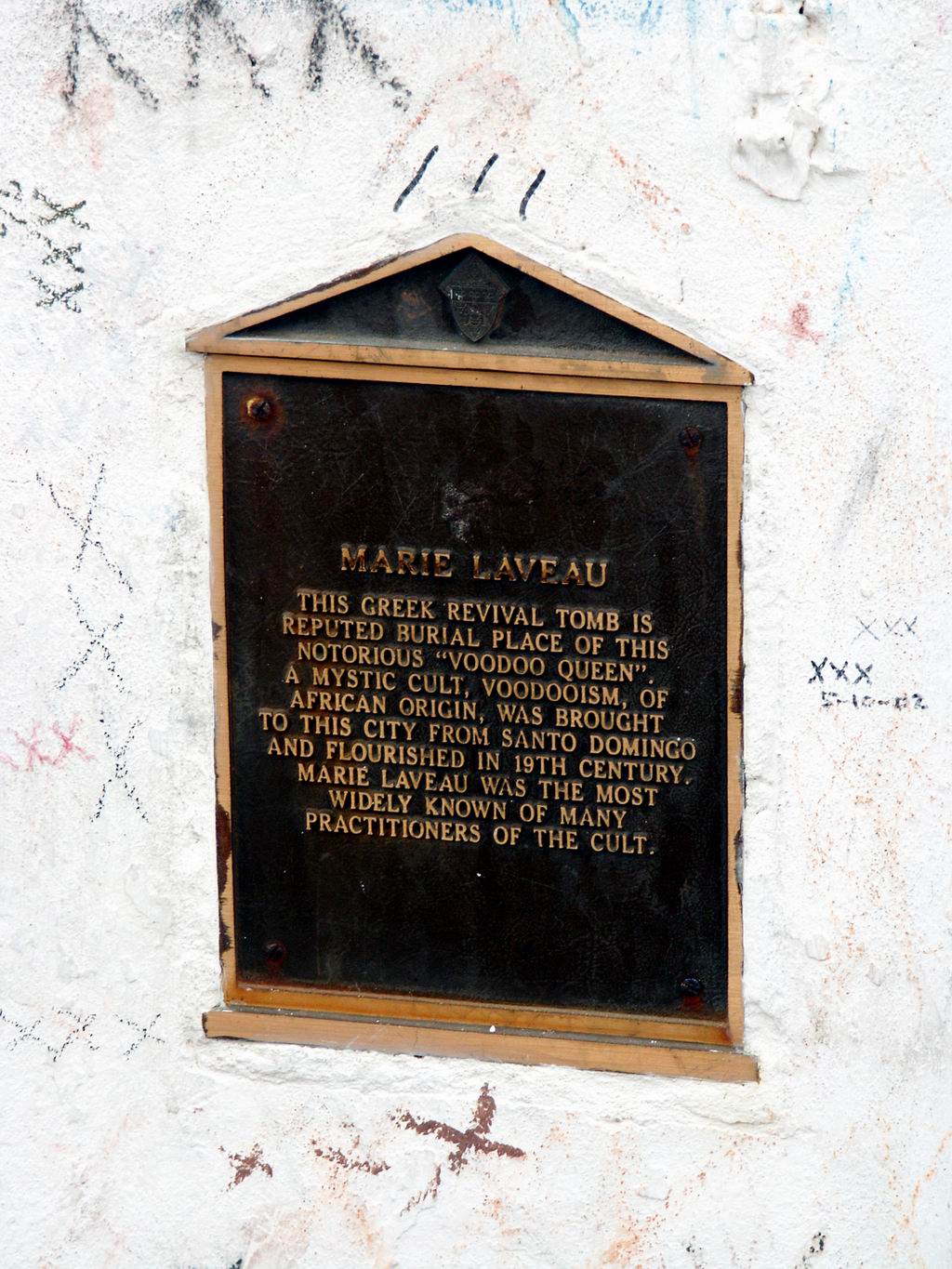
The tomb plaque and X marks in 2003. The plaque’s wording reflects an older, sensational public account of Voudou; its text should not be treated as a neutral history. Deirdre / Wikimedia Commons, CC BY-SA 3.0, unmodified; commercial reuse permitted.
The visual story of Laveau is similarly uncertain. A widely circulated painting attributed to George Catlin and later copied by Frank Schneider has long been presented as her portrait. The Smithsonian National Portrait Gallery records the attribution, while Louisiana’s historical encyclopedia labels it a portrait formerly identified as Laveau. Its reproduction rights are also restricted. There is no basis to offer it as a confirmed likeness, so it does not appear here.
Marie Laveau on American Horror Story
Angela Bassett played a fictional Marie Laveau in American Horror Story: Coven. FX’s cast listing for AHS: 13 also names Bassett as Marie Laveau. The return makes the historical question timely, but television has no obligation to follow parish or cemetery records. The real woman was neither immortal nor a character invented to oppose witches. Coven also fictionalized another documented New Orleans figure, the Axeman, a reminder that a recognizable name is only the start of a historical inquiry.
What remains after the dramatic layers are removed is substantial: a free Black Creole woman who led religious gatherings, raised a family, practiced Catholicism, worked within a slave society, and became famous enough for hostile newspapers and later generations to fight over her meaning. Her life deserves that complexity.
Frequently asked questions
Was Marie Laveau a real person? Yes. Baptism, marriage, family, newspaper, and cemetery records establish her life in New Orleans from 1801 to 1881.
Was she a witch? “Voodoo Queen” was a public title for her leadership in New Orleans Voudou. Calling her a witch collapses a distinct religious tradition into a horror stereotype.
Was Marie Laveau Catholic? Yes. Her Catholic baptism, marriage, children’s baptisms, and later religious practice are documented. They do not cancel the evidence of her Voudou leadership.
Is the tomb with the X marks hers? Cemetery records place her in the Widow Paris tomb in St. Louis Cemetery No. 1. The wish-making X ritual is a later custom, not a verified instruction from Laveau.
Was there a Marie Laveau II? Stories of a daughter succeeding her persist, but historians disagree about who, if anyone, held that role. It should not be stated as settled biography.
Sources & further reading
- Carolyn Morrow Long, Marie Laveau, 64 Parishes
- Carolyn Morrow Long, Voudou, 64 Parishes
- Marie Laveaux research project, birth and baptismal records
- Marie Laveaux research project, hairdresser claim
- National Park Service, Congo Square nomination
- Smithsonian National Portrait Gallery, attributed Laveau portrait
- FX, American Horror Story: 13 cast