The Index / Paranormal
The Enfield Poltergeist Explained: What Really Happened?
What really happened in the Enfield Poltergeist case? A careful look at the witnesses, hoax evidence, famous voice, photos and Warren claims.
Topics: Enfield Poltergeist, Paranormal, Hauntings, The Conjuring 2, Society for Psychical Research

Mx. Granger / Wikimedia Commons (CC0 1.0)
In late August 1977, a council house in Enfield, North London, became the center of a story that would outlive nearly everyone who investigated it. The Hodgson family reported knocking sounds, furniture moving without an obvious cause, objects flying through rooms and, later, a harsh male voice speaking through one of the children.
The Enfield Poltergeist became one of Britain’s most famous paranormal cases because it generated an unusually large record: witness statements, photographs, newspaper coverage, audio recordings and months of work by members of the Society for Psychical Research. It is also a case with documented trickery.
Those two facts are what make Enfield worth revisiting. There is no need to decide in advance that the house was haunted, and there is no need to pretend every reported incident has been reconstructed either. The useful question is simpler: what is actually documented, what was faked, and what remains uncertain?
The Hodgson Family
The events centered on 284 Green Street, a three-bedroom council house in Enfield occupied by Peggy Hodgson and her four children, Margaret, Janet, John and Billy.
Accounts differ slightly on the children’s ages in later retellings, but Margaret and Janet were the two daughters most closely associated with the disturbances. Peggy was a divorced mother dealing with financial pressure while raising the family largely on her own.
That background later became important to both believers and skeptics. Some parapsychologists discuss poltergeist cases under the label Recurrent Spontaneous Psychokinesis, or RSPK, a proposed phenomenon often associated in that literature with adolescents under stress. That is a parapsychological hypothesis, not an established scientific explanation for what happened at Enfield.
How the Enfield Case Began
The first widely documented incidents occurred on the night of August 31, 1977.
According to the Society for Psychical Research’s later summary of the case, Janet and John reported hearing shuffling noises in their bedroom. Peggy entered, and the family heard knocking. A chest of drawers was then reported to have moved roughly eighteen inches without anyone visibly pushing it.
The family sought help from their neighbors, the Nottinghams. Vic Nottingham and his son Gary entered the house and heard further knocking that they could not identify. Peggy Nottingham then contacted the police.
Janet later said she had played with a Ouija board before the disturbances began. That detail is often turned into a dramatic origin story, but the available evidence does not establish that a Ouija board caused or directly triggered the events.
What the Police Actually Witnessed
The police visit is one of the strongest pieces of independent testimony in the Enfield story, but it is also routinely exaggerated.
In the early hours of September 1, WPC Caroline Heeps and another officer attended the house. In a statement later reproduced from the SPR archive, Heeps described hearing unexplained knocking. She then reported seeing a chair wobble and slide approximately three to four feet across the living-room floor.
She checked the chair but could not explain the movement.
That is significant testimony. It is not, however, a police confirmation that a supernatural event occurred. The officers did not open an investigation into a haunting or certify the house as paranormal. Heeps described a movement she could not explain at the time.
There is a large difference between “a police officer reported an unexplained chair movement” and “the police proved there was a poltergeist.”
Maurice Grosse and Guy Lyon Playfair
The case soon reached the Society for Psychical Research through press contacts. Maurice Grosse visited the Hodgson home in early September and became one of its principal investigators. Guy Lyon Playfair later joined him.
Together they spent a long period observing the house, interviewing witnesses and making extensive audio recordings. Their investigation became the backbone of the modern Enfield story, and Playfair’s 1980 book This House Is Haunted remains one of the best-known firsthand accounts.
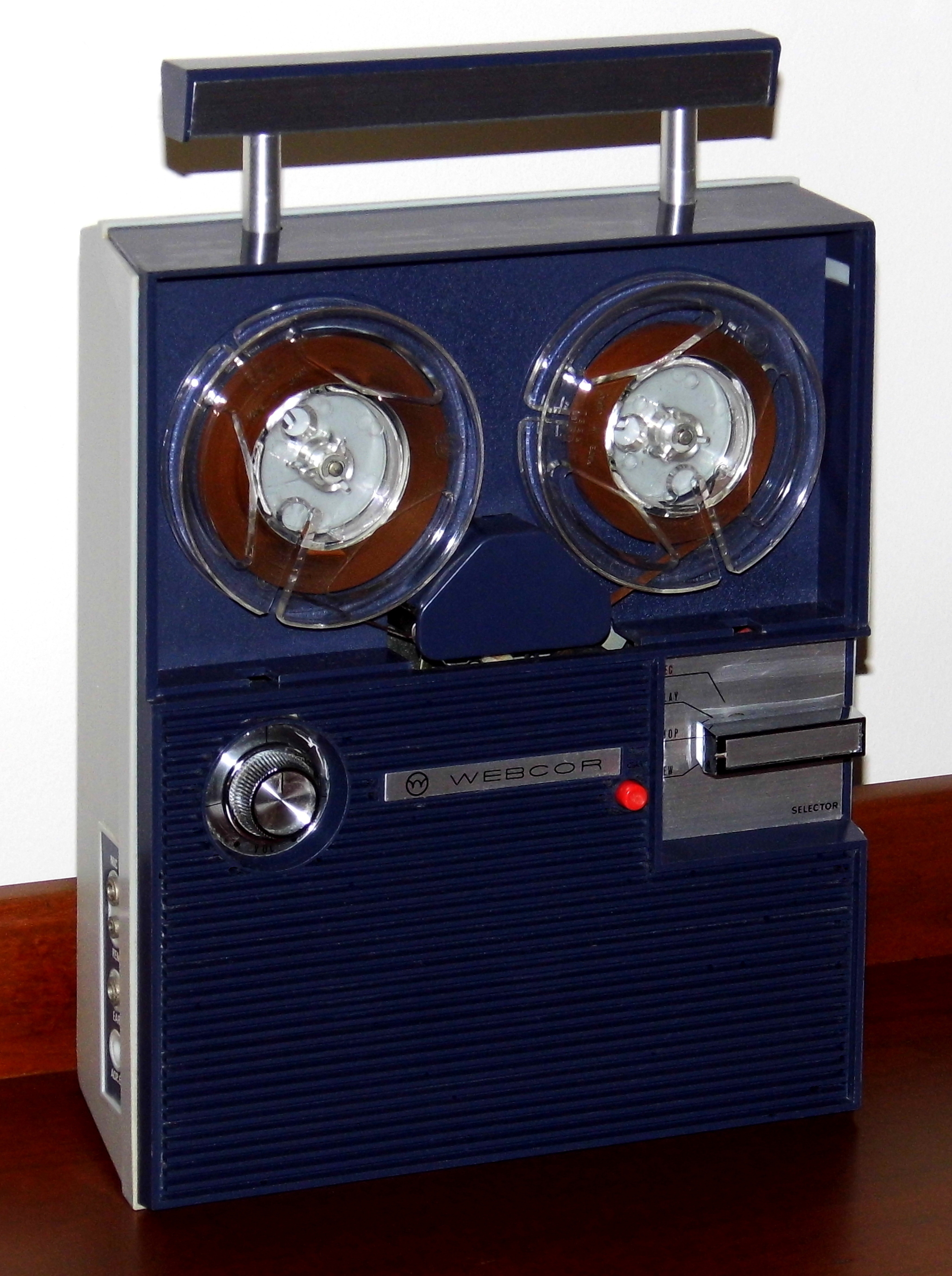
A portable reel-to-reel recorder of the general type investigators used to make the case’s extensive audio recordings. Joe Haupt, Wikimedia Commons (CC BY-SA 2.0).
Grosse had suffered a personal tragedy shortly before the case. His daughter Janet died in August 1976 from injuries sustained in a motorcycle accident. That fact has often been discussed when assessing his emotional investment in the case, but it should not be treated as proof that his conclusions were wrong. It is relevant context when considering investigator bias, nothing more.
Grosse and Playfair both accepted that the children sometimes played tricks. They nevertheless remained convinced that deliberate fakery did not account for everything they witnessed.
Other SPR researchers disagreed.
Psychologist Anita Gregory was sharply critical of the investigation and argued that Grosse and Playfair were too easy to fool. According to accounts of her work, a camera recorded Janet bending spoons and trying to bend an iron bar by ordinary physical means when she did not realize she was being observed.
That disagreement inside the SPR is important. Enfield was never a case in which even psychical researchers spoke with one voice.
What People Said Happened in the House
As the case continued, the list of reported phenomena grew.
Witnesses described knocks, bangs, furniture movement and small objects such as Lego pieces and marbles apparently being thrown across rooms. Reporters from the Daily Mirror visited the house, and photographer Graham Morris said he was struck by a Lego brick during one visit.
Investigators also recorded claims involving doors, bedding, furniture and electrical equipment. The most dramatic reports centered on Janet, including claims that she was lifted or thrown from her bed.
Then, in December 1977, the case acquired the feature that would make it especially famous: a deep, rasping male voice associated with Janet.
The “Bill Wilkins” Voice
The voice eventually identified itself as Bill Wilkins, the name of a former resident of the house.
Recordings captured the voice describing an elderly man’s death. In the account preserved by the SPR, it said that the man had gone blind, suffered a hemorrhage and died in a chair downstairs.
Years later, Terry Wilkins, the former resident’s son, confirmed that his father had died in the house in circumstances broadly matching the description.
Believers have long treated that as one of the strongest parts of the case. But there is a basic evidential problem: confirming that the information was correct does not establish how Janet learned it.
The SPR’s account says the information appeared to be unknown to her. That is not the same as demonstrating that she could not have heard local information about a previous occupant from neighbors, relatives or ordinary conversation. No documented chain of information has established exactly how she learned the details.
The voice itself also has a plausible physiological explanation.
Tests involving physicist John Hasted and phonetics expert Adrian Fourcin indicated a vocal effect known as plica ventricularis, in which structures above the normal vocal folds can contribute to a much rougher, deeper sound. A speech therapist who examined the recordings reportedly noted similarities to a false-vocal-fold tone but could not definitively identify how the sound was being produced.
That evidence does not prove Janet consciously fabricated every instance of the voice. It does show that an unusual low voice is not, by itself, evidence that a dead man was speaking through her.
Were the Levitation Photos Real?
Some of the most famous images from Enfield show Janet apparently suspended above or beside her bed.
The photographs were taken with a remotely operated camera set up by Graham Morris. Paranormal interpretations describe them as images of levitation. Skeptical analyses by writers including Melvin Harris and Joe Nickell have argued that the same frames are consistent with a child jumping or bouncing from the bed.
The photographs cannot show the full movement that occurred before and after each exposure, which is the central problem with treating a still image as proof of levitation.
Morris himself has given nuanced and somewhat conflicting public comments. In a 2023 report based on an interview with The Times, he was quoted as saying the scene looked to him like someone jumping across the room and that he had not personally claimed levitation. He later pushed back against the suggestion that he believed the incident was simply an ordinary jump and continued to say that he thought something unusual had been happening in the house.
That makes Morris a useful witness, but not a clean endorsement for either side.
The photographs remain striking. They do not establish what force, if any, moved Janet through the air.
The Evidence of Hoaxing
This is the part of the Enfield case that cannot simply be brushed aside.
Grosse and Playfair acknowledged that Janet and Margaret sometimes tried to trick investigators. Janet later said the girls had cheated “about two percent of the time,” explaining that they sometimes wanted to see whether the adults would catch them.
Her percentage is her own estimate, not an independently established figure.
There are also specific recorded examples of trickery. Accounts cited by skeptical investigators describe Janet being filmed bending spoons and attempting to bend an iron bar by hand. Grosse observed her using a broom handle to create knocking sounds, and she was involved in hiding recording equipment in a way that could be presented as unexplained disappearance.
Once deliberate fabrication is established, it changes the evidential standard for every poorly observed incident in the case. It does not logically prove that every report was fabricated, but it means unexplained claims cannot be treated as paranormal simply because no trick was caught at that particular moment.
Skeptic Deborah Hyde has also emphasized ordinary psychological mechanisms such as expectation and inattentional blindness. In a crowded, stressful house where everyone expects something to happen, witnesses can sincerely misinterpret movements or fail to notice where an object came from.
That possibility does not require anyone to be lying.
Ed and Lorraine Warren’s Role Was Much Smaller Than the Movie Suggests
For many modern viewers, Enfield means The Conjuring 2. That film places Ed and Lorraine Warren near the center of the case.
The historical record does not.
Guy Lyon Playfair later said the Warrens made only a brief visit and never conducted the Enfield investigation. The Society for Psychical Research has likewise described their involvement as a casual visit rather than an investigative role.
Playfair also recalled Ed Warren talking about the money that could be made from the case. His recollection is one source and should be treated as such, but there is no serious basis for presenting the Warrens as the people who led or resolved the Enfield investigation.
That makes The Conjuring 2 a dramatization, not a reliable reconstruction. The movie’s demonic antagonist Valak belongs to the film’s fictionalized mythology, not to the documented 1977 investigation. The same after-the-fact pattern shows up in the Warrens’ better-known Amityville investigation, where they likewise arrived once a case was already public rather than from its outset.
What Happened After Enfield?
The most intense phase of reported activity faded by the end of the 1970s, and Peggy Hodgson continued living at 284 Green Street until her death in 2003.
Janet later spoke publicly about the case and the attention it brought her as a child. She said she was bullied and called “Ghost Girl” at school. In later interviews she continued to insist that, although some incidents were faked, most of the frightening experiences were genuine from her perspective.
That distinction matters.
A person can sincerely remember an event as terrifying without that memory proving a supernatural explanation. Janet’s later testimony is important evidence about what she believed and experienced, but it cannot independently verify the cause of the phenomena.
The continuing fascination with Enfield was reinforced by documentaries and dramatizations, including Apple TV+’s 2023 The Enfield Poltergeist, which made extensive use of original audio material from the investigation.
So, Was the Enfield Poltergeist Real?
If “real” means did the Hodgson family become the center of a genuine, heavily documented series of disturbances in 1977 and 1978? Yes. The police visit, journalists, investigators, recordings and press coverage are historical facts.
If “real” means has a supernatural poltergeist been demonstrated as the cause? No.
The record contains clear evidence that some events were deliberately faked. Other famous evidence, including the deep voice and the levitation photographs, has plausible non-paranormal explanations or significant evidential limitations.
A smaller group of incidents remains difficult to reconstruct from the surviving record. WPC Caroline Heeps’ reported chair movement is the clearest example: she described something she could not explain, and no mechanism was established at the time.
But an unexplained observation is not automatically a paranormal one.
That is ultimately what makes Enfield more interesting than either the believer’s version or the debunker’s one-line dismissal. It is a case built from frightened children, committed investigators, skeptical researchers, tabloid attention, admitted tricks, sincere witnesses and a handful of observations that still resist a tidy historical reconstruction.
The haunting was never proven. The story, however, was very real.