The Index / Paranormal
Island of the Dolls: The Real Story Behind Mexico's Isla de las Muñecas
Don Julián Santana Barrera really did spend decades hanging dolls on a Xochimilco chinampa. The drowned girl he said he was honoring has never been documented.
Topics: Island of the Dolls, Xochimilco, Mexico, Haunted Objects, Paranormal
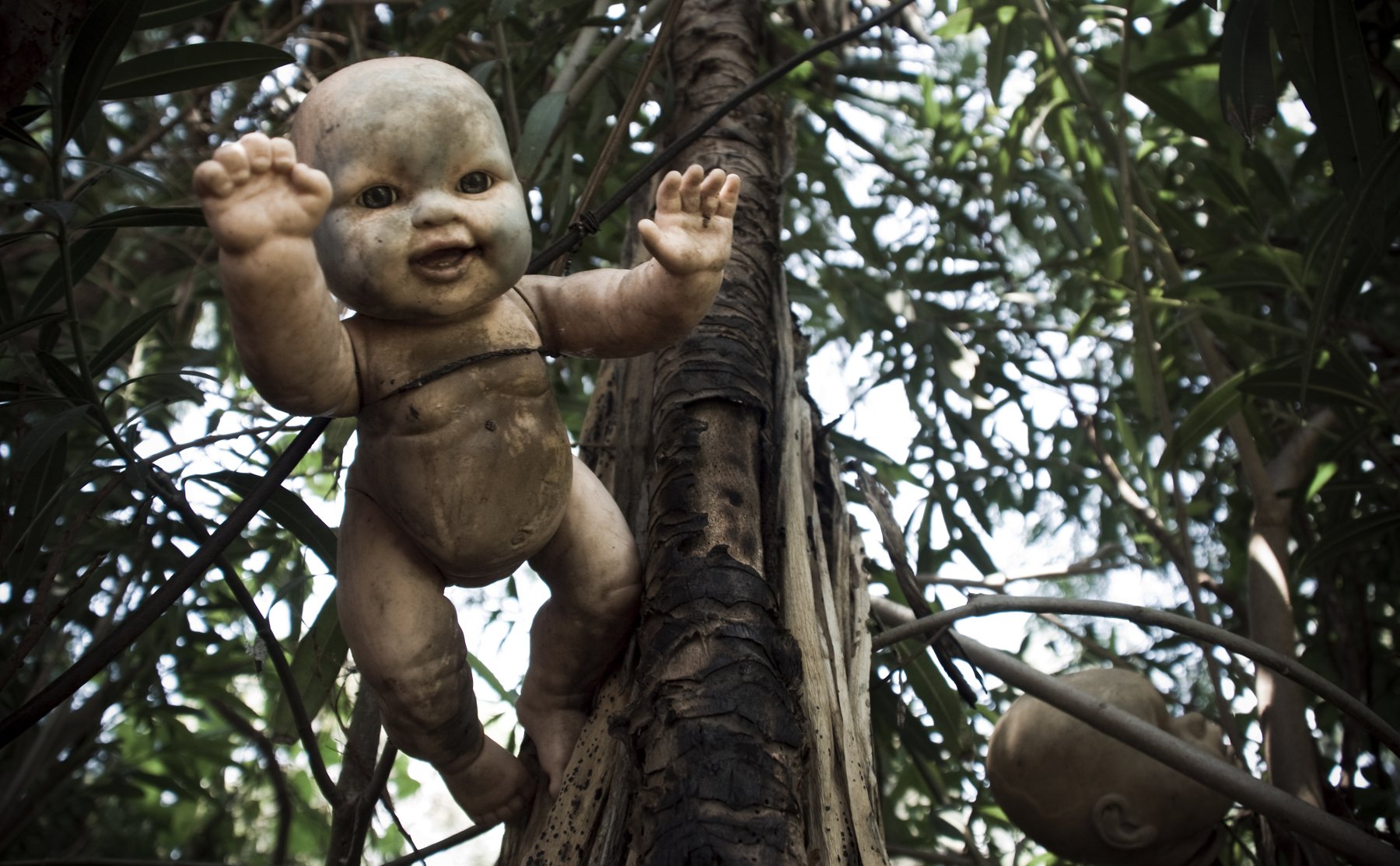
Eneas De Troya, Wikimedia Commons (CC BY 2.0)
A man really did spend roughly the last five decades of his life alone on a small artificial island in the Xochimilco canals south of Mexico City, hanging hundreds of discarded and damaged dolls from trees and structures until the entire place looked like something out of a fever dream. That part is documented, visible, and now a genuine tourist destination. The specific reason he gave for doing it — a girl who drowned in the canal, whose spirit he believed the dolls were placating — has never been independently confirmed to have happened at all.
Xochimilco and the Chinampa
Xochimilco is a network of canals and artificial islands in the southern part of Mexico City, built on a farming system called chinampas — rafts of woven branches piled with lake mud and soil, anchored to the canal bed and to each other, that eventually solidify into small, fertile islands. The technique dates to the pre-Hispanic period and once supported a substantial share of the food grown for the Aztec capital of Tenochtitlan. Xochimilco’s canal network was designated a UNESCO World Heritage Site in 1987, both for its agricultural history and as one of the last significant surviving remnants of the lake system that once covered much of the Valley of Mexico — a designation that later helped fuel a substantial rise in general tourism to the area, the Island of the Dolls included.
Don Julián Santana Barrera
Don Julián Santana Barrera, a Xochimilco native, withdrew from the surrounding community sometime in the mid-20th century to live alone on one of these chinampas, cultivating it and gradually turning it into what’s now known as Isla de las Muñecas — the Island of the Dolls. Exact dates for when he first arrived and began hanging dolls aren’t precisely documented in reliable sources; what’s clear is that the practice continued for decades, accumulating into the hundreds of dolls, many now weathered, missing limbs, or partially decomposed from prolonged exposure, that cover the island today.
The Drowned-Girl Story
The explanation most commonly repeated for why Santana started hanging dolls involves a young girl who drowned in the canal near the island. In the most common version, Santana either witnessed her drowning and was unable to save her, or found her body afterward; shortly after, he’s said to have found a doll floating in the water nearby, which he assumed had belonged to her, and hung it in a tree as a memorial gesture — supposedly the first of what became hundreds. Other tellings add a second doll found the following day, treated as confirmation that something beyond coincidence was happening.
This is the part worth stating plainly: no independent documentation — no death record, news account, or official report — has been identified confirming a girl actually drowned at the site. Even among Santana’s own relatives, accounts diverge; some have suggested the drowned girl existed only in his imagination, a story that developed and hardened over years of solitary life on the island. That doesn’t necessarily mean Santana was lying in a calculated way — genuine isolation, grief, and psychological strain can produce sincerely held beliefs without any deliberate fabrication — but it does mean the specific origin story shouldn’t be repeated as established fact.
Not the Only Explanation He Gave
Worth noting for readers who encounter yet another version: some accounts describe Santana offering different or evolving explanations for the dolls over the decades he spent alone on the island, including framing them at various points as protection against evil spirits generally, not exclusively tied to one specific drowned girl. That inconsistency across retellings is itself a sign of a story that developed and shifted over a long period of isolated, unwitnessed daily life, rather than one fixed founding narrative.
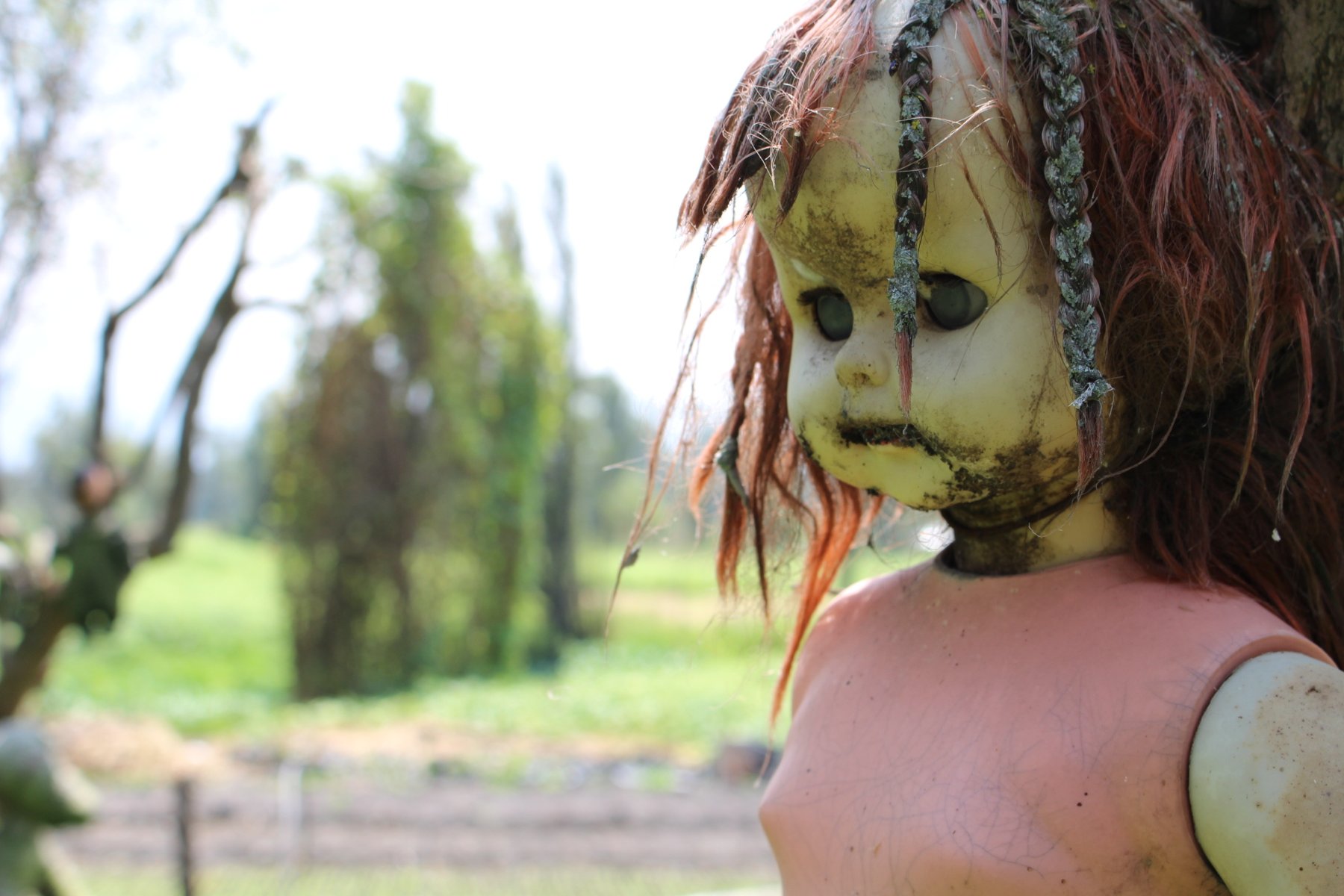
One of hundreds of weathered dolls Santana hung on the island over roughly five decades. Source. Emmanuel Eslava, Wikimedia Commons, CC BY-SA 4.0.
Don Julián’s Death
In 2001, Santana was found dead in the same canal where the girl he described was said to have drowned, discovered by a family member. Accounts of the circumstances vary — some describing a heart attack that occurred while he was near or in the water, others framing his death as more directly consistent with drowning at that specific spot — and some retellings include a detail, attributed to Santana himself before his death, describing mermaids calling to him from the water. As with the drowned-girl story itself, the exact cause and circumstances of his death aren’t independently documented with the kind of certainty that would resolve which version is accurate; what’s certain is that he died at the site that had defined the last decades of his life, an outcome that unsurprisingly deepened the site’s eerie reputation regardless of the actual medical cause.
After His Death: Family Stewardship and Tourism
Following Santana’s death, his family took over maintenance of the island and opened it to visitors as a tourist destination, reachable by the flat-bottomed trajinera boats used throughout the Xochimilco canal network. Stewardship has continued through succeeding generations of the family, including a great-nephew who has served as a guide and caretaker in more recent years. The island’s transition from one man’s private, decades-long solitary project into an organized, monetized tourist attraction is itself a documented and fairly typical pattern for sites that develop this kind of reputation — visible in similar form at other Morbid Index cases like Robert the Doll, where a personal or family object became a managed public attraction only after the original owner’s death.
Paranormal Claims
Visitors and online accounts describe a range of experiences at the island: dolls said to move their heads, arms, or eyes; whispering sounds attributed to the dolls themselves; and, in a considerably gentler modern development, some visitors leaving small offerings in hopes of blessings or good fortune, treating the site with something closer to folk-shrine reverence than pure fear. None of this constitutes independently verified evidence of anything supernatural; it’s consistent with the kind of pattern-driven perception (pareidolia, expectation, low light, genuinely unsettling visual subject matter) that shows up at most sites marketed around a haunted reputation, combined with a real and unusual visual environment that would unsettle most visitors regardless of any supernatural framing.
How International Media Spread the Story
The Island of the Dolls moved from a local Xochimilco curiosity to an internationally recognized “most haunted” attraction largely through 21st-century travel journalism and paranormal-interest media, which found the site’s genuinely striking visual quality (hundreds of decaying dolls in a remote canal setting) to be ready-made content, particularly once digital photography and later social media made the images easy to circulate widely. That international spread has shaped how the story gets told as much as the original local account has — later coverage has sometimes streamlined or dramatized the more uncertain, contested parts of Santana’s own story into a cleaner, more marketable “true legend” than the actual documented record supports.
Frequently Asked Questions
Is the Island of the Dolls real? Yes, as a physical place — Don Julián Santana Barrera genuinely spent decades hanging dolls on a Xochimilco chinampa, and the site is now a documented tourist destination maintained by his family.
Did a girl really drown at the Island of the Dolls? No independent record confirms this. It’s the origin story Santana is said to have given for the dolls, but no death record or contemporary documentation has been found to verify it, and even some of his own relatives have suggested the story may have been imagined.
How did Don Julián Santana Barrera die? He was found dead in the canal near the island in 2001. Accounts differ on whether the cause was a heart attack or drowning, and the exact circumstances aren’t independently documented with full certainty.
Who owns the Island of the Dolls now? Santana’s family, who opened it to tourism after his 2001 death and have continued maintaining and guiding visits through subsequent generations.
Is Xochimilco a UNESCO World Heritage Site? Yes, the Xochimilco canal system was designated in 1987, which has contributed to a broader rise in tourism to the area, including the Island of the Dolls.
Are the paranormal stories about moving dolls verified? No. Reports of moving dolls, whispering, and similar phenomena are unverified visitor accounts and folklore rather than documented evidence.
How did the Island of the Dolls become internationally famous? Primarily through travel and paranormal-interest media coverage in the 21st century, drawn to the site’s striking visual imagery, which spread rapidly online through photography and social media.
.jpg)
