The Index
Ed and Lorraine Warren at Amityville: What Did They Actually Investigate?
The Conjuring 2 makes the Warrens central to Amityville from day one. The real chronology is narrower: they arrived after the Lutz family had already left.
Topics: Ed and Lorraine Warren, Amityville Horror, The Conjuring, Paranormal Investigation, Ghost Boy Photo
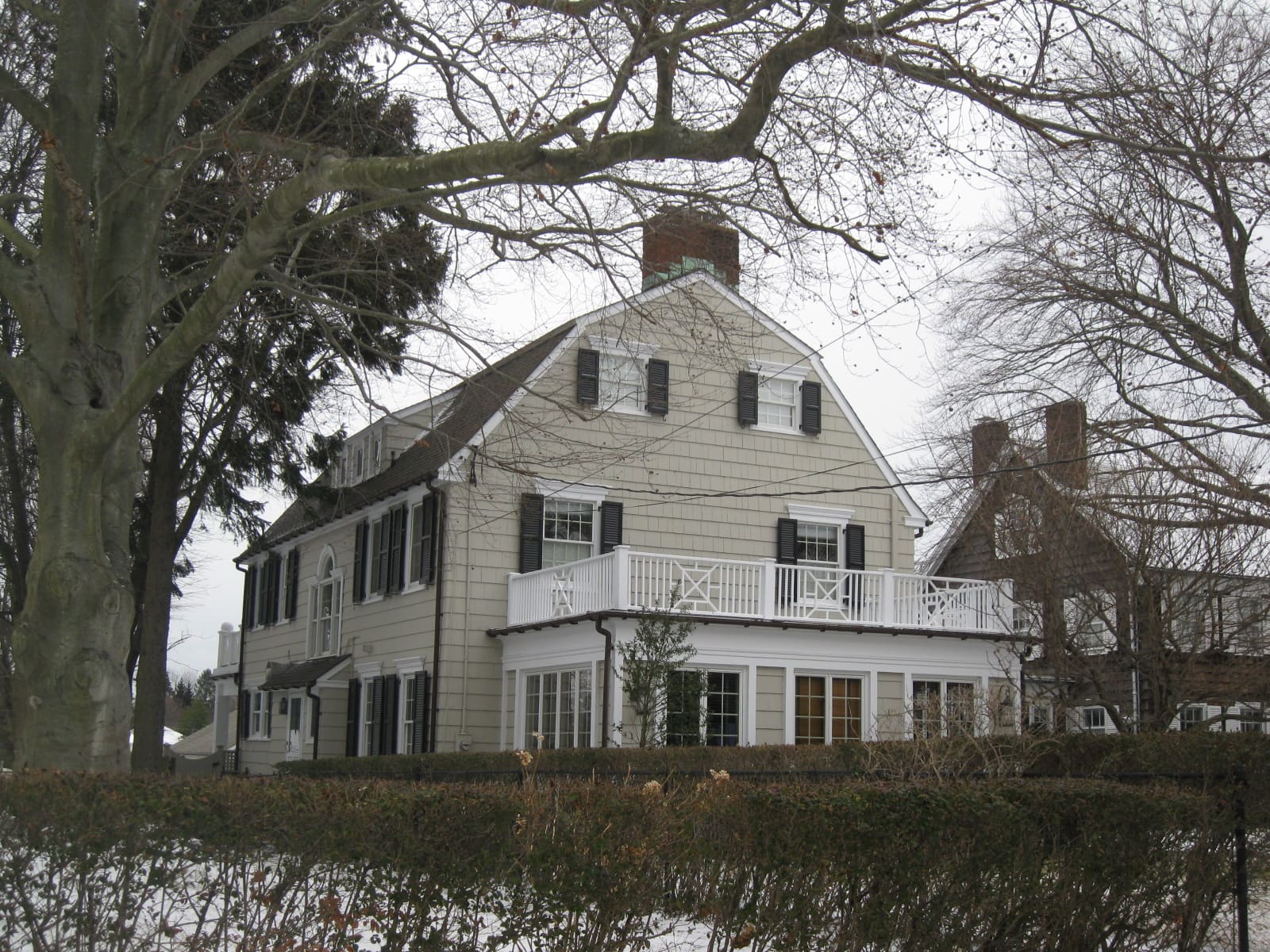
Doug Kerr, 2010 / Wikimedia Commons, CC BY-SA 2.0 (resized)
If your only exposure to Amityville is The Conjuring 2, you’d assume Ed and Lorraine Warren were standing in that house from the moment George and Kathy Lutz moved in, fighting off a demon alongside the terrified family. That’s not what happened. The Warrens’ actual involvement came later, was much briefer, and looked nothing like a Hollywood exorcism.
This article separates what the Warrens documented from what films, books, and their own later retellings added on top of it. For the full history of the case, see our Amityville Horror overview.
Did Ed and Lorraine Warren Investigate Amityville?
Yes, but not while the Lutz family lived there. The Warrens’ documented visit to 112 Ocean Avenue took place after George and Kathy Lutz had already moved out in mid-January 1976, as part of a media event rather than a private, invited investigation conducted during the family’s residency.
When the Warrens Actually Entered the Story
The Warrens’ first visit to the house came in early 1976, organized in connection with a local television news team doing a walkthrough of the now-vacant, recently abandoned property. That timeline matters because it directly contradicts the framing used in later dramatizations, where the Warrens appear to be present, or at least on call, from the earliest days of the family’s alleged ordeal. In the documented record, they weren’t. They arrived to investigate a story that had already ended, in a house the family reporting the phenomena no longer occupied.
Nothing in the contemporary record suggests the Lutz family personally sought out the Warrens or worked with them directly during the writing of their account. The Warrens’ involvement ran on a separate, later track from the Lutzes’ own story.
What Happened During Their Investigation?
The Warrens, accompanied by other investigators, journalists, and at least one photographer, spent time walking through the empty house, and afterward described sensing what they characterized as a malevolent, non-human presence. That’s the extent of what’s documented as an actual on-site activity: a walkthrough, followed by a public statement of impression.
It’s worth being precise about the difference between that and an “investigation” in any forensic sense. There’s no record of instrumentation readings, controlled observation protocols, or independently verifiable measurements from that visit. What survives is the Warrens’ own characterization of what they felt, offered after the fact, to a media audience already primed by the Lutz family’s story. That’s a claim, not a data set, and it should be read as one.
The Famous “Ghost Boy” Photograph
The single most circulated piece of “evidence” from the Warrens’ visit is a black-and-white infrared photograph, taken by photographer Gene Campbell during that same walkthrough, showing what appears to be a boy standing in a doorway with strikingly bright, glowing eyes. George Lutz later made the image public on The Merv Griffin Show, and it’s been treated as visual proof of a haunting ever since.
It isn’t proof of anything supernatural, and it’s worth explaining exactly why. A commonly cited skeptical identification holds that the figure in the photo is a living person who was present in the house that night, sometimes named as investigator Paul Bartz, caught mid-motion by the camera rather than a spectral child. That’s a proposed explanation based on reviewing who was actually inside the house during the shoot, not a certainty established through forensic image analysis, and it should be presented with that qualification rather than as a settled fact.
The eerie glowing eyes have a much more mundane explanation regardless of who the figure turns out to be. Infrared film combined with a camera flash frequently produces a bright “eyeshine” effect when light reflects directly back off a person’s retina — the same basic phenomenon behind ordinary red-eye in flash photography, just rendered differently on infrared stock. That doesn’t prove the photograph was staged or faked. It does mean its single most unsettling visual detail has a known, non-paranormal photographic cause.
Did the Warrens Find Evidence of a Demon?
They said they believed the house contained an inhuman, malevolent spirit rather than the ghost of a deceased person — a specific theological framing consistent with the Warrens’ broader demonological worldview, which treated many of their most famous cases, including the Annabelle doll, through the same lens of inhuman spirits impersonating or attaching themselves to sympathetic figures.
That framing is a claim the Warrens made based on their own religious and investigative framework, not an independently verified finding. It’s the same pattern that shows up across their other well-known cases: a strong, specific interpretive conclusion, delivered with confidence, resting on subjective impressions rather than material evidence anyone else could examine and confirm.
The Questionable History Added to the Amityville Legend
Two pieces of backstory got attached to Amityville during the years the Warrens and other paranormal writers were building out the case’s mythology, and both deserve direct scrutiny rather than repetition.
The John Ketchum Story
Jay Anson’s 1977 book introduced a colonial-era figure named John Ketchum (sometimes spelled Ketcham), described as a man expelled from Salem, Massachusetts, for practicing witchcraft, who supposedly settled within 500 feet of the future Lutz property and was buried on its northeast corner.
Genealogical research into the real Ketcham family, detailed in a 2024 Skeptical Inquirer investigation by Daniel Meyer, tells a different story. The Ketchams who actually lived on Long Island had relocated there from Ipswich, Massachusetts, decades before the 1692 Salem witch trials even took place, making the “expelled from Salem” premise chronologically impossible for the historical family that shares the name. No verified historical record links any documented John Ketcham to witchcraft accusations, and no evidence ties him or his burial to the Amityville property specifically. Meyer’s research concludes that Anson’s account misled readers, whether deliberately or through uncritical use of secondhand local legend, and that the claim functions as invented backstory rather than documented colonial history.
Was the House Built on an Indigenous Burial Ground?
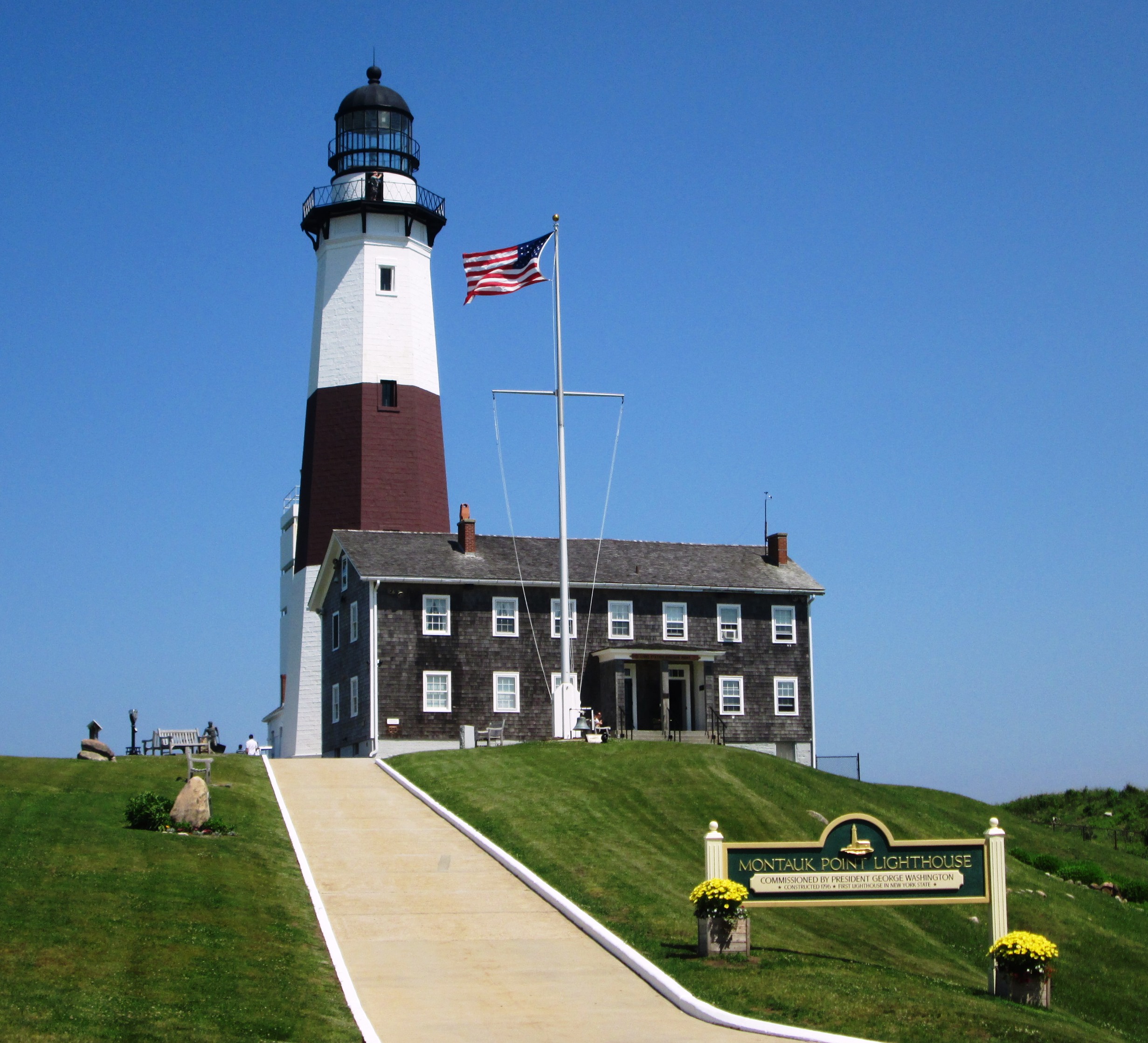
Montauk Point, eastern Long Island — the documented territory of the Montaukett, the Indigenous nation historians actually associate with this part of the island, as distinct from the Shinnecock the burial-ground claim misidentified. Wikimedia Commons (CC BY-SA 4.0).
No credible evidence supports this either, and the claim is worth tracing to its actual source rather than treating it as unverifiable local lore.
The burial-ground story entered Amityville mythology through parapsychologist Hans Holzer’s 1979 book, built around a session with a medium who claimed the property sat on a Shinnecock burial ground and that Ronald DeFeo Jr. had been possessed by the spirit of an angry chief. Historian John A. Strong’s documented work on Long Island’s Indigenous nations places the Shinnecock on the island’s eastern end, well away from Amityville; the Indigenous people historically associated with that specific area were the Montaukett. No archaeological or historical record ties a burial ground, or any comparable site, to the Ocean Avenue property. The “ancient burial ground” explanation for a haunting was already a familiar piece of American horror shorthand by the late 1970s, and Amityville’s version of it appears to be an application of that trope rather than a genuine local history the Warrens or Holzer uncovered.
How Amityville Became Part of the Warren Mythology
Amityville fits a recognizable pattern in the Warrens’ career: arrive after a case has already generated public attention, offer a strong interpretive framework — inhuman spirits, demonic presence, a specific cause discovered through psychic impression — and become permanently associated with a story that was substantially formed before their involvement began. The same pattern shows up in their much smaller, frequently overstated role in the Enfield Poltergeist, a British case investigated primarily by the Society for Psychical Research, where the Warrens made only a brief appearance late in the process despite later films placing them at its center.
Amityville, Annabelle, and Enfield share that same basic shape: a real, independently documented starting event, followed by Warren involvement that arrived later and claimed more interpretive authority than the surviving record can fully support, followed decades later by films that erase the gap between “arrived afterward” and “led the investigation from the start.”
What Is Actually Documented?
A walkthrough of an empty house, weeks after the family who reported the phenomena had already left. A public statement describing a sensed malevolent presence, offered without independently verifiable evidence. A photograph with a far more mundane explanation than the one usually attached to it. And two pieces of colorful backstory — the witch and the burial ground — that trace to a commercial book and a medium’s psychic reading rather than to any documented local history.
That’s a much smaller role than pop culture has assigned the Warrens at Amityville. It doesn’t mean their impressions were insincere. It means their impressions are the extent of the evidence, and impressions are not proof.
Frequently Asked Questions
Did Ed and Lorraine Warren investigate Amityville? Yes, but only after the Lutz family had already moved out. Their visit was a walkthrough of the vacant house connected to a media event, not an ongoing investigation conducted during the family’s residency.
When did the Warrens visit Amityville? In early 1976, weeks after the Lutzes left the house in mid-January of that year.
What did Lorraine Warren say she saw? She and Ed Warren described sensing a malevolent, inhuman presence in the house. That’s a subjective impression they reported afterward, not an independently documented finding.
Is the Amityville ghost-boy photo real? The photograph itself is a real infrared image taken during the Warrens’ 1976 visit. A commonly proposed explanation identifies the figure as a living person present that night rather than a ghost, and the glowing eyes match a known infrared-flash effect.
Did the Warrens say Amityville was demonic? They described the presence as an inhuman spirit rather than a deceased person’s ghost, consistent with their broader demonological framework applied to other cases like Annabelle.
Was the house built on an Indigenous burial ground? No credible evidence supports this. The claim traces to a 1979 book built around a medium’s psychic reading, and it misstates the documented Indigenous geography of Long Island.