The Index / Paranormal
What Is a Poltergeist? Meaning, History, and Possible Explanations
Poltergeist means noisy ghost in German. Here's the real history of the term, why teenagers keep showing up in these cases, and what investigators actually found.
Topics: Poltergeist, RSPK, Society for Psychical Research, Paranormal, Skeptical Investigation
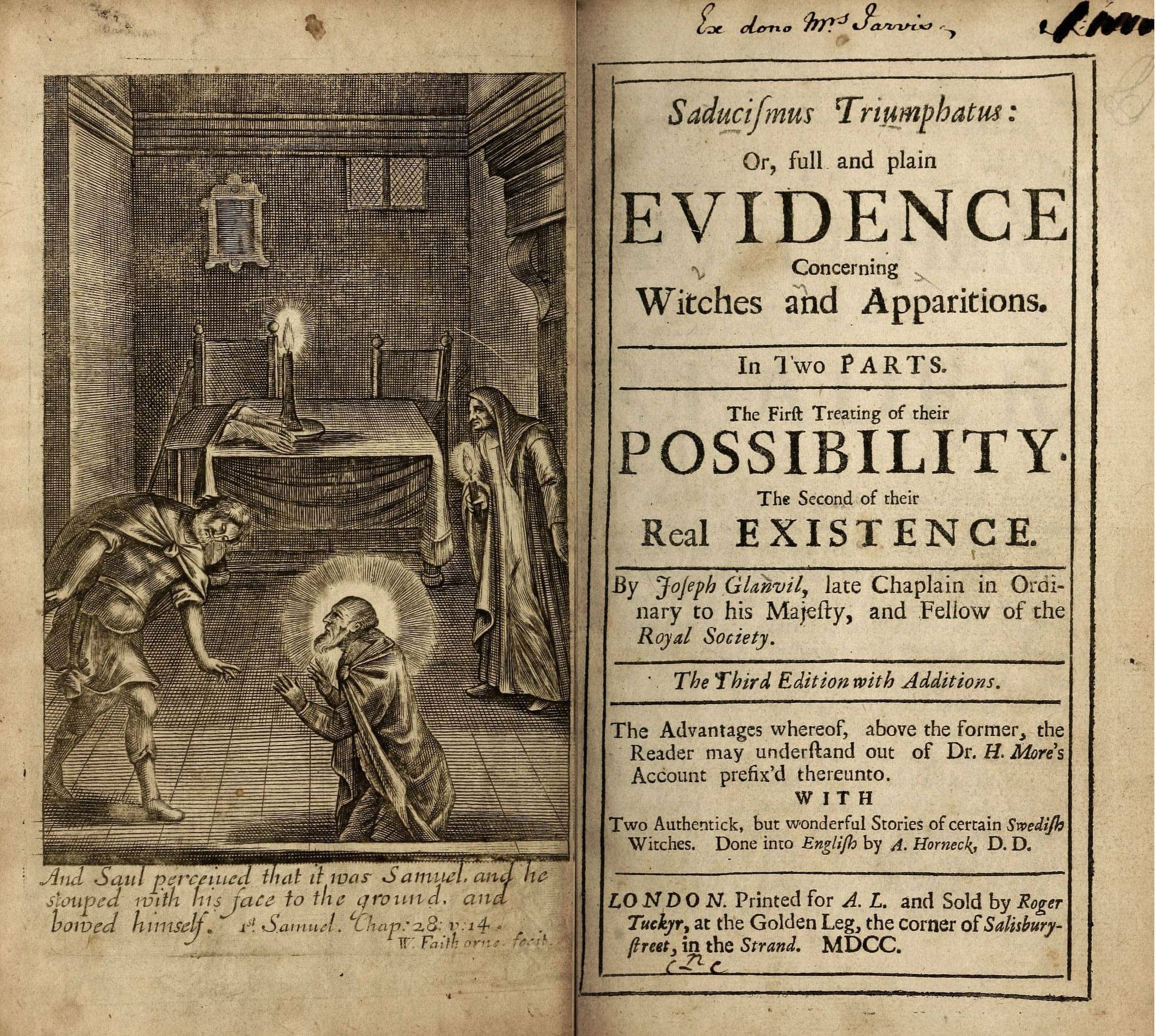
Unknown engraver (1681) / Wikimedia Commons (Public Domain)
Poltergeist is a German word before it’s a paranormal category: poltern, to rumble or make a racket, and Geist, ghost. Put together, it means roughly “noisy ghost” or “rumble-spirit,” and German writers were using it in print by the sixteenth century, well before any English speaker had reason to. The term crossed into English usage in the 1830s and has since become the default label for a very specific kind of haunting claim — one built around noise and movement rather than a visible figure.
That distinction matters more than most retellings admit. A poltergeist case is defined by what happens, not by who’s supposedly doing it. Nobody needs to see a ghost. They need furniture to move, objects to fly, knocking to start, and no one willing to take credit.
Poltergeist vs. Ghost: What’s the Actual Difference?
A conventional ghost story in Western folklore usually centers on an apparition — a figure, often identified with a specific dead person, who appears, sometimes repeatedly, in a specific location. A poltergeist case is built almost entirely around physical disturbance instead: knocking and rapping sounds, objects thrown or displaced, furniture moving, and occasionally electrical or plumbing disruptions, water appearing from nowhere, or small fires. Voices sometimes get added later, as they famously were at Enfield, but the core pattern is disturbance without a coherent visible witness account of who or what is causing it.
Folklorists and psychical researchers have long noted a second distinction: ghosts are typically described as haunting a place, while poltergeist activity is often described as following a person, most commonly a child or teenager in the household. That’s not a universal rule, and plenty of cases don’t fit it cleanly, but it’s common enough that it became central to how twentieth-century researchers tried to explain the phenomenon.
The Cases That Shaped the Modern Idea
Poltergeist-style reports go back centuries. A chronicle called the Annales Fuldenses describes disturbances at a farmhouse near Bingen on the Rhine in 858 CE — stones and household objects reportedly flying with no visible cause, one of the earliest written accounts that reads like a recognizable poltergeist case. In 1681, English clergyman Joseph Glanvill published Saducismus Triumphatus, a detailed account of “the Drummer of Tedworth,” a case in Wiltshire involving loud drumming, thumping, and other disturbances at the home of a magistrate who had confiscated a vagrant drummer’s instrument. It’s one of the first extensively documented English-language poltergeist narratives, complete with named witnesses and an investigator willing to put his account in print.
The title page of Joseph Glanvill’s Saducismus Triumphatus (1681), which documented the Drummer of Tedworth — one of the earliest extensively recorded English poltergeist cases. Source. Public Domain via Wikimedia Commons.
Modern investigation of the phenomenon began in earnest with the Society for Psychical Research, founded in London in 1882. Early SPR figures including physicist William Barrett and classicist Frederic W. H. Myers treated poltergeist reports as worth serious, methodical investigation rather than automatic dismissal, a stance that shaped how later researchers approached the subject: take the witness testimony seriously, look hard for a mundane cause, and be honest about what remains unexplained once you’ve looked.
Two twentieth-century American cases did the most to define the modern template. In 1958, the Herrmann family of Seaford, New York, reported bottles popping open and objects moving without explanation over several weeks. Parapsychologists J. G. Pratt and William Roll investigated and, working from that case, Roll coined a new term for what they thought they were seeing: recurrent spontaneous psychokinesis, or RSPK — the idea that a living person, usually under psychological stress, might be unconsciously generating the disturbances rather than a discarnate spirit doing it from outside. In 1967, the Rosenheim case in Bavaria became one of the most publicized poltergeist investigations in Europe, centered on strange electrical malfunctions — bursting light bulbs, phones dialing repeatedly on their own, swinging lamps — that investigators noted occurred specifically when a 19-year-old employee named Annemarie Schneider was present in the office.
RSPK: A Hypothesis, Not a Finding
Recurrent spontaneous psychokinesis proposes that the “agent” at the center of a poltergeist case — often, though not always, an adolescent — is unconsciously producing the physical effects through some form of mind-over-matter action driven by repressed stress, anger, or emotional turmoil. It’s a genuinely interesting hypothesis, and it’s the reason so much popular poltergeist writing fixates on hormonal teenagers as the trigger.
It is not an established scientific mechanism. No controlled, replicated experiment has ever demonstrated that a person can move physical objects through psychokinesis, whether calm or emotionally overwhelmed. RSPK functions within parapsychology as a proposed explanation for a pattern researchers noticed across cases, not as a confirmed phenomenon with a known physical basis. Treating “hormonal teenager causes poltergeist” as settled science overstates what four decades of RSPK research have actually shown.
What Poltergeist Investigators Actually Found
The most useful thing about the more recent, well-documented cases is that some of them got caught on camera.
The 1984 Columbus, Ohio case, centered on 14-year-old Tina Resch, became one of the most publicly dissected poltergeist investigations in American history. A local news cameraman left his camera rolling by accident during a lull and caught Resch, believing herself unobserved, yanking a lamp to the floor herself. William Roll, who investigated extensively and interviewed dozens of witnesses, remained convinced that at least some of what he’d documented wasn’t explained by that one incident. Skeptic James Randi took the opposite position after reviewing photographic evidence from the case, arguing that additional “unexplained” moments showed the same pattern of ordinary physical manipulation — a foot braced against furniture, a picture frame already broken before it “shattered.” Resch herself later said she staged some incidents specifically to satisfy reporters who wouldn’t leave until something happened, so they’d go home and leave her family alone.
That’s the shape of the evidence across most well-investigated poltergeist cases: a mix of testimony that resists easy explanation, alongside at least some demonstrated fakery, often by the very person the case centers on. It’s rarely all one or the other.
Ordinary Explanations Worth Ruling Out First
Long before reaching for RSPK or spirits, investigators — and skeptical ones in particular — have pointed to a long list of mundane causes that account for a substantial share of reported poltergeist activity: settling foundations and old plumbing producing knocking and banging sounds, drafts and building vibration from traffic or underground water tables causing objects to shift, rodents or other animals in wall cavities, electrical faults, and, especially in cases centered on a child or teenager, deliberate physical manipulation done for attention or to relieve household tension. Expectation and memory also do real work here: once a family believes their house is active, ordinary creaks and coincidences get folded into the pattern, and the retelling of events tends to sharpen and dramatize them each time the story gets told.
None of this means every witness is lying or imagining things. It means the baseline explanation for most reported activity is mundane, and the harder, more interesting cases are the ones where mundane explanations for every single incident are genuinely difficult to construct — which is a much smaller set than popular poltergeist media suggests.
Are Poltergeists Scientifically Proven?
No. There is no reproducible experimental evidence for psychokinesis, spirit activity, or any other mechanism capable of producing the effects poltergeist witnesses describe. What exists is a large body of testimony, a smaller body of investigator field notes, a handful of cases with partial photographic or video evidence, and at least a few cases with documented fraud mixed into otherwise unresolved testimony.
“Unexplained by the investigator at the time” and “proven supernatural” are different claims, and a lot of poltergeist writing quietly slides from one to the other. The honest position is that some incidents in the best-documented cases still lack a clear mundane explanation, which is not the same thing as evidence for a ghost.
How Pop Culture Reshaped the Word
Tobe Hooper’s 1982 film Poltergeist and its sequels did for the general term what The Exorcist did for possession: they gave millions of people a vivid, specific visual vocabulary — television static, a child pulled into a closet dimension, a house built over a cemetery — that has nothing to do with the documented history of the phenomenon. Real poltergeist cases don’t involve interdimensional portals or construction-related curses. The film borrowed the word for its ominous sound and built an entirely original horror premise around it, the same way countless other horror properties have repurposed folkloric terminology.
Poltergeist vs. Other Haunting Categories
It’s worth being precise about what poltergeist claims are not. The Enfield Poltergeist is the most thoroughly documented individual case in the English-language record and deserves its own detailed treatment rather than a summary here — it includes physical disturbance, a controversial voice phenomenon, admitted instances of trickery by the children involved, and genuinely puzzling testimony from independent witnesses including a police officer.
Other well-known haunting stories get grouped in with poltergeist activity loosely, even when the underlying claims are quite different. Amityville involves claims about a specific house tied to a real murder, closer to a residual-haunting narrative than a classic poltergeist pattern centered on one person. Annabelle is a haunted-object claim, where the alleged activity is said to be tied to a specific item rather than following a person through different locations. Lumping every unexplained bang or moved object into “poltergeist activity” flattens differences that actually matter when you’re trying to evaluate a specific claim.
Frequently Asked Questions
What does poltergeist mean? It’s German for “noisy ghost” or “rumble-spirit,” from poltern (to make a racket) and Geist (ghost or spirit). The term entered English usage in the 1830s.
What is the difference between a ghost and a poltergeist? A ghost is typically described as a visible apparition tied to a place. A poltergeist case centers on physical disturbance — noise, movement, thrown objects — often without any claimed sighting, and is frequently described as following a specific person rather than haunting a location.
What does poltergeist activity supposedly look like? Common reported phenomena include knocking or rapping sounds, objects moving or flying, furniture shifting, electrical malfunctions, and occasionally unexplained water or small fires. Voices are sometimes reported in later stages of a case.
Why are teenagers associated with poltergeists? Several well-documented twentieth-century cases, including Rosenheim and Seaford, centered on a teenager or young adult in the household. That pattern led researchers to develop the RSPK hypothesis, though it remains an unproven theory rather than an established finding.
What is RSPK? Recurrent spontaneous psychokinesis — a parapsychological hypothesis proposing that a living person under emotional stress unconsciously produces poltergeist-like effects. It has never been demonstrated under controlled conditions.
Are poltergeists scientifically proven? No. No controlled experiment has reproduced the effects poltergeist witnesses describe. Some incidents in well-documented cases remain without a clear mundane explanation, which is different from proof of a supernatural cause.
Are poltergeists dangerous? Most reported activity, even taken at face value, involves noise and moved objects rather than direct harm. There’s no reliable documented case of a poltergeist causing physical injury independent of ordinary human action.
What are the most famous poltergeist cases? The Drummer of Tedworth (1661–1663), Seaford (1958), Rosenheim (1967), the Enfield Poltergeist (1977–1979), and the Columbus/Tina Resch case (1984) are among the most extensively documented and debated.