The Index
What Lies Beneath Norway’s Grønhaug Viking Ship Burial?
A 2026 excavation on Karmøy exposed an older structure beneath the Grønhaug ship grave. See what dates the Viking ship and why a Bronze Age burial remains unconfirmed.
Topics: Grønhaug, Karmøy, Viking Age, Bronze Age, Maritime Archaeology
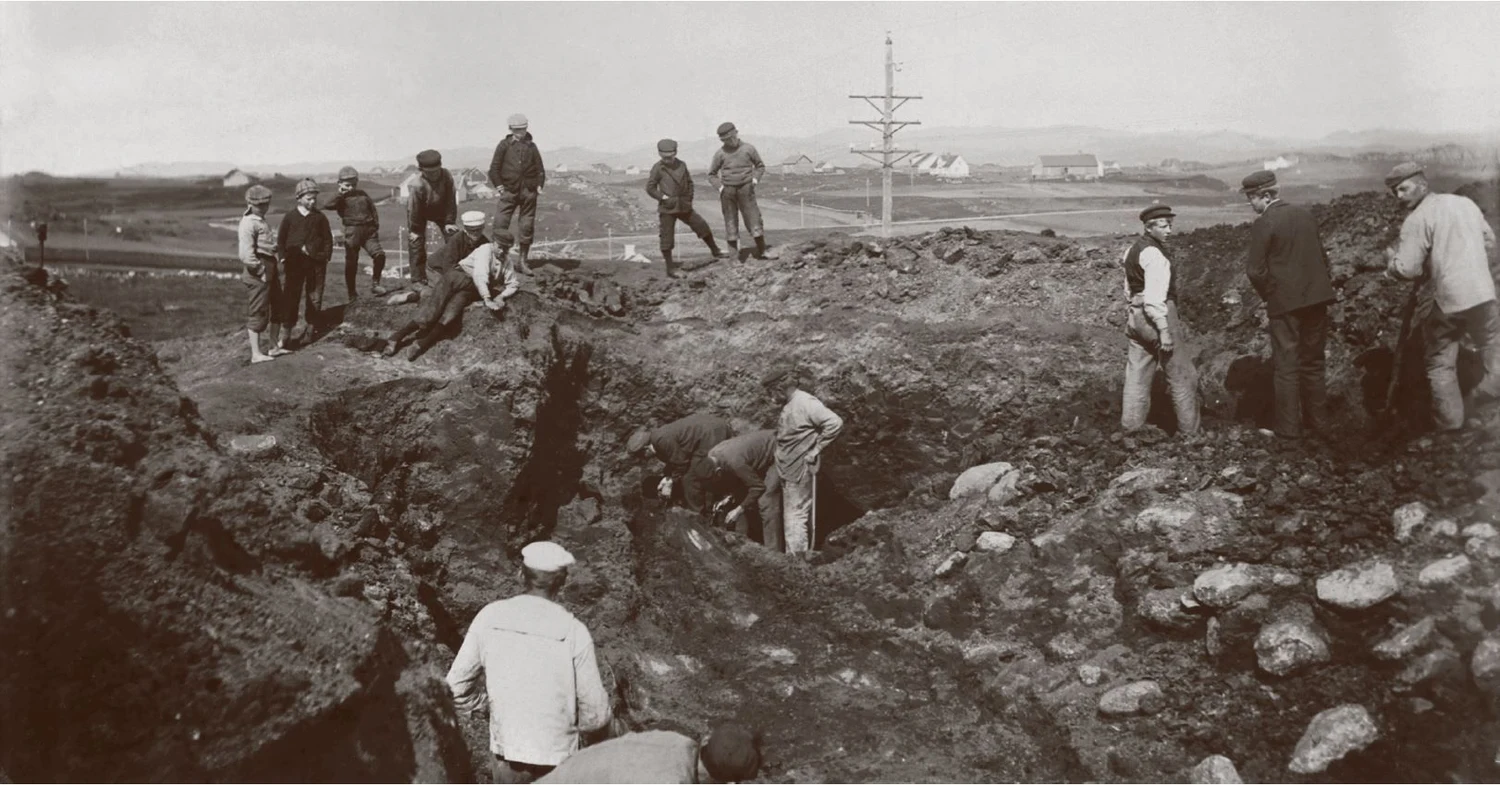
The 1902 excavation. University Museum of Bergen, CC BY. Resized and converted to WebP.
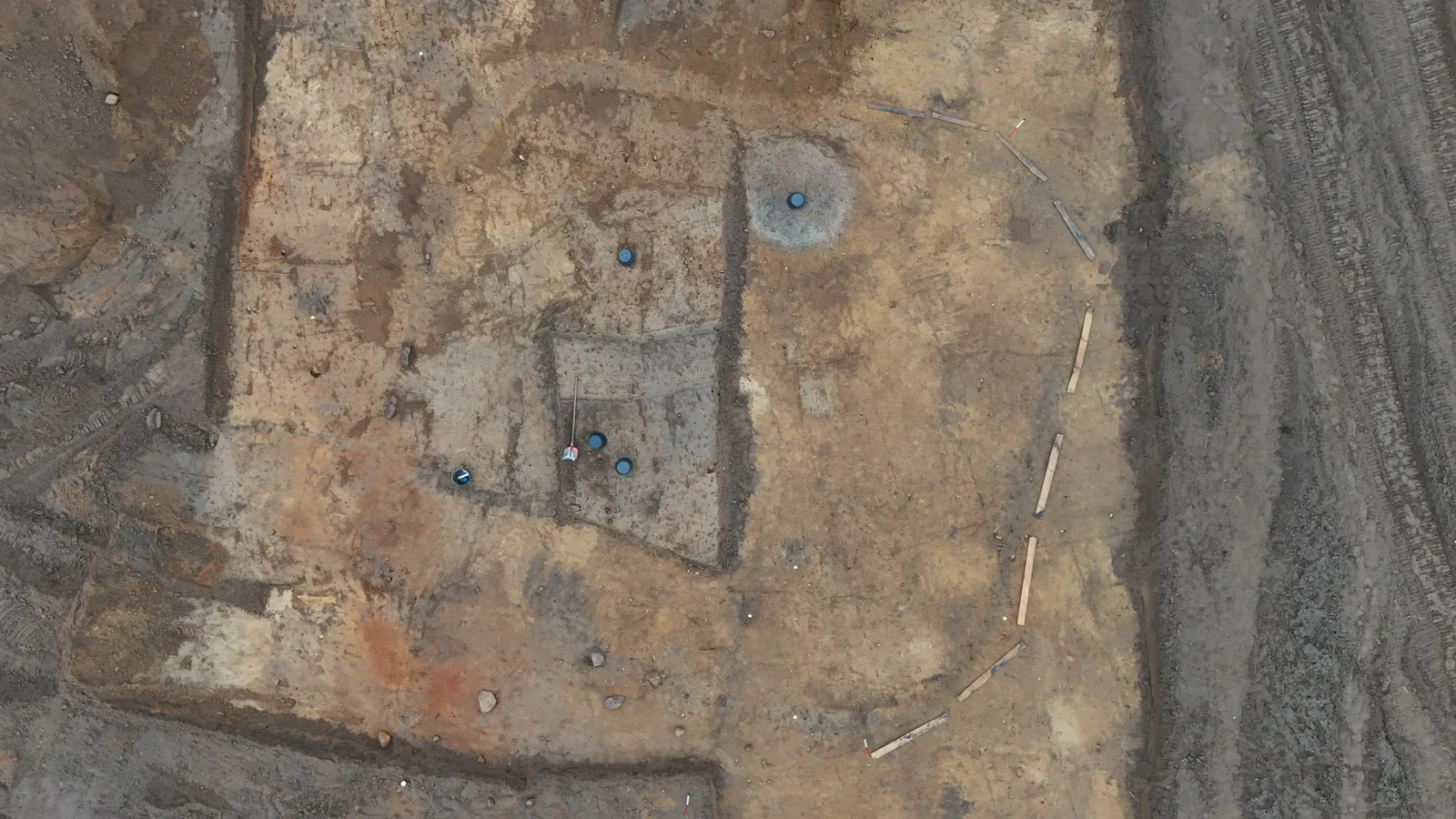
Archaeologists reopened the Grønhaug ship burial on the Norwegian island of Karmøy in August 2026 and found the lower edge of a stone structure beneath the Viking Age grave. The team suspects the ship was buried in a mound first built during the Bronze Age. The county’s excavation report leaves the age of the lower structure open pending dating of the samples. For more on Bronze Age, see Seddin’s Bronze Age ‘Temple’: What the Evidence Shows.
The August excavation returned to coverage in November. The date distinction matters because there are two things to date: the ship and the structure below it. Researchers have already narrowed down when an oak used in the ship was felled. That result tells us when the timber became available for shipbuilding, while the lower stonework needs evidence of its own.
What was found beneath the ship?
Grønhaug rises about four metres and measures about 30 metres across. It sits near Reheia, a Bronze Age burial ground. The surrounding mounds make an earlier origin plausible. The most useful clue inside Grønhaug is the edge of the lower stonework, which the team found at a deeper level than the Viking Age traces.
In its August field report, Rogaland County Municipality describes a mound built with turf and peaty soil around a core of stones. Archaeologists Marie Ødegaard and Håkon Reiersen reopened part of it to learn how it was built and how much organic material survived. They collected samples before closing the excavation. If datable material from the lower structure confirms the team’s interpretation, Grønhaug would be a case of a Viking Age ship burial placed into a much older monument.
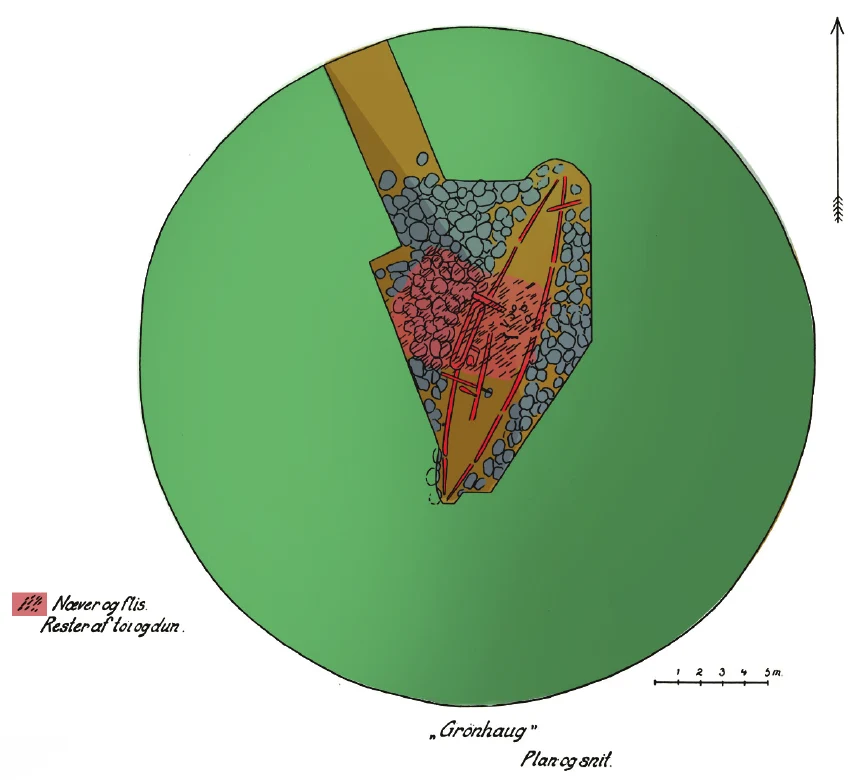
What dates the Viking ship?
Haakon Shetelig encountered the oak ship in an excavation in 1902. It was roughly 15 metres long. Some older accounts still give a late eighth-century date for the ship or burial. In a 2025 study, Aoife Daly, Justin J. L. Kimball and Jan Bill used tree rings and radiocarbon measurements to date the felling of the oak used for one plank to AD 854–867.
The Norwegian Directorate for Cultural Heritage describes the ship as dating to around AD 864. The ship could have been in use before burial, and its timber cannot date the stones below it. A specific person’s identity also cannot be established from the ship’s date or its proximity to the royal site at Avaldsnes.
What would settle the age of the lower mound?
The researchers need material tied to the construction or use of the lower feature. A date from the Viking grave, or from something that worked its way into the mound later, would answer a different question. The stones’ position gives a sequence to test. A securely placed sample could give that sequence a date.
On the Isle of Man, disturbance in the soil makes it difficult to tell whether objects came from one grave or two. At Grønhaug, the visible layering gives investigators a different kind of clue. The open question is how much time separates the two structures.
Frequently asked questions
What was found beneath the ship?
Grønhaug rises about four metres and measures about 30 metres across. It sits near Reheia, a Bronze Age burial ground. The surrounding mounds make an earlier origin plausible. The most useful clue inside Grønhaug is the edge of the lower stonework, which the team found at a deeper level than the Viking Age traces.
What dates the Viking ship?
Haakon Shetelig encountered the oak ship in an excavation in 1902. It was roughly 15 metres long. Some older accounts still give a late eighth-century date for the ship or burial. In a 2025 study, Aoife Daly, Justin J. L. Kimball and Jan Bill used tree rings and radiocarbon measurements to date the felling of the oak used for one plank to AD 854–867.
What would settle the age of the lower mound?
The researchers need material tied to the construction or use of the lower feature. A date from the Viking grave, or from something that worked its way into the mound later, would answer a different question. The stones’ position gives a sequence to test. A securely placed sample could give that sequence a date.