News / Movies
His Monster Streams October 5: What the Film Changes About Japan’s Shōjō
His Monster’s October 5 digital release pairs a predatory creature with Japan’s Shōjō. Explore the sake-loving figure’s history in art and Noh theatre.
Topics: His Monster, Shōjō, Shojo, Erich Cannon, Gabriel Casdorph, Japanese folklore, Noh, Astoria
Erich Cannon’s His Monster is scheduled to reach digital audiences on October 5, 2026 with a creature drawn from Japanese folklore — but the name behind that creature carries a history very different from the standard modern horror monster.
The film follows James Streeter, played by Gabriel Casdorph, a man struggling with alcoholism and grief after his young daughter is swept out to sea. James becomes convinced that something inhuman took her. As deaths begin around him, he keeps searching the Oregon woods for the creature he believes is responsible.
Oregon Film says His Monster is scheduled to arrive on Apple TV and Fandango At Home on October 5, following a limited theatrical and festival run. BritFlicks reports that distributor 4Digital Media’s rollout covers the United States, Canada, the United Kingdom, Australia and New Zealand.
The monster has a name: Shōjō.
That name is real.
But the safest way to understand what His Monster is doing is not to treat the movie as a literal adaptation of one fixed ancient legend.
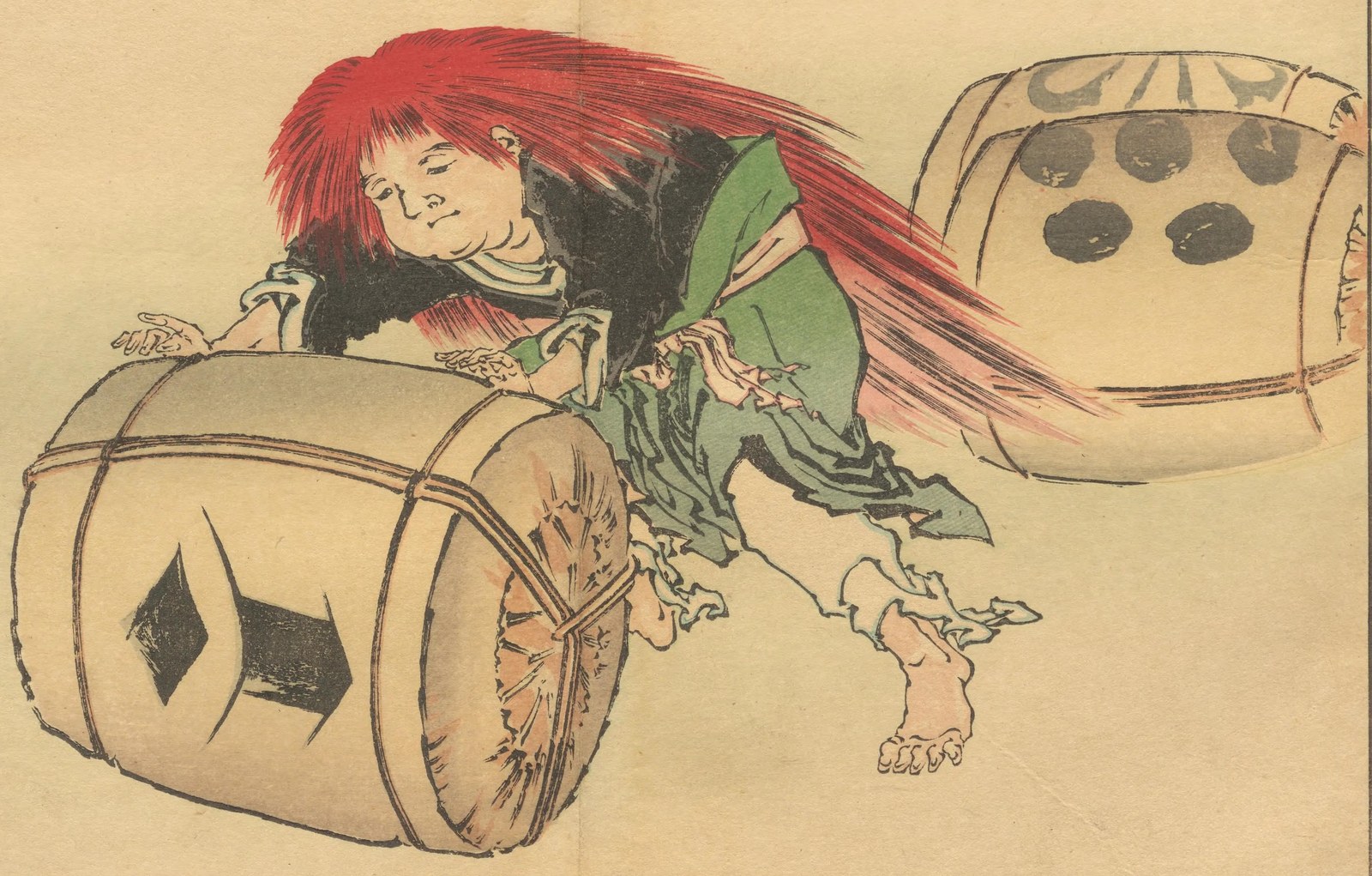
The Shōjō of Japanese art and Noh theatre is associated with red hair, drinking, sake and water. In famous traditional representations, it can even be a celebratory and rewarding figure.
His Monster takes that older cultural material and turns it toward grief, addiction and predatory horror.
What is His Monster about?
The film is written and directed by Erich Cannon and was produced by Compassionate Disaster Films. The production company credits the story to Cannon and Nathan D. Lee.
Its story is set in Astoria, Oregon.
James Streeter has already been losing control of his life when his daughter disappears into the water. He believes a supernatural creature is responsible, but the people around him do not share that certainty.
Oregon Film describes the story as a psychological horror drama in which James’ conviction about the monster grows alongside his isolation.
The cast includes:
- Gabriel Casdorph as James Streeter
- Ashley Song as Su-Yeong
- Meranda Long as Mira
- Miette Blanche as Hanna
- Brace Evans as Detective Joseph
The film was shot in Oregon, including Astoria, Mt. Hood, Hug Point and parts of Portland.
Cannon has said that the story’s emotional center is addiction and grief rather than a monster existing only to generate jump scares.
That distinction matters when looking at the folklore.
The supernatural creature works partly as a literal threat and partly inside a story about a man whose perception, guilt and addiction have already destabilized his life.
The creature is called a Shōjō
Bloody Disgusting identified the film’s monster as the Shōjō when the first major trailer coverage appeared in January 2026.
The name is written 猩々 and is usually romanized Shōjō.
Modern English descriptions often call the figure a sprite, spirit, fantastical animal or yōkai.
But there is no single translation that captures every stage of its history.
The British Museum has a late-17th- or early-18th-century Noh mask catalogued simply as a mask for “Shojo (drunken sprite).”
An Edo-period textile in the Asian Art Museum shows red-haired Shōjō gathered around a sake jar. The museum connects the scene with the celebratory Noh play and its supernatural gift to a sake seller.
That is already quite different from the predatory creature suggested by His Monster.
The famous Noh Shōjō rewards a sake seller
One of the most influential Japanese forms of the Shōjō comes from Noh theatre.
The Asian Art Museum summarizes the traditional play through an Edo-period textile showing red-haired Shōjō dancing around a sake jar.
In the play, a sake seller repeatedly serves a mysterious drinker whose face never seems to flush.
The stranger is eventually revealed as a supernatural water spirit named Shōjō.
Instead of killing the merchant, the spirit dances and rewards him with a magical supply of sake that does not run dry.
That story helps explain several features that became visually attached to the figure:
- intense red costuming;
- a red face or red hair;
- sake;
- dance;
- water;
- celebration.
Waseda University’s Theatre Museum likewise describes the Shōjō of Noh as a Chinese-derived imaginary creature portrayed in the theatre as a sake-loving spirit, traditionally dressed in red.
So while horror marketing can accurately call Shōjō a figure from Japanese supernatural tradition, the famous theatrical version is not simply “a sea demon that hunts humans.”
The Shōjō has Chinese roots
Calling the Shōjō purely an ancient native Japanese monster also hides part of the history.
Waseda’s theatre collection explicitly describes the creature as originating from Chinese imaginary-animal traditions before becoming a distinctive figure in Japanese Noh.
Related Chinese descriptions use the name xingxing (猩猩), also written 狌狌, for a partly imaginary animal whose features do not always match the later Japanese theatrical figure.
Over time, Japanese theatre and art developed their own recognizable Shōjō imagery.
The red appearance became especially powerful.
The Noh costume can be almost entirely red, from wig to robe to mask.
That theatrical image then fed later visual culture.
This is a useful reminder that folklore does not always move inside modern national borders.
A supernatural figure can cross languages and centuries before later audiences decide it has one obvious “origin.”
Red hair is important — but not because all old sources agree
The modern Shōjō is strongly associated with red hair and a red face.
Museum objects make that connection easy to document.
The Asian Art Museum describes red-wigged Shōjō.
Waseda describes the theatrical costume as overwhelmingly red.
The British Museum’s Shōjō mask likewise connects the figure with drinking.
But that recognizable red image is itself part of the figure’s history rather than proof that every earlier Chinese account described exactly the same creature.
For Morbid Index, that difference matters.
A familiar visual design can become standardized through theatre and art.
Once that happens, later audiences may assume the standardized version must have been the oldest one.
Folklore rarely works that neatly.
His Monster turns the Shōjō toward predatory horror
The film’s marketing uses a much darker version.
James believes the creature attacked his daughter.
People begin dying.
He searches the woods for something he believes is killing those around him.
That is the film’s fiction.
It should not automatically be projected backward onto the Noh tradition.
The strongest historical sources reviewed for this article emphasize the Shōjō as:
- a sake-loving supernatural figure;
- a water-associated spirit or fantastical being;
- a red-haired/red-faced theatrical character;
- a celebratory figure in visual culture.
That does not mean no local tale has ever made a Shōjō threatening.
Folklore varies.
It means His Monster should not be treated as a documentary rulebook for what Shōjō “really do.”
The film is using an inherited name and image to create its own horror creature.
Why the choice still makes sense
The adaptation has a clear thematic fit.
A Shōjō is strongly connected with alcohol.
James is struggling with alcoholism.
Read as an interpretation of the film, that association creates a thematic bridge between the protagonist and the monster.
Cannon has described His Monster as a story about the grip of addiction and grief, drawing in part from his own experience with alcohol.
In that reading, the Shōjō is more than an exotic creature selected from a list of Japanese monsters.
The alcohol association gives the figure a direct relationship to the story’s central human problem.
A creature known for drinking becomes part of a film about a man trying — and failing — to control what drinking has done to his life.
The movie can then darken that association without claiming that the traditional Noh spirit was always a killer.
The film is also built around practical creature work
Cannon has described practical effects as one of his long-term creative interests.
He cited Guillermo del Toro, Jim Henson productions such as The Dark Crystal and Labyrinth, and the monster-of-the-week structure of The X-Files among his influences.
Oregon Film credits local sculptor Scott Foster with creature design and Andee Hess of Osmose Design with production design and the monster build.
That matters for the Shōjō adaptation.
The creature is not only a name mentioned in dialogue.
The production built a physical monster around the idea.
At the same time, practical design inevitably creates another layer of interpretation.
A costume, mask or creature suit has to make visual decisions that older stories may never have standardized.
Astoria gives the sea connection a new setting
His Monster relocates the supernatural figure into the Pacific Northwest.
Astoria sits at the mouth of the Columbia River near the Pacific Ocean.
The film’s story uses that landscape rather than a historical Japanese setting.

Central Astoria and the Astoria–Megler Bridge over the mouth of the Columbia River. The photograph is geographic context for the film’s Oregon setting, not a production still or a documented location of Shōjō folklore. Photo by EmergentProperty via Wikimedia Commons, licensed CC BY-SA 3.0. Resized and recompressed; this image remains under CC BY-SA 3.0.
That relocation is another reason to keep folklore and fiction separate.
A Japanese supernatural figure can be adapted into an Oregon horror story.
That does not relocate the historical folklore itself.
There is no basis in the sources reviewed here for claiming that Astoria has an old local Shōjō tradition.
The film creates that connection.
When does His Monster stream?
Oregon Film lists October 5, 2026 for the streaming release and specifically names Apple TV and Fandango At Home.
BritFlicks reports that 4Digital Media’s digital rollout covers:
- United States
- Canada
- United Kingdom
- Australia
- New Zealand
Actual store availability can appear at different times by platform and territory, so a release date should not be confused with proof that every storefront is already live at the same moment.
The film previously played a limited theatrical and festival run.
Oregon Film says it won Best Feature at the Old Towne Film Festival and Best Narrative Feature at the Unisphere Film Festival, and it also screened internationally at events including FantaFestival in Rome.
Is the official trailer available?
Yes. The official trailer is available on YouTube, uploaded on September 21, 2026 by 4DM Movie Trailers, distributor 4Digital Media’s trailer channel.
Its title is His Monster (2026) | Official Trailer | Horror/Mystery. Oregon Film also embeds this same video in its September release announcement.
His Monster is not a folklore documentary
This is the final boundary worth preserving.
A film can use real folklore without reproducing it literally.
His Monster takes:
- the Shōjō name;
- the association with water;
- the figure’s theatrical and artistic associations;
- the association with alcohol;
and places those elements inside a new psychological creature feature about grief and addiction.
The old Noh Shōjō can dance, drink and reward a sake seller.
Cannon’s monster can be frightening.
Both can exist without one erasing the other.
The useful history begins when we stop treating every modern monster movie as the final authority on the folklore it borrows.
Frequently Asked Questions
What is the monster in His Monster?
The film’s creature is identified as a Shōjō, a supernatural/fantastical figure known in Japanese art and Noh theatre and historically connected with older Chinese traditions.
Is Shōjō a Japanese demon?
“Demon” is too narrow. Museums describe Shōjō as a drunken sprite, water spirit or imaginary animal depending on context. The famous Noh version is not a Christian-style demon.
Does the traditional Shōjō kill people?
The famous Noh tradition does not center on a predatory killer. In that story, the Shōjō drinks, dances and rewards a sake seller with a magical inexhaustible supply of sake. Other traditions can differ, but the film’s killer-creature behavior should not be treated as a universal folklore rule.
Why is the Shōjō associated with alcohol?
Sake is central to the Noh play and to many historical visual representations. Shōjō are repeatedly shown drinking or gathered around sake vessels.
Why does the Shōjō have red hair?
Red became a defining part of the Japanese theatrical and artistic image of Shōjō. Noh costuming uses a dramatic red wig, red clothing and a red-toned mask.
Is Shōjō originally Japanese?
The Japanese Shōjō tradition has older Chinese antecedents. Japanese Noh and visual art developed a distinctive version of the figure over time.
Is His Monster based on one specific Shōjō legend?
No reviewed source establishes the movie as a direct adaptation of one particular traditional tale. It uses the Shōjō figure inside an original story about James Streeter, grief and alcoholism.
Where was His Monster filmed?
Oregon Film says the production shot in Astoria, Mt. Hood, Hug Point and parts of Portland, Oregon.
When is His Monster released digitally?
The digital release is scheduled for October 5, 2026. Oregon Film specifically names Apple TV and Fandango At Home, while distributor-related reporting lists a wider rollout across the U.S., Canada, U.K., Australia and New Zealand.
Is the His Monster trailer official?
Yes. The linked trailer was uploaded on September 21, 2026 by 4DM Movie Trailers, distributor 4Digital Media’s trailer channel. Oregon Film embeds the same video in its release announcement.
Sources & further reading
- 4Digital Media: His Monster release date and synopsis
- Compassionate Disaster Films: His Monster production credits and director statement
- Oregon Film / The Confluence: His Monster comes to streaming October 5
- Oregon Film / The Confluence: His Monster theatrical tour and production background
- BritFlicks: His Monster arrives on streaming platforms October 5
- Bloody Disgusting: His Monster trailer and Shōjō identification
- Asian Art Museum: Shojo sprites and Noh tradition
- British Museum: Noh theatre mask, Shojo
- Waseda University Theatre Museum: Noh Mask Shojo
- Japan Arts Council: Shōjō Noh play synopsis
- Nipponica and World Encyclopedia: Shōjō animal and theatrical traditions
- Taiwan Ministry of Education: 狌狌 and 猩猩 spelling variants
- 4DM Movie Trailers: His Monster official trailer, September 21, 2026
- National Diet Library: Katsushika shinsō gafu, 1890, frame 26
- Wikimedia Commons: Shōjō rolling a sake barrel
- Wikimedia Commons: Astoria-Megler
-fol26-shojo.jpg)
