Lore & Explained / Literature
Jekyll and Hyde Ending Explained: The Potion, the Confession and Who Dies
Why does Jekyll's potion fail, and who dies? Read the ending of Stevenson's 1886 novella, including the impurity, Hyde's smaller body and Jekyll's choices.
Topics: Jekyll and Hyde, Robert Louis Stevenson, Gothic Literature, Ending Explained
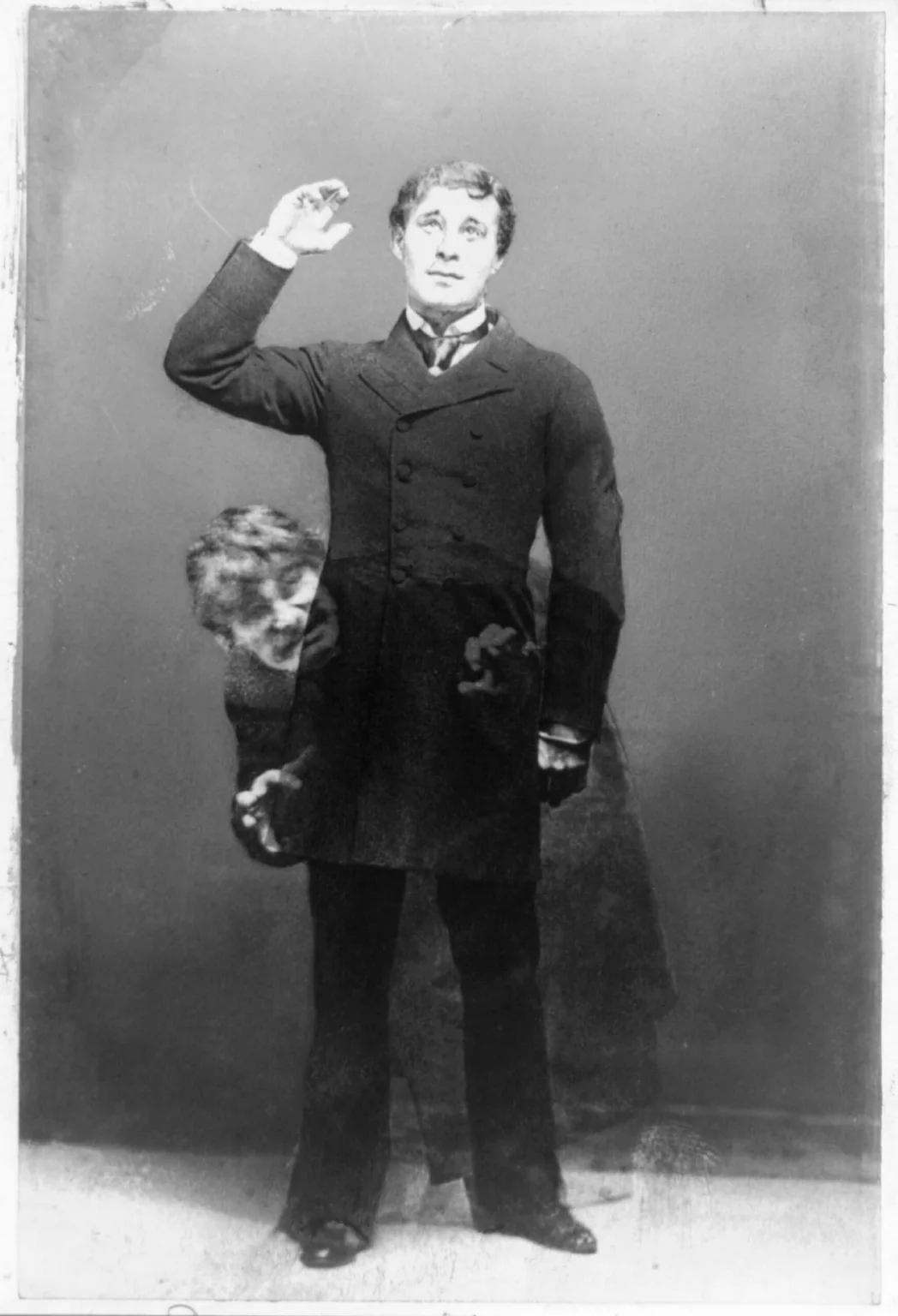
The ending of Strange Case of Dr Jekyll and Mr Hyde reveals that Henry Jekyll and Edward Hyde share one body. Jekyll’s transformations become uncontrollable, his supply of an effective chemical runs out, and the body Utterson and Poole find is in Hyde’s form. Jekyll’s final statement explains how the attempt to separate his impulses destroyed his ability to control them.
This is an explanation of Robert Louis Stevenson’s 1886 novella, with full spoilers. Film and stage versions often alter both the experiment and the ending.
What do Utterson and Poole find?
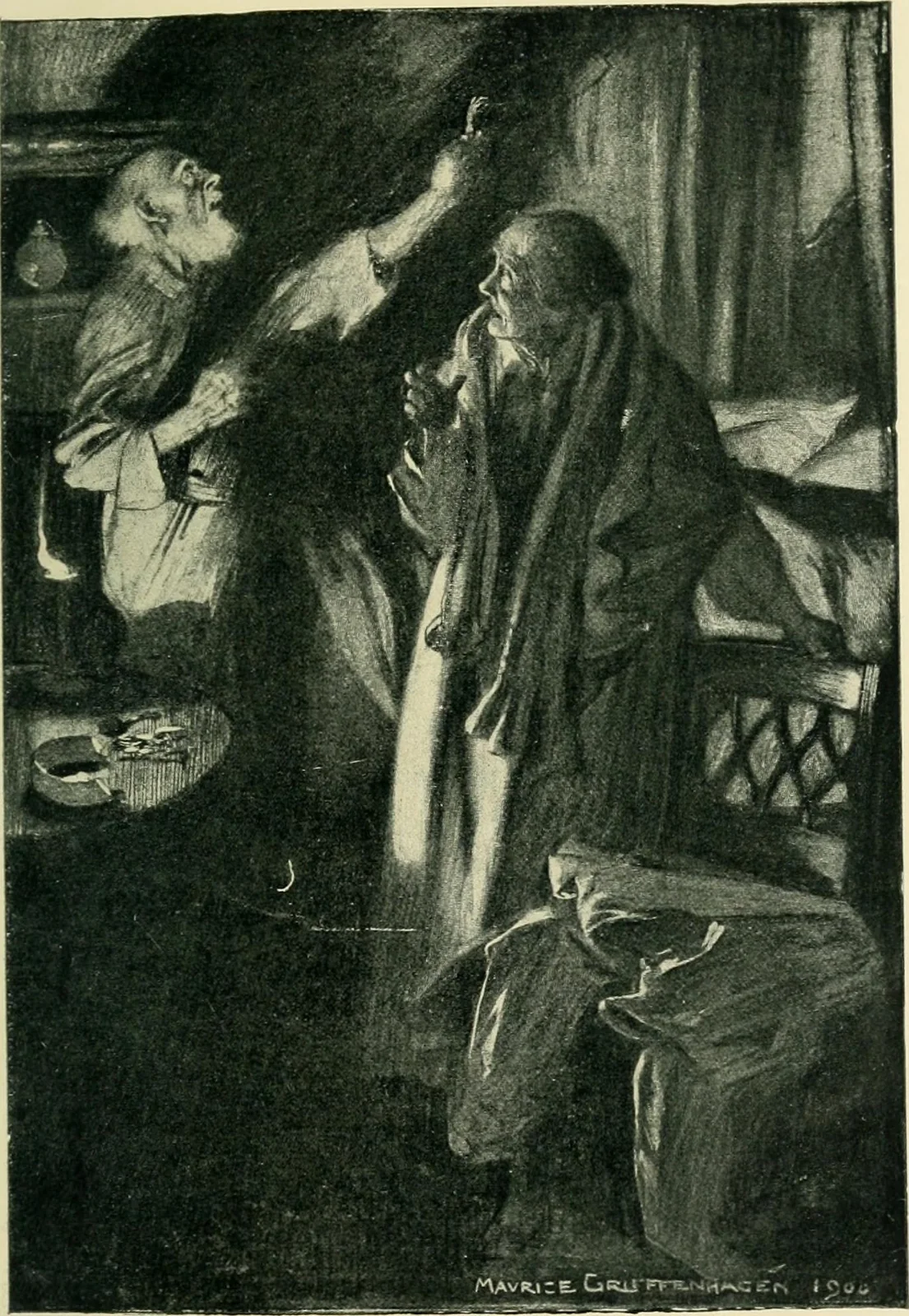
Concerned by the strange voice and conduct behind Jekyll’s locked door, the lawyer Utterson and the servant Poole force their way inside. They find Hyde dead in clothing too large for him, with evidence of poison nearby. Jekyll appears to be missing.
The puzzle is resolved through documents rather than a final spoken confession. Lanyon’s account describes witnessing a transformation; Jekyll’s own statement explains the experiment and its consequences. The order lets the reader move from an apparently impossible disappearance to the concealed relationship between the two identities.
The body does not belong to an unrelated visitor who murdered Jekyll and escaped his appearance. Hyde is the transformed condition of the same person.
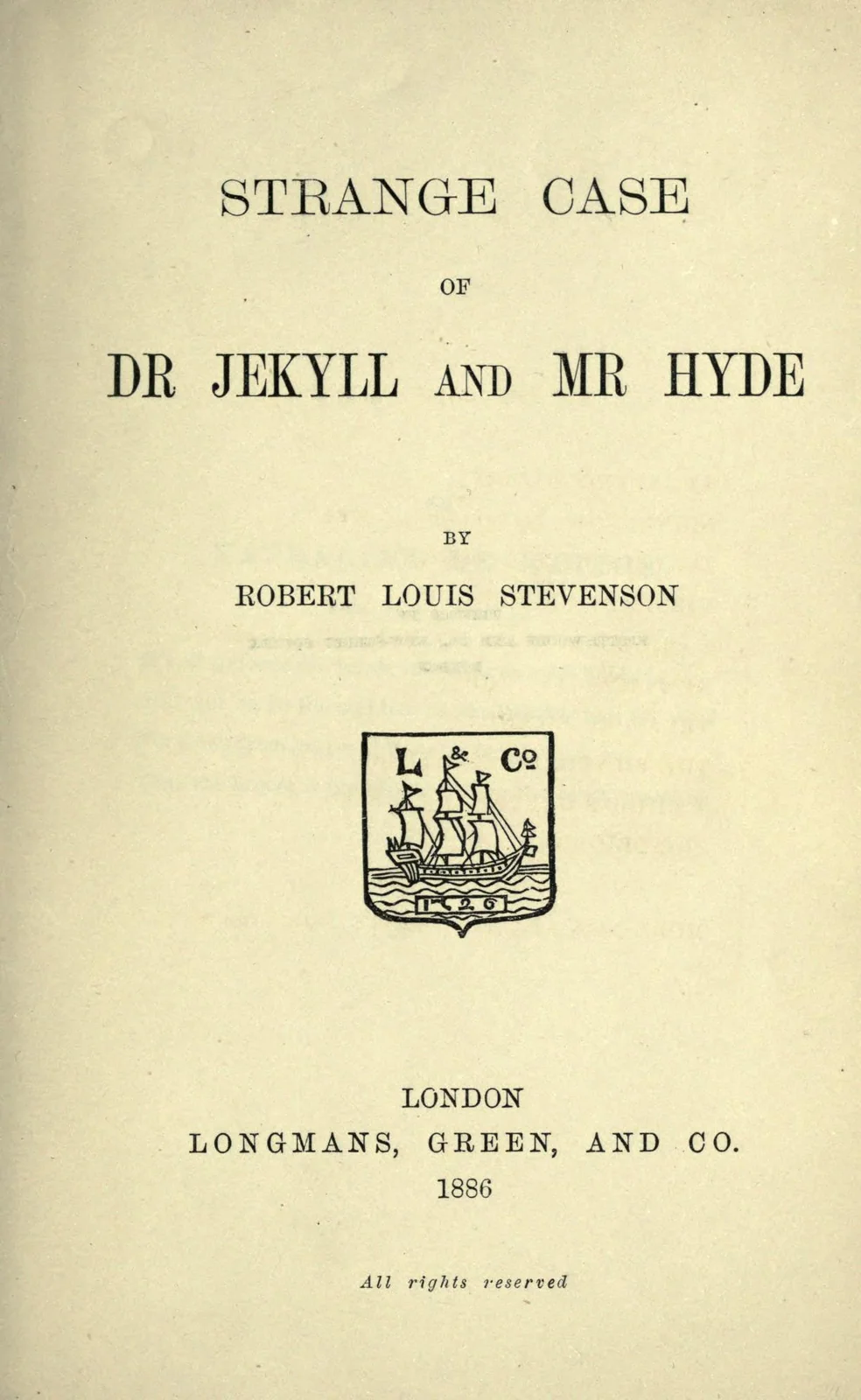
The 1886 title page, from the UCLA Library copy. Source. Robert Louis Stevenson. Public domain. Resized and converted to WebP.
Why does the potion stop working?
Jekyll initially controls the change with a chemical preparation. Later he transforms without choosing to, including at moments when he is trying to remain himself. The drug becomes necessary to recover Jekyll’s form rather than merely a means of becoming Hyde.
When the original supply of a salt is exhausted, new supplies fail. Jekyll concludes that an unknown impurity in the first batch made the preparation effective. He can repeat the named ingredients without reproducing the accidental condition that mattered.
The final confession in the novella therefore gives a specific reason for the crisis. It is not simply that the potion has a built-in limit of three uses or that Jekyll forgets his own recipe.
The failed replication also undermines his confidence as an experimenter. He had exercised power over his body without fully understanding the process on which that power depended.
Is Jekyll good and Hyde evil?
That formula is too neat. Jekyll already contains the conflicting desires he hopes to separate. He creates Hyde partly to enjoy actions without having them attached to his respectable public identity.
Hyde’s violence becomes more extreme, culminating in the murder of Sir Danvers Carew. But Jekyll’s responsibility does not disappear because his appearance changes. He knows the connection, benefits from the concealment and repeatedly returns to the possibility of transformation.
The moral problem is not an innocent doctor randomly inhabited by an unrelated monster. It is a man trying to partition conduct from reputation, then discovering that the partition will not remain under his control.
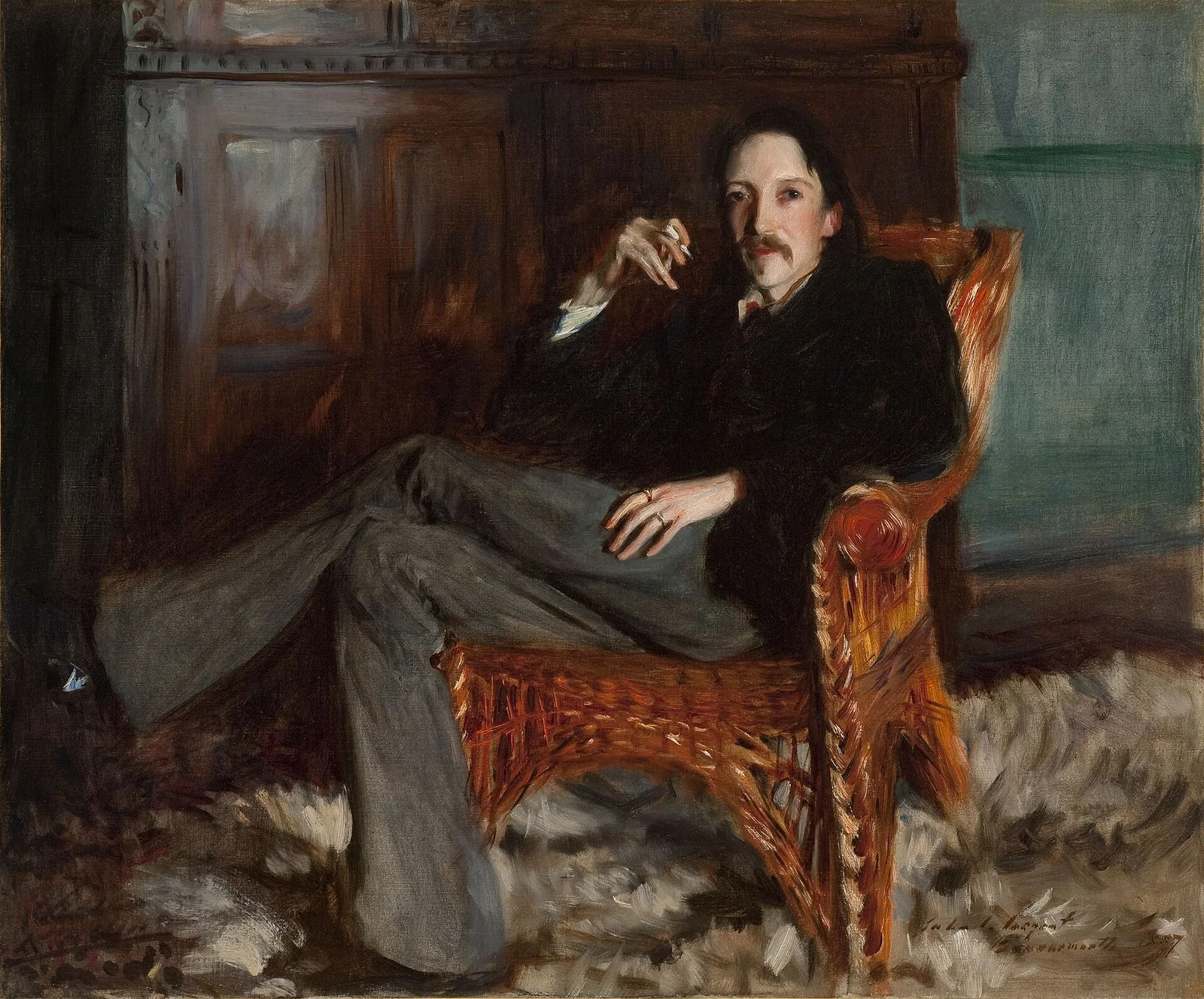
John Singer Sargent’s portrait of Robert Louis Stevenson, 1887. Source. John Singer Sargent. Public domain. Resized and converted to WebP.
Why is Hyde smaller than Jekyll?
Stevenson’s Hyde is smaller, slighter and younger. Jekyll’s own explanation connects that difference with the part of himself that had been less fully exercised. Later portrayals that make Hyde a towering brute are adapting the figure, not reproducing this detail.
The photograph of Richard Mansfield accompanying this article belongs to the theatrical afterlife of the story. Its double exposure visualizes two appearances in one performer. It is a record of performance and photography, not an image of a medical condition.
The novella’s fantastic transformation should not be used as a clinical description of dissociative identity disorder or as evidence that people with mental illness are secretly violent.
Who dies at the end?
Physically, there is one body, found in Hyde’s form. Narratively, Jekyll treats the loss of his ability to return as an ending of his own life before the reader reaches the discovered body.
His statement stops at the point where he can no longer guarantee control. It does not narrate his final seconds from outside himself. Utterson’s discovery supplies the external outcome, while the confession supplies the history leading to it.
That combination preserves a last uncertainty about experience without leaving the central identity puzzle unsolved. Jekyll and Hyde are not two separate bodies whose fates require two separate corpses.
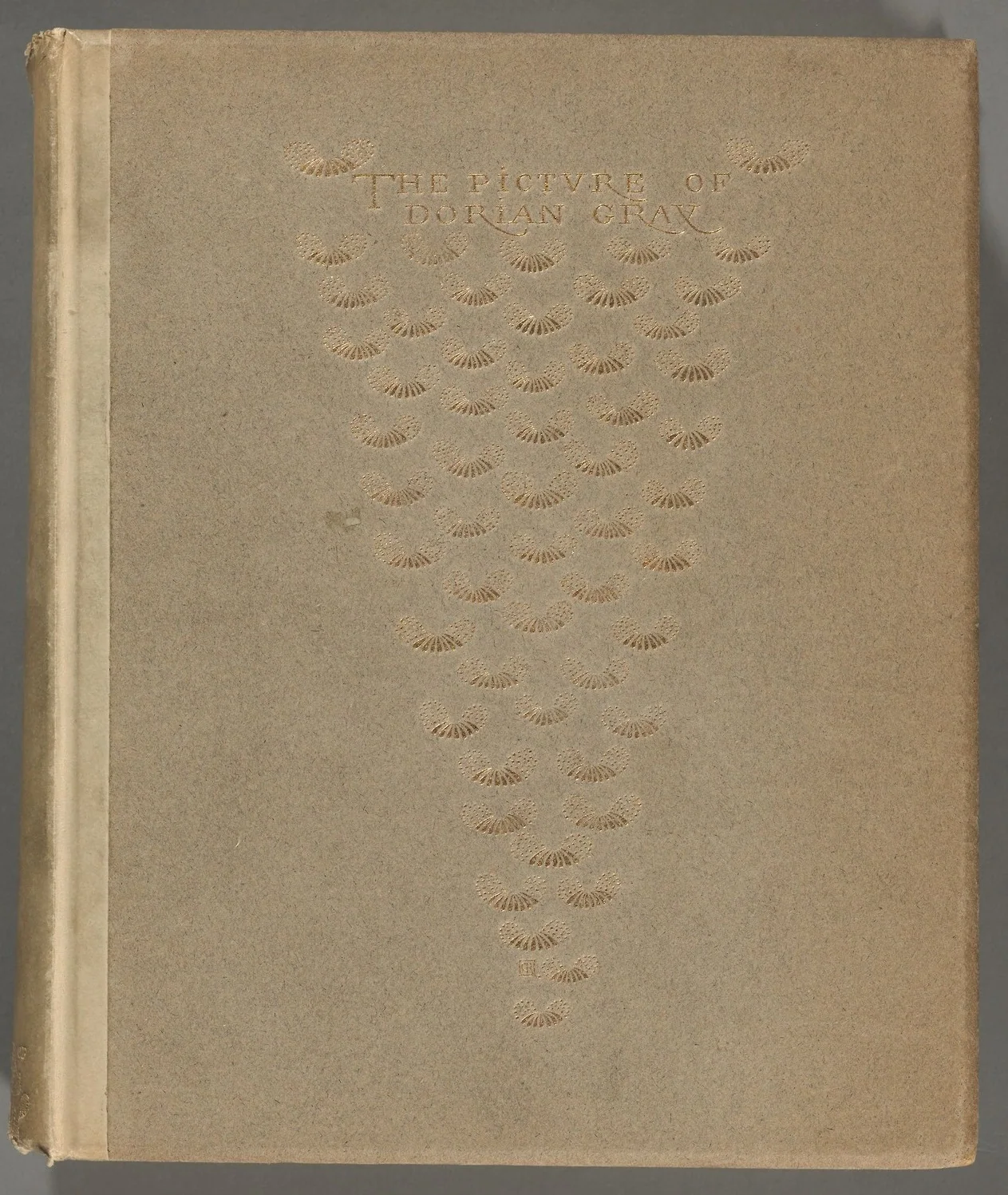
For another story about keeping a respectable face while damage accumulates elsewhere, read The Picture of Dorian Gray. Frankenstein offers a different relationship between experiment, creation and responsibility.