Lore & Explained / Folklore
Krampus Explained: The Real Alpine Folklore Behind Christmas's Horned Monster
Krampus isn't documented before the 16th century, and the popular 'son of Hel' backstory traces to a 2012 fantasy novel. Here's the actual Alpine history.
Topics: Krampus, Alpine Folklore, Christmas Folklore, Saint Nicholas, Folklore
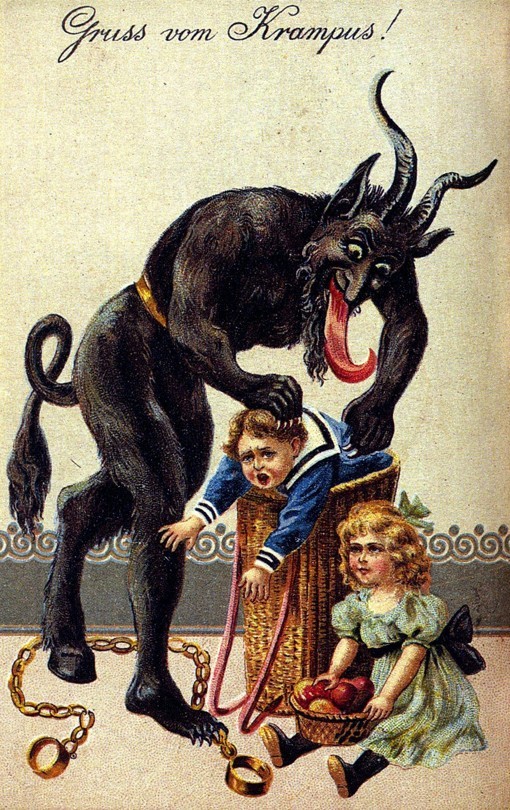
Unknown photographer, c. 1900s (Public Domain)
Krampus is the horned, chain-rattling companion who’s supposed to punish naughty children while St. Nicholas rewards the good ones — a figure that’s become genuinely popular in American pop culture over the last decade, usually introduced as an “ancient pagan god” who predates Christianity. The documented record doesn’t actually support that framing. Krampus isn’t attested in any written source before the 16th century, and one of his most widely repeated modern backstories — that he’s literally the son of the Norse death-goddess Hel — traces to a specific 2012 fantasy novel, not to any older mythology.
Who Krampus Is, Traditionally
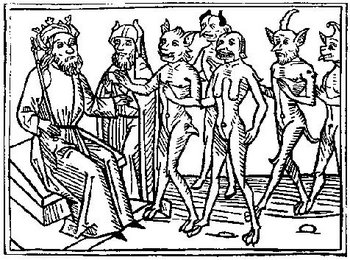
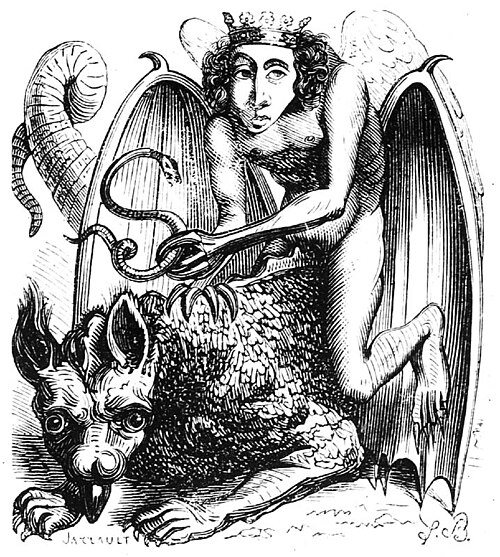
In the folklore of the Central and Eastern Alps — Austria, Bavaria, South Tyrol, and neighboring regions — Krampus accompanies St. Nicholas on Krampusnacht, December 5, the night before the Feast of St. Nicholas. Where Nicholas rewards well-behaved children with small gifts, Krampus is said to punish badly behaved ones, traditionally depicted carrying birch rods (Ruten) for swatting and chains he rattles to announce his approach; some tellings have him carrying off particularly wicked children in a basket. He’s typically portrayed as a shaggy, goat-horned, cloven-hooved figure with a long tongue — visually indebted to older European devil and demon iconography rather than to any single fixed traditional appearance.
The St. Nicholas Pairing
The pairing of a rewarding saint with a punishing companion reflects a broader pattern across Alpine and Central European Christmas folklore, where St. Nicholas historically appears alongside various threatening counterparts by different regional names — Knecht Ruprecht in parts of Germany, Krampus specifically in Austria and Bavaria. The historical logic behind splitting reward and punishment between two figures rather than having Nicholas do both himself reflects that outright menace didn’t fit comfortably with Nicholas’s identity as a saint; giving the punishing role to a separate, demonic figure let the folk tradition keep both functions without compromising Nicholas’s own character.
Earliest Documentation
This is the part worth being precise about, given how often Krampus gets marketed as ancient. Historians have found no written attestation of a figure recognizably matching Krampus before the 16th century, and the clearer documentary trail actually starts later, through the late medieval and early modern Nikolausspiele — church-sponsored morality plays in which a masked devil figure accompanies St. Nicholas to frighten and threaten misbehaving children as a piece of religious theater. From there, the tradition that becomes recognizably “Krampus” develops through the following centuries of Alpine folk practice, well documented but considerably younger than the “ancient pre-Christian god” framing implies.
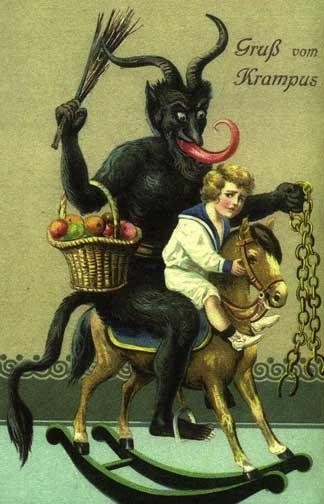
A Krampuskarte, or Krampus postcard, from around 1900 — part of a wildly popular greeting-card tradition that peaked between roughly 1885 and 1914. Source. Public Domain.
Is Krampus Actually a Pagan God?
Some popular and even a handful of scholarly accounts have proposed that Krampus descends from pre-Christian pagan deities or winter-solstice spirits, occasionally naming specific candidates like the horned Celtic god Cernunnos as a possible ancestor. That reading is a real position in the broader conversation about Krampus’s origins, but it’s also, by most historians’ own account, essentially unverifiable — there’s no unbroken documentary chain connecting any specific pre-Christian deity to the 16th-century-and-later Krampus record, and the pagan-survival theory functions more as an appealing origin story than an evidenced one. The honest position is that Krampus’s deeper folk roots may well reach into older Alpine winter tradition in some diffuse way, the same way a lot of regional folk custom does, but a specific, traceable lineage back to a named pagan god isn’t something the documentary record actually supports.
The “Son of Hel” Myth: A Traceable Modern Invention
This is worth correcting directly, because it circulates as though it were established folklore, including in some reputable-seeming outlets. The claim that Krampus is the literal son of Hel, the Norse goddess who presides over the underworld realm that shares her name, has no basis in any historical Norse or Alpine source — Old Norse was never spoken in the Alpine regions where Krampus tradition actually developed, and Krampus appears nowhere in genuine Old Norse literature. The connection appears to originate specifically with American fantasy author Gerald Brom’s 2012 novel Krampus: The Yule Lord, which invented the “son of Hel” backstory as a piece of original fiction for its plot. The idea then spread from there into popular online “folklore” content, sometimes uncritically, until it reads to many readers today like an established piece of traditional belief rather than a 21st-century novelist’s invention.
Perchten: A Related but Distinct Tradition
Krampus is often mentioned alongside the Perchten, wild masked figures from Alpine folklore associated with the winter period stretching toward Epiphany on January 6. Perchten traditions are genuinely old and regionally distinct from Krampus specifically, encompassing both frightening “Schiachperchten” and beautiful “Schönperchten” figures tied to seasonal transition and purification customs. The two traditions share visual and thematic DNA — masked, costumed, winter-associated figures meant to inspire fear or awe — and have influenced each other’s modern performance culture, but they’re not simply the same figure under different regional names, and treating them as interchangeable flattens two genuinely separate folk traditions.
Krampuskarten: The Postcard Boom
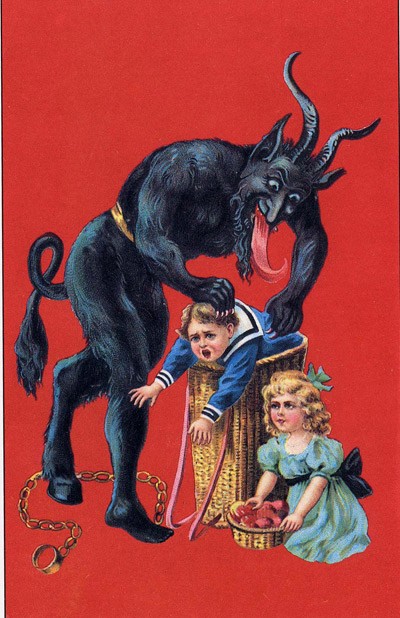
Another Krampuskarte from the early 1900s, part of the same commercial greeting-card boom. Source. Public Domain.
One of the best-documented chapters of Krampus history is entirely modern and thoroughly commercial: starting in the 1800s and peaking in the decades before World War I, Europeans exchanged Krampus-themed greeting cards known as Krampuskarten, often captioned “Gruß vom Krampus” (“Greetings from Krampus”). These cards frequently combined humor with genuinely unsettling imagery — Krampus menacing, chasing, or hauling off children, sometimes with mildly risqué undertones aimed at adult readers rather than children specifically. The Krampuskarten boom is a well-preserved, easily verified slice of the tradition’s actual documented history, in contrast to the far shakier claims about ancient pagan origins.
Suppression and Modern Revival
Krampus tradition has not had an uninterrupted run. Following the 1932 Austrian election, the Austrofascist Dollfuss regime prohibited Krampus celebrations, viewing the tradition’s association with violence and disorder as incompatible with the government’s aims; in the 1950s, Austrian authorities separately distributed pamphlets titled “Krampus Is an Evil Man,” expressing concern about the character’s effect on children’s mental well-being. The tradition saw a substantial modern revival toward the end of the 20th century, including the rise of organized Krampuslauf (“Krampus run”) events — public processions of costumed Krampus performers, now a significant tourist draw across Austria and neighboring regions and a major vector for the character’s renewed international visibility.
The 2015 Film
Krampus, a 2015 horror-comedy from Universal Pictures, introduced the character to a much wider American audience, drawing loosely on Alpine folklore elements while building its own contemporary horror-movie mythology around them. Like most horror-movie adaptations of folk material, it’s a creative reinterpretation rather than a documentary source, and shouldn’t be mistaken for an accurate account of the underlying Alpine tradition.
Frequently Asked Questions
What is Krampus? A horned, punishing companion figure to St. Nicholas in Central and Eastern Alpine folklore, traditionally appearing on Krampusnacht, December 5, to punish badly behaved children while Nicholas rewards good ones.
Is Krampus an ancient pagan god? There’s no verified documentation supporting that claim. Krampus isn’t attested in any written source before the 16th century, and historians generally treat pagan-origin theories as unverifiable rather than established.
Is Krampus the son of Hel? No. That claim has no basis in genuine Norse or Alpine tradition and appears to originate with Gerald Brom’s 2012 fantasy novel Krampus: The Yule Lord.
What is Krampusnacht? December 5, the night before the Feast of St. Nicholas, when Krampus traditionally appears alongside St. Nicholas in Alpine communities.
Are Krampus and the Perchten the same thing? No. They’re related but distinct Alpine winter folklore traditions with their own separate histories, though they share visual and thematic similarities and have influenced each other’s modern festival culture.
Was Krampus ever banned? Yes. Austria’s Austrofascist government banned Krampus celebrations following the 1932 election, and Austrian authorities raised concerns about the tradition again in the 1950s.
What are Krampuskarten? Krampus-themed greeting cards, especially popular in Europe from the 1800s through the years before World War I, often combining dark humor with unsettling imagery of Krampus menacing children.
Is the 2015 Krampus movie historically accurate? No. It’s a horror-comedy that draws loosely on Alpine folklore elements while building its own original story around them, not a documentary account of the tradition.