Lore & Explained
Marchosias Explained: The Winged Wolf Who Hoped to Return to Heaven
Explore Marchosias's winged wolf form, marquis rank and hope of returning to Heaven, with a comparison of the Goetia and earlier demon catalogues.
Topics: Marchosias, Demons, Ars Goetia, Grimoires
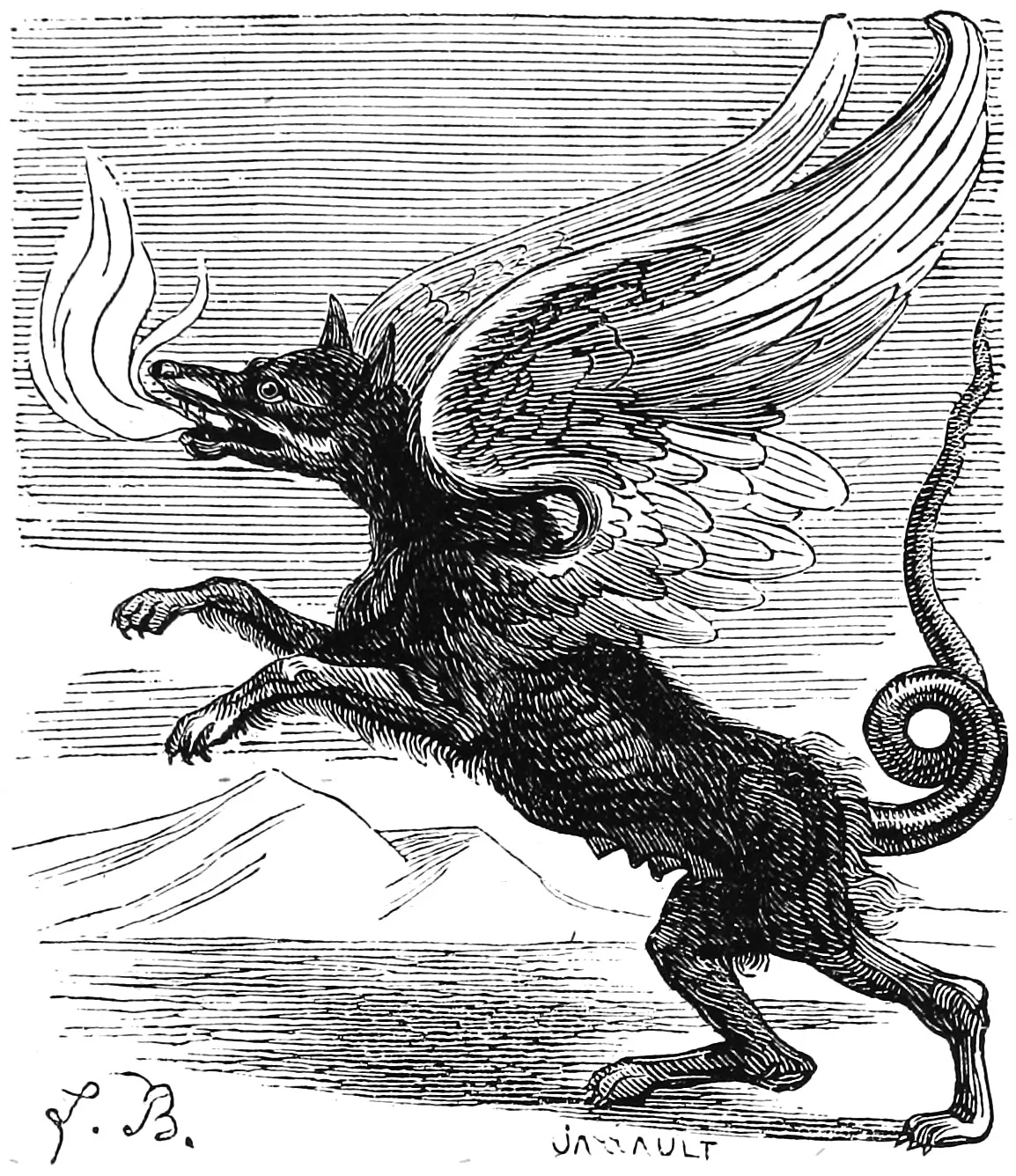
Marchosias is a marquis in the Ars Goetia, described as a winged wolf with a serpent’s tail who can take human form. The entry also gives him an unusual ambition: he hopes to return to a heavenly throne. That hope is reported inside the grimoire, not presented as a fulfilled prophecy.
His familiar monstrous body is only half the story. The account also calls him truthful and faithful to the practitioner, making him a less simple figure than an illustration alone suggests.
Marchosias or Marchocias?
The spellings belong to related textual traditions. Johann Weyer’s Pseudomonarchia Daemonum uses Marchocias; Marchosias is familiar from the English tradition and the Goetia.
He is number 31 in Weyer and number 35 in the Goetia. Those positions are useful for finding the passage. They should not be treated as a league table of the strongest demons.
The core description remains recognizable: an imposing marquis with an animal form, martial ability and a claimed willingness to answer questions. The differences are best understood by comparing editions, rather than assuming that alternate spellings indicate separate beings.
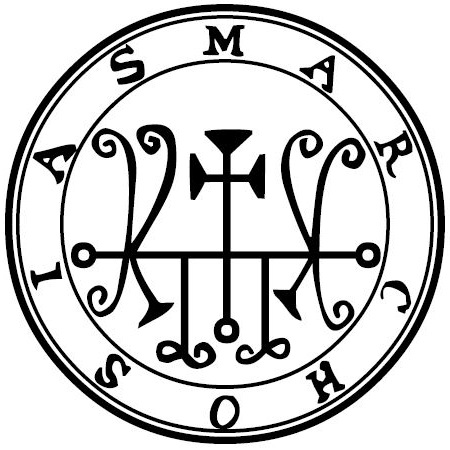
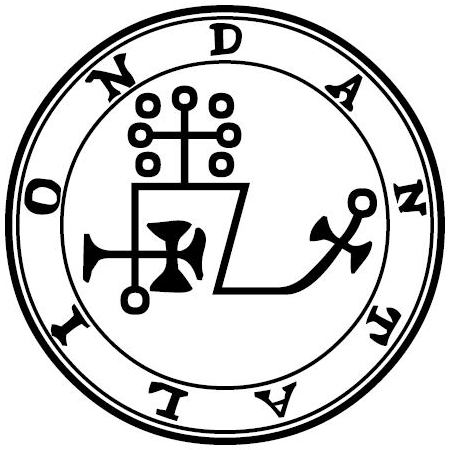
The 1904 Goetia’s seal of Marchosias, distinct from a pictorial portrait. Source. S.L. MacGregor Mathers and Aleister Crowley. Public domain. Resized and converted to WebP.
What does Marchosias look like?
The Goetia describes a wolf with griffin’s wings and a serpent’s tail, breathing fire. It then says he assumes the shape of a man at the exorcist’s command.
The well-known Louis Le Breton engraving in the 1863 Dictionnaire infernal makes the hybrid form concrete. It is a later interpretation of a textual creature, not evidence that someone observed such an animal.
The wings are not an incidental addition by a modern fantasy artist. They are part of the grimoire description. The serpent’s tail and transformation into human form are also in the text. Details beyond those features need to be traced to whichever artist or adaptation introduced them.
This is a different tradition from werewolf folklore. Marchosias is a spirit appearing in a wolf-like form; the entry does not describe an ordinary person becoming a wolf through a curse or at the full moon.
What powers are attributed to him?
The entry characterizes Marchosias as a strong fighter, a truthful respondent and a faithful servant of the exorcist. It assigns him 30 legions.
Here exorcist refers to the ritual operator in the book’s system. It does not necessarily mean a priest removing a possessing spirit from a patient, the meaning familiar from modern horror. The text imagines someone compelling a spirit to appear and respond.
That context explains the apparently contradictory description of a threatening creature as faithful. The promise concerns the spirit’s behavior within the ritual hierarchy. It is not a universal moral assessment, and it does not establish that the promised results can occur.
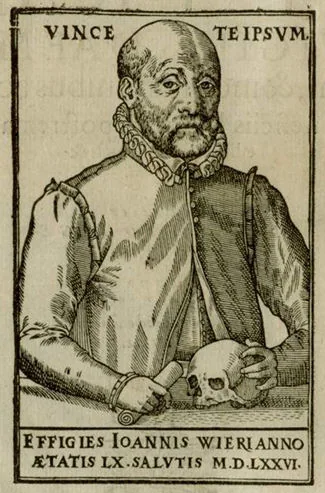
Johann Weyer’s catalogue preserves an earlier account under the spelling Marchocias. Source. Unknown artist; portrait of Johann Weyer (1576). Public domain. Resized and converted to WebP.
Did Marchosias want to return to Heaven?
Yes, according to the Goetia entry. It identifies his former order as the dominations and reports that he told Solomon he hoped to return to the seventh throne after 1,200 years.
The phrasing is important: he had hopes. The passage does not give a verified date for a return, announce that it happened, or provide a calendar from which a modern reader can calculate an approaching event. Treating the number as a countdown turns a character’s reported expectation into something the text does not establish.
Solomon’s presence also belongs to the work’s claimed authority. A book attributed to an ancient king is not automatically a manuscript written in that king’s lifetime. These are later magical traditions using a Solomonic framework.
A useful comparison with other Goetic figures
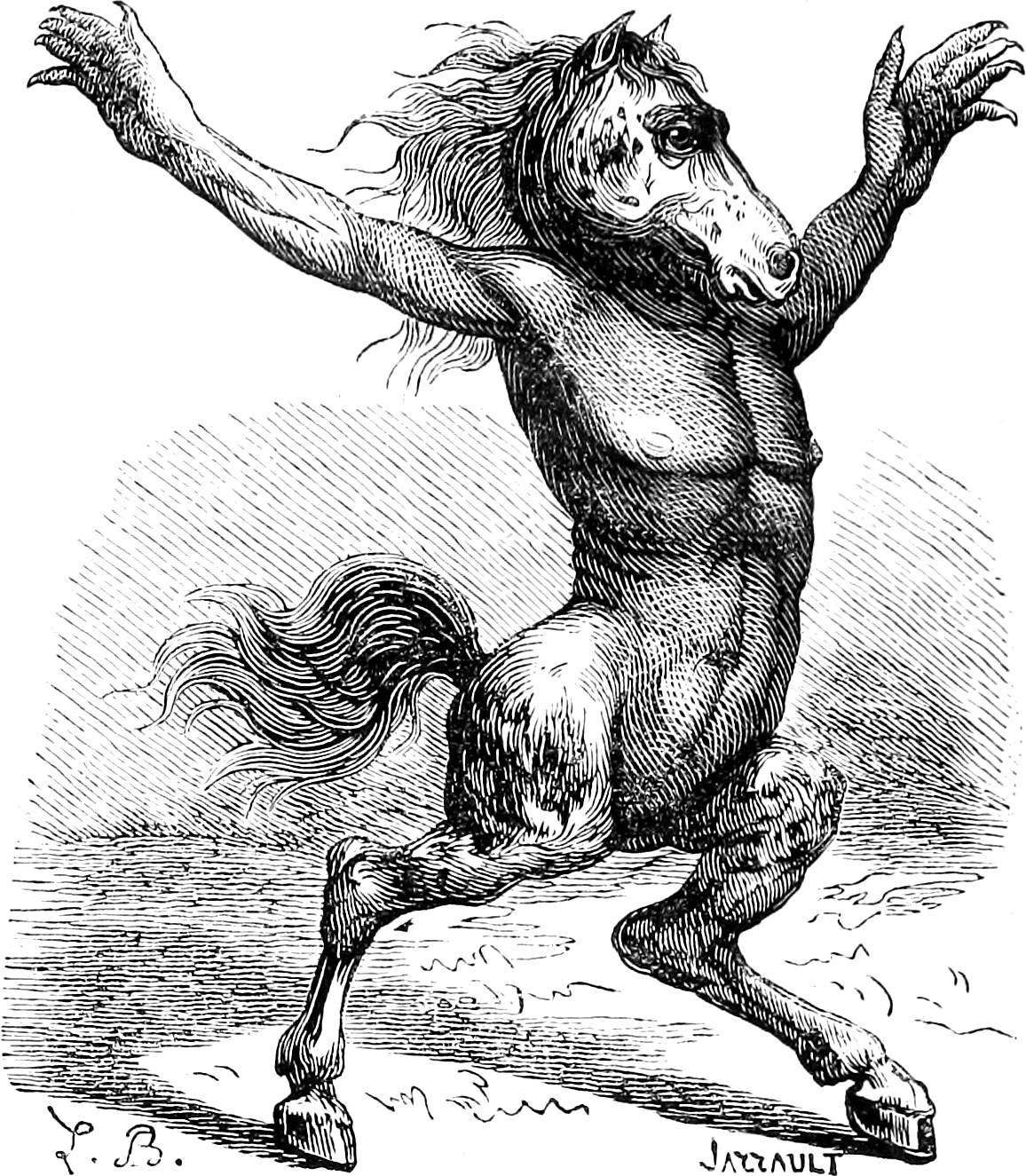
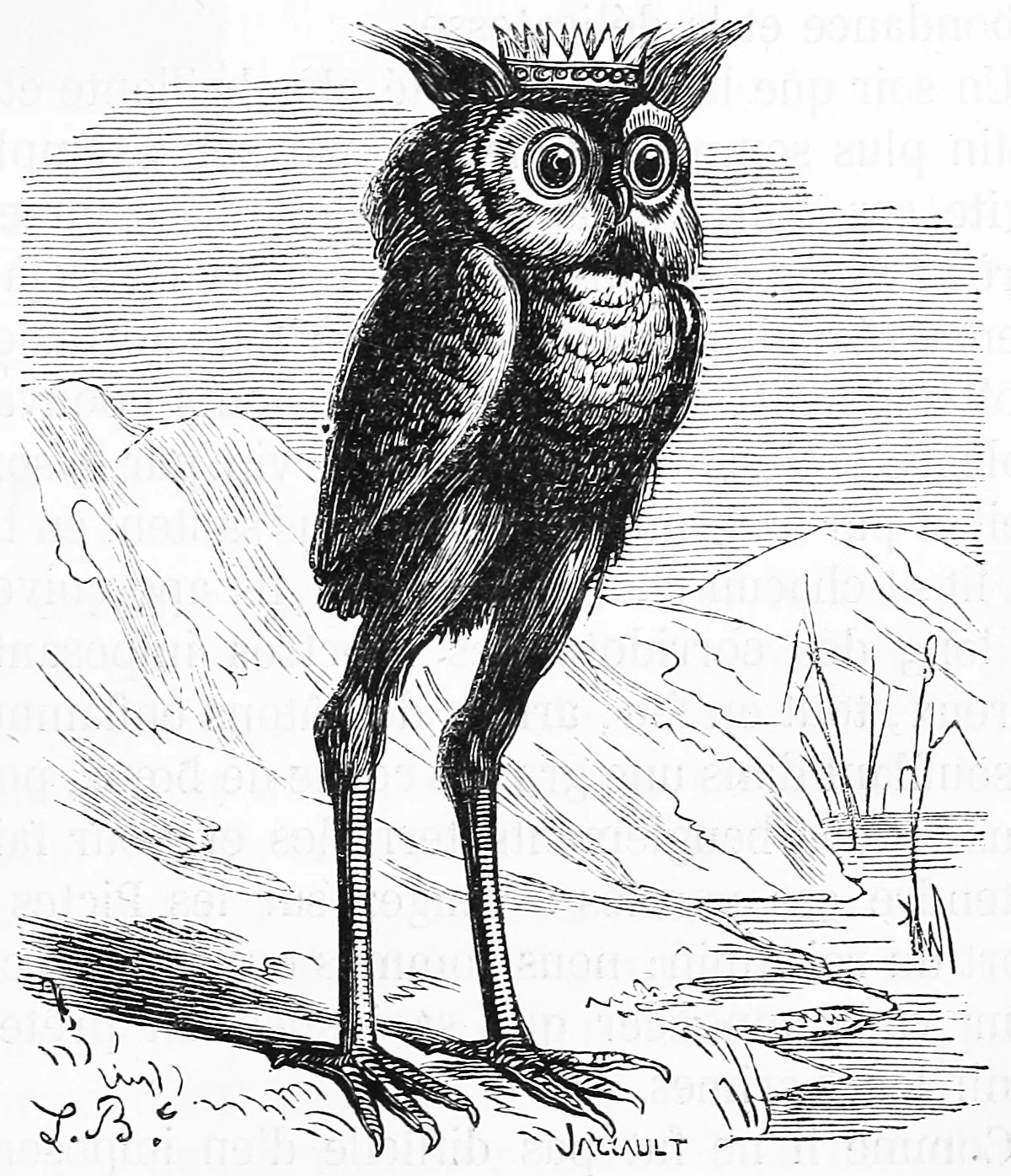
Orobas is another animal-shaped spirit whose entry emphasizes truthful answers and loyalty. Paimon illustrates a different combination of courtly rank and knowledge.
Together, these entries show why the catalogue works better as a collection of literary and ritual profiles than as a consistent biological or theological system. A wolf, a horse and a crowned rider can occupy neighboring parts of the same imagined bureaucracy without sharing a single origin story.
For Marchosias specifically, the most distinctive points are already in the short primary passage: the hybrid body, the human transformation, the fighter’s role and the unfulfilled hope of restoration. They do not need an invented romance, invented ancient worship or a modern power ranking to make them worth reading.