The Index / Unsolved Cases
Mary Celeste Explained: What Happened to the Famous Ghost Ship?
The Mary Celeste was found abandoned in the Atlantic in December 1872. A 2026 wood-and-ethanol experiment strengthened one old explosion theory, but it still does not prove why the crew left.
Topics: Mary Celeste, Ghost Ship, Unsolved Mysteries, Maritime History, 1872
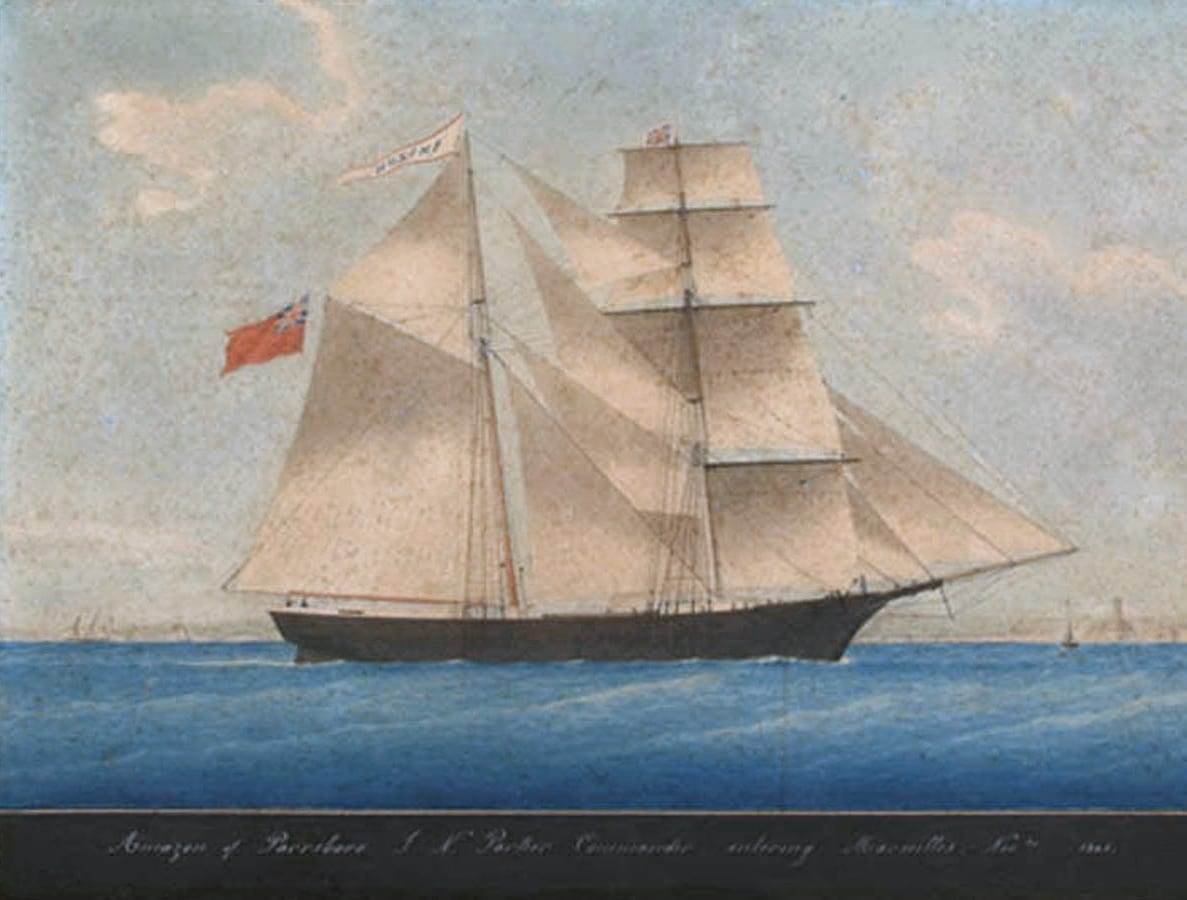
Public Domain, via Wikimedia Commons
On December 4, 1872, sailors from the Dei Gratia found the brigantine Mary Celeste moving through the Atlantic with nobody aboard.
The captain, his family and seven crew members were gone. The ship’s boat was missing. Papers and navigational instruments had been taken. Personal belongings remained. The vessel itself was still afloat and capable of sailing.
That basic mystery is real.
The famous image of a warm breakfast abandoned on the table is not.
More than 150 years later, the disappearance is still unresolved. But one long-running natural explanation became more interesting in 2026, when chemists Jack Rowbotham and Frank Mair tested an ethanol-vapour explosion scenario using a wooden scale model and real ethanol.
Their experiment showed that a rapid explosion could occur under warmer conditions and leave little or no visible charring.
That is useful evidence about what was physically possible.
It is not proof that the same event happened aboard the Mary Celeste.
Before the Mary Celeste
The vessel was launched in Nova Scotia in 1861 as the Amazon. She passed to American owners in 1868 and was renamed Mary Celeste.
Her final voyage began in New York on November 7, 1872, bound for Genoa.
Captain Benjamin Briggs sailed with his wife Sarah, their two-year-old daughter Sophia and a crew of seven. The cargo consisted of roughly 1,700 barrels of high-strength industrial alcohol.
Royal Museums Greenwich records the ship’s last surviving log entry on the morning of November 25.
Nine days later, the Dei Gratia encountered her.
What the boarding party found
First mate Oliver Deveau and another sailor crossed over from the Dei Gratia.
Their observations, later repeated during the Gibraltar salvage proceedings, are far more useful than the ghost-story versions that developed afterward.
The ship was empty.
The boat normally carried aboard the vessel was gone. Some sails and rigging were damaged. Cargo hatches had been disturbed. One pump was partly disassembled. The ship’s papers and Briggs’s navigational instruments were missing, while much of the crew’s personal property remained.
The condition strongly suggests that the people aboard left deliberately, rather than simply vanishing in an instant.
There were no obvious signs that a mass killing had taken place on deck.
And there was no interrupted breakfast scene.
The Gibraltar inquiry
The Mary Celeste was brought to Gibraltar, where a salvage court opened proceedings in December 1872.
Attorney General Frederick Solly-Flood became convinced that foul play might explain the abandonment. Suspicions included mutiny, murder and fraud.
Those ideas were investigated because the circumstances were genuinely unusual, not because investigators found clear evidence of a supernatural event.
The surviving archive is unusually valuable. The Peabody Essex Museum’s Phillips Library holds material from the Benjamin Spooner Briggs papers, including an 1873 letter with attached testimony from the Gibraltar investigation and later typescripts of evidence heard by the Vice Admiralty Court.
The inquiry never produced a demonstrated explanation for the crew’s disappearance.
The alcohol cargo has always mattered
The cargo is central to one of the strongest natural hypotheses.
Alcohol vapour is flammable. If ethanol leaked or evaporated from some of the barrels into a closed hold, the crew could have faced either an actual ignition or a situation that looked dangerously close to one.
Later unloading records showed that nine of the roughly 1,700 barrels were empty.
That fact does not prove an explosion.
It does create a plausible route by which vapour could have accumulated.
A captain would not need certainty that the ship was about to explode. He would only need to believe that remaining aboard for the next few minutes was more dangerous than getting into the boat.
The 2026 experiment
On April 7, 2026, Chemistry World reported a new experiment by Jack Rowbotham and Frank Mair at the University of Manchester.
The pair built a 1:18 scale wooden model of the ship’s hold and used ethanol rather than the substitute materials used in an earlier 2006 demonstration.
They first modelled colder conditions similar to those near the start of the voyage. A spark did not produce an explosion.
They then warmed the model and the ethanol to reproduce conditions closer to the warmer Atlantic near the Azores.
This time, ignition produced a rapid explosion. The blast displaced the hatch and buckled part of the model deck, but the wooden model showed no obvious burning or charring afterward.
That matters because a common objection to the explosion theory has always been the lack of scorch damage aboard the real ship.
The experiment demonstrates that a short ethanol-vapour event can be violent enough to alarm a crew while leaving less visible evidence than a sustained fire.
It does not demonstrate that the Mary Celeste definitely experienced such an explosion in 1872.
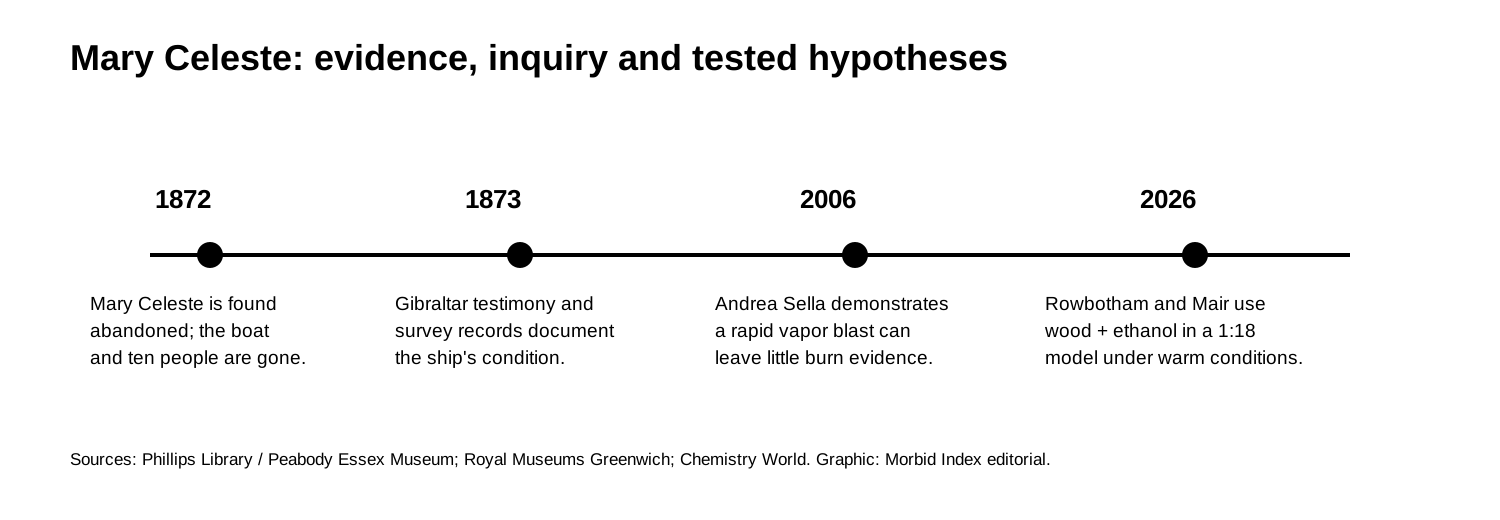
The experiment strengthened the physical plausibility of an old theory. It did not recreate the missing crew’s final decisions. Graphic: Morbid Index editorial.
What the experiment does not solve
The experiment still leaves the hardest part of the case unanswered.
Even if an ethanol-vapour flash occurred, we do not know:
- what caused the spark;
- whether Briggs ordered a temporary evacuation;
- whether the boat remained attached to the ship by a line;
- whether weather conditions separated the boat from the vessel;
- what happened to all ten people afterward.
No body, lifeboat wreckage or surviving witness has supplied the missing sequence.
The experiment therefore strengthens a mechanism, not the entire story.
Other natural explanations
Alcohol vapour is not the only serious hypothesis.
Water in the hold, damaged rigging, the state of the pumps and the missing boat have also supported scenarios involving rough weather, misread water levels or a fear that the vessel was flooding.
Royal Museums Greenwich notes that one pump was partly disassembled and that a sounding rod was found nearby. If the crew had difficulty measuring the water level reliably, Briggs may have believed the vessel was in worse condition than it actually was.
A temporary evacuation could therefore have been triggered by several problems at once rather than one dramatic explosion.
The warm-breakfast story is later fiction
Arthur Conan Doyle’s 1884 short story “J. Habakuk Jephson’s Statement” helped turn the case into a cultural legend.
Doyle changed facts, including the ship’s name, and created a fictional plot.
Later retellings made the abandoned ship look even more theatrical: meals still warm, cups untouched and an entire crew apparently removed between bites.
That image does not belong to the strongest historical record.
The real case is stranger in a quieter way.
The people appear to have left a viable ship intentionally.
We do not know why they believed that was necessary.
What happened to the ship later
The Mary Celeste returned to commercial service after the 1872 incident.
Her career ended in the 1880s after a later captain deliberately wrecked her in an insurance-fraud scheme near Haiti.
That later crime is unrelated to the 1872 disappearance, but it added another layer to the ship’s reputation for bad luck.
Is the mystery solved?
No.
The 2026 experiment makes the ethanol-vapour hypothesis more physically credible than it was before, especially because it used wood and ethanol in a warmer-condition model and reproduced a fast blast without obvious charring.
But a laboratory demonstration is not an eyewitness.
The safest conclusion is:
- the crew almost certainly abandoned the ship deliberately;
- an alcohol-vapour scare or ignition is now a well-supported possible trigger;
- flooding concerns or equipment problems may also have contributed;
- the exact reason for leaving and the crew’s fate remain unknown.
That is enough to keep the Mary Celeste in the category of unresolved historical mysteries without turning the gaps into paranormal evidence.
For another case where a real mystery accumulated far more dramatic mythology, see the Dyatlov Pass Incident.
Frequently Asked Questions
Was anyone from the Mary Celeste ever found?
No. Captain Benjamin Briggs, his wife, daughter and seven crew members were never recovered.
Was there really food still warm on the table?
The strong historical record does not support the famous warm-breakfast scene. It belongs to later retelling and fiction rather than the documented boarding evidence.
Did an alcohol explosion sink the ship?
No. The ship did not sink in 1872. The theory is that an ethanol-vapour event may have frightened the crew into leaving temporarily.
Did scientists solve the Mary Celeste mystery in 2026?
No. Rowbotham and Mair demonstrated that a rapid ethanol-vapour explosion could occur in a wooden scale model under warmer conditions without leaving obvious charring. That makes the theory more plausible, but it does not prove that the event occurred aboard the real ship.
Why would the crew leave a ship that was still seaworthy?
They may have believed the danger was immediate — from fumes, an explosion risk, flooding or inaccurate water measurements — and intended to return after waiting in the boat.
What is the most plausible explanation?
A temporary evacuation triggered by a perceived danger remains one of the strongest evidence-based scenarios. The 2026 experiment strengthens the alcohol-vapour version of that scenario, but the exact sequence is still unproven.
Is there evidence the disappearance was supernatural?
No. The unresolved parts of the case are historical gaps, not evidence of a paranormal cause.
Sources & further reading
- Phillips Library, Peabody Essex Museum: Benjamin Spooner Briggs Papers — 1873 Mary Celeste testimony materials
- Phillips Library, Peabody Essex Museum: 1873 letter with attached Mary Celeste testimony
- Royal Museums Greenwich: The mystery of the Mary Celeste
- Chemistry World: Chemists think they know what happened on board the Mary Celeste (April 7, 2026)
- Smithsonian Magazine: Abandoned Ship — The Mary Celeste
- The Guardian archive: Mary Celeste — mysterious occurrence at sea, 1873
- Wikimedia Commons: Mary Celeste as Amazon in 1861 (Public Domain)