Lore & Explained / Movies
Nosferatu vs. Dracula: How Count Orlok Changed the Vampire
Is Count Orlok the same as Dracula? Compare the 1922 Nosferatu with Bram Stoker's novel, from appearance and plague to the crucial sunlight ending.
Topics: Nosferatu, Dracula, Vampires, Count Orlok, Horror Movies
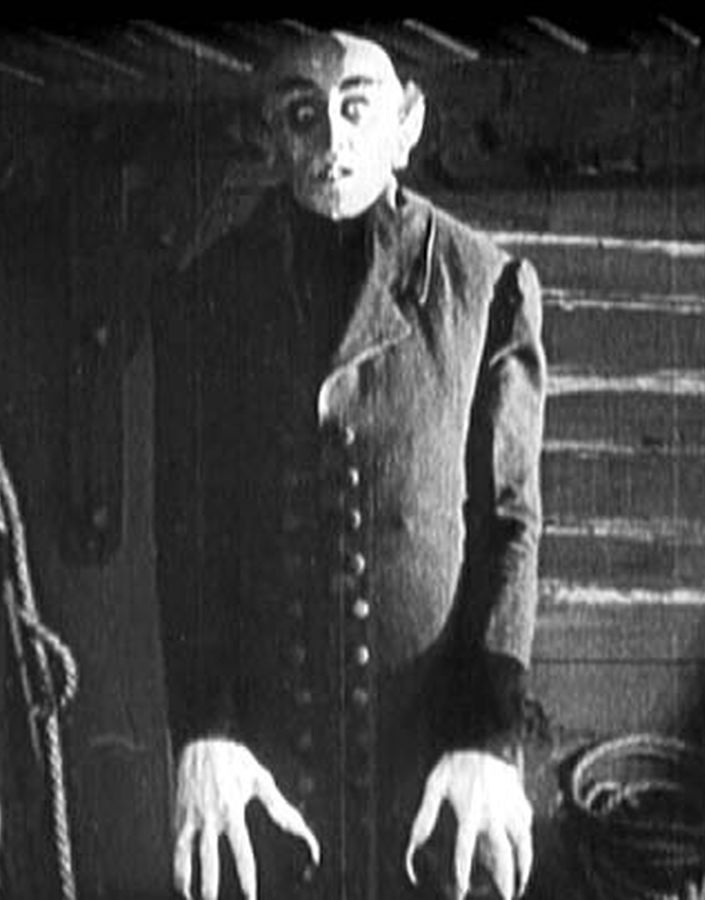
Nosferatu – Eine Symphonie des Grauens, Prana-Film, 1922 (Public Domain)
Count Orlok is the vampire in F. W. Murnau’s Nosferatu (1922), an unauthorized adaptation of Bram Stoker’s Dracula (1897). He is not an unrelated monster who happens to resemble Dracula. The film changes names, setting, appearance and important parts of the plot while retaining a recognizable version of Stoker’s story.
That makes the simplest answer “an adaptation,” not “exactly the same character in every detail.” Orlok belongs to Murnau’s film. Dracula belongs to Stoker’s novel and its many separate adaptations. Comparing them means specifying which versions are on the table.
Here, the comparison is between the 1922 film and the 1897 novel. It includes spoilers for both endings.
What the two stories share
A young man travels to the castle of a disturbing foreign count to arrange a property transaction. The apparent business trip becomes a trap. The count is a vampire, and the property purchase helps him move into the world of the visitor and the people he loves.
In the novel, that traveler is Jonathan Harker. In Nosferatu, he is Thomas Hutter. Stoker’s Mina becomes, in the film’s substantially rearranged story, Ellen Hutter. The count is renamed Orlok and played by Max Schreck.
The shared structure makes the borrowing clear even without identical names. The BFI identifies the film as an unauthorized adaptation, and records the legal challenge by Stoker’s widow. Changing a title and several character names did not make the underlying connection disappear.
Orlok is not a different species with a fixed rulebook
Online discussions sometimes treat “Nosferatu” and “Dracula” as two biological categories of vampire. That is not a helpful way to understand this particular film.
Orlok is a cinematic reworking of a literary vampire. Differences in his abilities and weaknesses belong to that adaptation. They are not scientific distinctions, nor do they establish rules that every later filmmaker must follow.
The same applies when a later work uses the word nosferatu for a class of creature. That usage may be perfectly coherent inside a game or fictional universe, but it does not redefine Murnau’s relationship to Stoker.
How their appearances differ
Schreck’s Orlok is bald, narrow and visibly inhuman, with pointed ears and extraordinarily long fingers. His body can resemble an angular shape inserted into a doorway rather than a guest entering a room. Kino Lorber’s account of the film emphasizes this departure from more socially plausible vampire portrayals.
Stoker’s Dracula is also unsettling. Harker notices an old man’s white moustache, sharp teeth and unusual hands. He is not initially the familiar clean-shaven romantic aristocrat of some later adaptations. The useful comparison is therefore not “ugly Orlok versus handsome book Dracula.” Both are frightening, but the novel can let its count converse and conceal his nature in ways Orlok’s silhouette makes difficult.
That distinction changes the audience’s experience. Harker gradually accumulates reasons to fear his host. A viewer who gets a clear look at Orlok needs much less persuading.
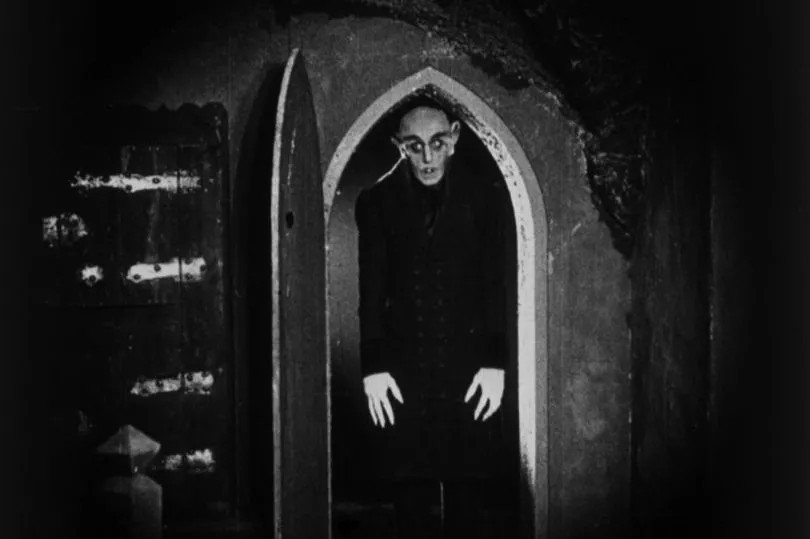
Orlok’s silhouette filling a doorway is one of the film’s most reproduced images, and shows how little Murnau relies on dialogue to establish threat. Source. Public domain.
Why disease dominates Nosferatu
Murnau gives the vampire’s arrival the shape of a public catastrophe. A ship brings him into town, and death spreads through the community. Coffins and deserted streets become part of the film’s vocabulary.
The result is different from focusing only on a predator and an individual victim. The threat seems to have entered the surroundings themselves. The town cannot simply shut one bedroom door and return to normal life.
This is also why the film’s real locations matter. As Kino Lorber notes, substantial location filming sets the fantastic figure against recognizable landscapes and buildings. Ordinary spaces do not reassure us. They give the vampire somewhere believable to arrive.
Stoker also uses illness, blood and invasive threat, but his novel expands into a coordinated pursuit involving journals, letters, records and a group of hunters. Nosferatu compresses and redirects that material. It is not simply the novel with fewer spoken words.
The biggest rule change: sunlight
In Stoker’s novel, daylight restricts Dracula’s freedom and powers, but it does not automatically burn him to death. Readers importing a later sunlight rule can misread scenes in which he operates during the day.
The original Nosferatu gives sunrise a decisive role. Ellen keeps Orlok with her until morning, and the sunlight destroys him. She also dies. The vampire’s defeat comes through her action and sacrifice rather than a recreation of Stoker’s final pursuit.
The Sight and Sound essay on the film discusses this ending and the unease that remains after the vampire vanishes. One need not accept every part of that critic’s interpretation to recognize the basic contrast: sunrise is fatal here, whereas it is not Dracula’s automatic death sentence in the novel.
What happens to Dracula instead?
Stoker ends with the hunters intercepting the count before he can regain safety. Jonathan Harker and Quincey Morris attack him with knives as the sun goes down. That is not Orlok’s bedroom ending, and it is not the familiar image of a lone hunter hammering a stake through Dracula’s heart.
The book does contain staking elsewhere. Remembering that detail correctly while attaching it to the wrong death is an easy mistake. The solution is to return to the actual scene rather than reconstruct it from a century of vampire films.
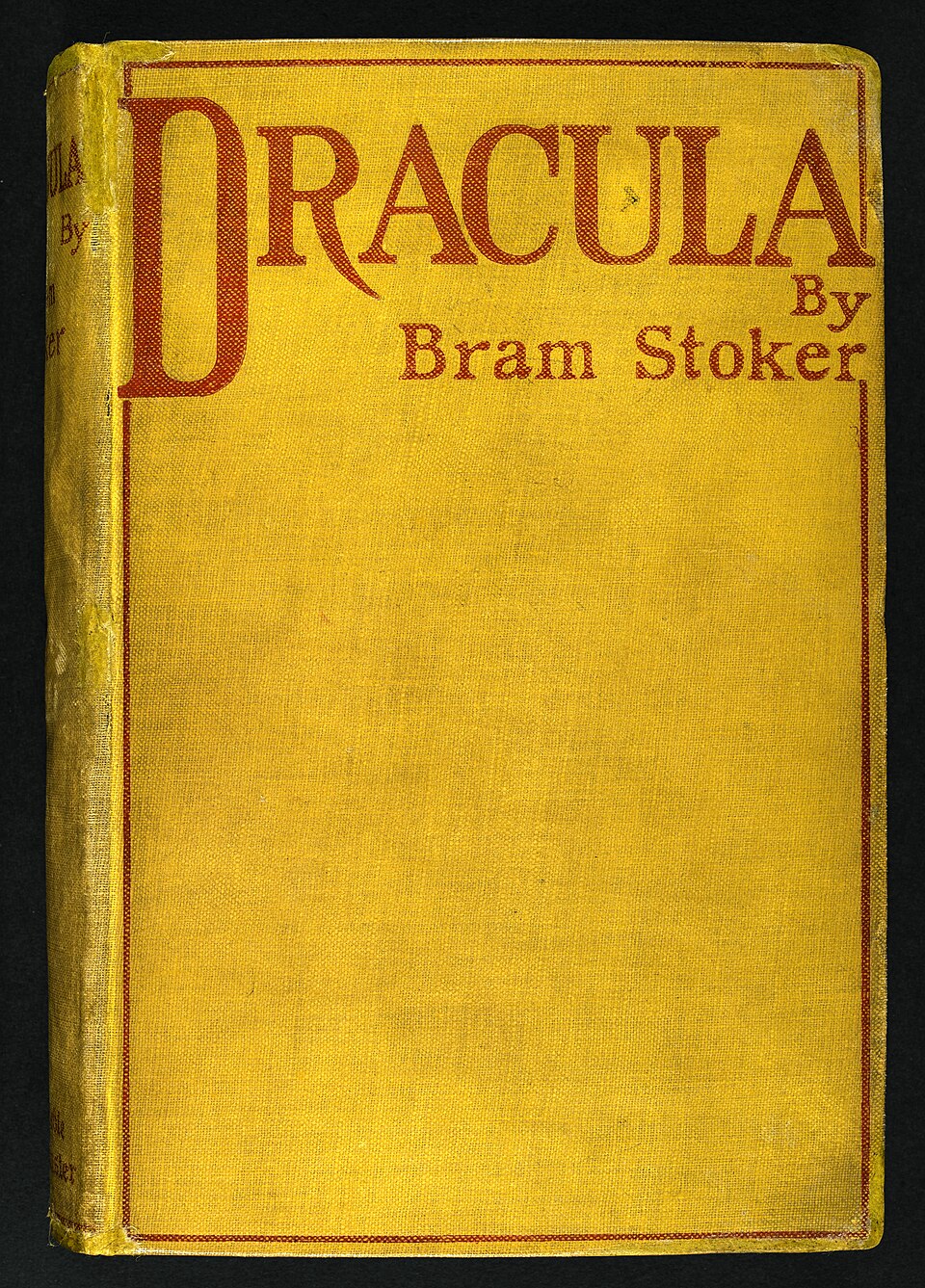
The 1897 first edition, bound in plain yellow cloth with red lettering and no illustration. Source. Public domain.
Why the distinction is worth keeping
Both works become more interesting when neither is reduced to a checklist of vampire powers. Stoker builds an accumulating record of a pursuit. Murnau gives the threat a body and a visual environment that can communicate dread without explanation.
For the earlier traditions behind these fictional creatures, see vampire folklore before Dracula. For the separate question of Stoker’s historical inspirations, see Dracula, Vlad the Impaler and the true-story claims.
Orlok’s importance is not that he reveals what Dracula “really” looks like. He demonstrates how much an adaptation can change while its source remains unmistakable: the visiting clerk is still in danger, the count still wants a new home, and a familiar human world is about to become uninhabitable.



.jpg)

