Lore & Explained / Movies
Sam Explained: From Season’s Greetings to Trick ’r Treat’s Soul of Halloween
Sam began in Michael Dougherty’s 1996 short Season’s Greetings. Separate his Trick ’r Treat mythology from Halloween history and the 2026 revival.
Topics: Sam, Trick ’r Treat, Season’s Greetings, Michael Dougherty, Halloween, Sam: The Soul of Halloween, Witching Hours
Gage Skidmore via Wikimedia Commons (CC BY-SA 3.0)
Sam looks like something that should have been hiding in Halloween folklore for centuries. He was not.
The burlap-masked trick-or-treater from Trick ’r Treat has become one of modern horror’s clearest Halloween mascots, and the new Sam: The Soul of Halloween project now gives him an official mythology that speaks in deliberately timeless terms.
The real history of the character is much easier to date.
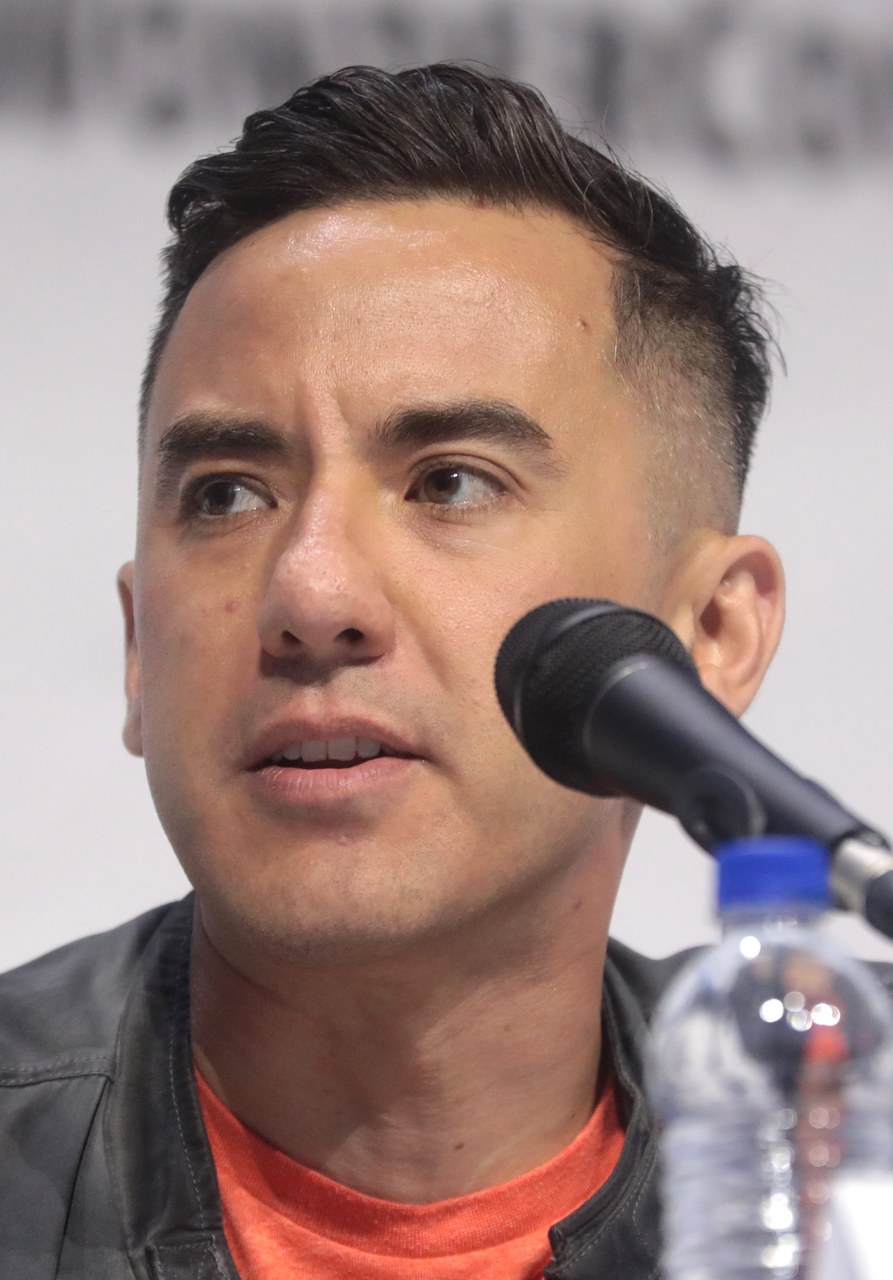
Hero: Michael Dougherty at WonderCon in Anaheim, March 30, 2019. Photo by Gage Skidmore via Wikimedia Commons, licensed under CC BY-SA 3.0. Resized and recompressed; the image remains available under the same license. This is a portrait of Sam’s creator.
Filmmaker Michael Dougherty created Sam while studying animation at New York University’s Tisch School of the Arts. The character first appeared in Dougherty’s hand-drawn 1996 short film Season’s Greetings. Thirty years later, Dougherty is returning to that animated origin with a new run of shorts, artwork, publishing and Halloween events throughout October 2026.
That makes this a useful moment to separate three things that are often blended together:
- Sam’s documented real-world creation in 1996;
- Sam’s fictional mythology inside Season’s Greetings, Trick ’r Treat and the new 2026 project;
- the real historical traditions of Halloween, which are older than Sam and should not be treated as proof that he existed in folklore before Dougherty created him.
Sam began in a student film, not an ancient legend
Dougherty’s own archive dates Season’s Greetings to 1996.
He made the short at NYU’s Tisch School of the Arts. According to his official page, each frame was hand-drawn, colored with markers, attached to clear animation cels and photographed on 16 mm film.
The story follows a young trick-or-treater on Halloween night.
That childlike figure is Sam.
Dougherty’s current official Sam site describes the creative goal plainly: he wanted an original character who could represent Halloween itself — cute and unsettling, playful and dangerous.
The idea did not begin with a medieval text, a folklorist’s field notes or an old rural legend.
It began with a filmmaker designing a Halloween character.
That does not make Sam less interesting.
It tells us what kind of mythology we are looking at.
Dougherty’s original goal was to “capture the spirit of Halloween”
In an interview published on October 2, 2026 by Bloody Disgusting, Dougherty said he recently found his original notes for Season’s Greetings.
Near the beginning of those notes was his creative intention: to capture the spirit of Halloween.
That sentence helps explain why Sam survived the transition from a four-minute animated short to a feature film.
He was not designed as one monster with one isolated backstory.
He was designed to embody a holiday.
Dougherty has repeatedly connected the character with costumes, candy, jack-o’-lanterns, ghost stories and the idea that Halloween traditions matter.
That concept eventually became the moral machinery of Trick ’r Treat.
How Season’s Greetings works
Season’s Greetings is visually simple compared with the later feature.
A small trick-or-treater moves through Halloween night.
The short establishes Sam through behavior rather than exposition. He does not arrive with a narrated genealogy explaining where he was born, what species he belongs to or which ancient culture worshipped him.
That restraint is important.
The first Sam story is not a pseudo-historical origin tale.
It is an encounter.
Dougherty’s current official archive calls Sam the Spirit of Halloween, but that is a description of the character’s fictional role, not evidence of an older supernatural belief.
Trick ’r Treat turned Sam into the holiday’s enforcer
Sam later became the connective figure in Trick ’r Treat, Dougherty’s anthology feature.
Legendary lists the film’s original release as December 9, 2007. Dougherty’s current site emphasizes the film’s wider 2009 release and its later life as a cult Halloween favorite.
The production history is therefore slightly awkward in the way cult-film histories often are: the film existed and screened before the broad home-video release that helped build its audience.
The important lore point is clearer.
Sam appears across otherwise separate stories whenever characters violate the rules and customs of Halloween.
Those rules include ideas such as:
- keep the jack-o’-lantern burning;
- respect trick-or-treating;
- wear a costume;
- do not treat Halloween’s rituals as meaningless.
Sam is not merely another creature wandering through the anthology.
He gives the anthology a moral center.
Break the holiday’s rules, and Sam may notice.
Is Sam a ghost, demon or monster?
The new official Sam: The Soul of Halloween site gives the current franchise answer:
Sam is presented as Halloween personified and is described as neither ghost nor demon, monster nor man.
That wording is useful because older promotional descriptions have sometimes used simpler labels such as “demon.”
Legendary, for example, describes Sam in its Trick ’r Treat synopsis as a mischievous trick-or-treating demon.
Current franchise mythology is broader.
The 2026 site treats Sam less as a species to classify and more as a supernatural personification of Halloween.
For lore purposes, the safest answer is therefore:
Sam is a fictional supernatural embodiment and guardian of Halloween.
“Demon” has been used in official film marketing.
The newer mythology deliberately refuses to confine him to that category.
Is Sam an ancient Halloween deity?
No historical evidence reviewed for this article supports that claim.
Sam is a modern fictional character created by Michael Dougherty in 1996.
The new official mythology intentionally writes him as timeless. It says he existed before modern Halloween practices and describes his story as having been passed through generations for centuries.
Those statements belong to Sam’s fictional canon.
They are not historical claims about an actually documented deity, spirit or folkloric being.
That boundary matters because modern horror franchises often borrow the language of folklore to make invented mythology feel old.
The technique is effective.
It is still fiction.
For a holiday figure traced through historical folklore sources, see our Krampus explainer.
What about Samhain?
The similarity between the name Sam and Samhain makes it tempting to construct an ancient genealogy for the character.
That temptation should be resisted unless a creator source actually establishes the connection being claimed.
Samhain appears in medieval Irish literature as a seasonal turning point. In The Wooing of Emer, winter runs from Samuin to Beltaine. That is evidence for a seasonal division in a literary text, not for an ancient spirit named Sam.
But scholarship has become increasingly careful about several popular claims attached to it.
In his 2024 peer-reviewed article “The Celtic New Year and Feast of the Dead”, historian Ronald Hutton re-examined the later scholarly tradition that turned Samhain into a universal “Celtic New Year” and great pan-Celtic feast of the dead.
The evidence is more complicated than the familiar modern summary.
None of that scholarship identifies a burlap-masked guardian named Sam.
Sam’s historical origin remains 1996.
The “thin veil” belongs to the new franchise mythology
The 2026 Sam website says that on Halloween the veil between worlds grows thin.
That phrase should be read as part of the project’s mythology.
It should not be used as evidence that people in pre-Christian Ireland used the same formulation or believed in Sam as Halloween’s guardian.
The official site blends genuine Halloween symbols with invented Sam lore on purpose.
Jack-o’-lanterns, costumes, candy, ghost stories and seasonal superstitions are real traditions with their own histories.
Sam’s role as the supernatural being who enforces all of them is the fictional connective tissue.
That is exactly what Dougherty designed him to do.
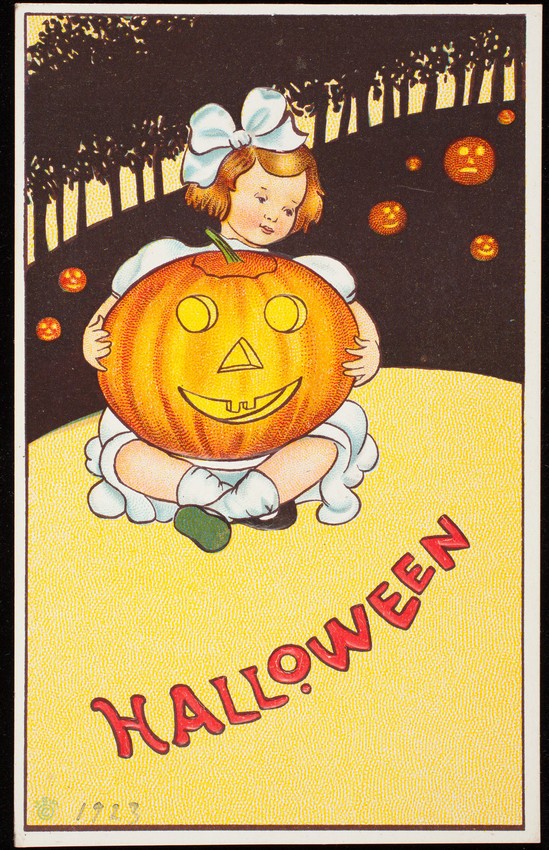
An American Halloween postcard from about 1923–1925. The jack-o’-lantern imagery predates Sam by decades and is shown here as historical Halloween context, not as evidence for the character. Unknown artist / Historic New England via Wikimedia Commons, public domain in the United States.
Why the distinction makes Sam more interesting
Calling Sam “ancient folklore” would actually flatten what Dougherty achieved.
Halloween already had many recognizable figures before 1996:
- witches;
- ghosts;
- skeletons;
- black cats;
- devils;
- scarecrows;
- jack-o’-lanterns.
What it lacked, in Dougherty’s view, was one original character who could stand for the holiday itself in the way Santa Claus stands for Christmas in popular culture.
Sam was an attempt to fill that space.
He looks old because his design feels assembled from existing Halloween language.
The burlap mask evokes homemade disguises and scarecrows.
The orange pajamas evoke pumpkins and autumn decoration.
His small size makes him read as a child collecting candy.
His behavior transforms familiar customs into supernatural rules.
That combination is modern character design built from older cultural material.
Why Sam barely needs dialogue
Sam rarely speaks.
That gives him another advantage as a holiday icon.
A character with a long biography, specific hometown, human family and ordinary conversational personality would belong more firmly to one story.
Sam functions almost like a symbol moving between stories.
His meaning comes from:
- where he appears;
- which Halloween rule has been broken;
- what object he carries;
- what he does in response.
That visual economy began in animation and carried naturally into the anthology format of Trick ’r Treat.
Is Sam immortal?
The franchise has strongly encouraged that interpretation without giving readers a conventional biological explanation.
Current official mythology describes him as timeless and says he appears wherever the true spirit of Halloween is celebrated.
That places him outside a normal human life cycle.
But “immortal” can mean several different things in fantasy.
It can mean that a being cannot die.
It can mean that it dies and returns.
It can mean that it is a personification that manifests whenever its concept exists.
The current site establishes a timeless role, but that wording alone does not specify whether Sam cannot die, dies and returns, or manifests anew.
The franchise does not need a laboratory answer to make the character work.
Does Sam have a definitive origin story inside the fiction?
Not in the ordinary superhero sense.
The real-world origin is documented: Dougherty created him for Season’s Greetings.
The fictional origin remains intentionally mythic.
The new official site expands what Sam represents, where he appears and why he cares about Halloween traditions, but it does not give a simple birth scene that resolves every question.
That distinction is useful:
creation history tells us how Michael Dougherty made the character.
fictional mythology tells us what Sam is supposed to mean inside the stories.
Those are different kinds of origin.
The 2026 revival returns Sam to animation
Thirty years after Season’s Greetings, the character is moving back toward the medium that created him.
The official 2026 project promises new animated shorts throughout October, alongside artwork, publishing, screenings and other collaborations.
The first new short, “Hello October,” arrived at the beginning of the month.
Dread Central described the piece as a brief graveyard greeting in which the dead rise to welcome October.
The larger significance is the format.
Sam became globally recognizable through a live-action feature, but he began as a hand-drawn animated character.
The new project is deliberately reconnecting those two lives.
Season’s Greetings has also been restored
The original short is part of the revival rather than just a footnote.
The official Sam site says Season’s Greetings has been restored in 4K with 5.1 audio from the original film elements.
The site dates that restoration project to 2025 and is using the restored short in 2026 anniversary screenings.
That gives viewers an unusually direct way to compare the first version of Sam with the current mythology.
The visual design changed.
The basic idea did not.
Witching Hours is new material, not discarded sequel material
Sam is also returning in Trick ’r Treat: Witching Hours, a new graphic novel scheduled for October 13, 2026.
Dougherty told Bloody Disgusting that its stories were created specifically for the comic rather than recycled from abandoned versions of a Trick ’r Treat sequel.
That matters for continuity.
The comic is an official extension of the world.
It is not a disguised leak of what Trick ’r Treat 2 would have been.
The stories can therefore expand Sam’s mythology without being treated as a roadmap to a future film.
Is Trick ’r Treat 2 finally happening?
There is still no production announcement equivalent to “cameras are rolling.”
In the interview published on October 2, 2026, Dougherty told Bloody Disgusting that a sequel script exists and that he has storyboarded it extensively.
He also rejected the idea that the project should simply be declared dead.
That is meaningful development information.
It is not the same thing as a greenlight, shooting date or release date.
For now, the concrete 2026 expansion is Sam: The Soul of Halloween, the new animation, the restored short and Witching Hours.
A sequel remains a separate question.
The real history and the fictional mythology can coexist
Sam works because Dougherty built him from recognizable Halloween material.
The character does not need to be passed off as a recovered ancient spirit for that connection to matter.
The real history is strong on its own:
1996: Michael Dougherty creates Sam for the hand-drawn NYU short Season’s Greetings.
2007: Trick ’r Treat begins screening as a feature and Sam becomes the anthology’s recurring enforcer.
2009: the film reaches a much wider audience through home video.
2025: the original short is restored in 4K.
2026: the 30th-anniversary Sam: The Soul of Halloween project launches new animated stories, publishing and events.
Inside the fiction, Sam can be timeless.
Outside the fiction, his birth certificate says 1996.
Frequently Asked Questions
Who created Sam from Trick ’r Treat?
Filmmaker Michael Dougherty created Sam while studying animation at NYU’s Tisch School of the Arts.
When did Sam first appear?
Sam first appeared in Dougherty’s 1996 hand-drawn animated short Season’s Greetings.
Was Sam created for Trick ’r Treat?
No. Sam predates the feature film by more than a decade. Season’s Greetings came first and later inspired the character’s role in Trick ’r Treat.
Is Sam a real figure from Halloween folklore?
No evidence reviewed for this article identifies Sam as a historical folkloric being. He is a modern fictional character created by Michael Dougherty.
Is Sam a demon?
Legendary has described him as a trick-or-treating demon, but the current mythology treats him as Halloween personified rather than assigning him a fixed species. The broadest current description is the supernatural embodiment or guardian of Halloween.
Is Sam connected to Samhain?
Sam’s fiction draws broadly on Halloween traditions and folklore, but readers should not infer an ancient Samhain deity or spirit named Sam without a creator or historical source that establishes it. Sam’s documented character history begins in 1996.
Is the “thin veil between worlds” part of real Samhain history?
The phrase appears in the current official Sam mythology. It should not be treated as proof of an ancient historical formula. Academic work on Samhain warns against oversimplifying later claims about ancient Celtic belief.
What is Sam: The Soul of Halloween?
It is a 2026 expansion of the character built around the 30th anniversary of Season’s Greetings, with new animated shorts, artwork, publishing, screenings and other Halloween projects.
Is Season’s Greetings available in 4K?
The official Sam site says the 1996 short has been restored in 4K with 5.1 audio from its original film elements.
Is Trick ’r Treat 2 confirmed?
A sequel script and extensive storyboards exist according to the Dougherty interview published in October 2026, but the reviewed sources do not establish that the film is currently in production or has a release date.
Sources & further reading
- Michael Dougherty: Season’s Greetings (1996)
- Sam: The Soul of Halloween — Origins
- Sam: The Soul of Halloween — Mythology
- Sam: The Soul of Halloween — official site
- Bloody Disgusting: Michael Dougherty interview on Sam and Witching Hours (October 2, 2026)
- Dread Central: Hello October short and 30th anniversary rollout
- Legendary: Trick ’r Treat
- Michael Dougherty: Trick ’r Treat and its 2009 home-video release
- Legendary Comics / Simon & Schuster: Witching Hours publication details
- University College Cork CELT: The Wooing of Emer, translated by Kuno Meyer (1888)
- University of Bristol: Ronald Hutton article abstract and bibliographic record
- Ronald Hutton: The Celtic New Year and Feast of the Dead (Folklore, 2024)
- Wikimedia Commons: Michael Dougherty by Gage Skidmore
- Wikimedia Commons: Halloween Postcard 1923–1925