The Index / Paranormal
Shadow People Explained: Folklore, Sleep Paralysis, and the Figures People Say They See
"Shadow people" is a modern umbrella term that spread through paranormal radio and internet culture in the early 2000s. Here is what the 2001 record shows, what sleep-paralysis research can explain, and what remains unverified.
Topics: Shadow People, Hat Man, Sleep Paralysis, Modern Folklore, Paranormal
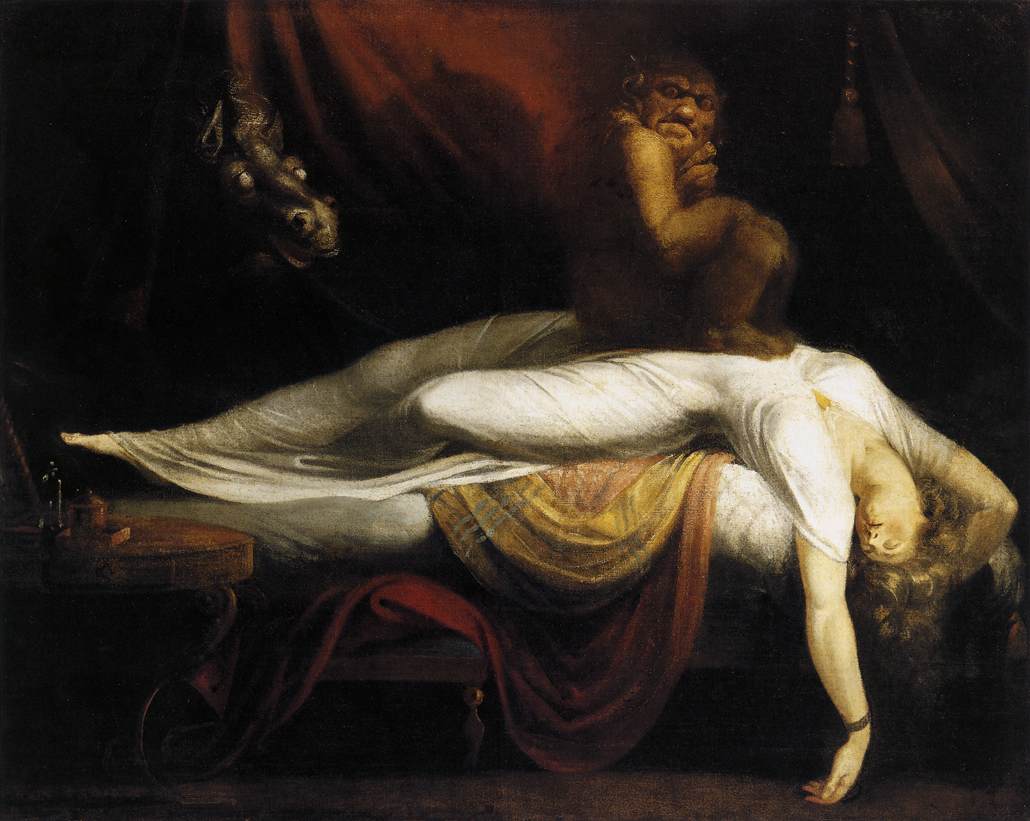
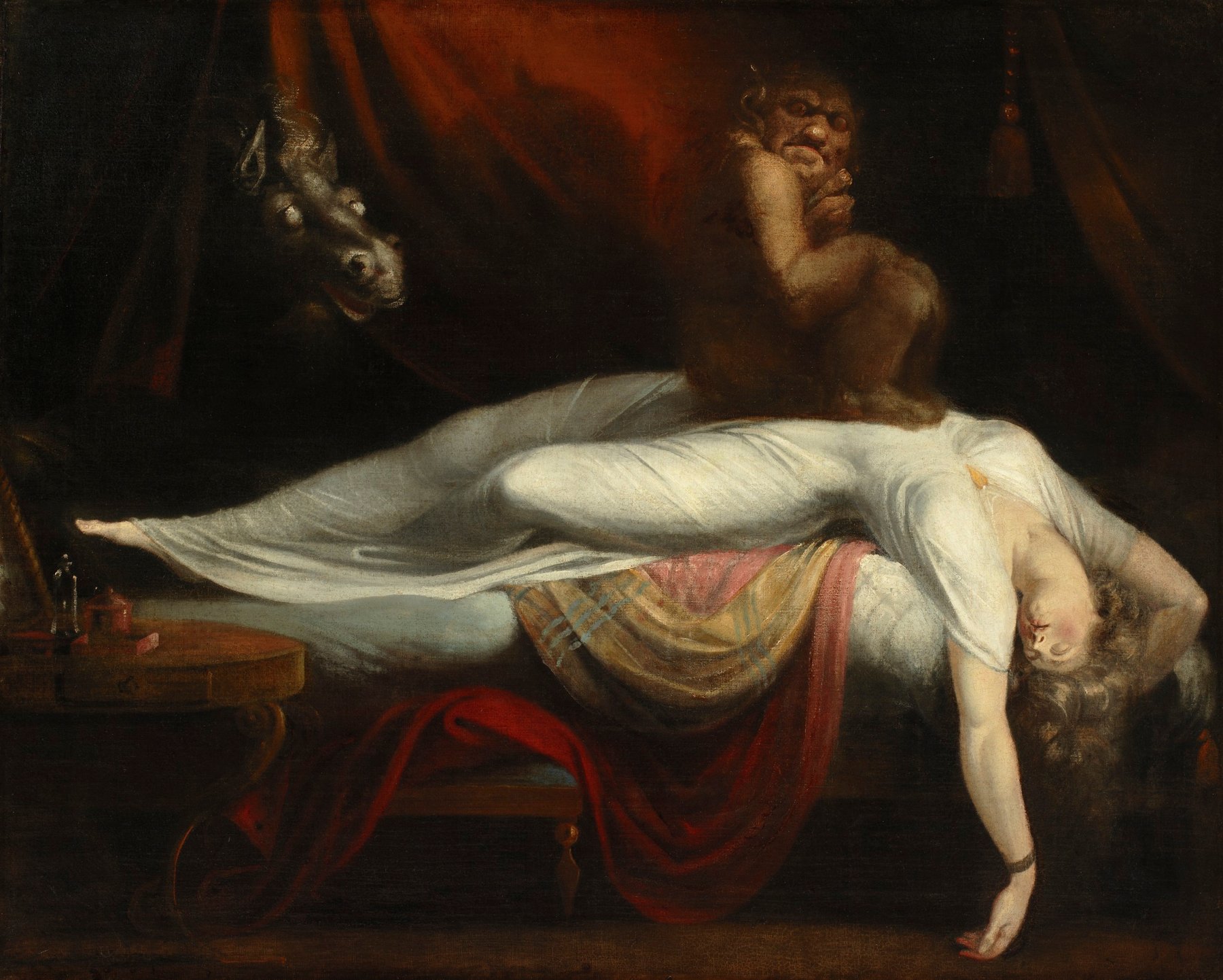
Henry Fuseli, The Nightmare (1781), public domain, via Wikimedia Commons
“Shadow people” sounds like the name of one ancient supernatural tradition. It is not.
The modern label became widely recognizable through paranormal radio and internet culture in the early 2000s, where reports of dark humanoid silhouettes were gathered into a shared category. Older folklore certainly contains night visitors, sensed presences and threatening figures around sleep, but those traditions should not be retroactively treated as one continuous history of “shadow people.”
The modern record is more interesting when its chronology is kept intact.
What the 2001 record actually shows
A common retelling says the modern phenomenon began with one specific Coast to Coast AM broadcast on April 12, 2001. The surviving program record is more complicated.
The Art Bell Archive lists an April 5, 2001 episode titled around “The Shadow People” with guest Dr. Albert Taylor. One week later, the April 12 program returned to the subject. Archive notes for that follow-up describe thousands of listener emails and a guest identified as Thunder Strikes discussing the phenomenon.
By May 31, 2001, Coast to Coast AM was again devoting a program to “shadow beings,” this time with Dr. Morgan Spence. The official program page presents Spence’s ideas as paranormal hypotheses, not verified findings.
So the strongest conclusion is not that one April 12 broadcast invented the idea. It is that a cluster of broadcasts in spring 2001 helped standardize and amplify the modern shadow-people category, while listeners supplied stories and imagery that could be compared and repeated.
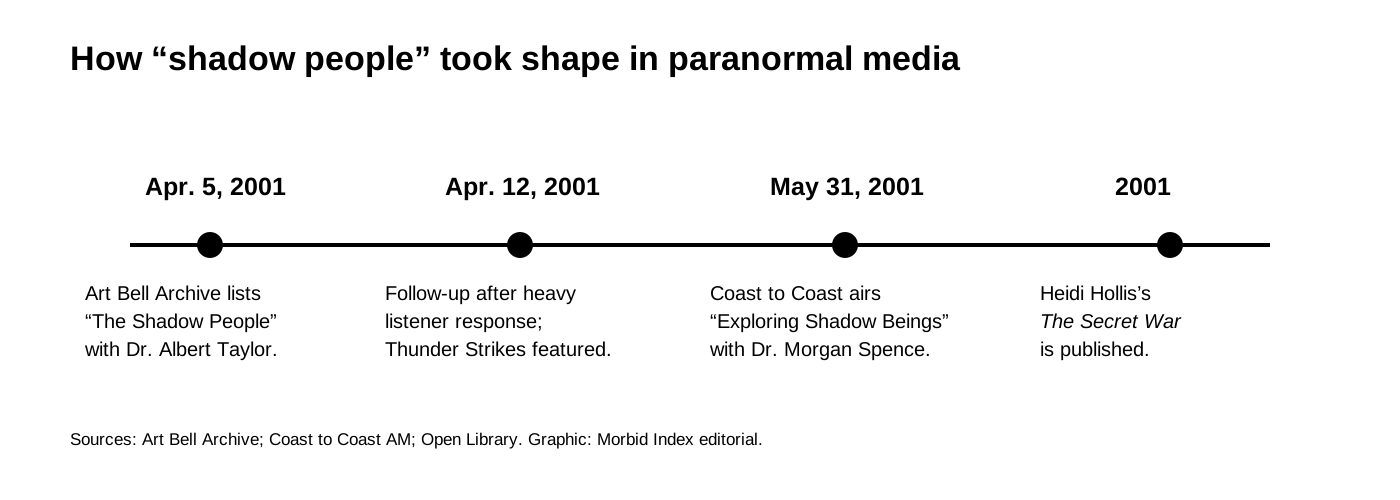
The modern label took shape through repeated paranormal-radio discussion rather than one isolated broadcast. Graphic: Morbid Index editorial.
Where Heidi Hollis fits
Author Heidi Hollis became one of the best-known early promoters of the modern shadow-people idea.
Her book The Secret War was published in 2001, and her later appearances, interviews and website material helped popularize a framework in which shadow figures were treated as hostile non-human entities. Hollis has also made strong claims about naming or identifying the phenomenon and about the distinct figure known as the Hat Man.
Those claims should be understood as part of Hollis’s own paranormal interpretation and self-described role in the legend’s development, not as independent proof of what witnesses were encountering.
That distinction matters because the cultural influence is real even when the supernatural explanation is not established.
What people say they see
Modern accounts commonly describe a dark or black humanoid silhouette with few or no visible facial features.
Reports often place the figure:
- in a doorway;
- at the foot or side of a bed;
- moving across a hallway;
- at the edge of peripheral vision;
- disappearing when the witness looks directly at it.
One recurring variant is the Hat Man, described as a dark figure wearing a broad-brimmed hat or fedora-like shape.
The Hat Man is best treated as a recognizable sub-legend within modern shadow-person storytelling. There is no reliable historical evidence that one ancient, hat-wearing supernatural entity has been continuously reported across cultures and centuries.
Sleep paralysis explains an important part of the pattern
Some shadow-person reports closely resemble experiences documented in sleep paralysis research.
During sleep paralysis, a person becomes conscious while normal REM-related muscle paralysis is still present. The episode can include intense fear and vivid hallucination-like experiences.
A 1999 study by J. Allan Cheyne, Steve Rueffer and Ian Newby-Clark described three recurring clusters in sleep-paralysis experiences. One included a sensed intruder or threatening presence, often accompanied by visual or auditory hallucinations. Another involved chest pressure and breathing difficulty.
Those features overlap strongly with one common category of shadow-person story: waking unable to move, sensing somebody in the room and seeing a dark humanlike figure nearby.
That overlap does not mean every shadow-person report is sleep paralysis. Some accounts are described as fully waking encounters away from bed or sleep transitions.
It does mean that a well-documented neurological state can explain a substantial subset of the experiences without requiring an external entity.
Older “night hag” traditions are comparable, not identical
Sleep-paralysis research has long been discussed alongside folklore about witches, demons, incubi, night hags and other beings said to attack sleepers.
That makes older traditions relevant to shadow-people discussions, but the relationship needs limits.
When two traditions involve chest pressure, paralysis and a threatening presence at the edge of sleep, they may reflect similar human experiences interpreted through different cultural frameworks.
That is not the same as proving that a modern “shadow person” is simply an ancient demon under a new name.
The modern category has its own media history, vocabulary and visual expectations.
What about sightings while fully awake?
Sleep paralysis cannot account for every report because many witnesses say they were fully awake.
Other ordinary mechanisms may contribute to some of those cases.
Pareidolia is the tendency to perceive meaningful forms, especially faces or bodies, in ambiguous visual information. Research shows that face-like patterns can capture attention in ways similar to actual faces.
Low light and peripheral vision can add uncertainty. Peripheral vision is good at detecting movement but carries less fine detail than central vision. A coat, doorway, person-shaped object or moving shadow can therefore be interpreted quickly before direct inspection supplies more information.
Those mechanisms are plausible explanations for some brief sightings. They should not be oversold as a single universal answer.
There is no controlled dataset containing every “shadow person” encounter, and many individual stories cannot be reconstructed or tested after the fact.
The Hat Man became its own legend
The Hat Man is now often discussed as though it were a separate being with a fixed identity and history.
The evidence supports a more cautious description.
It is a recurring visual form within modern shadow-person narratives: a tall, dark humanoid shape with a brimmed hat, often appearing in bedrooms or during frightening nighttime experiences.
Online storytelling, paranormal radio, books, videos and image-sharing gave that figure a recognizable template. Once people know what the Hat Man is “supposed” to look like, later ambiguous experiences can be interpreted through that template.
That process is normal for living folklore. Repetition stabilizes details.
It does not prove that everyone is inventing what they report, and it does not prove that one external being is visiting all of them.
How expectation shapes a modern legend
Modern paranormal legends spread differently from older oral traditions because people can encounter hundreds of examples before having an unusual experience themselves.
A person who already knows the Hat Man image may interpret a dark bedroom shape differently from somebody who has never heard the term.
This does not require dishonesty. Memory and perception are interpretive processes, and people describe unfamiliar experiences using the cultural vocabulary available to them.
That is one reason shadow people are useful to compare with Slender Man. The two are not the same kind of origin story — Slender Man began as deliberate fiction — but both show how repeated online imagery and storytelling can stabilize a recognizable monster.
What evidence exists?
There is no reproducible scientific evidence showing that shadow people are external non-human entities.
What does exist is evidence for several experiences often found inside shadow-person stories:
- sleep paralysis;
- sensed-presence hallucinations;
- hypnagogic and hypnopompic imagery;
- pareidolia;
- ambiguous low-light perception.
That evidence explains mechanisms that can produce convincing experiences. It does not allow investigators to retrospectively diagnose every individual report.
The most defensible conclusion is therefore modest: people can genuinely experience frightening dark figures or sensed presences, but the available evidence does not establish that those experiences are caused by a supernatural being.
Frequently Asked Questions
What are shadow people?
“Shadow people” is a modern umbrella term for reports of dark, humanlike silhouettes, often seen briefly in bedrooms, doorways or peripheral vision.
Did shadow people begin on Coast to Coast AM?
The program was highly influential in popularizing and standardizing the modern phenomenon. Archive records show repeated shadow-people programs in April and May 2001, rather than one single broadcast that can confidently be called the sole origin.
Was April 12, 2001, the first shadow-people broadcast?
No. The Art Bell Archive lists an April 5, 2001 program about “The Shadow People,” one week before the better-known April 12 follow-up.
Who is the Hat Man?
The Hat Man is a recurring variant in modern reports: a dark humanoid figure described as wearing a brimmed hat. It has become a distinct sub-legend, but there is no verified evidence that it is one external supernatural entity.
Can sleep paralysis make people see shadow figures?
Yes. Sleep paralysis can include a sensed presence and vivid visual or auditory experiences. That provides a documented explanation for many reports that occur while falling asleep or waking.
Does sleep paralysis explain every shadow-person sighting?
No. Some reports are described as fully waking experiences. Other mechanisms such as pareidolia, low-light misperception, memory and expectation may account for some cases, while many individual stories cannot be tested.
Are shadow people an ancient legend?
Not as one unified tradition. Older folklore includes night visitors, demons and sleep-related presences, but the modern “shadow people” category developed in recent paranormal media and internet culture.
Is there scientific proof that shadow people are real entities?
No reproducible scientific evidence demonstrates shadow people as external non-human beings.
Sources & further reading
- Art Bell Archive: Shadow People topic archive
- Coast to Coast AM: Exploring Shadow Beings (May 31, 2001)
- Open Library: Heidi Hollis, The Secret War (2001 edition metadata)
- Cheyne, Rueffer & Newby-Clark (1999): Hypnagogic and hypnopompic hallucinations during sleep paralysis
- Sharpless & Doghramji: Sleep paralysis, folklore, and myth
- Cleveland Clinic: Sleep Paralysis
- PubMed: Pareidolic faces attract attention similarly to human faces (2023)
- Wikimedia Commons: Henry Fuseli, The Nightmare (1781)
- Wikimedia Commons: Thomas Burke engraving after The Nightmare (1783)