The Index / Paranormal
Kuchisake-onna Explained: Japan's Slit-Mouthed Woman Legend and the 1979 Panic
Kuchisake-onna, the masked woman who asks 'Am I beautiful?', is a real 1978-1979 rumor panic documented in Japanese newspapers, not an ancient yokai tradition.
Topics: Kuchisake-onna, Japanese Folklore, Urban Legend, Japan, Paranormal
Lincun / TAKASUGI Shinji, Wikimedia Commons (CC BY-SA 3.0)
A masked woman stops a child on the way home from school. “Am I beautiful?” she asks. Say no, and she kills you on the spot. Say yes, and she pulls down her mask to show a mouth slit from ear to ear, then asks again. That story spread through Japanese schoolyards with enough force in 1979 that some towns sent police patrols out looking for her and parent groups started walking children home. It’s a real, datable media panic, not an old ghost story that finally got written down.
What Kuchisake-onna Actually Means
Kuchisake-onna (口裂け女) translates straightforwardly as “slit-mouthed woman” — kuchi (mouth), sake (from the verb saku, to split or tear), onna (woman). No embellishment is needed to make the name unsettling; it describes exactly what witnesses claimed to see once she removed her surgical mask.
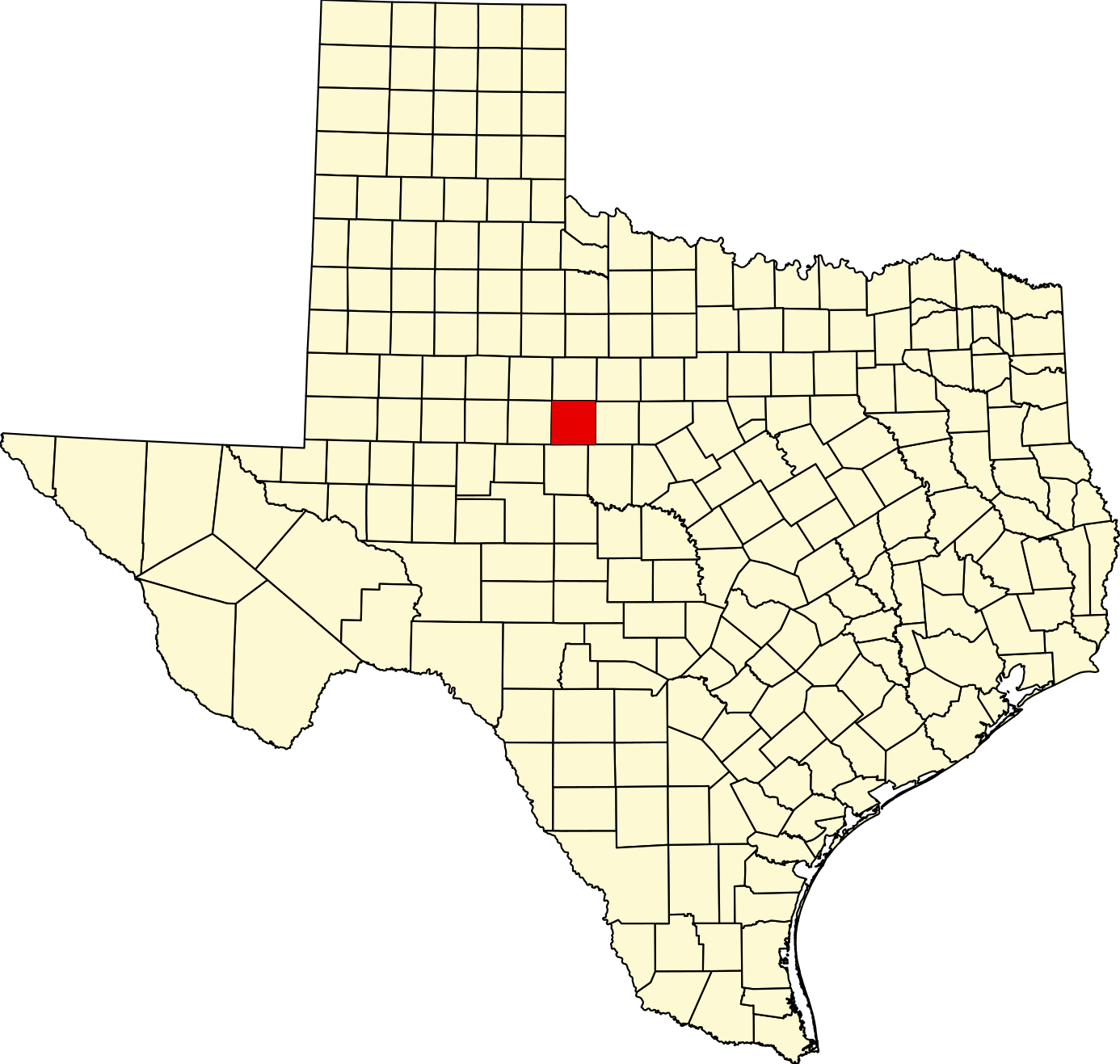
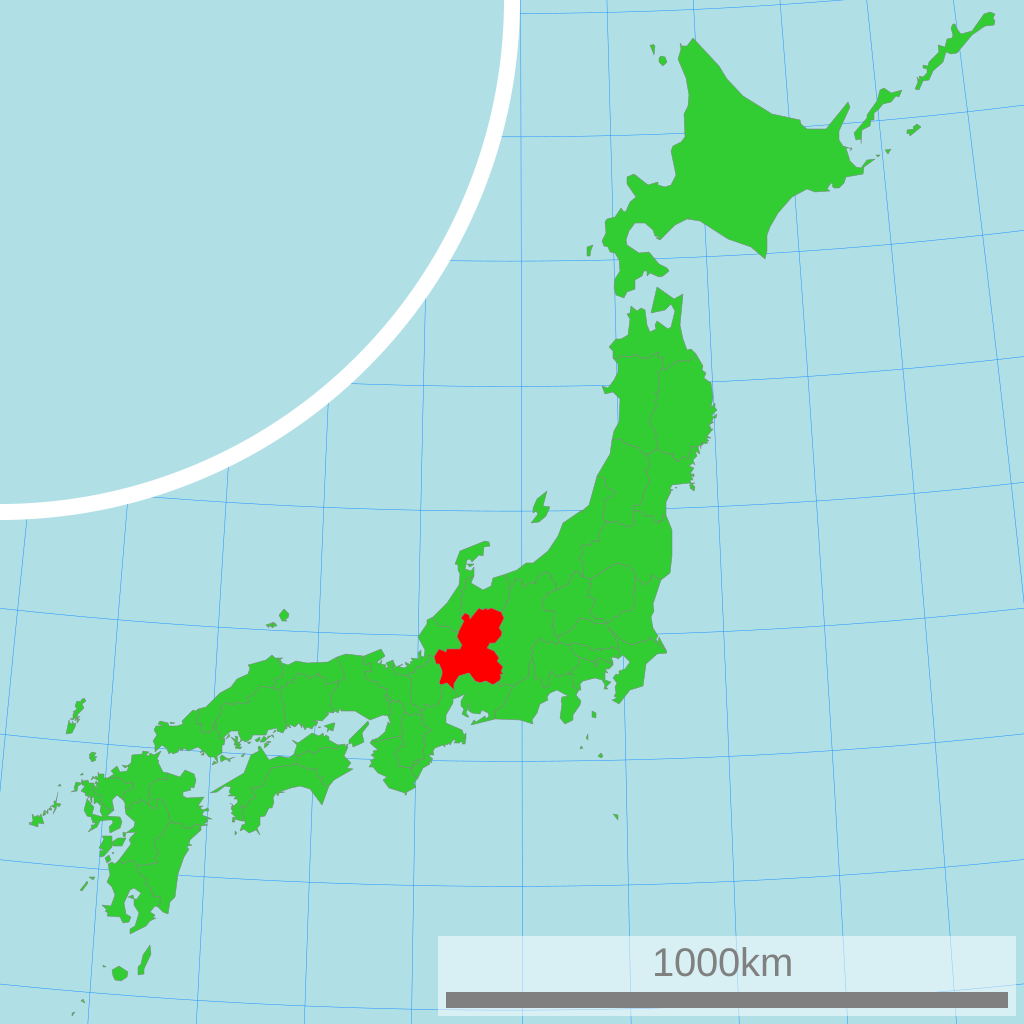
Gifu Prefecture, highlighted here, is where newspaper coverage first traced the Kuchisake-onna rumor in December 1978 before it spread nationwide. Source. Lincun / TAKASUGI Shinji, Wikimedia Commons, CC BY-SA 3.0.
The Legend as It Circulated
The standard account, as it stabilized during the 1979 panic, described a woman in an ordinary surgical mask — unremarkable in Japan, where mask-wearing for illness, allergies, or air quality was already common by the 1970s — who approached someone, usually a child walking alone, with the question “Watashi, kirei?” (“Am I pretty?”). A “no” answer, in the most common telling, got the victim killed immediately. A “yes” answer prompted her to lower the mask, reveal a mouth slit wide across both cheeks, and ask again — with a “no” or a scream at that point supposedly earning the victim the same disfigurement, delivered with scissors or a blade.
Regional variants multiplied fast, in the way rumor tends to when it’s spreading through word of mouth among children who are simultaneously modifying it as they retell it. Some versions offered an escape: answering ambiguously, something like “so-so,” was said to confuse her long enough to run. Others held that she could be distracted by throwing a specific hard candy, bekko-ame, in her direction. A widely repeated variant claimed shouting “pomade” three times would make her falter — tied to a folk explanation that pomade, a greasy hair product, had been used during whatever surgery supposedly caused her injury and that the smell now repelled her. In Ehime and Fukushima prefectures, tellings sometimes shifted her name to Kuchiware-onna (“broken-mouthed woman”) or gave her a red car she rode around in. None of these variants agree closely enough to point to one fixed, original version — they’re evidence of a rumor actively mutating in real time across different communities, not competing memories of a single real event.
The 1978-1979 Panic, Documented in Print
The earliest identifiable reports place the rumor’s start in Gifu Prefecture in December 1978. It spread nationally with remarkable speed over the following months, moving from playground gossip into print: the Gifu regional paper Gifu Nichi Nichi Shinbun covered it on January 26, 1979, followed by national weekly magazines Shukan Asahi on March 23 and Shukan Shincho on April 5. By summer 1979, a survey reported that the overwhelming majority of schoolchildren nationwide had heard of Kuchisake-onna, and the Asahi Shimbun was treating the name as an established cultural buzzword rather than a fringe rumor.
The social response was concrete, not just anecdotal fear. Teachers and parent-teacher association members escorted children home from school in some areas. Local police in towns including Koriyama in Fukushima Prefecture and Hiratsuka in Kanagawa Prefecture dispatched patrols specifically in response to Kuchisake-onna sighting reports. In June or July 1979, police in Himeji, Hyogo Prefecture, arrested a 25-year-old man who had been dressing as the figure and carrying a knife — a genuine criminal incident that the rumor environment had directly provoked, whatever his actual intentions were. The panic subsided by August 1979, and the most straightforward explanation for the timing is also the most mundane: summer vacation broke the daily school-based social network the rumor had been spreading through.
Is There an Older Tradition Behind Her?
This is where sourcing gets genuinely contested, and it’s worth stating the disagreement honestly rather than picking a side without evidence. Some folklore writers have proposed Edo-period (17th-19th century) roots for a slit-mouthed female figure, treating Kuchisake-onna as a modern retelling of considerably older material. Japanese literature scholar Iikura Yoshiyuki has argued against that reading, dating the figure specifically to the 1970s as a self-contained modern phenomenon rather than a continuation of older yokai tradition. The most concrete, dateable evidence — the December 1978 Gifu origin point and the traceable newspaper coverage that follows it — supports treating Kuchisake-onna as a 20th-century urban legend first and foremost. Where she may connect to older Japanese folklore about vengeful or disfigured female spirits is a real scholarly question, not a settled one, and this article isn’t the place to assert a lineage that the sourcing doesn’t clearly establish.
Not Every Japanese Ghost Story Is a Yokai
It’s worth resisting the common shorthand that treats every unsettling Japanese female figure as an interchangeable “yokai” — a term with its own specific meaning in Japanese folklore referring to a broad and old category of supernatural beings, spirits, and monsters. Kuchisake-onna functions much more like what folklorists elsewhere would call a contemporary legend or ostension narrative: a story that spreads through modern social channels (school playgrounds, print media, and much later the internet), attaches itself to real anxieties (violence against women and children, distrust of masked strangers, urban danger), and generates real-world behavioral responses, the same way stories like Bloody Mary or Slender Man do in other cultural contexts. Folding her automatically into “ancient yokai lore” erases what’s actually most interesting about the case: a monster that can be dated to a specific month, in a specific prefecture, and traced through a specific newspaper’s coverage.
Later Media
Kuchisake-onna has appeared repeatedly in Japanese horror films, manga, anime, and video games since the 1990s, cementing her as one of the country’s most recognizable modern legend figures alongside characters like Sadako from Ringu. These adaptations vary considerably in how closely they follow the 1979 rumor’s specific details, and none of them function as documentation of the original panic — they’re downstream popular culture built on top of it, the same relationship The Ring style j-horror franchises generally have to the folklore that inspired them.
Frequently Asked Questions
What does Kuchisake-onna mean? “Slit-mouthed woman” — a literal Japanese description, not a metaphor, referring to the disfigurement she reveals after removing her surgical mask in the legend.
Is Kuchisake-onna a real person? No documented individual case has ever been confirmed as the origin. The legend is a rumor panic first traceable to Gifu Prefecture in December 1978.
Is Kuchisake-onna real? There’s no credible evidence of a supernatural slit-mouthed attacker. What’s well documented is a genuine, dateable 1978-1979 social panic, including at least one real arrest of a person impersonating her.
How do you escape Kuchisake-onna? Depends which version of the rumor you’re asking about — an ambiguous answer, throwing hard candy, or shouting “pomade” three times are all commonly repeated but mutually inconsistent folk “rules” that developed during the legend’s spread.
Is Kuchisake-onna an ancient yokai? That’s disputed among scholars. Some argue for older Edo-period roots; others date her specifically to the 1970s as a modern legend. The best-documented evidence points to a 20th-century origin.
Why did the panic end in August 1979? The most likely explanation is mundane: summer vacation interrupted the school-based social network that had been spreading the rumor daily.
Was anyone actually arrested because of Kuchisake-onna? Yes. Police arrested a man in Himeji in mid-1979 for dressing as the figure and carrying a knife in public.
Is Kuchisake-onna connected to other urban legends like Bloody Mary? Not historically or culturally connected, but structurally similar — both are contemporary legends that spread through social retelling and generate real behavioral responses (mirror rituals, police patrols) rather than documented supernatural events.