Lore & Explained / Literature
The Turn of the Screw Ending Explained: Miles, Quint and the Ghost Question
What happens to Miles at the end of The Turn of the Screw? Examine Quint, the governess's account and the evidence for competing readings of James's novella.
Topics: The Turn of the Screw, Henry James, Ghost Stories, Ending Explained
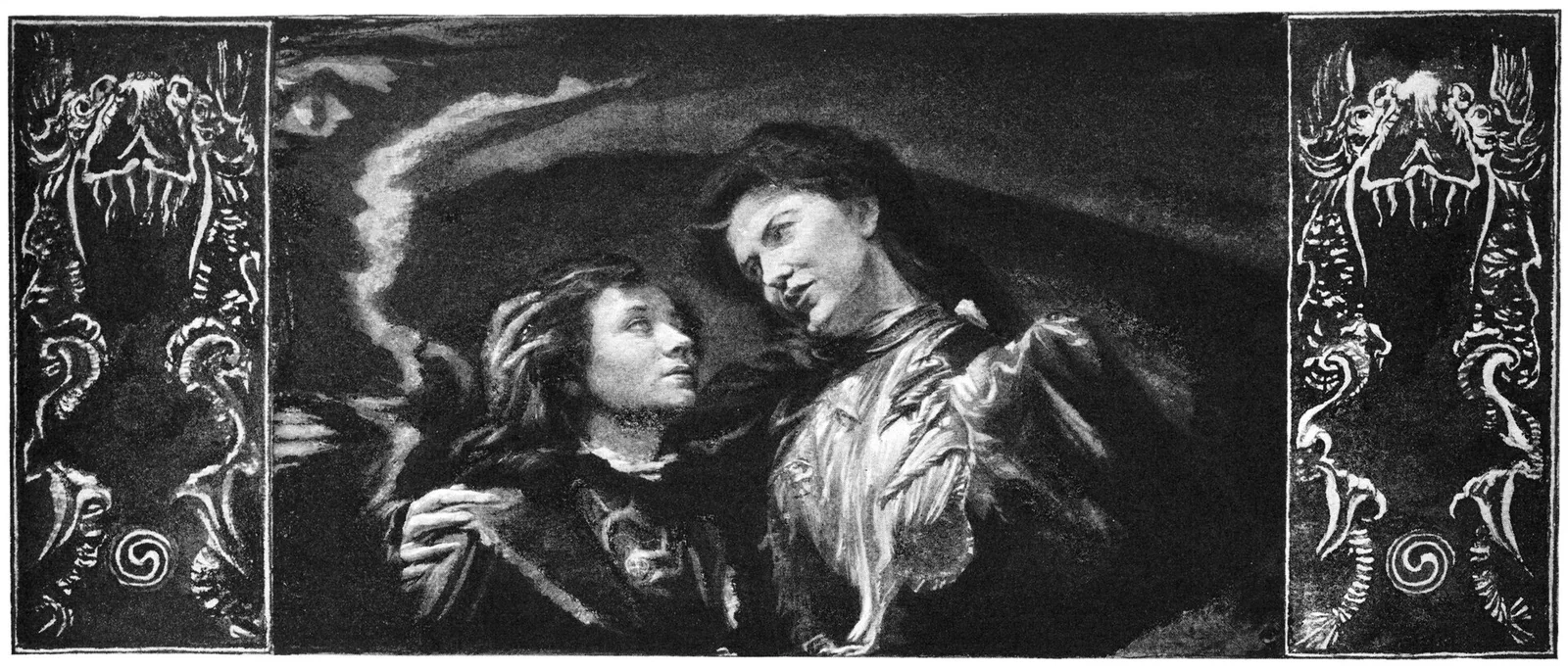
At the end of Henry James’s The Turn of the Screw, Miles dies in the governess’s arms after naming Peter Quint. The novella does not provide an independent account that settles whether a ghost destroys him, the governess’s intervention overwhelms him, or some other sequence explains his death. Its final certainty is the death itself; its cause remains entangled with the narrator’s interpretation.
This guide discusses the 1898 novella, including its last scene. It does not explain the different endings of screen adaptations.
What happens in the final scene?
The governess questions Miles while she believes Peter Quint is watching from outside the window. She is determined to protect the boy and obtain an acknowledgment of what she thinks has been happening.
Miles names Quint, asks where he is, and looks around. The governess declares that Quint has lost him. Moments later she realizes that the child she is holding is dead.
The final word dispossessed encourages more than one interpretation. It can suggest release from a possessing force, but in a scene ending with a child’s stopped heart, the language of victory becomes deeply troubling. The governess’s explanation and the result do not comfortably agree.
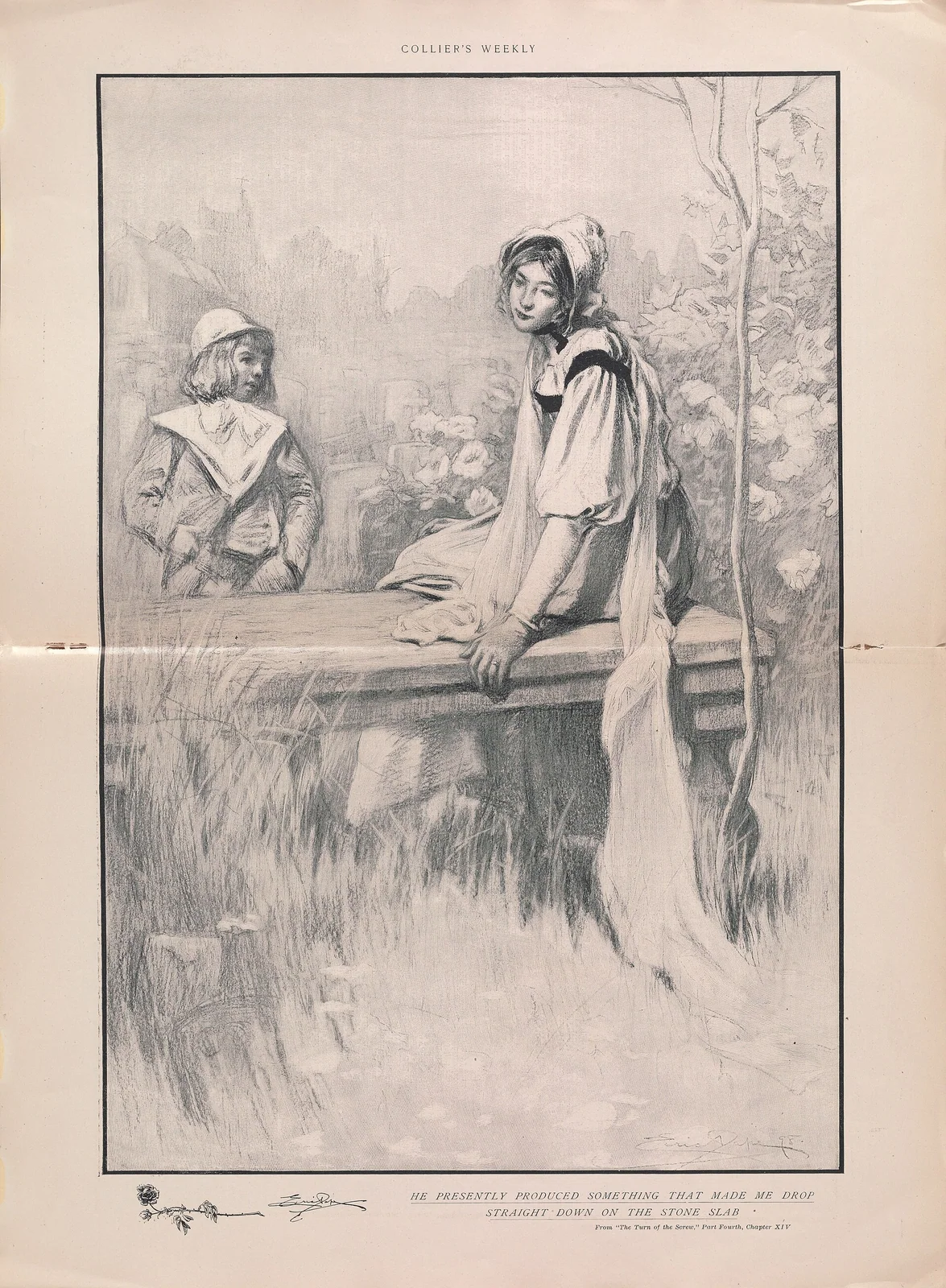
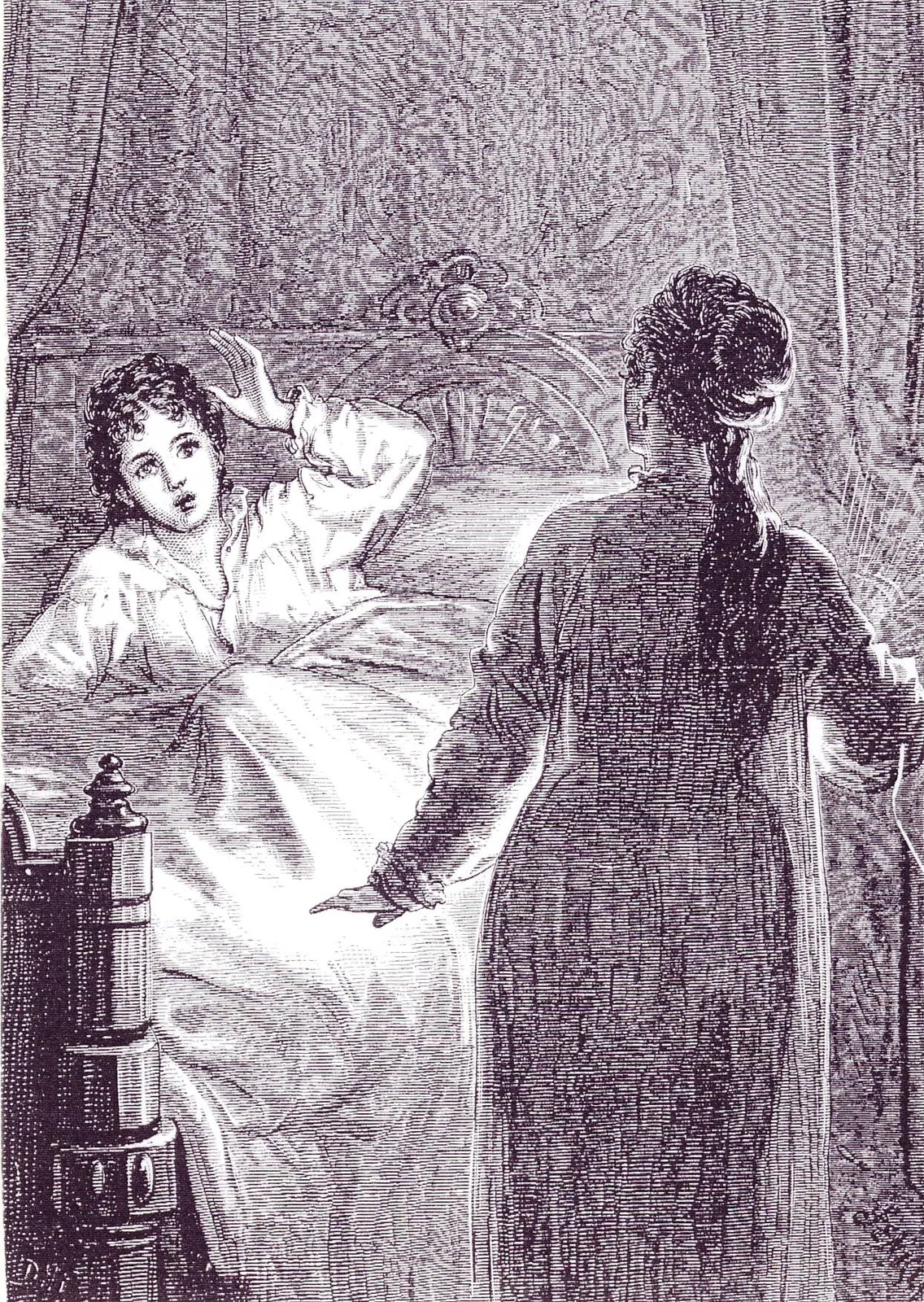
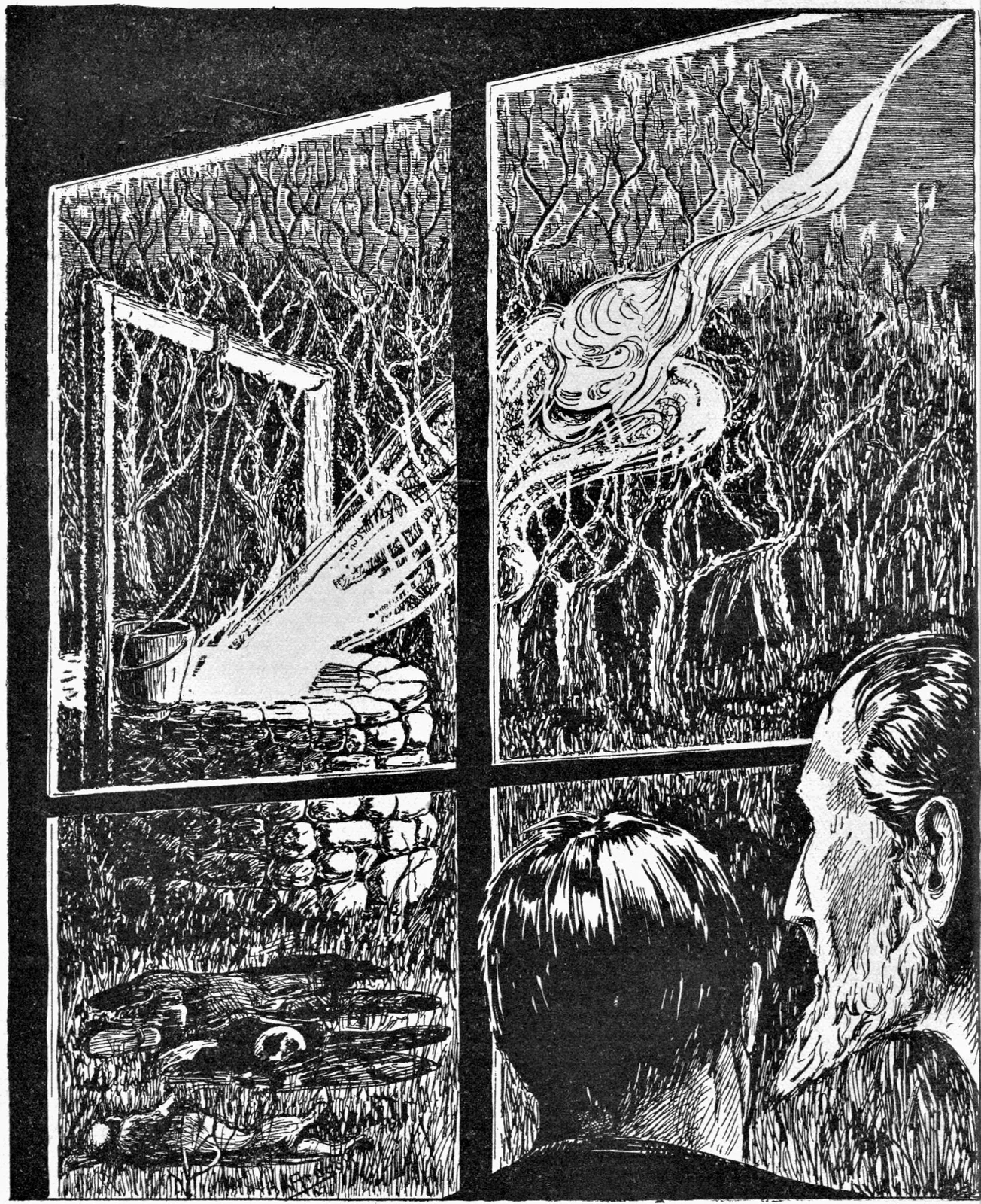
Eric Pape’s illustration for the serialized novella. The artist’s interpretation does not settle the ghost question. Source. Collier’s Weekly, illustration by Eric Pape. Public domain. Resized and converted to WebP.
Are Peter Quint and Miss Jessel real ghosts?
The story establishes that Quint and Miss Jessel were real people in the household’s past and are now dead. It does not give the reader an equally independent confirmation that their ghosts appear at Bly.
The governess describes a figure whom Mrs Grose recognizes as Quint. That recognition gives the supernatural reading substantial material to work with: the description seems to correspond to someone the governess did not previously know.
Yet the recognition comes through the governess’s retrospective narrative. Mrs Grose does not thereby become a second witness who independently sees Quint’s ghost in the same scene. Recognition of a description and observation of an apparition are different claims.
The complete novella keeps the reader inside this problem of testimony. We receive a manuscript read within an outer storytelling frame, not an all-seeing narrator’s direct access to every event.
Does Miles see Quint at the end?
He names him, but naming alone does not establish exactly what he sees. His searching questions and the governess’s urgent prompting leave room for different readings of the exchange.
Even the phrase “you devil” creates a problem of address. A supernatural reading can direct it toward Quint. A reading centered on the governess’s frightening behavior can hear it differently. The text does not pause to provide an authoritative explanation of its referent.
The strongest readings account for the whole exchange rather than treating one isolated phrase as a code that solves the book.
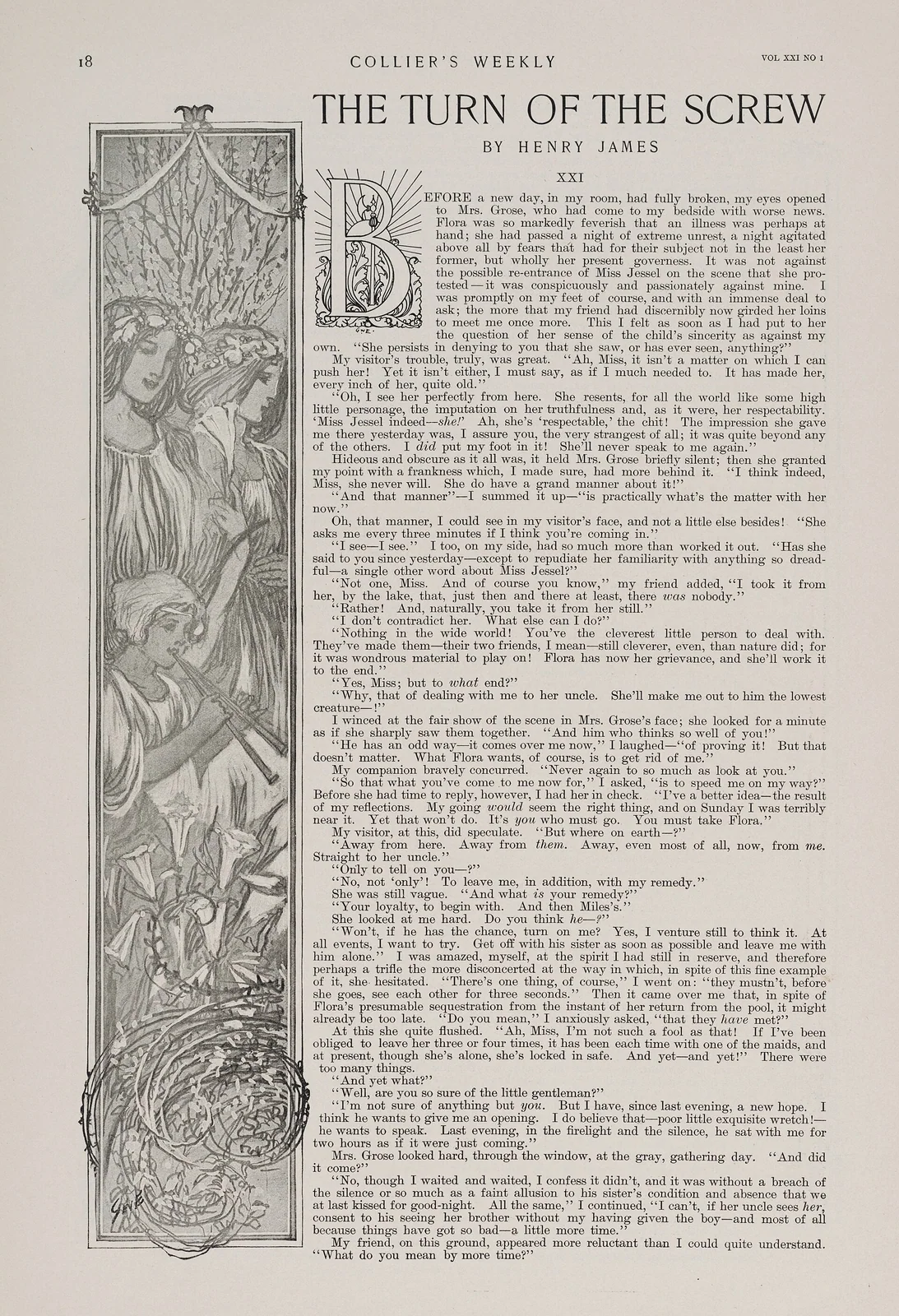
A page from the original magazine serialization, with its printed text and illustration. Source. Collier’s Weekly, illustration not attributed. Public domain. Resized and converted to WebP.
Did the governess kill Miles?
That is a possible interpretive conclusion, not an explicitly established finding. A psychological reading sees her increasingly forceful attempts at protection as a danger to the children. A supernatural reading sees her struggling against an external threat and reaching a disastrous moment of confrontation.
In either case, her confidence matters. She believes that she understands what the children need, interprets their resistance within her theory, and seeks confirmation. The reader must decide how far to trust a narrator whose certainty continues even as events become worse.
Diagnosing her with a specific modern disorder would not settle the literary question. The book supplies a mediated account of conduct and perception, not a clinical assessment.
What happens to Flora?
Flora leaves Bly with Mrs Grose before the final confrontation with Miles. This separates the children and leaves the governess alone with the boy whose acknowledgment she is determined to obtain.
Flora’s response to the governess is part of the conflict over what is happening at Bly. It should not be treated as a convenient independent declaration that proves either all the ghosts or none of them.
Why does the ending refuse a clear solution?
The novella makes interpretation part of the danger. The governess reads gestures, silences and refusals as evidence; the reader must then read her reading. A final explanation from outside that structure would remove much of its force.
The ending can therefore be understood without pretending that one cause has been conclusively demonstrated. Miles is dead. The governess describes a triumph over Quint. The distance between those two facts is where the horror remains.
Compare Laura’s troubled survival in Carmilla and the unseen visitor in The Monkey’s Paw for other endings shaped by what their narrators can and cannot establish.