The Index / Paranormal
Was the Amityville Horror a Hoax? The Evidence Behind the Lutz Family Story
William Weber said the Lutz family invented their haunting story. The Lutzes passed a polygraph. Here's what the actual evidence supports, and what it doesn't.
Topics: Amityville Horror, William Weber, Skeptical Investigation, George and Kathy Lutz, Hoaxes
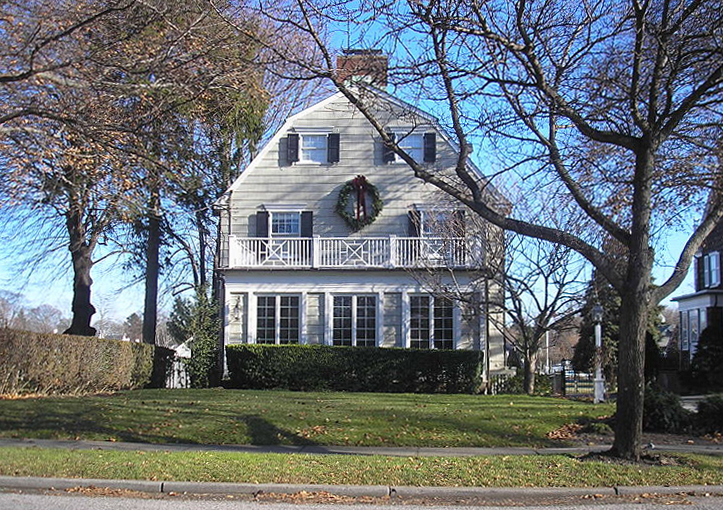
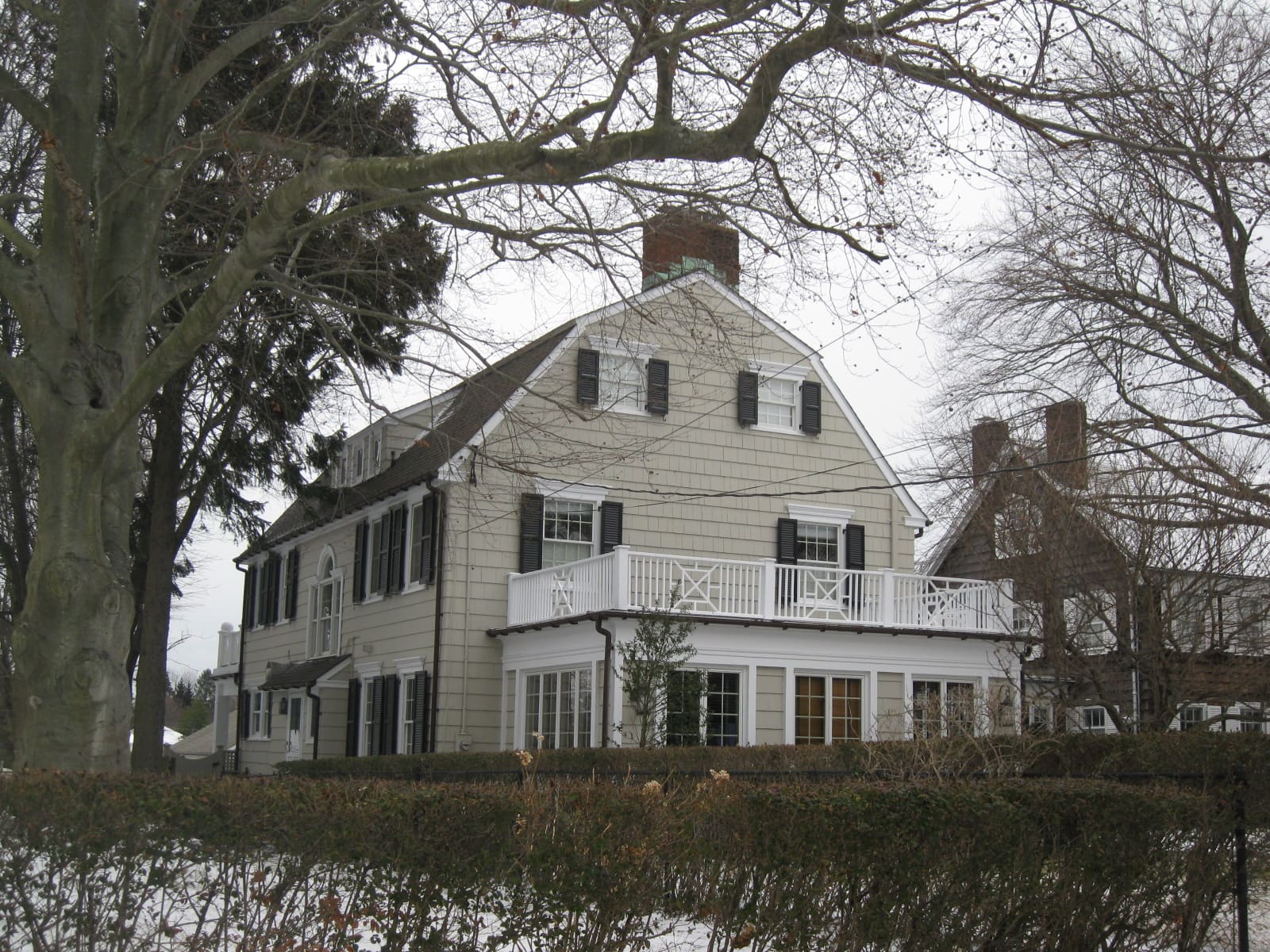
Seulatr, 2005 / Wikimedia Commons (released to the public domain)
Nobody involved in the Amityville story agrees on how much of it was real, and that includes the people who were there. George and Kathy Lutz maintained until their deaths that they experienced something genuinely frightening in that house. The lawyer who briefly represented their killer’s-defense-turned-book-deal said, on the record, that he helped invent it. A federal judge who reviewed the underlying documents called the published book largely fiction. None of those positions is neutral, and none of them, individually, settles the question.
This article works through the evidence for and against fabrication rather than assuming an answer in advance. For the full account of what the Lutz family claimed and how the story developed, see our Amityville Horror overview.
Why Was Amityville Accused of Being a Hoax?
The accusation didn’t come from outside skeptics with no connection to the case. It came from William Weber, the defense attorney who had represented Ronald DeFeo Jr. at trial and who, in the murders’ aftermath, approached George and Kathy Lutz about collaborating on a book. That detail matters from the start: the person who would become the story’s most damaging critic was also one of its earliest architects, at least in terms of trying to get it published.
When the Lutzes instead signed with writer Jay Anson for what became the bestselling 1977 book, Weber’s business relationship with them collapsed, and lawsuits followed. His allegations of fabrication surfaced publicly only after that falling-out, a timing detail that cuts in more than one direction: it could mean he’s a scorned business partner inventing a smear, or it could mean he only felt free to talk once he no longer had a financial stake in maintaining the story. Both readings are available from the same set of facts.
William Weber’s Explosive Claim
In a September 1979 interview with People magazine, Weber said that he and the Lutzes had built the horror story “over many bottles of wine,” and that he had shared crime-scene details and case information from his time representing DeFeo, material he claimed the family later reworked into supernatural incidents matching the murder victims’ rooms and habits.
That’s a specific, on-the-record allegation from someone with direct, early access to both the criminal case and the Lutz family. It’s also an allegation from a man who had just lost a lucrative book deal to the people he was now accusing, and who was actively suing them at the time he made the claim. Weber never produced independent physical evidence — drafts, notes, recordings — proving the story was invented in the way he described. His account is testimony, not documentation, and it should be weighed as testimony from an interested party rather than as a confession with corroborating proof attached.
What George and Kathy Lutz Said in Response
The Lutzes denied Weber’s account for the rest of their lives, maintaining that their experiences were genuine even as they acknowledged that Jay Anson had taken dramatic liberties in writing the book. That’s a meaningful distinction on their part: admitting an author exaggerated your story is different from admitting the underlying experience never happened, and the Lutzes never conceded the latter.
They also pursued their own legal action, suing Weber and several publishers in 1977 for invasion of privacy and related claims, seeking substantial damages. Weber countersued. Neither party’s legal filings, on their own, prove who was telling the truth about the house — lawsuits establish what people are willing to formally allege, not what actually happened inside 112 Ocean Avenue.
Did the Lutzes Pass a Lie Detector Test?
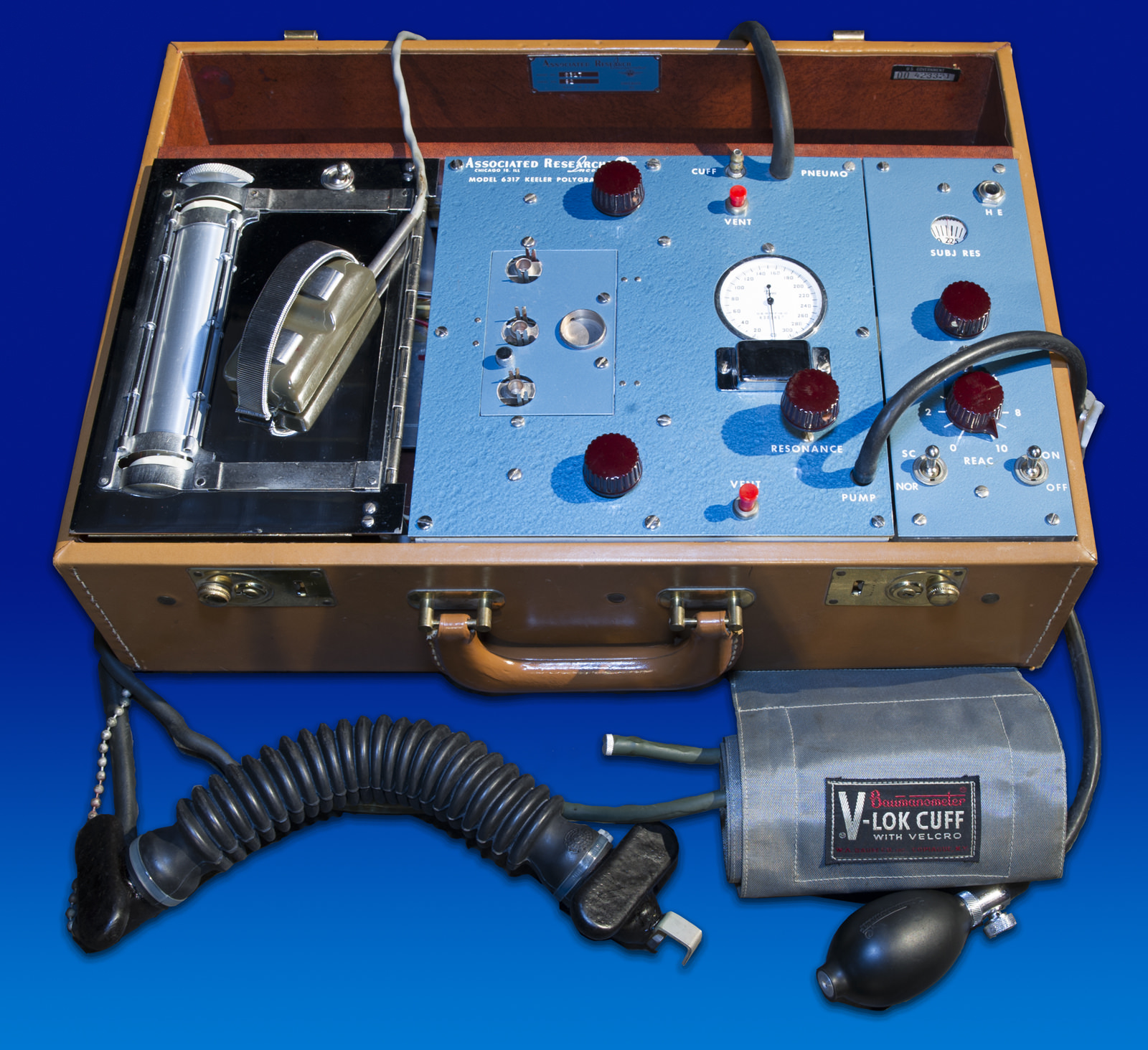
A period polygraph machine of the general type used for the Lutzes’ 1979 examination — this specific unit, from the FBI’s collection, was used in an unrelated case. Public domain.
Yes, in the narrow sense that matters here. On June 19, 1979, George and Kathy Lutz underwent polygraph examinations at a security firm in Hollywood, California, administered separately by examiners Chris Gugas and Michael Rice, both established figures in the polygraph field at the time. The examiner’s opinion was that neither showed signs of deception.
That result gets cited constantly as proof the haunting was real, and it shouldn’t be. A polygraph measures physiological stress responses associated with the act of lying — elevated heart rate, perspiration, breathing changes — not the accuracy of the underlying belief being tested. Someone who sincerely believes something happened, whether or not it did, can pass a polygraph about that belief without deception ever entering into it. The test result is genuine evidence that the Lutzes were not consciously, deliberately lying when they described their experiences in 1979. It is not evidence that a demonic presence occupied their house. Those are two very different claims, and the polygraph only speaks to the first one.
How Much Did the Story Change?
Significantly, and the changes matter more than any single contradiction. The earliest press accounts of the Lutz family’s departure, in early 1976, were comparatively modest — a family leaving a house under difficult circumstances, without the elaborate mythology that would follow. By the time Jay Anson’s book appeared in September 1977, the story included green slime, cloven hoofprints in snow, a levitating Kathy Lutz, and a demonic pig-like entity named Jodie. Anson worked from roughly forty-five hours of taped interviews with the Lutzes rather than independent, on-site investigation, which means the book’s most dramatic content passed through exactly one filter — a professional writer paid to produce a commercially compelling manuscript — between the family’s account and the published page.
That doesn’t prove any specific detail was fabricated. It does mean the version of events most people know is, by design, a dramatized adaptation rather than a transcript, and dramatized adaptations reliably grow more extreme with each retelling regardless of what actually happened.
The Priest’s Conflicting Accounts
One of the book’s most vivid scenes involves a priest — fictionalized as “Father Mancuso,” based on the real Father Ralph J. Pecoraro — who allegedly heard a disembodied voice order him out of the house and later suffered blisters and a fever.
This is one of the more genuinely useful pieces of evidence in either direction, because Pecoraro’s own accounts don’t agree with each other. A sworn statement connected to the Lutzes’ 1977 lawsuit against Weber has him saying he only spoke to the family by phone and never personally experienced the dramatic events described in the book. But Pecoraro also gave other, less formal accounts over the years, including a television appearance describing a visit to the house and something he found genuinely unsettling. A single witness offering a cautious legal denial in one setting and a more dramatic personal account in another is exactly the kind of inconsistency that makes this case difficult to resolve cleanly in either direction — it doesn’t prove the book’s version happened, and it doesn’t prove Pecoraro’s involvement was as minimal as his sworn statement suggests.
What Physical Evidence Actually Exists?
Very little that independently verifies the paranormal claims, and some of it actively undercuts specific details in the book. Later owner Barbara Cromarty said publicly that the original doors, locks, and window hardware appeared intact and undamaged when she examined them — a direct contradiction of the book’s descriptions of doors torn from hinges and window locks mysteriously bent. The “Red Room” the book describes as an ominous hidden space turns out, according to later owners and inspections, to have been a small, mundane storage area, not the sinister discovery Anson’s text presents. No independently documented slime residue, hoofprint casts, or physical trace of any described phenomenon has ever surfaced.
None of this proves the Lutzes experienced nothing. It does mean that where the story makes claims that should have left physical traces, those traces have not been found by anyone outside the family.
What Later Owners Said
James and Barbara Cromarty, who bought the house in 1977 and lived there for a decade, said repeatedly and publicly that they experienced no paranormal activity during their residency, and their frustration was aimed instead at the relentless tourists and trespassers the story attracted. The O’Neill family, who owned the house through the following decade, reported the same absence of anything unusual. That’s a meaningful pattern across many years of ordinary occupancy by people with no financial stake in either confirming or denying a haunting — unlike the Lutzes, whose account became the basis of a commercially successful book.
Did Money Motivate the Story?
Financial incentive is real and worth naming honestly, but it isn’t proof by itself. The Lutzes stood to profit, and eventually did profit, from a book and film built around their claims. William Weber wanted a cut of that same profit and lost it. Jay Anson was a professional writer paid to produce a marketable manuscript. Every party involved had a financial interest that could, in principle, shape what they said publicly.
That context should make readers appropriately skeptical of any single account. It shouldn’t be treated as a standalone argument that the entire story was fabricated — people can have financial incentives to publicize something they also sincerely believe happened, and the existence of a motive to lie is not the same as evidence that someone did.
So, Was the Amityville Horror a Hoax?
The evidence supports several conclusions sitting uncomfortably next to each other rather than one clean verdict. It’s very unlikely that every event in Jay Anson’s book happened as written; too many specific, checkable details — the doors, the locks, the Red Room, the priest’s sworn account — don’t hold up against later evidence. It’s plausible, and consistent with the polygraph results, that the Lutz family sincerely believed they experienced something frightening in that house, whatever its actual cause. It’s likely that at least some ordinary occurrences, in a family under real financial stress and living in a house with a recent multiple-murder history, were interpreted through a lens primed to expect something supernatural. And it’s well documented that the story was substantially exaggerated and dramatized for commercial publication, with William Weber’s testimony offering a specific, if self-interested, account of how that process might have started.
What the evidence does not support is a tidy label in either direction. “Completely real haunting” fails against the physical evidence and the priest’s conflicting accounts. “Conclusively proven hoax” fails against the absence of any courtroom finding to that effect and the Lutzes’ polygraph results, which at minimum establish they weren’t knowingly lying by 1979. The honest position sits in the uncomfortable middle: a frightened family, a financial incentive, a professional writer, an aggrieved former collaborator, and a story that grew considerably in the telling.
Frequently Asked Questions
Was the Amityville Horror proven fake? Not in a formal, legal sense. No court ruled on the truth of the haunting itself. What exists is a mix of contradicted physical claims, a disgruntled collaborator’s allegation of fabrication, and the family’s consistent, polygraph-supported denial that they were lying.
Did William Weber invent the Amityville story? Weber claimed he and the Lutzes built the story together “over many bottles of wine,” using details from the DeFeo case. He made this claim after a business falling-out with the family and never produced independent proof, so it should be weighed as an interested party’s testimony rather than a confirmed fact.
Did the Lutz family admit lying? No. They denied fabrication for the rest of their lives, while acknowledging that author Jay Anson dramatized aspects of the published book.
Did the Lutzes pass a lie detector test? Yes, in 1979, according to the examiners who administered it. That result shows they weren’t consciously lying about their beliefs at the time. It doesn’t independently verify that a haunting occurred.
Did later owners report ghosts? No. The Cromarty and O’Neill families, who owned the house for roughly two decades combined after the Lutzes left, both said publicly they experienced nothing unusual.
What evidence exists for the Amityville haunting? Primarily the Lutz family’s own testimony and the polygraph results supporting their sincerity. Independently verifiable physical evidence — for specific claims like damaged doors, hoofprints, or slime residue — has not been found.
Sources & further reading
- Wikimedia Commons: Amityville house photograph, Seulatr (public domain)
- Lutz v. Weber, 479 F. Supp. 1268 (E.D.N.Y. 1979)
- People: "For the Defense" — William Weber interview, September 17, 1979
- Committee for Skeptical Inquiry: Joe Nickell on Amityville
- Skeptical Inquirer: No Witches in Amityville? (Daniel Meyer, Nov/Dec 2024)