The Index / Paranormal
The Amityville Horror: What Really Happened in the Real House?
The DeFeo murders at 112 Ocean Avenue are documented fact. The Lutz family's haunting claims are a separate, disputed story. Here's what the record actually supports.
Topics: Amityville Horror, Ronald DeFeo Jr., George and Kathy Lutz, Ed and Lorraine Warren, 112 Ocean Avenue, Haunted Houses
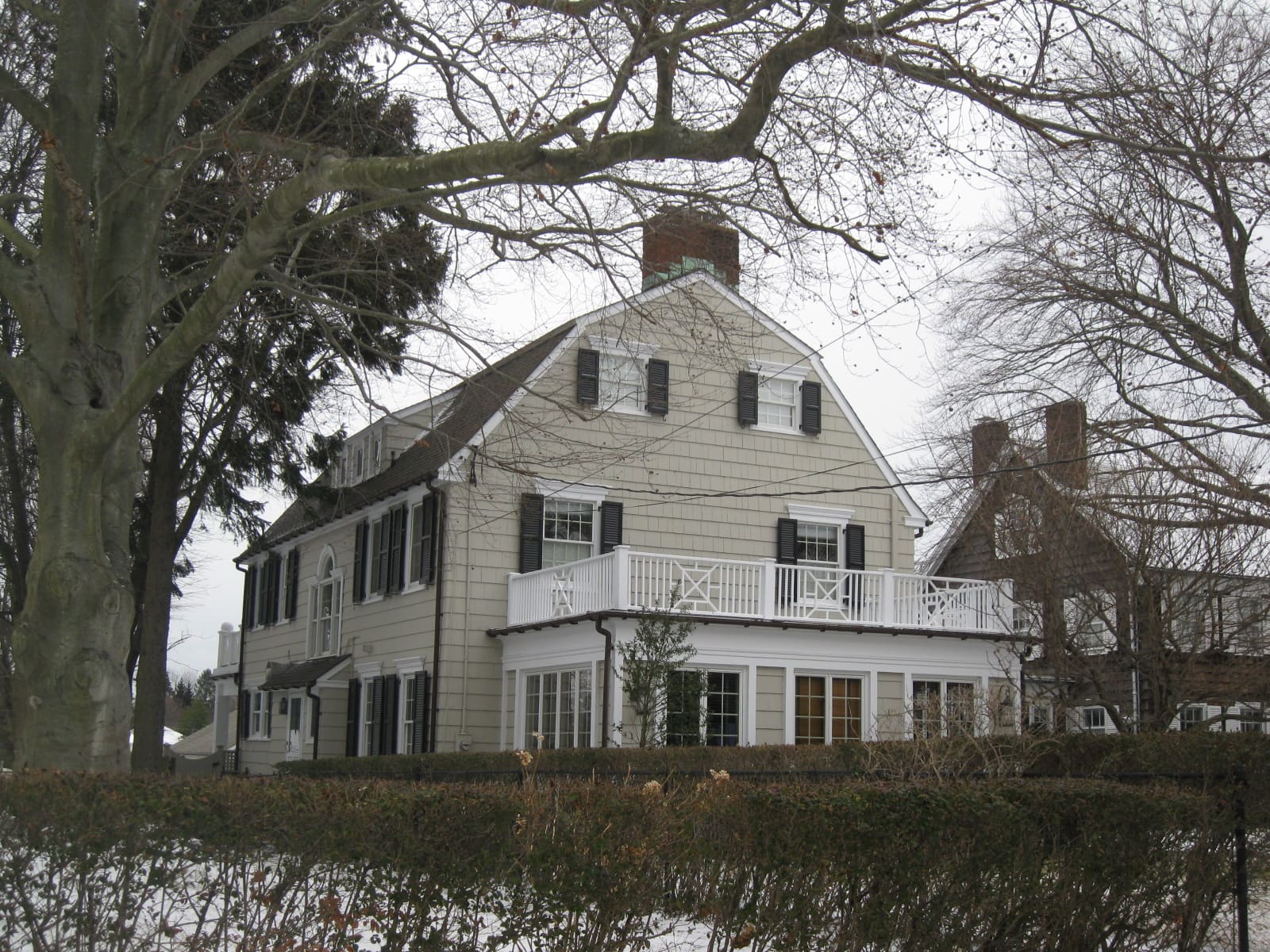
Doug Kerr / Wikimedia Commons (CC BY-SA 2.0)
Six members of one family were shot to death inside a house on Ocean Avenue in Amityville, New York, in November 1974. That is not folklore. There was a trial, a conviction, and a killer who spent the rest of his life in prison.
Thirteen months later, a different family bought that same house, moved in, and left twenty-eight days later saying they had been driven out by something they couldn’t explain. That second part — the haunting — is where the trouble starts, because almost everything famous about “The Amityville Horror” comes from that short window and the book, lawsuits and films that followed it.
The murders are documented history. The haunting is a disputed story told mostly by the people who profited from telling it. Keeping those two facts separate is the only way to make sense of Amityville.
What Happened at 112 Ocean Avenue
The house itself is a large Dutch Colonial on a canal in Amityville, on New York’s Long Island, built in 1927. Ronald DeFeo Sr. bought it in 1965 for his growing family. On November 13, 1974, six people in that house were murdered with a rifle. Ronald “Butch” DeFeo Jr., the eldest son, was convicted of the killings the following year.
George and Kathy Lutz bought the house in December 1975, apparently undeterred, or at least willing to accept a discount, by its history. They lasted about a month before abandoning the place, along with much of their furniture. What they said happened during that month became a bestselling book in 1977, a hit film in 1979, and eventually a horror franchise that has outlived nearly everyone actually involved in the case.
The house at what is now 108 Ocean Avenue, photographed in February 2010, long after its distinctive quarter-moon third-floor windows had been replaced. Source. Doug Kerr / Wikimedia Commons, CC BY-SA 2.0.
The DeFeo Family Murders
Just before 3 a.m. on November 13, 1974, someone walked through the house with a .35-caliber lever-action Marlin rifle and shot six people as they slept: Ronald DeFeo Sr., 43; his wife Louise, 42; and four of their children — Dawn, 18; Allison, 13; Marc, 12; and John Matthew, 9. All six were found in their beds.
Ronald DeFeo Jr. — 23 years old, known to family and friends as Butch — reported the killings that evening. He ran into Henry’s Bar in Amityville and told the people inside that his parents had been shot. Several of them went back to the house with him, and a patron called the police.
DeFeo initially told police that a Mafia associate named Louis Falini had killed his family over a business dispute. Investigators checked the story quickly and found Falini had a solid alibi. They also found an empty rifle box in DeFeo’s room matching the caliber of the murder weapon. Under questioning the next day, DeFeo admitted he had done it.
None of that makes this a comfortable story to tell, and it isn’t one Morbid Index treats as an occasion for gore. Six people, several of them children, died in their own home. Whatever came later at that address does not change that. For the complete documented case, including the trial and the questions that were never fully resolved, see our DeFeo murders history.
Ronald DeFeo Jr.’s Conviction — and His Changing Story
DeFeo’s trial opened in October 1975 in Suffolk County Supreme Court. His attorney, William Weber, mounted an insanity defense, arguing that DeFeo had suffered a psychotic break and acted under the influence of voices he could not control. The prosecution’s psychiatric witnesses disagreed, describing DeFeo as fully aware of what he was doing.
The jury rejected the insanity defense. On November 21, 1975, DeFeo was convicted on six counts of second-degree murder, and he was later sentenced to six terms of 25 years to life. He remained in New York state prison until he died in March 2021, at age 69.
He did not stop talking about the murders. Over the following decades DeFeo offered several different accounts of what happened that night — sometimes insisting he acted alone, at other points claiming his sister Dawn had shot their parents and younger siblings and that he killed her afterward in a struggle, and in later interviews describing a version involving other participants entirely. Investigative writer Ric Osuna interviewed DeFeo extensively for his 2002 book on the case and argued that unburned gunpowder residue reportedly found on Dawn’s nightgown was consistent with her having fired a weapon that night.
That residue claim has never been tested in a way that produced a legal finding, and no one besides DeFeo was ever charged with the murders. Parole boards and appellate courts that reviewed his later statements were unpersuaded, and several noted that his account had shifted to suit whatever legal or media opportunity was in front of him at the time. The honest position is that DeFeo was legally convicted as the killer, that his own story became progressively less reliable with each retelling, and that the exact circumstances inside that house — including whether he had any help — remain genuinely disputed rather than settled by his later claims. What drove him to it is similarly unresolved. Investigators and later writers have pointed to a volatile, sometimes abusive household, drug use, and a substantial life-insurance payout as possible factors, but no single motive was ever proven at trial.
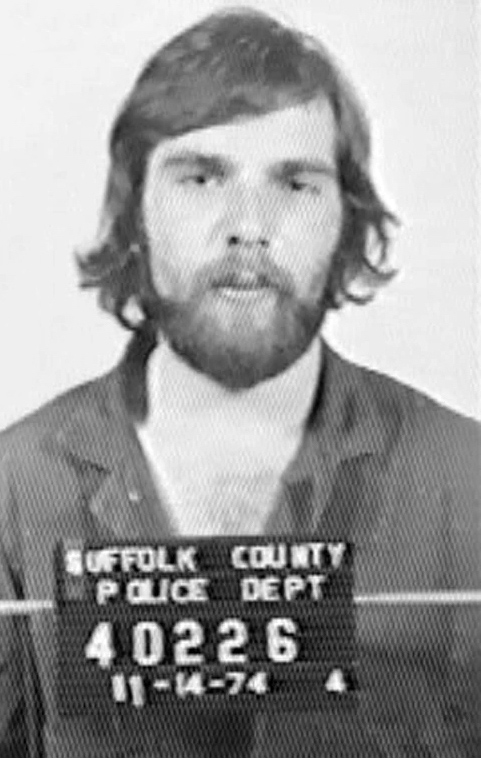
Ronald DeFeo Jr., photographed by the Suffolk County Police Department the day after the murders. Source. Public domain.
George and Kathy Lutz Move In
George Lutz, a 28-year-old land surveyor, and his wife Kathy bought 112 Ocean Avenue in December 1975 for $80,000, a price that reflected both the house’s size and its recent history. They took most of the DeFeo family’s remaining furniture as part of the deal. The household included Kathy’s three children from a previous marriage — Daniel, Christopher and Melissa — along with the family dog.
Sources differ on the exact move-in date: some accounts place the closing and move-in on the same day, December 18, while others give December 19. What isn’t disputed is that the family left on January 14, 1976, taking little with them. Depending on which start date you use, that’s either 27 or 28 days — close enough that “the Lutzes lasted less than a month” is the safer way to put it than insisting on an exact figure.
The Lutzes said they left because of escalating, frightening phenomena. Newsday’s early 1976 reporting on their departure also noted something less dramatic: the family was already under serious financial strain, struggling with a large mortgage and a heating system that was reportedly expensive to run. Both things can be true. A family under financial pressure and a family that believed its house was haunted are not mutually exclusive, and the record doesn’t allow a confident ranking of which motive mattered more.
What the Lutz Family Said Happened
Almost everything associated with the Amityville legend — the cold spots, the swarms of flies, the “Red Room,” the demonic pig — comes from roughly forty-five hours of tape recordings the Lutzes made after leaving the house, later shaped into prose by author Jay Anson.
According to those accounts, George began waking at 3:15 each morning, close to the time of the murders. The family described strange odors, unexplained cold patches, and damage to doors and window locks. Kathy said she experienced disturbing dreams and the sensation of being embraced by something unseen. Missy, the youngest child, said she had befriended an entity she called “Jodie,” which the family associated with a red-eyed, pig-like presence. Anson’s book also describes a small room off the basement, painted red, that the family’s dog reportedly refused to enter — the space that became known as the “Red Room.”
The book goes further still, describing green slime oozing from walls, cloven hoofprints in snow outside the house on New Year’s Day, and a scene in which Kathy is said to have levitated above her bed.
None of this should be repeated as something that happened. It’s what the Lutzes said happened, filtered through Anson’s dramatized prose. There is no independent corroboration for most of it. Suffolk County police records show no emergency calls from the house during the family’s stay, and neighbors interviewed at the time did not report the swarms, odors or disturbances the book describes. That absence doesn’t prove nothing frightened the Lutzes inside that house — it means nobody outside the family has ever verified it.
A couple of the specific claims deserve their own scrutiny rather than blanket dismissal. Later owner Barbara Cromarty said publicly that the original door and window hardware looked intact and undamaged when she inspected the house — her observation, not an independent forensic inspection commissioned to test the book’s claims. As for the flies: it’s true that certain species can survive winter indoors or emerge in heated buildings, so “flies can’t exist in winter” is too strong a claim to make. The real problem with that part of the story isn’t biological impossibility — it’s that nobody besides the family ever documented the swarm the book describes.
The Priest Story Is Stranger Than the Simplified Version
The book’s most vivid early scene involves a priest — called “Father Mancuso” in Anson’s text, a pseudonym for the real Father Ralph J. Pecoraro — who allegedly visited the house, heard a voice tell him to get out, and later suffered blisters and a fever.
When the Lutzes sued William Weber in 1977, the case eventually produced a sworn statement from Pecoraro. In it, he said he had only spoken with the Lutzes by phone about blessing the house and had not personally experienced a disembodied voice, a physical attack, or the other effects described in the book. That affidavit is the strongest documentary evidence undercutting the priest scene as written.
But the record is not as tidy as “the priest admitted it was fabricated.” Pecoraro gave other, less legally formal accounts over the years — including a television appearance in which he described visiting the house and experiencing something he found unsettling — that don’t line up neatly with the sworn denial. It’s possible to read this as a man giving a cautious legal statement to avoid being drawn deeper into a lawsuit, or as a man who told different versions of an ambiguous experience to different audiences at different times, or as some combination of both. What can be said with confidence is that Pecoraro’s own account of his involvement is not fully consistent across the historical record, and treating the sworn affidavit as the final, complete word on what he believed happened overstates what that one document proves.
Jay Anson and the Book
The Lutzes did not write the famous book themselves. After a falling-out with Weber over how to structure a book deal, they signed with Jay Anson, a professional writer who worked from their tape recordings rather than living in the house or independently investigating the claims. The Amityville Horror, published by Prentice-Hall in September 1977, was marketed explicitly as a true story and sold enormously well.
Anson’s book is a source for what the Lutzes told him. It is not independent evidence that any of it happened. Treating a commercial horror bestseller as a factual record is the single biggest reason the Amityville legend outgrew the more modest, contradictory story underneath it.
William Weber Said They Made It Up
William Weber — DeFeo’s defense attorney, who had briefly discussed a book collaboration with the Lutzes before they went to Anson instead — later became the story’s most damaging critic.
In a 1979 interview with People magazine, Weber said flatly that he and the Lutzes had built the horror story “over many bottles of wine.” He claimed he had shared crime-scene details and case information with the family, material he says was later reworked into supernatural incidents.
Weber’s account matters. He had direct, early access to the Lutzes and a specific, on-the-record explanation for how a haunting story could have been assembled from real case details rather than genuine paranormal experience. But he is not a neutral witness. Weber had wanted a cut of the book’s profits, lost that arrangement when the Lutzes went to Anson instead, and was already suing them by the time he gave that interview. A man with a financial grudge saying “I helped invent this” is meaningful evidence — the kind a fact-checker takes seriously — but it isn’t a courtroom-verified confession, and the Lutzes disputed his account for the rest of their lives.
Was Amityville Actually Proven to Be a Hoax?
Not in the way that phrase usually implies.
In 1977, the Lutzes sued Weber and several publishers, seeking damages over how the story had been handled. Weber countersued. Judge Jack B. Weinstein, presiding over Lutz v. Weber in the U.S. District Court for the Eastern District of New York, dismissed the Lutzes’ claims in 1979. In doing so, he remarked that the book appeared to him to be largely a work of fiction relying heavily on suggestions from Weber.
That comment is frequently cited as proof the case was “debunked in federal court.” It’s more accurate to say a federal judge, ruling on a lawsuit about contract and publicity disputes rather than a trial on the truth of a haunting, expressed skepticism about the book’s veracity as part of his reasoning. It’s a serious, on-the-record judicial opinion from someone who had reviewed the underlying documents — not a scientific or forensic finding that every experience the Lutz family described was invented.
Put the pieces together — Weber’s confession, the lack of independent witnesses, the contradictions between the book and the physical evidence, and a federal judge’s skepticism — and there is substantial, well-founded reason to doubt the paranormal narrative as published. There is not a single ruling or test that proves every subjective thing the Lutz family said they experienced was consciously fabricated. We break down that evidence in much more detail, including the Lutzes’ 1979 polygraph results, in Was the Amityville Horror a Hoax?
What Ed and Lorraine Warren Actually Did at Amityville
Ed and Lorraine Warren are inseparable from Amityville in popular culture, largely thanks to The Conjuring 2. Their actual involvement was much narrower and came later than most retellings suggest.
The Warrens had no role during the Lutz family’s twenty-eight days in the house. Their first documented visit came in early 1976, weeks after the Lutzes had already left, as part of a televised walkthrough organized with a local news crew. During that visit, the Warrens and a group of investigators and reporters spent time in the house; the Warrens said afterward that they had sensed a malevolent presence.
That’s a claim, made after the fact, during a media event — not a documented on-site investigation conducted while the family still lived there. The dramatic séance-and-exorcism version of events shown in The Conjuring 2, in which Lorraine Warren relives the DeFeo murders and encounters a demonic nun, is an invention of that film’s fictional universe. The nun character, Valak, belongs to the movies’ internal mythology; there is no historical claim from 1976 describing anything resembling it. Readers curious about where that grimoire figure actually comes from, long before the films got hold of it, can see our Valac explainer. The Warrens’ pattern of arriving after a case had already become public, then building a larger claim around it, shows up again in cases like the Enfield Poltergeist and the Annabelle doll. We cover exactly what the Warrens documented at Amityville, including the John Ketchum and burial-ground legends, in Ed and Lorraine Warren at Amityville.
The Famous “Ghost Boy” Photograph
During that same early-1976 walkthrough, photographer Gene Campbell took a black-and-white infrared photograph on the second-floor landing. It appears to show a boy standing in a doorway with bright white eyes. George Lutz later released the image publicly on The Merv Griffin Show, and it has circulated as visual “proof” ever since.
Paranormal accounts have suggested it shows the ghost of John Matthew DeFeo, the youngest murder victim. A commonly cited skeptical explanation instead identifies the figure as a living person present that night — sometimes named as investigator Paul Bartz — caught mid-frame by the camera. That identification is a proposed explanation from researchers who reviewed who was actually in the house, not a forensic certainty confirmed by image analysis.
The glowing eyes have a much less mysterious explanation regardless of who is in the picture: infrared film combined with a flash can produce a bright “eyeshine” effect when light reflects directly off the retina, similar to red-eye in ordinary photography. That doesn’t prove the photo is a hoax. It does mean the image’s most eerie feature has an ordinary photographic cause.
Was the House Built on a Native American Burial Ground?
No credible evidence supports this, and it’s worth being precise about where the claim came from rather than just labeling it false.
The burial-ground story entered the Amityville legend through parapsychologist Hans Holzer’s 1979 book Murder in Amityville, built around a session with medium Ethel Johnson-Meyers, who claimed the property sat on a Shinnecock burial ground and that DeFeo had been possessed by the spirit of an angry chief. Historians of Long Island’s Indigenous nations have pointed out that the claim doesn’t even match local geography: the Shinnecock historically occupied the eastern end of Long Island, well away from Amityville, while the Indigenous people of that specific area were the Montaukett. No documented historical or archaeological record ties a burial ground or asylum to the Ocean Avenue property. The trope of the “Indian burial ground” as an explanation for hauntings was already a well-worn piece of American horror shorthand by the late 1970s, and Amityville borrowed it rather than uncovering it.
What Later Owners Said About the House
James and Barbara Cromarty bought the property in 1977 and lived there for a decade. They said publicly, more than once, that they experienced no paranormal activity, and they grew frustrated enough with tourists, photographers and trespassers that they successfully petitioned to have the street address changed from 112 to 108 Ocean Avenue. Later renovations replaced the distinctive quarter-moon third-floor windows that had become the house’s visual signature in film posters.
The O’Neill family, who owned the house through the late 1980s and 1990s, likewise said they lived there without incident. More recent private owners have continued to hold the property; none has publicly reported anything unusual. That’s a meaningful pattern across nearly five decades of ordinary occupancy, though it’s worth stating plainly as testimony from specific owners rather than as a blanket “no one has ever experienced anything,” since nobody can rule out an unreported claim.
Does the Amityville Horror House Still Exist?
Yes. It’s a private home on a residential street, still standing, still lived in. Morbid Index isn’t going to provide directions or encourage anyone to go looking for it — the current owners have nothing to do with events from fifty years ago and have every right to be left alone. The address discussion above is part of the documented history of the case, not an invitation to visit.
What the Movies Changed
The 1979 film adaptation was shot on a different house entirely, in Toms River, New Jersey, with an exaggerated, glowing version of the eye-like windows built for the production. It amplified the book considerably: the climax involves collapsing staircases and walls oozing blood, and George Lutz is portrayed sliding into something close to homicidal rage, a depiction his real-life counterpart pushed back against.
Later franchise entries, and eventually The Conjuring 2, folded the Warrens’ brief, after-the-fact involvement into a full-blown demonic mythology, complete with an on-site exorcism and a named antagonist that has nothing to do with 1976. Each retelling made the house more theatrical and the family’s specific, contradictory claims less visible underneath the spectacle.
So What Really Happened at Amityville?
Strip away the marketing and two things remain standing on solid ground. Ronald DeFeo Jr. murdered his parents and four siblings in November 1974, was convicted for it, and spent the rest of his life in prison — a documented tragedy, not a legend. Separately, George and Kathy Lutz really did buy that house, really did move their family in, and really did leave within a matter of weeks.
What happened in between is where certainty runs out. The Lutzes described frightening experiences that became the basis of an enormously profitable book, and neither Weber’s confession, Judge Weinstein’s skepticism, nor the absence of outside witnesses adds up to formal proof that every detail was invented. It adds up to a story built and reshaped by publishing deals, a lawsuit, a defense attorney with a grudge, and a film industry that kept raising the stakes with each adaptation. The paranormal claims were never independently verified, and several of the story’s most famous specific details — the priest’s stigmata, the burial ground, the ghost boy — don’t hold up the way the book presents them.
That’s a less tidy ending than either “haunted house” or “total hoax.” It’s also the only one the evidence actually supports.
Frequently Asked Questions
Is The Amityville Horror based on a true story? Partly. The 1974 DeFeo murders are real, documented history. The haunting the Lutz family described afterward is a separate, disputed claim that was never independently corroborated.
What really happened in the Amityville house? Ronald DeFeo Jr. killed six family members there in November 1974 and was convicted of the murders. Thirteen months later, the Lutz family lived in the house for less than a month and left saying they had experienced terrifying, unexplained phenomena — claims that became the basis for Jay Anson’s book.
Who killed the DeFeo family? Ronald DeFeo Jr. was convicted on six counts of second-degree murder. He gave several conflicting accounts over the following decades, including claims involving his sister Dawn, but no one else was ever charged.
How long did the Lutz family live in the Amityville house? Roughly a month — sources differ between 27 and 28 days depending on whether the move-in date is given as December 18 or 19, 1975. They left on January 14, 1976.
Why did the Lutz family leave? They said it was because of escalating supernatural activity. Contemporary reporting also noted the family was under significant financial pressure at the time, including a heavy mortgage and costly heating problems.
Was The Amityville Horror a hoax? Defense attorney William Weber said he and the Lutzes invented much of the story, and a federal judge who reviewed the case called the book largely fictional. That’s strong evidence against the paranormal narrative as published, though it falls short of a formal, all-encompassing legal finding that every claim was consciously fabricated.
Did Ed and Lorraine Warren investigate Amityville? They visited the house briefly in early 1976, after the Lutz family had already moved out, as part of a media walkthrough. They were not present during the family’s residency, and the demonic-nun storyline from The Conjuring 2 is a film invention.
Is the Amityville house still standing? Yes, at what is now 108 Ocean Avenue. It remains a private residence.
Was the house built on a Native American burial ground? No credible historical evidence supports this. The claim traces back to a 1979 book built around a medium’s psychic reading, and it misplaces the local Indigenous geography of Long Island.
What is the Amityville “ghost boy” photograph? An infrared photograph taken during the Warrens’ 1976 walkthrough, showing a figure with glowing eyes. A commonly cited skeptical explanation identifies the figure as a living investigator rather than a ghost, and the glowing eyes match a known infrared-flash effect rather than anything unexplained.
Sources & further reading
- Lutz v. Weber, 479 F. Supp. 1268 (E.D.N.Y. 1979)
- People: "For the Defense" — William Weber interview, September 17, 1979
- New York Supreme Court, Appellate Division: People v. DeFeo
- Committee for Skeptical Inquiry: Joe Nickell on Amityville
- Newsday: Ronald DeFeo Jr., Amityville killer, dies in prison
- John A. Strong, "The Montaukett Indians of Eastern Long Island"