News
What Archaeologists Found Beneath the Aberlemno III Pictish Stone
A fish carving helped prop up the Aberlemno III cross-slab. See what the 2026 dig found, where a carved face turned up and what the pits might mean.
Topics: Aberlemno, Picts, Scotland, Archaeology
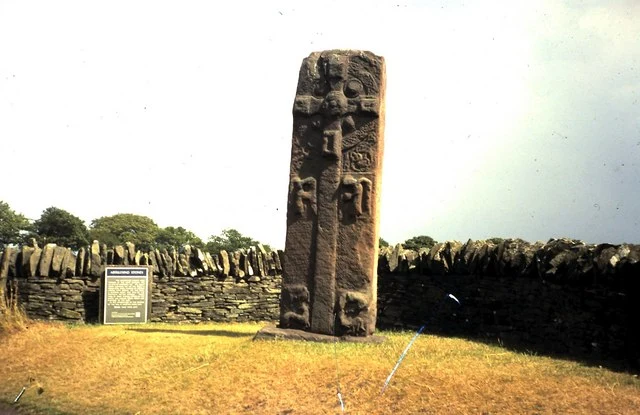
Aberlemno III in 1983. Photo by ronnie leask via Geograph, CC BY-SA 2.0. Converted to WebP.
A piece of an older Pictish carving was used to prop up the base of Aberlemno III, a roadside cross-slab in Angus, Scotland. Historic Environment Scotland and AOC Archaeology announced the find on November 5, 2026, alongside a carved human face from the surrounding topsoil. Two pits below the base also raise a question about how the monument stood before it was set in its stone socket. See also Dorset’s Bride Stone and the Evidence for a Stone Age Tomb. See also documented dark history.
The fragment beneath the base
The piece used as a prop carries part of an incised fish design. The excavation team thinks it may show a salmon, a motif found on older Pictish stones in northern and eastern Scotland. Its position under the base is evidence of reuse. The original stone may already have been broken by the time the socket was added, and the team needs more analysis to establish when that happened.
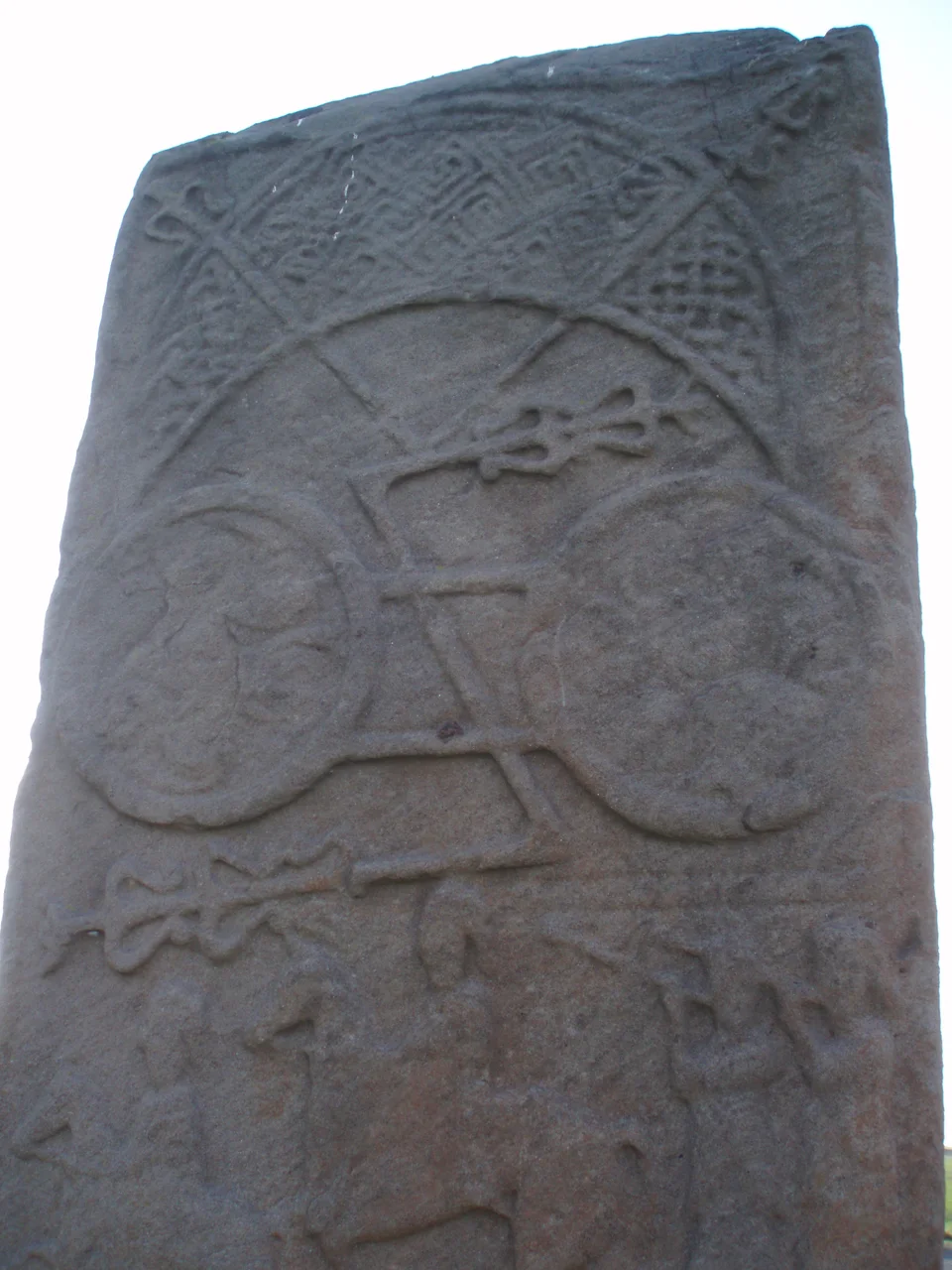
The roadside cross-slab itself is a different object. The Historic Environment Record describes a ring cross and figures on one face, with Pictish symbols above a hunting scene on the reverse. Historic Environment Scotland’s Statement of Significance favours a date in the first half of the ninth century for the slab and notes that an eighth-century date has also been proposed.
Why the carved face is a separate find
The fragment of a human head came from topsoil around the monument. Its appearance suggests an early medieval date, according to the team. The excavators found no clear fit with Aberlemno III or another known Pictish monument in the area. Its date and the object it came from are still open questions. The November announcement shows a close-up of the fragment.
Did the cross-slab turn?
Excavators identified two possible stone settings beneath the base. If one held Aberlemno III, the monument could originally have faced north and south, towards Aberlemno Kirk on one side. In the team’s proposed sequence the slab later fell or was moved, acquired its stone socket and was set facing east and west. That would amount to a change in alignment at the same site. The pits have yet to be confirmed as evidence of that sequence.
The distinction matters for other excavations too. At Qinngua in Greenland, archaeologists used the position of a burial to help interpret a building. At Aberlemno, the position of the fragment establishes its role under the base, while the pits still need to be tied to a particular stone.
Where the stone is now
The excavation followed a fall in March 2025, when the slab and its winter cover toppled. Historic Environment Scotland says the roadside slab is undergoing conservation in Edinburgh. The base has also been brought there. Part of the slab remains lodged in the socket, and the team plans to recover it and examine the surviving surface.
Hero photograph licensed under CC BY-SA 2.0.
Frequently asked questions
Did the cross-slab turn?
Excavators identified two possible stone settings beneath the base. If one held Aberlemno III, the monument could originally have faced north and south, towards Aberlemno Kirk on one side. In the team's proposed sequence the slab later fell or was moved, acquired its stone socket and was set facing east and west. That would amount to a change in alignment at the same site. The pits have yet to be confirmed as evidence of that sequence.