The Index
Apophis Curse: What the Burned Papyrus in Thebes Shows
Forty burned papyrus fragments from Thutmose III’s temple show how Egyptians cursed Apophis, roughly 1,000 years before a surviving ritual manual.
Topics: Ancient Egypt, Apophis, Thebes, Papyrus, Archaeology
Forty papyrus scraps from the mortuary temple of Thutmose III in ancient Thebes show that Egyptians performed the rite known as Overthrowing Apophis during the New Kingdom. Their drawings, writing and traces of burning and piercing help date the practice to about 3,400 years ago, roughly a millennium before the surviving manual that describes it.
How did archaeologists identify the curse?
The 2026 study by Fredrik Hagen, Carina Kühne-Wespi and Myriam Seco Álvarez brings together three clues. The scraps came from discarded material at the mortuary temple of Thutmose III, on the west bank of modern Luxor. Some preserve drawings of serpents and cursive Egyptian writing. Many also show damage that matches what the later ritual text prescribes for an image of Apophis.
A scorch mark alone could come from many kinds of fire. Here, the picture, the text and the physical damage point to the same use. That is the combination that makes the fragments evidence of a rite people performed. A related distinction matters in the study of the skulls from Abydos, where researchers also compare marks on surviving material with the circumstances of its burial.
Differences in the layout narrow the interpretation further. On several pieces, lines divide the drawings. At least one comparable fragment lacks such a divider and arranges its serpents differently. The authors also note differences in handwriting and drawing. These details make a single original sheet unlikely. The 40 pieces are a count of fragments, so they cannot tell us how many ceremonies took place.
Which three pieces of evidence are often confused?
| Evidence | Date | What it tells us |
|---|---|---|
| Burned scraps from Thutmose III’s temple | New Kingdom, about 3,400 years ago | The rite was already being carried out at the temple. |
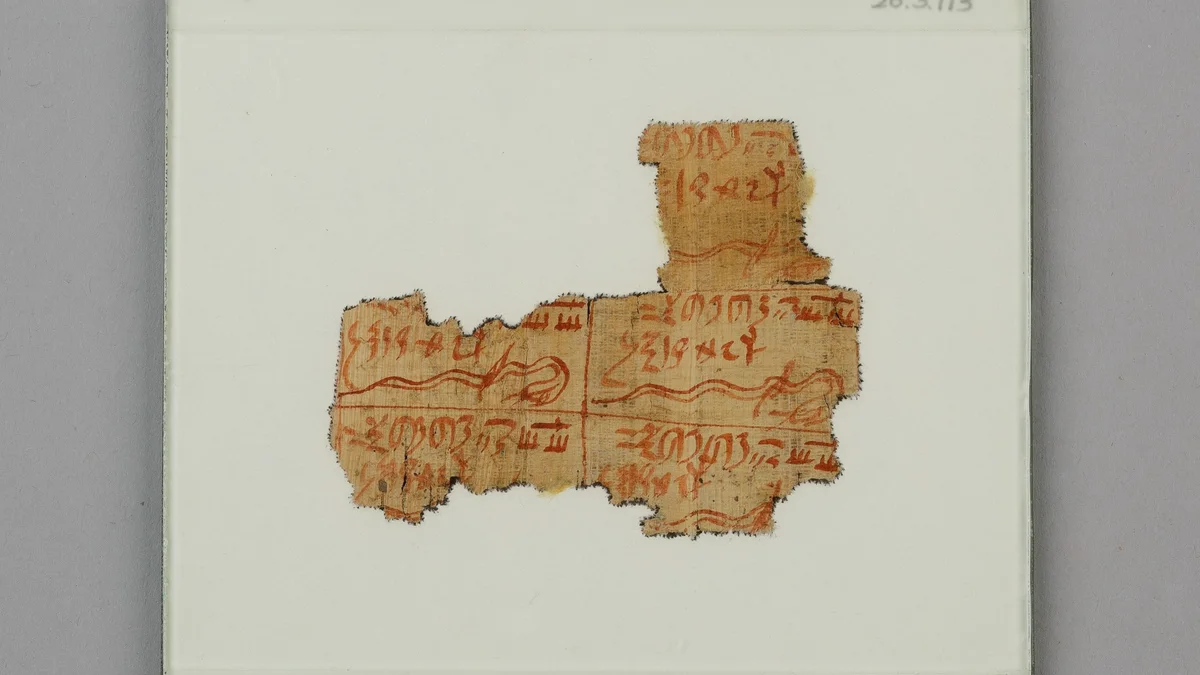
| Fragment of Magical Papyrus, Met 28.3.113 | About 721–525 BCE | A separate object from an embalmers’ cache shows a later example of the drawn panels. It is the comparison fragment pictured above. |
| Bremner–Rhind Papyrus | Late fourth century BCE | The surviving manuscript preserves instructions for the rite and helps researchers interpret the older remains. |
The Met’s catalog locates its fragment in an embalmers’ cache at Deir el-Bahri, a separate find context from the temple rubbish deposit. That matters because objects from the same broad area can preserve different kinds of evidence. At the Wandlebury burial pit, for example, researchers likewise distinguish what the deposit reveals from what still needs independent confirmation.
The University of Copenhagen mentioned charred fragments with images of Apophis in 2021. Its November 2026 announcement describes the published analysis of 40 fragments. The new work explains what the material shows without requiring a new date for the excavation.
Why did Egyptians target Apophis?
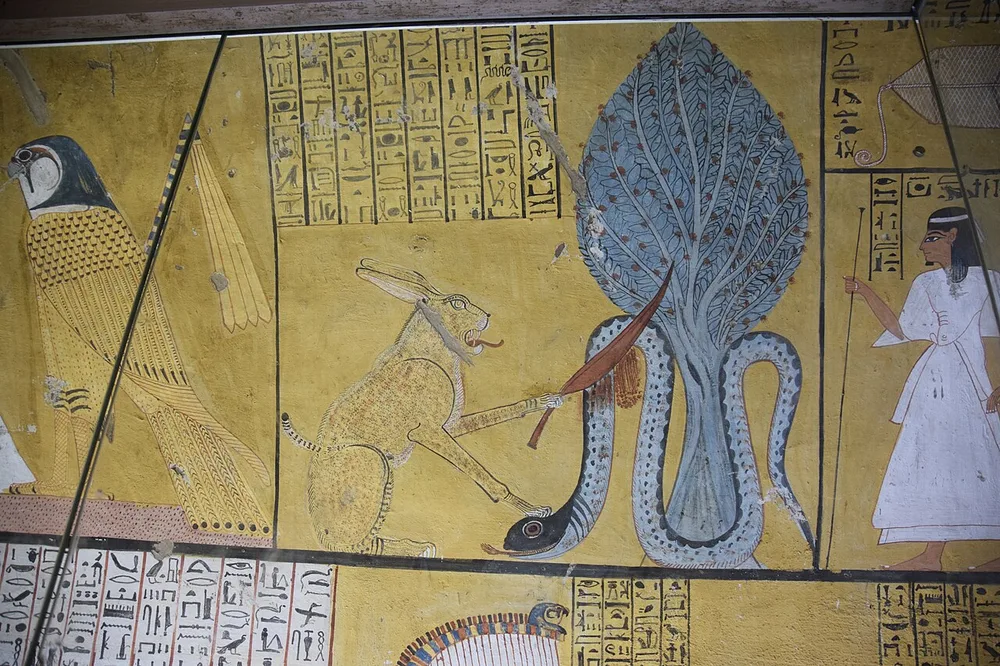
In Egyptian religious tradition, Apophis, also called Apep, was the serpent who threatened Ra on his nightly passage through the underworld. Damaging a likeness of Apophis enacted the defeat of that threat. The university notes that similar language and actions could also be directed against hazards or human enemies. The objects show what people did in response to those beliefs. They give no way to measure the supernatural effects claimed for the rite.
This is a different kind of evidence from the stories attached to Tutankhamun’s tomb. At Thebes, historians have remnants of a documented rite. Tutankhamun’s famous curse grew through later claims about the people who opened his tomb.
Frequently asked questions
How old are the burned Apophis fragments?
The University of Copenhagen dates the temple fragments to about 3,400 years ago, in Egypt’s New Kingdom. That puts the material evidence roughly 1,000 years before the surviving ritual manual.
Did the pieces all come from one document?
The researchers found differences in the drawings, layout and handwriting that make a single original sheet unlikely. The number of surviving pieces cannot tell us how many times the rite took place.
Is the papyrus pictured here one of the burned fragments?
No. The Met’s papyrus is a later comparison object, dated to about 721–525 BCE and found in a separate embalmers’ cache. It helps show what some of the ritual drawings looked like.
Sources & further reading
- Hagen, Kühne-Wespi and Seco Álvarez, Cursing Apophis (2026)
- University of Copenhagen: November 23 announcement and interview
- University of Copenhagen: earlier excavation account
- The Metropolitan Museum of Art: Fragment of Magical Papyrus (28.3.113)
- American Research Center in Egypt: Thutmose III Temple Project