The Index / Unsolved Cases
The Circleville Letters Explained: Who Sent the Anonymous Threats?
For nearly two decades, anonymous letters terrorized Circleville, Ohio. A man served ten years for a related crime but was never charged with writing them, and forensic experts still disagree on who did.
Topics: Circleville Letters, True Crime, Unsolved Cases, Ohio
DPLA / Wikimedia Commons (Public Domain)
Starting in 1976, anonymous letters began arriving in mailboxes across Circleville, Ohio, a small town south of Columbus. The letters accused specific residents of affairs, made threats, and claimed detailed knowledge of people’s private lives. A man was later imprisoned for ten years for a crime connected to the case — but he was never formally charged with writing the letters, and forensic experts who have studied the letters since still don’t agree on who actually wrote them.
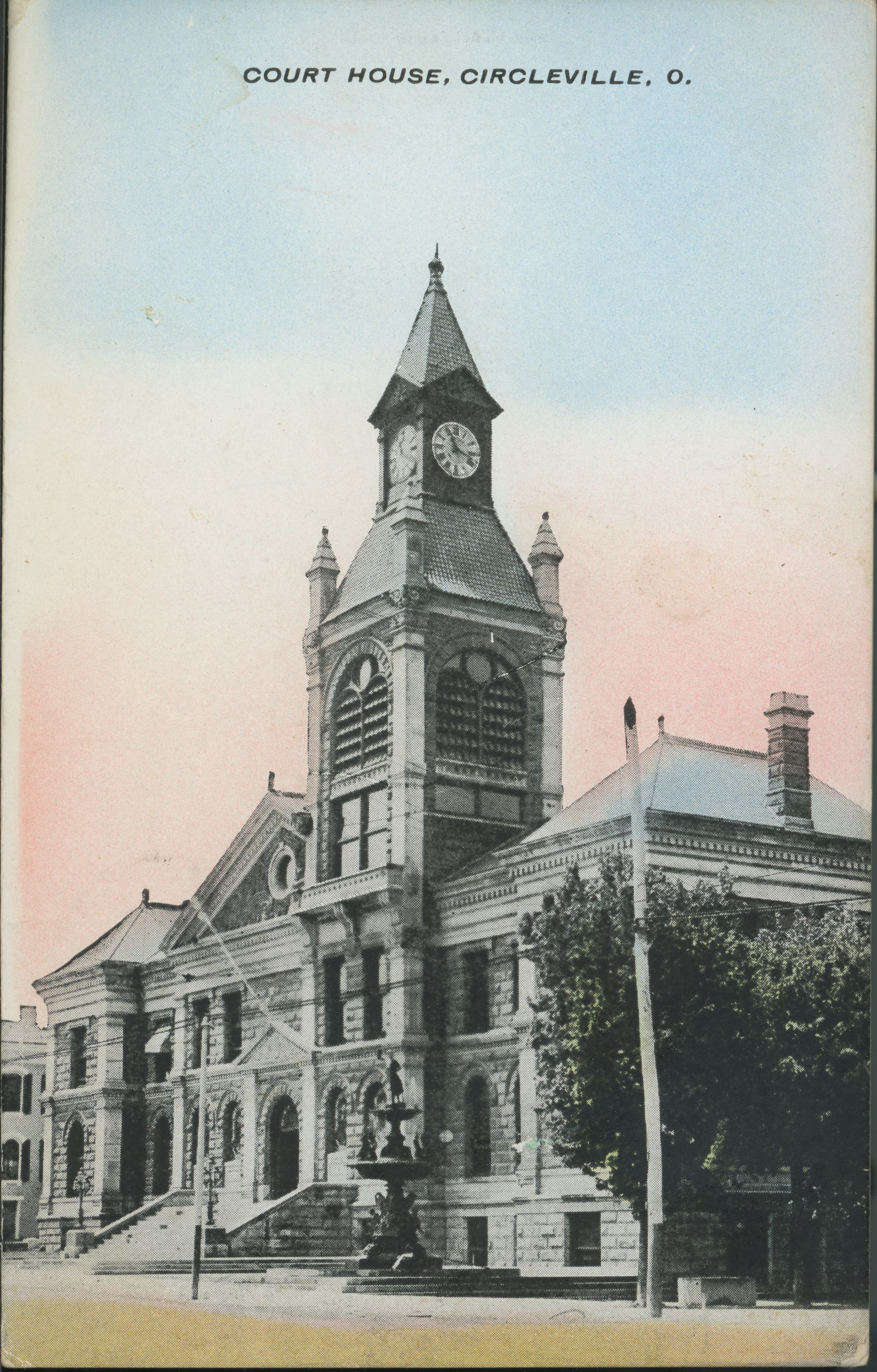
Historic Circleville courthouse postcard. It is location context, not a record from the letters investigation. Source. DPLA / Wikimedia Commons, Public Domain.
How the Letters Started
The first known letter arrived addressed to Mary Gillispie, a Circleville school bus driver, accusing her of having an affair with Gordon Massie, the local school superintendent. Later letters expanded the pattern: threatening language, claims of surveillance (“I know where you live. I’ve been observing your house.”), and increasingly personal accusations aimed at Mary and, eventually, other residents around town. Mary and Massie later acknowledged a relationship, though they maintained it began only after the letters started.
Ron Gillispie’s Death
On August 19, 1977, Ron Gillispie — Mary’s husband — received a phone call and left the house, reportedly to confront whoever he believed was behind the letters. A short time later, his pickup truck left the road and struck a tree at an intersection he knew well. A single round had been fired from a gun found in the truck, with no clear account of when or how. The exact circumstances of his death have never been fully resolved to everyone’s satisfaction, and it remains one of the case’s most disputed points — officially treated as an accident, but one that happened under circumstances many people connected to the case have never found fully convincing.
The Booby-Trapped Sign
The letters kept coming after Ron’s death, and in 1983 the case escalated again. Mary Gillispie found a homemade device rigged to a sign along her regular bus route: a pistol positioned to fire if the sign was disturbed. Investigators traced the gun to Paul Freshour, Mary’s brother-in-law, who had recently separated from Ron’s sister.
Paul Freshour’s Trial and Conviction
Sheriff’s investigators conducted a handwriting comparison with Freshour in February 1983. That test has since been criticized as methodologically weak — rather than being asked to write naturally, Freshour reportedly copied out portions of the actual letters, a method forensic document examiners generally consider unreliable for establishing authorship. Freshour was tried and, on October 24, 1983, convicted of attempted murder in connection with the booby-trapped gun. He received the maximum sentence: seven to twenty-five years.
It’s worth being precise about what he was actually convicted of. Freshour was never formally charged with writing the Circleville letters themselves — only with the attempted-murder charge tied to the trap. Investigators and the public largely treated him as the letter writer regardless, a distinction that matters given what happened next.
Letters That Continued From Prison
According to accounts from the case, letters matching the same handwriting and pattern kept arriving in Circleville after Freshour was incarcerated — despite reports that he was restricted from having pens or writing paper during at least part of his imprisonment. A prison official is reported to have concluded it would have been effectively impossible for Freshour to have written and mailed those letters under those conditions. That detail is central to why the case remains disputed: if the letters continued while their leading suspect had no practical way to send them, either the restrictions weren’t as complete as reported, someone else was writing letters in a similar style, or the attribution to Freshour was wrong from the start.
Release and Later Life
Freshour was paroled in 1994 after serving roughly ten years, and the letters that had plagued Circleville for nearly two decades stopped around the same time. He maintained his innocence for the rest of his life, publicly asking for someone to properly reexamine the case and identify the actual writer. He died of a heart attack on June 28, 2012, at age 70, without that happening.
Competing Forensic Opinions
The case hasn’t stayed static since Freshour’s death. A 2021 CBS 48 Hours segment brought in forensic document examiner Beverley East, who analyzed a larger set of roughly 49 letters connected to the case and concluded Freshour was likely their author. Former FBI profiler Mary Ellen O’Toole, examining the same case, has expressed the opposite view, suggesting the actual writer could have been someone else entirely. Both are credentialed professional opinions, reached independently, pointing in different directions — which is a fair summary of where the case still stands. It was never formally reopened after Freshour’s 1983 conviction.
What’s Actually Documented, and What Isn’t
Documented: the letters existed and were mailed to real people over roughly eighteen years; Ron Gillispie died in a one-vehicle crash in 1977 under disputed circumstances; a gun rigged to injure Mary Gillispie in 1983 was traced to Paul Freshour; Freshour was convicted of attempted murder for that device and served a decade in prison; letters continued arriving after his imprisonment began.
Not documented, despite how often it’s repeated as settled: that Freshour was proven, rather than assumed, to be the letter writer. No criminal charge for authorship was ever filed, no conviction for writing the letters exists, and professional handwriting analysis conducted decades apart has produced conflicting conclusions. Anyone telling this story as a closed case with a confirmed villain is going further than the documented record supports.
The gap between a case’s confidently repeated popular version and its actual evidentiary record shows up across a lot of unsolved American cases — it’s the same dynamic covered in our look at the Axeman of New Orleans and the widely repeated but unverified theory about who that killer was. Like the Zodiac Killer, the Circleville case involves an anonymous author communicating directly with a community, and in both cases, decades of confident theorizing have outpaced what was ever actually proven.
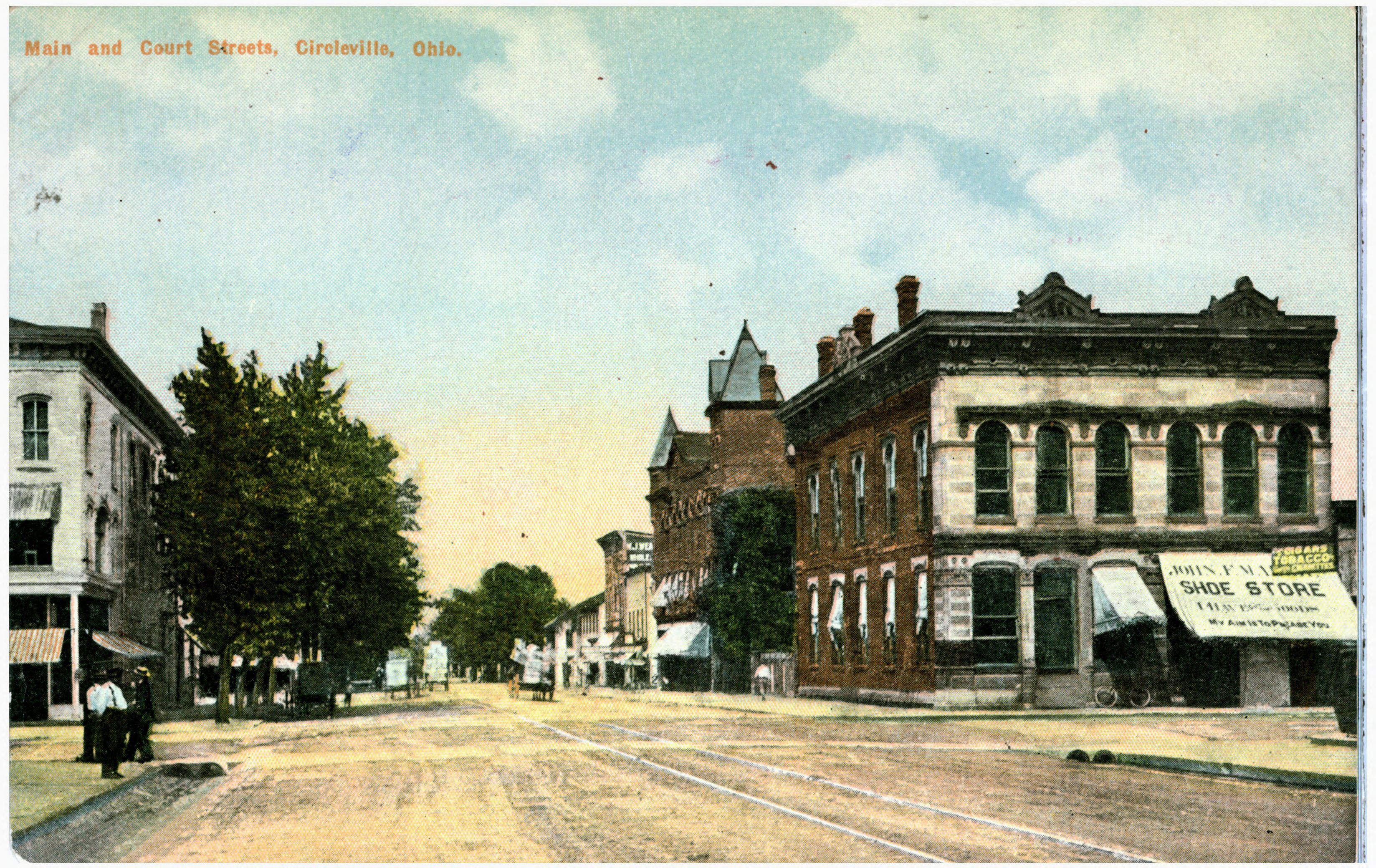
Historic view of Main and Court Street in Circleville. It provides town context and does not depict a recipient, letter or crime-scene event. Source. DPLA / Wikimedia Commons, Public Domain.
Frequently Asked Questions
Who wrote the Circleville letters? This was never conclusively established. Paul Freshour was convicted of a related attempted-murder charge but not of writing the letters, and modern forensic analysts disagree about whether he was the author.
Was Paul Freshour guilty? He was legitimately convicted of attempted murder in connection with a booby-trapped gun traced to him. Whether he also wrote the letters — the assumption most retellings make — was never proven in court and remains disputed among document examiners.
How did Ron Gillispie die? He died in a single-vehicle crash in August 1977 after apparently going to confront the letter writer. The exact circumstances, including an unexplained gunshot, have never been fully resolved.
Did the letters really continue while Freshour was in prison? Multiple accounts describe letters continuing after his 1983 imprisonment began, despite reported restrictions on his access to writing materials. This detail is a major reason the case remains contested.
Is the Circleville letters case still unsolved? Yes. No one was ever charged with authorship of the letters, and the case has not been formally reopened, though independent forensic reviews have continued to reach different conclusions.

.jpg)
.jpg)