The Index / Historical Mysteries
The Devil's Footprints of 1855: What Really Crossed Devon's Snow?
Hoof-like tracks appeared in snowy Devon in 1855. Read the contemporary reports, the disputed 100-mile trail and the evidence behind the Devil legend.
Topics: Devil's Footprints, Devon, 1855, Victorian Folklore, Historical Mysteries, Animal Tracks
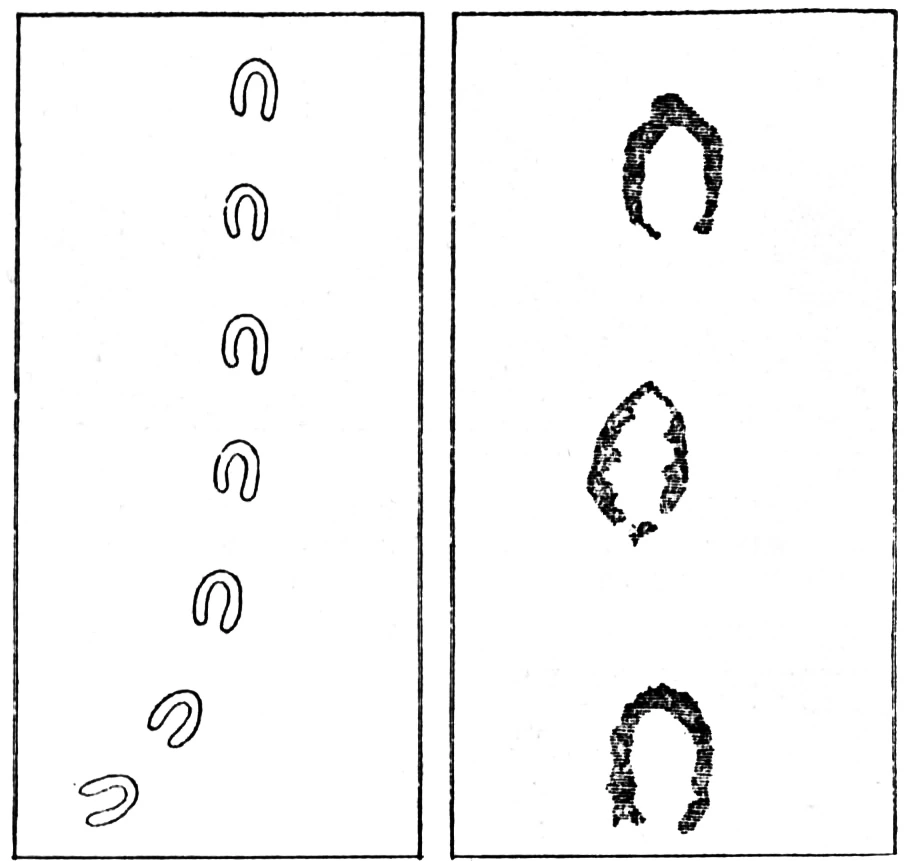
On the morning of 9 February 1855, people in parts of Devon, southwest England, found small, hoof-like impressions in the snow. They appeared in gardens, lanes and churchyards. Some witnesses thought the tracks were unusually neat and closely spaced; others reported finding them where an animal ought not to have been able to walk. Within days, newspapers were discussing a visitor whose name made the story impossible to forget: the Devil.
The marks and the alarm are historical. A supernatural visitor is not established by the evidence. Just as importantly, the familiar claim that one creature walked a perfectly continuous, 100-mile trail across Devon has never been demonstrated. The surviving record consists of observations from different places, contemporary letters, newspaper reports, sketches and much later recollections. Those are not interchangeable kinds of evidence.
The most useful starting point is historian Mike Dash’s collection and assessment of the original material, which reproduces reports from 1855 rather than relying solely on modern retellings.
What happened on the night of 8–9 February 1855?
Devon was experiencing an unusually severe winter. Snow fell during the night of 8–9 February, followed in some areas by milder weather, rain or sleet, and then renewed freezing. The weather matters because snow is not a permanent impression pad: a small animal’s prints can lose detail, widen or harden as conditions change. But it also matters that some local observers believed they could still identify familiar animal tracks nearby. Snow distortion is a plausible contributor, not a complete reconstruction of every footprint.
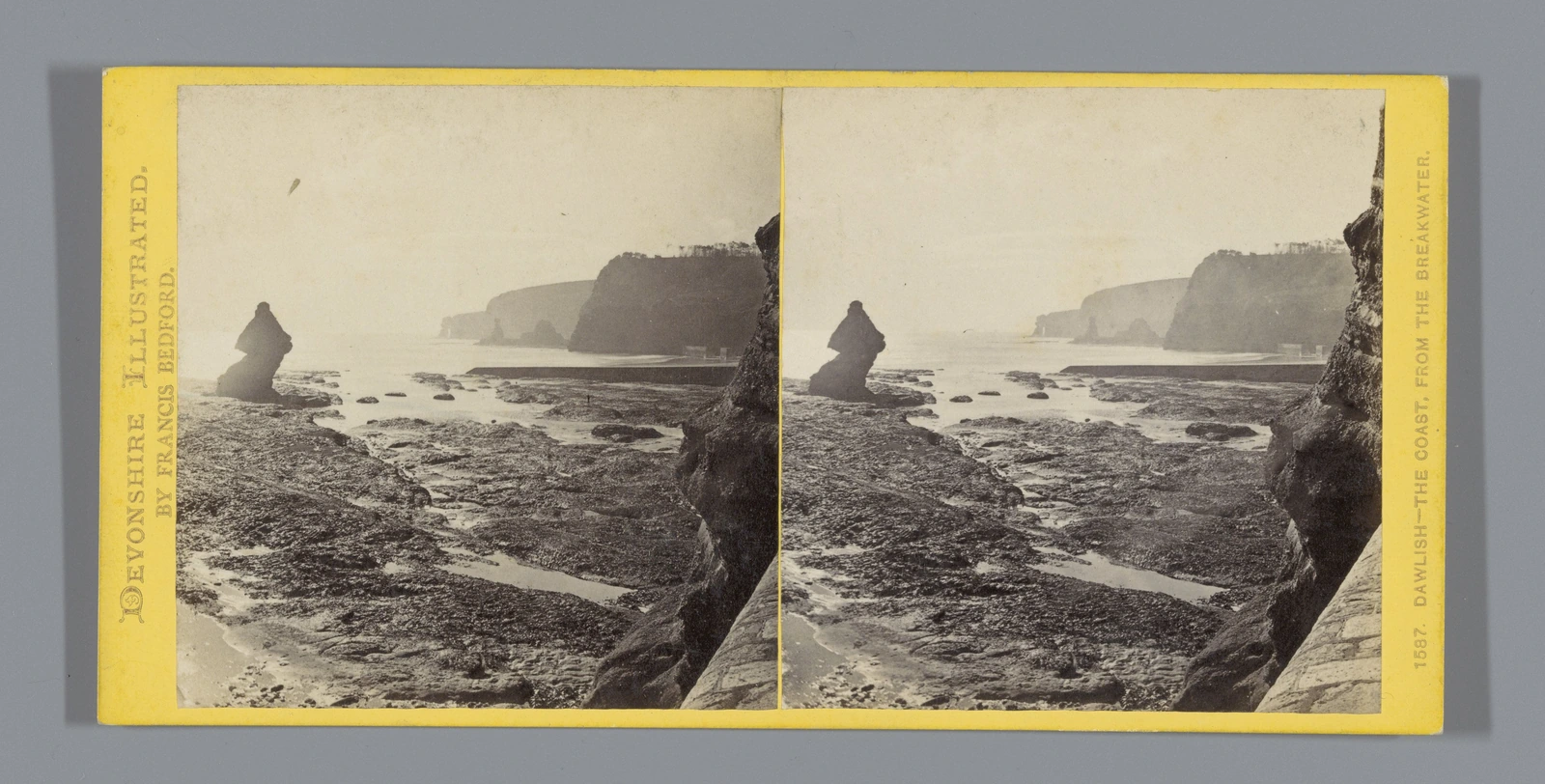
The sightings clustered around the Exe estuary and south Devon, with reports involving places including Dawlish, Exmouth, Lympstone, Topsham and Teignmouth. Accounts from more distant communities circulated too, but not all have the same evidential basis. The record also includes reports of similar prints on one or two subsequent nights; it is misleading to fold every sighting into a single overnight journey.
One contemporary Dawlish report, printed by the Western Luminary on 13 February 1855, described mysterious small marks and already mentioned two competing explanations: an escaped animal, perhaps a monkey, and the possibility that local people associated the impressions with the Devil. The latter was a belief attributed to observers, not an observation of a supernatural being. Dash reproduces the early report and dates it as the earliest traceable newspaper account in his survey.
What did the footprints look like?
Several accounts likened the impressions to miniature donkey hoofprints. An often-repeated size is roughly four inches long and three inches wide, though individual reports differ. The intervals between prints were commonly described as short—roughly eight to sixteen inches—and many observers emphasized a near single-file arrangement instead of the familiar left-right pattern of an animal walking on four distinct feet.
That summary contains a trap: it can make many local observations sound like an exact match. They were not. Some tracings show what look like cloven marks; others depict a simpler, rounded shape. Some witnesses saw possible claw marks. Drawings published in the newspapers do not all agree with one another.
A particularly influential sketch accompanied a letter in The Illustrated London News of 24 February 1855. A subsequent correspondent, the Reverend G. M. Musgrave, disputed whether that illustration faithfully represented the prints. This disagreement existed in 1855, before any modern investigator tried to explain the case away. It makes the assertion that every print had the identical shape difficult to defend.
The illustrations accompanying this article are historical diagrams of what people said they saw, reproduced in the Illustrated London News. They are not photographs of an animal or definitive physical casts. The hero image places two contemporary newspaper illustrations side by side; the composite was reprinted in the paper in 1928. See the archive image and publication details.
Did a single trail really stretch for 100 miles?
No continuous, 100-mile track was documented. This is the most important correction to the popular version of the story.
The familiar 40–100-mile range combines estimates from different periods. The 1855 correspondent “South Devon” inferred a journey exceeding 100 miles from the reported locations. Rupert Gould later calculated a minimum route of about 40 miles in Oddities, published in 1928. Neither figure measures a continuous trail followed by an observer. The most dramatic account, signed “South Devon” and published in The Illustrated London News on 24 February, presented the trail as remarkably straight and far-reaching. Dash’s examination of parish correspondence identifies the writer as a young man named D’Urban, whose account nevertheless relied in part on information gathered from others.
Residents did follow particular tracks. A Dawlish search party reportedly traced marks from the churchyard towards Luscombe and beyond for several miles without finding their maker. The precise distance is uncertain: Dash gives around five miles in his introduction but about eight in an editorial note. The 1855 report names the places without measuring the route. Such local pursuit is evidence of determined investigation. It does not prove that the same trail continued across every village in which a similar mark appeared.
Dash notes that no surviving observer or group traced anything close to the full proposed route. Without an uninterrupted record, it remains possible that different animals, conditions or incidents produced superficially similar marks in different places. That is an inference about the limits of the evidence, not proof of a particular alternative explanation.
What about the footprints on rooftops and across the River Exe?
Reports placed tracks on roofs, narrow walls, enclosed gardens and, in one famous anecdote, on opposite sides of a haystack with no marks visible across the stack itself. Some accounts also claimed that the mysterious route crossed the River Exe. These details are why the case endured as something stranger than a misidentified hoofprint.
Yet the underlying question is who actually observed and traced each alleged crossing? A track seen near a wall and a track seen beyond it do not automatically establish that one animal climbed the wall. Marks on separate sides of a broad estuary do not establish an animal’s unbroken path across the water. Many of the most striking claims entered the printed record through correspondents who combined their own observations with local reports.
That does not establish that witnesses invented the incidents. It establishes that the record is inadequate for reconstructing every transition between one reported stretch and another. Some of Devon’s waterways had frozen during the severe winter, a fact worth noting, but it is not evidence that a specific animal walked over the Exe or that all reported tracks were linked.
What do the surviving documents actually prove?
The material is more substantial than a single mysterious anecdote. It includes newspaper correspondence from February and March 1855, illustrations, witness letters, and tracings that may have been made directly from prints in the snow. But it does not amount to a complete, independently verified map of one creature’s movements.
The Reverend H. T. Ellacombe, clergyman at Clyst St George, preserved letters and tracings connected with the incident. Those papers later helped researchers compare the sources. The folklorist Theo Brown published extracts in the Report and Transactions of the Devonshire Association in 1952; Dash’s source collection brings the material together with the contemporary press accounts. Some statements are firsthand observations, some repeat what a friend or parishioner said, and some are memories recorded decades later. The distinction matters when evaluating anything as precise as the length of a stride or the continuity of a track.
The Exeter and Plymouth Gazette on 17 February 1855 included a correspondent who considered how ordinary animal tracks might appear stranger after snow and rain, even suggesting that prints from a cat’s feet could overlap. Such speculation did not end the mystery. It shows that people were looking for natural explanations while the news was still unfolding, not merely a century afterward.
The newspaper diagrams are valuable historical artifacts because they preserve claims and disagreements from the time. They cannot by themselves reveal the species of their maker. There is no surviving animal specimen, reliable continuous footprint cast series, or other physical evidence that settles the case.
Badgers, rodents, birds or a runaway kangaroo?
Numerous proposed solutions appeared almost immediately. Some are more biologically plausible than others, but a plausible mechanism should not be mistaken for an identification.
Badgers. Naturalist Richard Owen suggested badgers in correspondence published by The Illustrated London News on 3 March 1855. A quadruped can sometimes place a rear foot close to or over a front-foot impression, making a sequence look deceptively single-file. This gives the proposal a physical mechanism. It does not prove that badgers made all the reported marks, including those from apparently inaccessible places.
Mice, rats and other small animals. Small animals moving or hopping in snow can leave composite patterns that look unlike a textbook pawprint. Contemporary commentators put forward rodents among many candidates. A print can also change shape when its edges melt and refreeze. That combination may explain why some impressions were described as hoof-like, but no surviving systematic field record identifies the maker of every local trail.
Birds. Herons and other birds also figured among suggestions. Prints apparently beginning or ending suddenly might be consistent with a creature taking flight. That is an explanation for a type of observation, not a verified account of the entire reported route.
An escaped kangaroo. This is one of the more memorable theories, but the story is frequently told more confidently than the evidence allows. Musgrave acknowledged advancing a kangaroo suggestion in preference to leaving parishioners convinced the Devil had visited. The surviving documents do not establish that such an animal escaped and traversed Devon that night. Presenting it as a solved case would simply replace one unsupported certainty with another.
A deliberate prank. Human-made marks are possible in principle, and a famous local scare could invite imitation. But there is no demonstrated hoax mechanism or identified perpetrator accounting for all the reported sites. Calling the affair “definitely a hoax” would outrun the documents.
The honest result is narrower: several ordinary processes could account for at least some details. No single explanation has been proved to account for every report, and some of the reported details cannot now be tested.
Why did people call them the Devil’s footprints?
Hoof-like marks, unusual weather and footprints in places people considered inaccessible invited supernatural interpretation. But the religious label was never universal. Early newspapers also discussed animals, mistaken impressions and practical tracking efforts. It was the mixture of competing explanations—not uniform local belief—that turned the prints into a durable mystery.
The printed story gained its most dramatic shape as local observations traveled through national newspapers. Once the tracks were narrated as a visitor passing over walls and houses, a series of distinct reports became a single story with a recognizable protagonist. The Devil was a powerful interpretation of the evidence, not someone whom the documents establish as a visitor to Devon.
The process resembles the way two other English legends developed, though the events themselves are quite different. In the Black Shuck tradition, a documented sixteenth-century storm and a printed supernatural account became inseparable in later telling. Spring-Heeled Jack likewise shows how nineteenth-century reports and popular print could turn uncertain events into a recurring monster. Neither comparison proves what made the Devon prints; it helps explain how the interpretation spread.
Was the Devil’s Footprints mystery ever solved?
Not definitively. The evidence is strong that unusual-looking tracks were found and reported in multiple Devon communities in February 1855. It is much weaker for the claim that the marks were identical across those communities, that one creature made them all, or that the alleged track crossed every obstacle described in later versions.
The 1855 witnesses did not agree on the shape of the impressions or their likely source. Some traced individual trails, but no surviving investigation connected the separate reported stretches into a verified whole. Multiple ordinary causes remain possible, including different animals and snow conditions. The supernatural explanation has no independently verified evidence supporting it.
The mystery survives not because the documents show an impossible animal, but because they show how hard it was—even for observers on the ground—to turn a scattering of clues into one reliable account.
Frequently asked questions
When did the Devil’s Footprints appear?
Most of the reports concern the night of 8–9 February 1855, with some subsequent sightings mentioned in the source material. The earliest traceable printed report identified by Mike Dash appeared in the Western Luminary on 13 February 1855.
Where were the tracks found?
Reports were concentrated in Devon, England, notably around the Exe estuary and towns such as Dawlish, Exmouth, Lympstone, Topsham and Teignmouth. Some more distant locations were mentioned, but the quality of the evidence varies by place.
Were the footprints really 100 miles long?
The 100-mile figure is a contemporary estimate based on separate reported sightings, not a continuous route measured by one investigator. The other often-cited figure, 40 miles, comes from Rupert Gould’s later reconstruction. It should never be presented as a verified 100-mile walk.
Did a kangaroo escape in Devon in 1855?
A kangaroo was suggested in period correspondence, but the documents reviewed here do not confirm an escape. It is a hypothesis, not the established explanation.
Are the drawings actual evidence from 1855?
The drawings reproduced above derive from 1855 newspaper illustrations and show how correspondents depicted the prints. They document contemporary descriptions and disagreements; they do not identify an animal or authenticate supernatural claims.
The 1855 newspaper passages discussed here were consulted through Dash’s transcriptions, rather than through inspection of the newspaper originals. His collection also reproduces later scholarship and recollections, identified above by their dates.
Sources & further reading
- Mike Dash, The Devil's Hoofmarks (Fortean Studies, 1994): source collection and editorial assessment
- Western Luminary, 13 February 1855: Dawlish report, transcribed by Dash (Document 1)
- Woolmer's Exeter & Plymouth Gazette, 17 February 1855: Spectator and Dawlish correspondence, transcribed by Dash (Document 3)
- The Illustrated London News, 24 February and 3 March 1855: South Devon, Owen and Musgrave correspondence, transcribed by Dash (Documents 7 and 11)
- Theo Brown, A Further Note on the Great Devon Mystery (1952): Ellacombe letters and tracings, reproduced by Dash (Document 23)
- Rupert Gould, Oddities (1928): later route calculation, reproduced by Dash (Document 39)
- The Illustrated London News: 1855 diagrams reproduced in 1928, image provenance via Wikimedia Commons
- Rijksmuseum, RP-F-F04618: Francis Bedford's Dawlish stereograph, approximately 1850–1880, via Wikimedia Commons