The Index / Dark History
The Tunguska Event Explained: Why the 1908 Blast Left No Confirmed Crater
A cosmic airburst flattened Siberian forest in 1908. What the evidence establishes, why no crater is confirmed, and what remains uncertain about the object.
Topics: Tunguska, Siberia, Asteroids, Historical Mysteries
The Tunguska event was a powerful explosion above Siberia on June 30, 1908. The best-supported explanation is a natural object from space breaking apart in the atmosphere. Its blast flattened a vast area of forest without leaving a confirmed impact crater.
The remaining mystery concerns the object’s precise properties and the details of its breakup. An incomplete reconstruction does not mean scientists have no explanation for the destruction.
What happened at Tunguska?
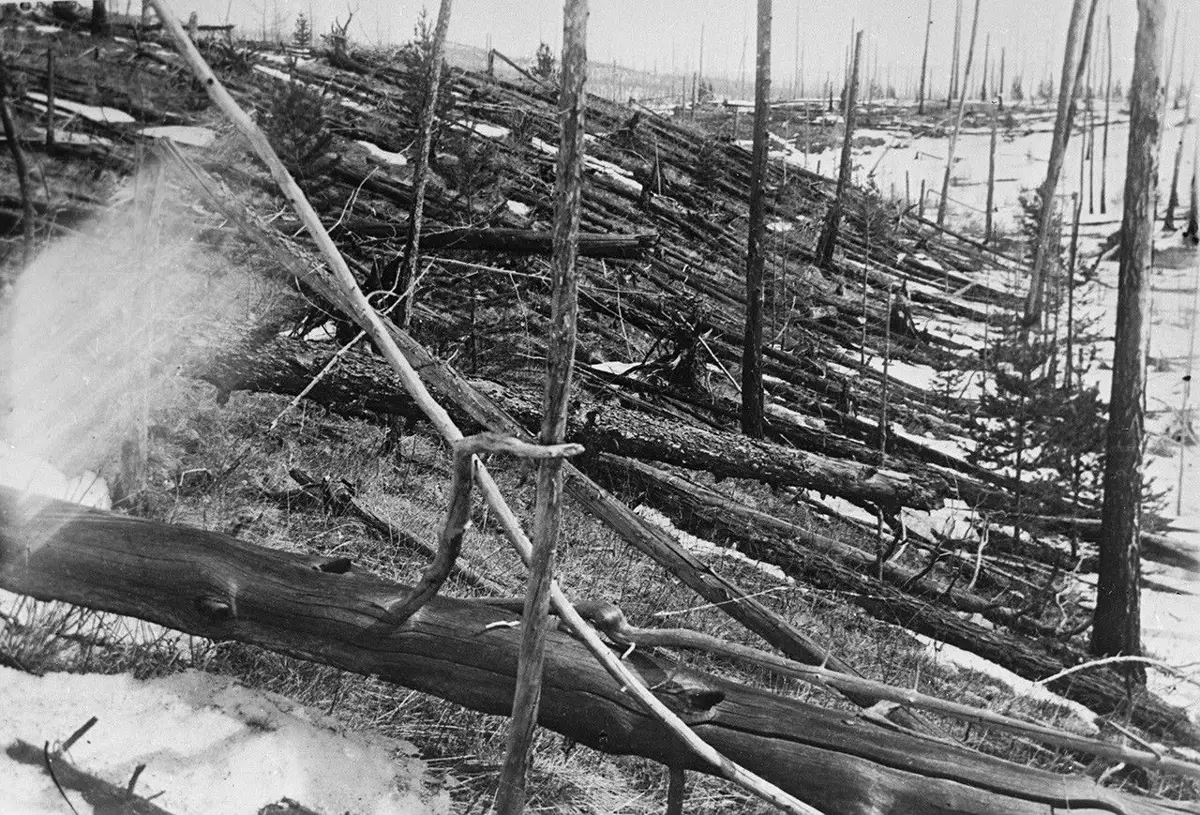
A brilliant fireball appeared above the region near the Podkamennaya, or Stony, Tunguska River. The explosion damaged roughly 2,000 square kilometers of forest. The devastated trees became the most recognizable physical record of the event.
The NASA Ames reconstruction published in 2019 describes investigators working from treefall patterns, burned ground, atmospheric pressure waves and seismic records. These are different kinds of evidence; together they constrain what an explanation must reproduce.
They are not a film of the incoming object. Field investigations began in the 1920s, long after the explosion, and the available record cannot recover every detail of its approach.
| Question | What the evidence supports |
|---|---|
| When did it happen? | June 30, 1908 |
| Where? | A remote part of Siberia near the Stony Tunguska River |
| What caused the widespread damage? | A powerful atmospheric explosion, best explained by a cosmic airburst |
| Is there a confirmed crater? | No |
| Is the original object fully identified? | No; its exact size, composition and trajectory remain reconstructed rather than directly observed |
Why an airburst does not need a crater
An impactor can release much of its energy above the ground. A fast-moving object compresses the air ahead of it, heats and loses material, and can fragment when the stresses exceed its strength. The resulting pressure wave can cause damage below even when no intact body excavates a large crater.
That mechanism was observed with much better instruments at Chelyabinsk on February 15, 2013. JPL’s updated account describes a small asteroid fragmenting at high altitude, with cameras, infrasound detectors, government sensors and recovered meteorites providing complementary evidence.
Chelyabinsk was a separate event, not a replay with identical conditions. Its value for Tunguska research is that models of atmospheric breakup can be tested against an extensively recorded real example.
The absence of a confirmed Tunguska crater therefore fits the airburst explanation. It is not, by itself, evidence that the explosion required an unknown technology.
How large was the object?
Published estimates depend on the assumed material, speed, entry angle and breakup behavior. A number quoted without those assumptions can sound more precise than the evidence allows.
David Morrison’s 2018 NASA workshop report summarized likely models around 10–20 megatons of energy, released at roughly 10 kilometers altitude. Under a stony-asteroid interpretation, it gave a diameter of about 50–80 meters.
Those are modeled ranges, not measurements of a recovered asteroid. The same report identifies the shortage of quantitative observations as a major constraint. It is reasonable to describe a substantial cosmic airburst with confidence while remaining cautious about its exact parameters.
What about Lake Cheko and alleged fragments?
A nearby lake is not automatically an impact crater. Nor does finding an unusual stone near a blast area establish that it belonged to the incoming object.
The Earth Observatory review published in June 2025 notes proposals involving Lake Cheko and candidate material, alongside research disputing the crater interpretation. It describes direct evidence of the crater or original bolide as still elusive.
The careful distinction is between a proposed identification and an accepted identification. Presenting Lake Cheko as the discovered Tunguska crater would erase a real scientific disagreement.
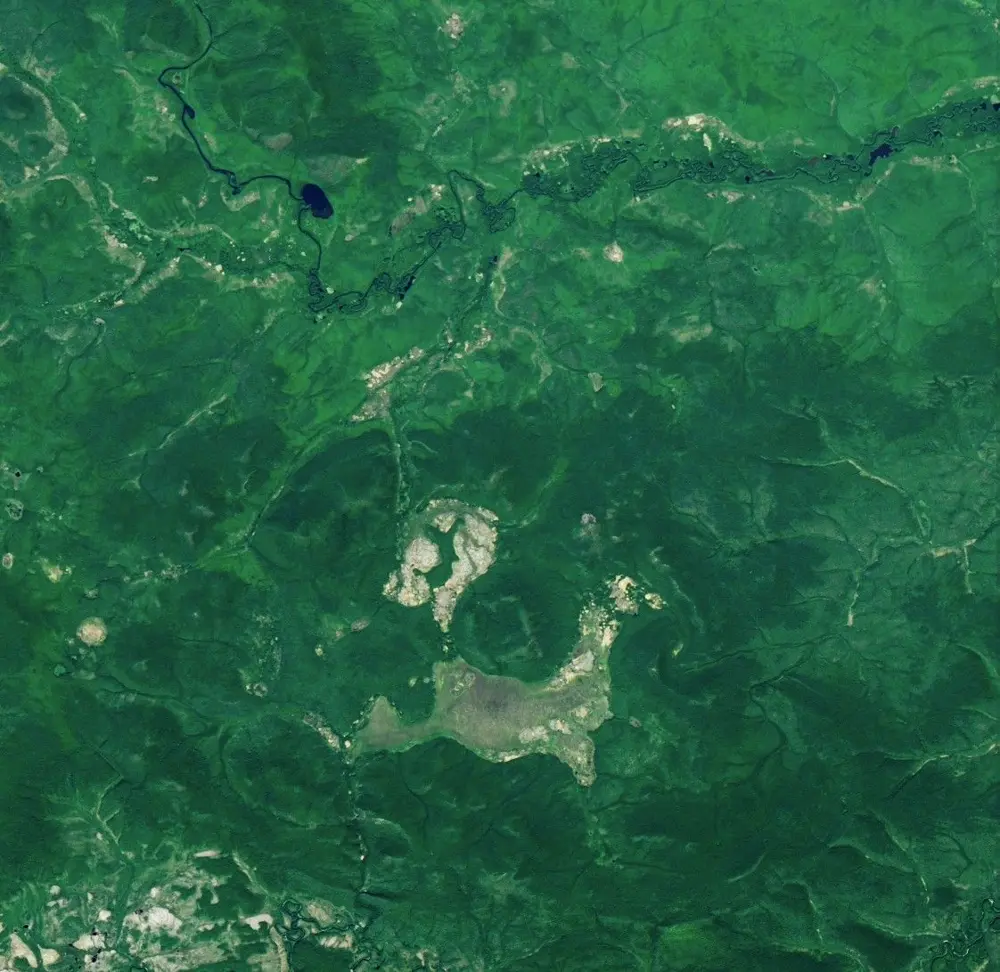
The region photographed by Landsat 8 on July 6, 2024. This is a modern landscape view, not a photograph of the 1908 explosion or a visible crater. Image: NASA Earth Observatory/Michala Garrison, using USGS Landsat data. Original image and context.
Why it remains a historical mystery
Tunguska illustrates a useful distinction: understanding the broad physical mechanism does not recover the full history of one event. Researchers can test airburst models against damage while still disagreeing about the particular object that produced it.
Our account of Dyatlov Pass and the avalanche investigation makes a related distinction between testing a natural mechanism and explaining every surviving detail. These are separate events with separate evidence.
For contrasting kinds of sky-related cases, see the documented debris recovery and later claims surrounding Roswell, and the mix of radar observations and witness reports in the 1952 UFO wave. A shared reputation for mystery does not make their evidence interchangeable.
Frequently asked questions
Was Tunguska an asteroid or a comet?
The airburst explanation is well supported. Stony-asteroid models are strong candidates, but the precise nature of the original object is not established by an uncontested recovered specimen.
Why was there no giant hole in the ground?
The destructive energy was released in the atmosphere. A powerful blast above the surface can flatten trees without excavating a conventional impact crater.
Are the famous forest photographs from 1908?
The hero photograph here is from a Kulik expedition in May 1929, almost twenty-one years later. It documents damaged forest; it does not show the explosion itself.
Has Tunguska been completely solved?
The broad airburst mechanism is much better supported than the idea of an entirely inexplicable explosion. The object’s exact properties, trajectory and some proposed physical traces remain subjects of research.