The Index / Paranormal
The Dybbuk Box True Story: How an eBay Listing Became a Haunted-Object Legend
The man who created the Dybbuk Box has admitted he made up the story. Here's the real 2003 eBay origin, and what a dybbuk actually is in Jewish folklore.
Topics: Dybbuk Box, Kevin Mannis, Jewish Folklore, Haunted Objects, Paranormal
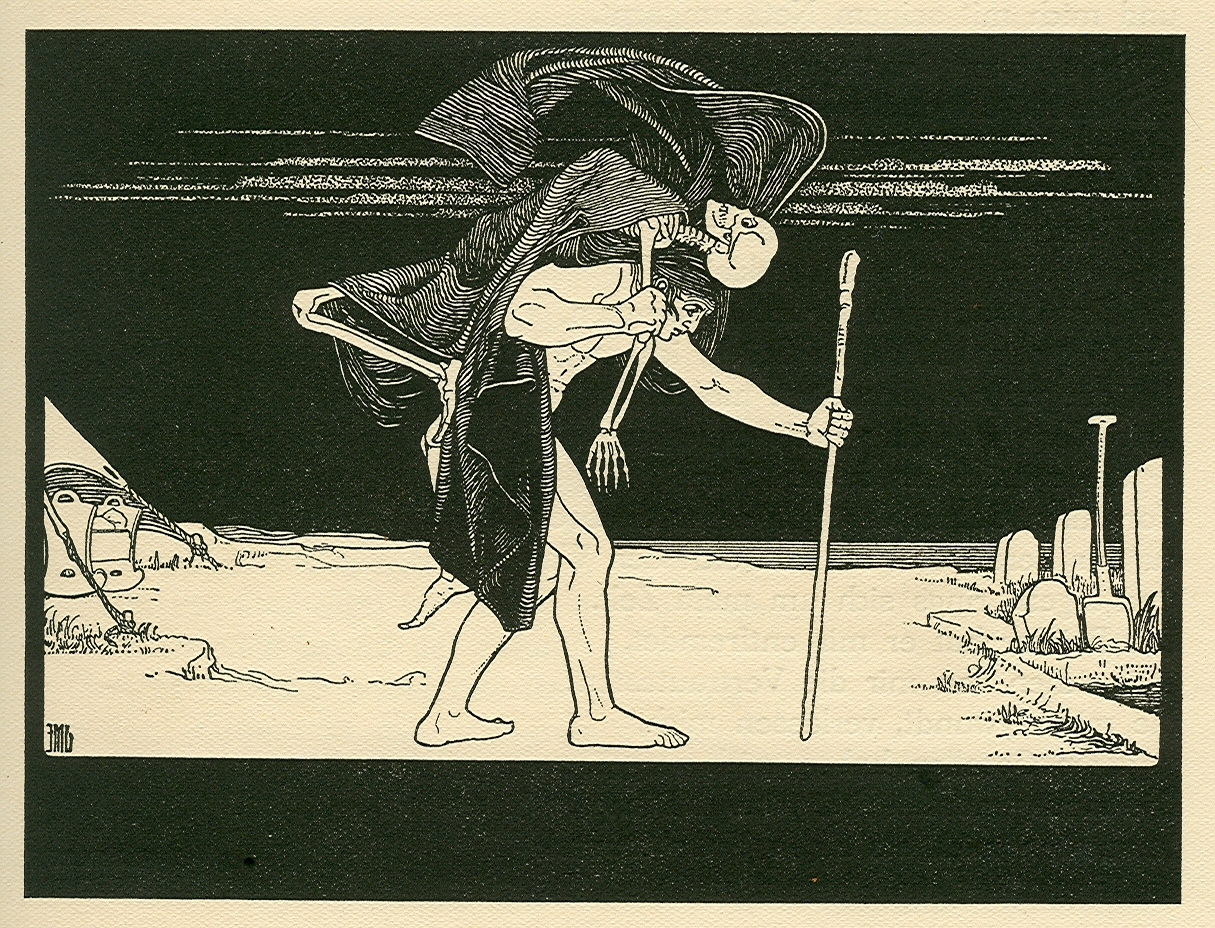
Ephraim Moses Lilien / Wikimedia Commons (Public Domain)
The man who invented the Dybbuk Box has said so, on the record, in his own words: “I am a creative writer. The Dybbuk Box is a story that I created.” That’s Kevin Mannis, the Oregon antiques dealer whose 2003 eBay listing turned an ordinary wine cabinet into one of the internet’s most durable haunted-object legends. He’s also said, correctly, that the entire premise doesn’t hold together on its own terms — a dybbuk, in actual Jewish folklore, isn’t the kind of thing that lives in a box at all.
That’s the story worth telling here: not whether a cabinet is haunted, but how a piece of deliberately written fiction became treated as documented paranormal history within a few years of being posted.
An illustration associated with S. Ansky’s The Dybbuk. It represents a theatrical and literary work, not the later eBay-box claim. Source. Ephraim Moses Lilien / Wikimedia Commons, Public Domain.
What Kevin Mannis Actually Sold
In 2003, Mannis bought a small wooden wine cabinet at an estate sale in Portland, Oregon, from the family of a local attorney — not, as the eBay listing would soon claim, from the granddaughter of a Holocaust survivor. He then wrote an elaborate backstory for the object: a box supposedly kept sealed by its original Polish Jewish owner out of fear of the malevolent spirit trapped inside, passed down through a chain of owners who each experienced escalating misfortune, nightmares, and physical ailments after acquiring it.
He listed it on eBay in September 2003 under the title “Dibbuk Box, Haunted Jewish Wine Cabinet,” and it sold. The listing didn’t stay a one-time sale. It spread — reposted, quoted, and expanded across paranormal forums and later social media, treated by readers as a genuine historical account rather than what it was: a detailed piece of short fiction written specifically to make an antique cabinet more interesting to buyers.
Mannis has since confirmed exactly how much of the object itself was his own invention, not just the story. “The carving in the back of it is my carving,” he’s said. “The stone that was in the box is something that is a signature creation of mine also. Make no mistake, I conceived of the Dybbuk Box — the name, the term, the idea — and wrote this creative story around it.”
What a Dybbuk Actually Is
This is worth getting right, because the marketing term has drifted so far from the source that most people encountering “dybbuk box” content have never heard the actual folklore it borrowed from.
In traditional Jewish folklore, particularly as it developed in Eastern European Ashkenazi communities, a dybbuk is understood as a restless, often malevolent spirit of a dead person that attaches itself to and possesses a living person — not an object. The concept appears across centuries of folk belief and religious literature, and gained its widest cultural exposure through S. An-sky’s 1914 play The Dybbuk, a work of Yiddish theater about a young woman possessed by the spirit of her deceased beloved, later adapted into a well-known 1937 Polish-Yiddish film.
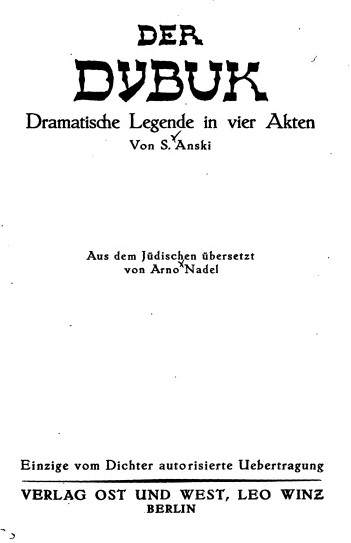
Title page for a 1921 edition of S. Ansky’s The Dybbuk. The play is cultural context for the word, not evidence for a haunted box. Source. Unknown creator / Wikimedia Commons, Public Domain.
Mannis himself has pointed out the basic contradiction in his own creation’s premise: a dybbuk is a spirit that clings to a person’s soul, not an object that sits on a shelf. “Dybbuks don’t live in boxes,” as he’s put it. “So a dybbuk box, by definition, doesn’t make any sense.” There’s no documented folkloric tradition, before his 2003 listing, of a physical container built or used specifically to contain a dybbuk. The entire category of object — now sold under that name across Etsy shops and paranormal marketplaces — starts with him.
From eBay to a Book to a Museum
The box didn’t stay with Mannis. It passed to a buyer named Iosif Neitzke, and then, in February 2004, to Jason Haxton, a Missouri museum curator with a longstanding interest in the paranormal, who paid $280 for it. Haxton went considerably further than Mannis had, publishing a 2011 book describing his own alleged physical symptoms and paranormal experiences after acquiring the box, and launching a dedicated website that helped push the legend even further into mainstream awareness.
There’s a genuinely strange wrinkle here: by the time Haxton published his book, he had already learned Mannis invented the story, and said so in his own writing — while simultaneously continuing to promote the box as a source of real supernatural harm. That’s not necessarily contradictory as a matter of personal belief; it’s entirely possible to know a story’s origin was fabricated and still sincerely believe something happened to the object or its owners afterward. But it means the book that did the most to cement the legend as “real” was written by someone who already had the debunking information in hand.
Television personality Zak Bagans purchased the box from Haxton in 2016 for an undisclosed sum and put it on permanent display at his Haunted Museum in Las Vegas, marketed as “the world’s most haunted object” — a claim built entirely on a chain of ownership stories tracing back to Mannis’s admitted fiction.
The 2012 Film Connection
The Possession, released in 2012 and produced by Sam Raimi, took the dybbuk box concept and turned it into a conventional supernatural horror premise: a young girl becomes possessed after her family acquires a cursed wooden box at a yard sale. Both Mannis and Haxton are credited as consultants on the production. Director Ole Bornedal has described unusual incidents during filming, the kind of on-set paranormal color that accompanies most horror productions with a “true story” marketing angle, whether or not anything genuinely unexplained occurred.
The film cemented “dybbuk box” in mainstream horror vocabulary well beyond the paranormal-forum audience that had kept the eBay story circulating for nearly a decade beforehand.
Why the Story Spread So Easily
A wine cabinet with a plausible chain of previous owners, a specific and detailed backstory, and a a built-in reason for secrecy — the original owner’s fear — gave the internet exactly what a good haunted-object story needs: enough specificity to feel documented, and enough ambiguity to resist easy fact-checking, at least until someone tracked down the person who wrote it and asked him directly. Compare it to a case like Annabelle, where a real 1970s newspaper account exists independent of the Warrens’ later retelling — the Dybbuk Box never had that kind of grounding at all. It was fiction from the first post, framed as fact, and it worked precisely because nobody selling it had a reason to correct the record until the story had already spread far beyond eBay.
The broader pattern is one Morbid Index keeps running into: modern internet folklore often develops the exact same way older folklore did — through retelling, embellishment, and community elaboration — just compressed into years or months instead of generations, with a searchable paper trail showing exactly how it happened.
Frequently Asked Questions
What is the Dybbuk Box? A wine cabinet that Oregon antiques dealer Kevin Mannis sold on eBay in 2003 along with an invented backstory describing it as haunted by a malevolent Jewish spirit.
Is the Dybbuk Box real? The cabinet is a real physical object. The haunted backstory attached to it is admitted fiction, written by Mannis specifically for the 2003 eBay listing.
Who created the Dybbuk Box story? Kevin Mannis, who has publicly confirmed he invented the object’s carving, the stone inside it, and the entire narrative, including the claimed original Holocaust-survivor owner.
What is a dybbuk in Jewish folklore? A restless spirit believed to possess a living person, drawn from centuries of Ashkenazi Jewish folk tradition and popularized by S. An-sky’s 1914 play The Dybbuk. Traditional dybbuk folklore does not involve spirits contained in physical objects.
Did Kevin Mannis admit making it up? Yes, directly: “I am a creative writer. The Dybbuk Box is a story that I created.”
Where is the Dybbuk Box now? On display at Zak Bagans’ Haunted Museum in Las Vegas, which acquired it from Jason Haxton in 2016.
Is The Possession based on the Dybbuk Box? Yes. The 2012 film adapted the eBay legend into a conventional possession horror story, with Mannis and Haxton both credited as consultants.
Are dybbuk boxes part of traditional Judaism? No. The concept of a physical box built to contain a dybbuk has no basis in traditional Jewish folklore or religious literature and originates entirely with Mannis’s 2003 listing.