Lore & Explained / Urban Legends
Hanako-san Explained: The Japanese School-Bathroom Ghost and How the Legend Spread
Hanako-san is a modern Japanese school ghost, not a documented dead child. Her third-stall ritual, variants and 1990s media boom show how living folklore travels.
Topics: Hanako-san, Japanese Folklore, Urban Legends, School Ghost Stories
Wikimedia Commons contributor / CC BY 3.0
Knock three times on the third stall. Ask whether Hanako-san is there. In many versions, a girl’s voice answers. That is the core of Toire no Hanako-san, Japan’s school-bathroom ghost: a ritual compact enough to travel between children and flexible enough to change at every school.
It is not the biography of an identified child. The air-raid victim, murdered girl, bullied student and suicide stories often supplied as her origin are variants, not verified history.
A Modern School Legend
The name means “Hanako of the Toilet,” with -san as a polite suffix. The standard version places her in a girls’ bathroom, often on the third floor and in the third stall, though every part of that formula changes from one telling to another. A child knocks three times, asks “Are you there, Hanako-san?” and, in the version meant to frighten rather than reassure, hears a small voice answer “I’m here.” Variants replace the knocking with a spoken phrase or turning around in place several times before asking. She may wear a red skirt, have a bob haircut, answer politely, drag a would-be visitor into the stall, or simply be heard and nothing more — some tellings make her a sad, lonely spirit who only wants a playmate, while others make her a dangerous, monstrous thing wearing a little girl’s voice as a lure.
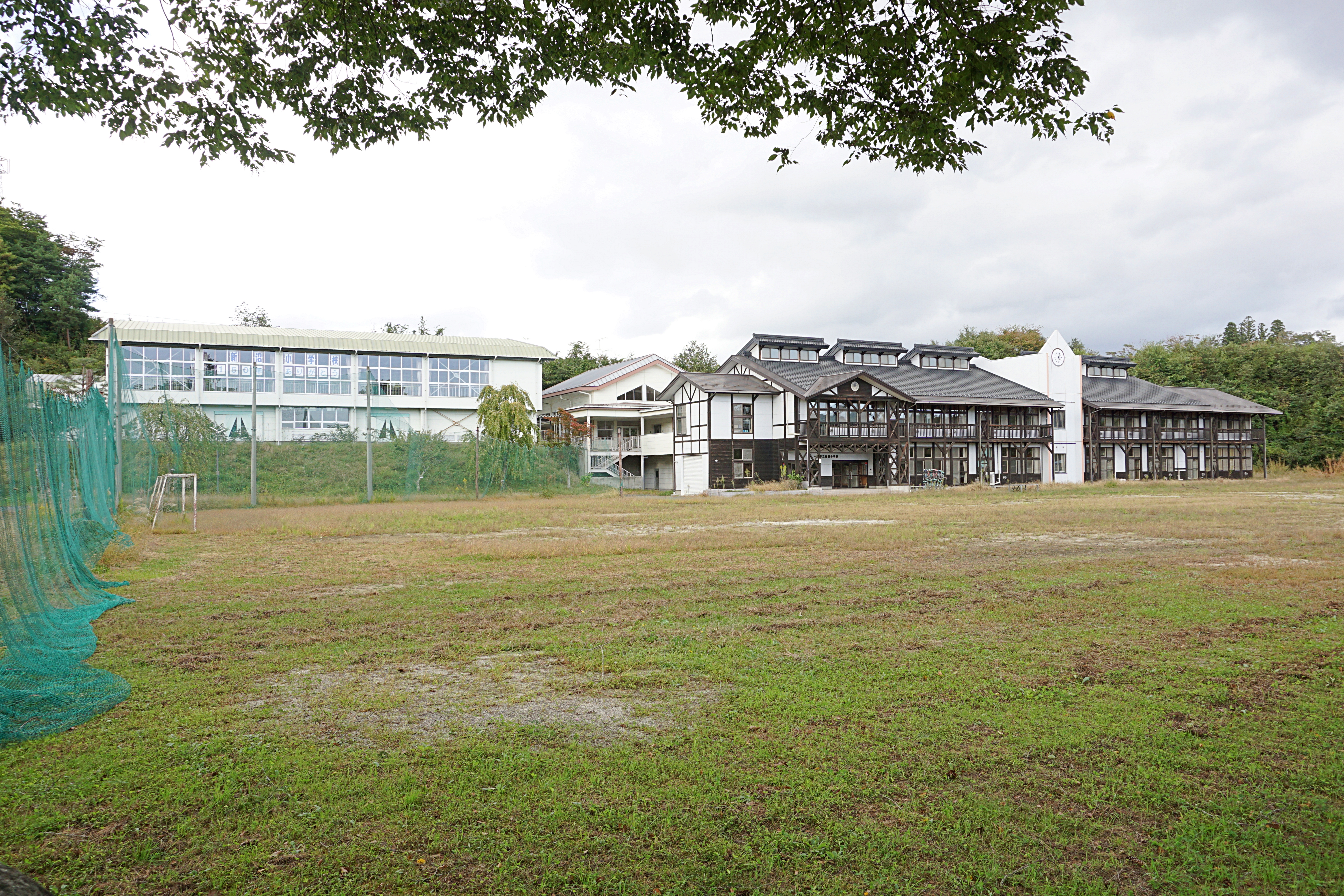
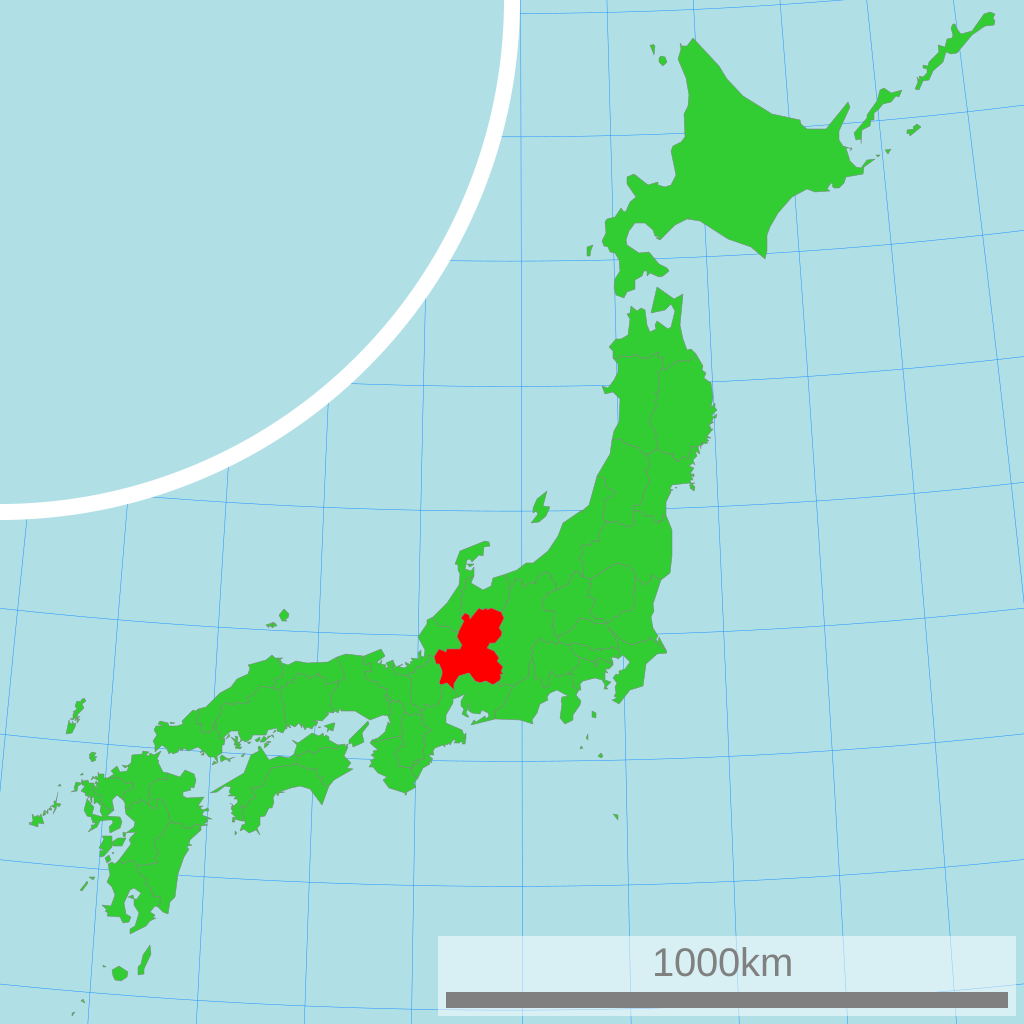
An elementary school in Iwate Prefecture — the same region as Sawauchi Village, linked to the earliest documented Hanako-pattern story. Wikimedia Commons (CC BY 4.0).
Folklore researchers trace recognizable postwar bathroom-ghost stories back further than the legend’s media boom: the earliest confirmed written record tied to the Hanako pattern comes from Sawauchi Village in Iwate Prefecture in 1948. Clear forms of the modern call-and-response ritual were established by the late 1960s, then spread nationally through children’s magazines in the 1980s. Folklorist Tsunemitsu Tōru’s 1990 School Ghost Stories helped make gakkō no kaidan — the broader “school ghost story” genre Hanako belongs to — a recognized category of Japanese folklore study rather than just playground chatter. Films and television in the 1990s gave her a still wider audience, cementing the version most people now know.
Regional retellings diverge enough that researchers treat Hanako-san less as one fixed story and more as a template local children fill in with their own school’s details. Variants from Hokkaido and the Tohoku region, for instance, show noticeable overlap with Aka Manto, an older bathroom-spirit legend involving a masked or caped figure who asks a trapped victim to choose between colors — one of several signs that prewar ghost-story motifs migrated into the postwar school building rather than Hanako-san springing up as a wholly new invention.
Not a Traditional Yōkai
Calling Hanako a yōkai can be convenient, but it blurs history. Yōkai is a broad category with older literary and artistic traditions. Hanako functions more specifically as contemporary children’s folklore: local, ritualized and shaped by modern schools and media.
The toilet is a useful setting because it is private, awkward and slightly out of adult view. That does not make it a portal. It makes it ideal folklore territory.
Hanako is closest to Bloody Mary in form: a child-sized dare performed in a designated place, with no single documented death behind it despite confident origin stories offered as fact. She should not be collapsed into Kuchisake-onna, a different modern Japanese legend involving an adult, masked woman rather than a child’s bathroom ritual.
Frequently Asked Questions
Was Hanako-san a real girl? No specific historical girl has been verified as the source of the legend. The World War II air-raid death, parental murder and bullying-suicide backstories that circulate online are competing folklore variants, not documented history, and no single one of them has primary-source support.
Is the third stall always part of the ritual? No. It is the most commonly repeated version, but regional and school-by-school variants change the floor, the stall number, the knock count and the expected response.
Where does the earliest version of the story come from? The earliest written record folklorists connect to the Hanako pattern comes from Sawauchi Village in Iwate Prefecture in 1948, predating the legend’s nationwide spread through 1980s children’s magazines and 1990s film and television by decades.