The Index
Hand of Glory Explained: The Thief's Candle and the Whitby Museum Object
Explore the Hand of Glory's sleeping-household tales and the object at Whitby Museum, distinguishing collected folklore from the exhibit's known history.
Topics: Hand of Glory, English Folklore, Whitby, Folklore Objects
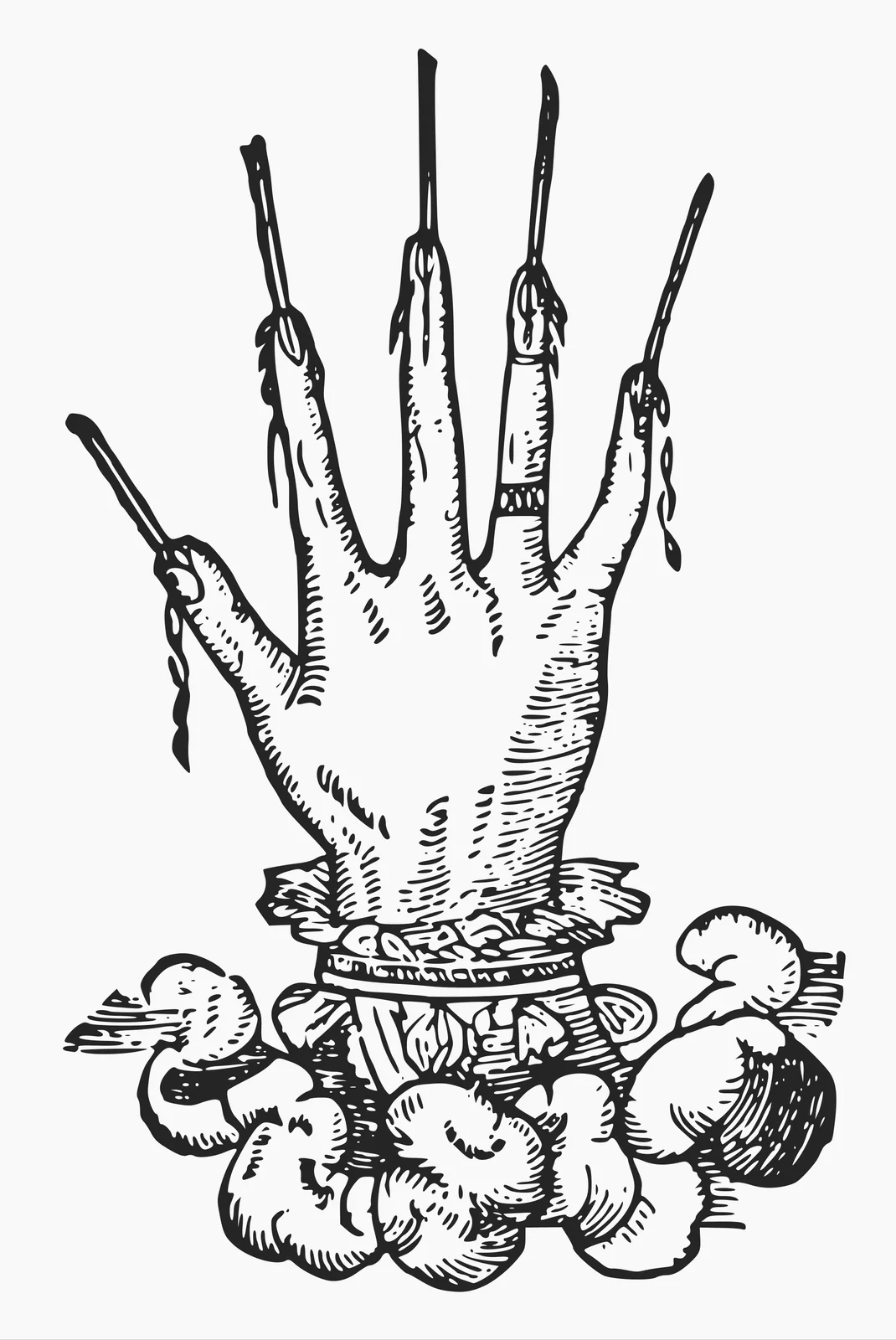
A Hand of Glory is a folkloric burglar’s charm: a dead person’s hand imagined as a supernatural light that prevents a household from waking. Some versions make the fingers burn; others place a candle in the hand. Whitby Museum preserves an object identified with the tradition, but the existence of the object does not prove the magical claims.
The difference between a physical exhibit and the stories surrounding it is central to understanding why this particular relic remains so unsettling.
What is the Whitby Museum object?
Whitby Museum’s collection account describes a preserved human hand associated with a cottage at Castleton. It entered the museum in 1935 through Joseph Ford, a local historian and stonemason who identified it with the Hand of Glory tradition.
The museum notes that it shows no signs of having been burned. That observation is compatible with a story in which a hand holds a separate candle, but compatibility is not proof of a particular use. The published account does not establish the person’s identity or demonstrate that the hand belonged to an executed burglar.
Those limits should stay attached to the label. “An alleged Hand of Glory” is a more accurate description than “a working witch’s candle.”
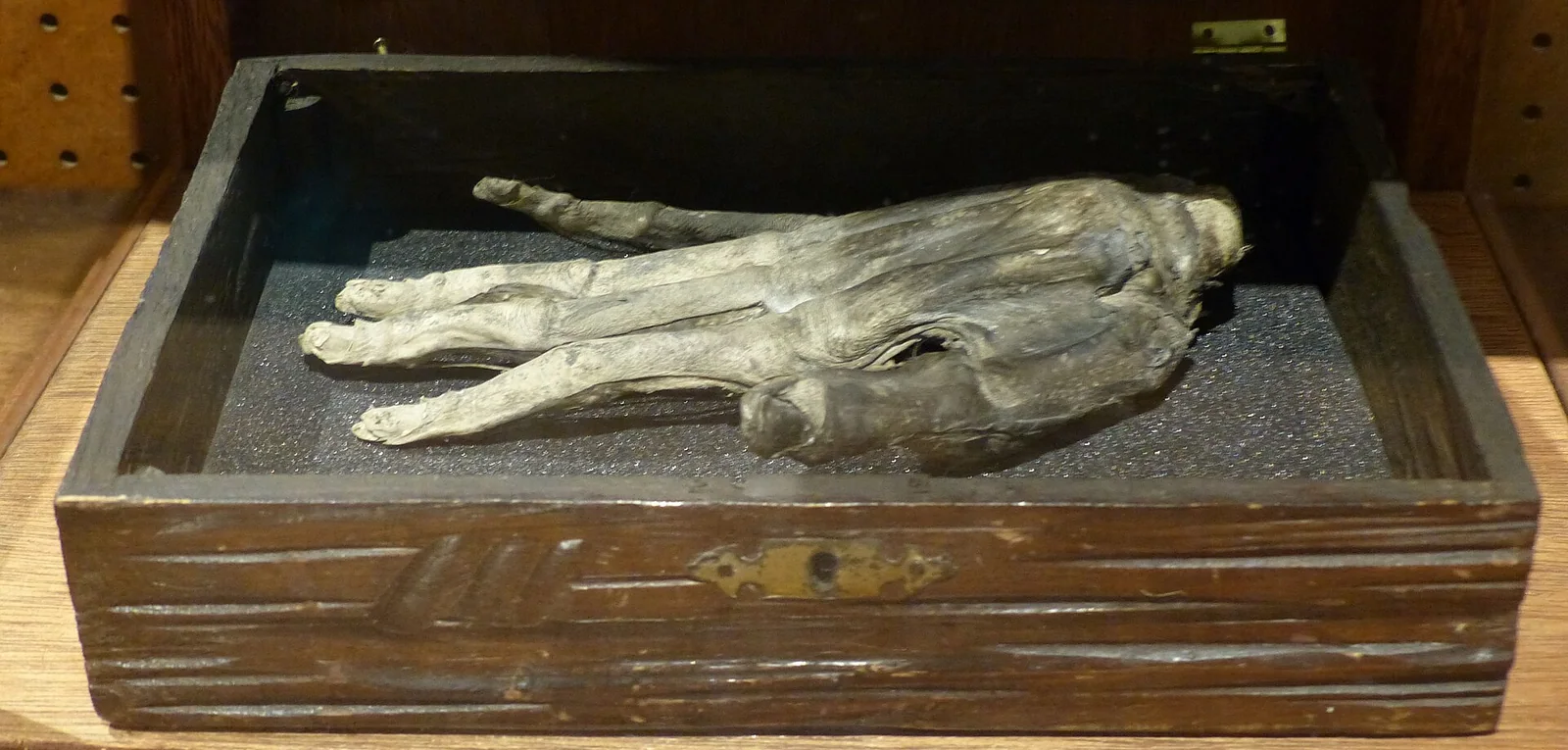
The alleged Hand of Glory at Whitby Museum. Its existence does not establish the powers described in folklore. Source. www.badobadop.co.uk. CC BY-SA 4.0. Resized and converted to WebP.
What was the hand supposed to do?
William Henderson’s nineteenth-century Notes on the Folk-Lore of the Northern Counties of England and the Borders brings together several versions. The charm is supposed to immobilize people or keep sleepers from waking while a thief takes their valuables.
The frightening idea is not simply a corpse used as an object. It is the removal of a household’s ability to notice or resist an intruder. A familiar room becomes unsafe while its occupants remain unaware.
Henderson also records differences in who can see the light and how the charm is overcome. The folklore does not behave like a single technical specification. Repeated motifs are more stable than every detail attached to them.
Why does one finger refuse to light?
In a tale printed by Henderson, a servant secretly watches men prepare the hand. The fingers light but the thumb does not, signaling that one person in the house is awake. She cannot wake the other occupants and must act alone.
Another version has a supposed beggar accepted into an inn for the night. The cook observes him, recognizes the danger and eventually extinguishes the light with milk. The household wakes and the thief is caught.
The Northumberland version makes the cook’s attention and persistence decisive. The person who appears socially least powerful becomes the one capable of saving everyone else.

Whitby Museum and Pannett Art Gallery, where the object is preserved. Source. Geni. CC BY-SA 4.0. Resized and converted to WebP.
Are those accounts records of real robberies?
They are records of stories being collected and transmitted. Henderson identifies informants and compares variants, which helps trace the narrative. It does not independently verify every event inside a tale or establish that supernatural paralysis occurred.
He also repeats an account of thieves in Ireland carrying a dead hand with a candle. In that account, the household is alarmed and the thieves flee. Even a reported attempt to use a charm would demonstrate belief or conduct, not the charm’s efficacy.
That distinction leaves room for several different historical questions: whether an object existed, whether somebody believed it had power, whether it was used during an attempted crime, and whether the claimed magic worked. Evidence for the first question cannot silently answer all the others.
Why do modern versions disagree?
The burning fingers and the candleholder are both part of the recorded tradition. So are different intruders, inns and methods of breaking the supposed spell. A modern retelling may choose one version or combine them.
The resulting story can be effective horror, but its details should not be presented as the documented biography of Whitby’s exhibit. A museum object and a widely circulating tale may become attached without every episode being traceable to that object.
For another case where a real body acquired a supernatural explanation, read Mercy Brown’s exhumation. For a fictional object with a similarly ominous hand-sized presence, compare the three wishes in The Monkey’s Paw.