The Index
Mercy Brown: The 1892 Exhumation Behind Rhode Island's Vampire Story
Read the history of Mercy Lena Brown's death and exhumation in Rhode Island, with family records, tuberculosis context and the limits of the Dracula link.
Topics: Mercy Brown, Vampire Folklore, Rhode Island, New England
Mercy Lena Brown was a nineteen-year-old Rhode Island woman who died of tuberculosis in 1892. Her body was later examined during an attempt to explain illness in her family through a belief about the dangerous dead. The exhumation was real. There is no evidence that she was a vampire.
She was known to her family as Lena. Remembering that name helps restore a person to a story often reduced to a cemetery attraction.
What happened to the Brown family?
The Rhode Island Historical Society’s collection-based account reproduces death records and newspaper notices. Mercy’s mother died in 1883 and her sister Mary Olive in 1884. Mercy died on 17 January 1892. Her brother Edwin was also gravely ill and died on 2 May 1892.
Those records matter because even modern summaries disagree about some earlier dates. A contemporary death record or notice is a better basis for a chronology than a dramatic retelling whose main purpose is to reach the exhumation scene.
The recurring disease was then commonly called consumption. The family losses gave neighbors a terrifying pattern to interpret, but a pattern of illness is not evidence that an earlier victim was attacking the living.
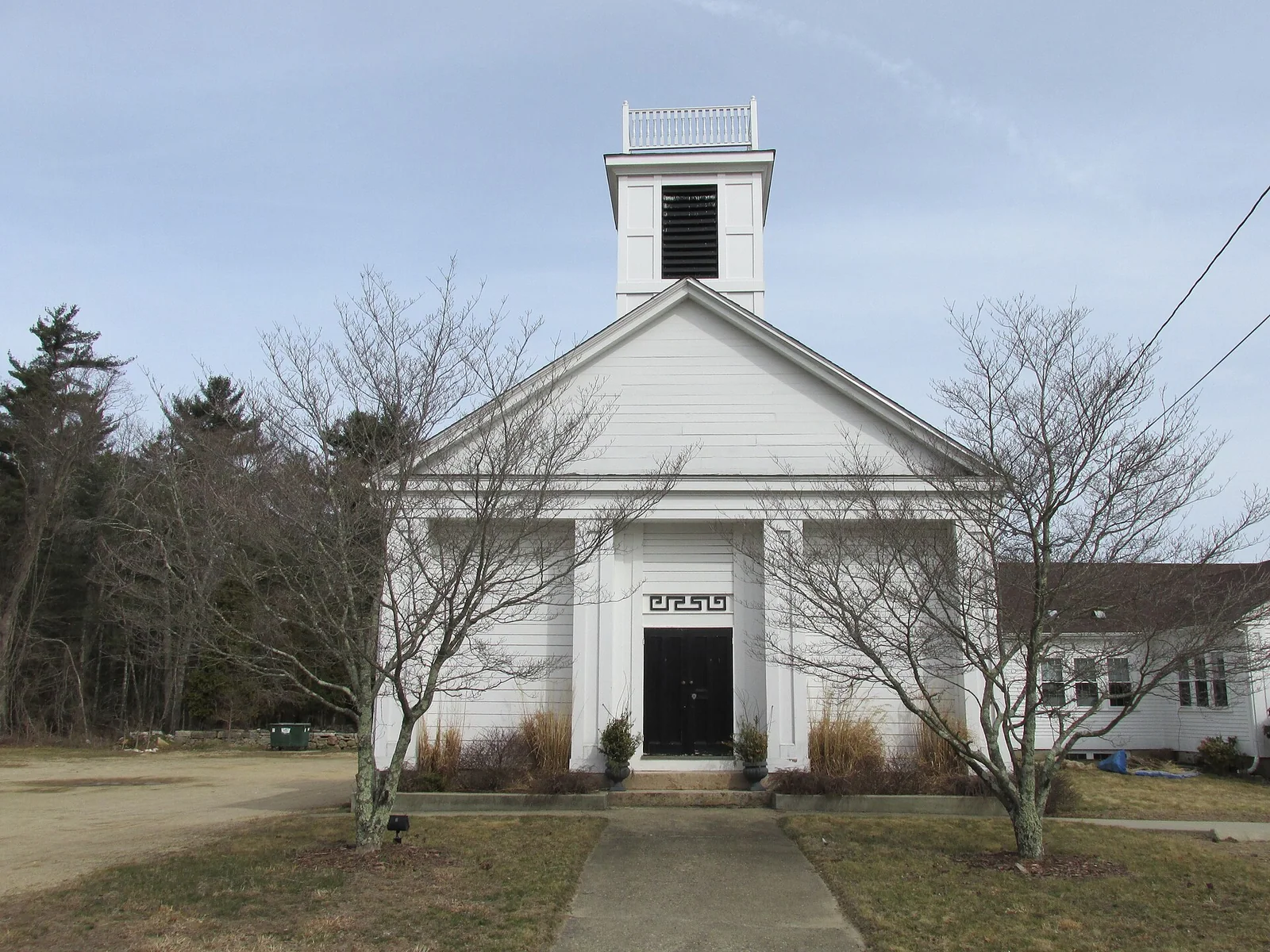
Chestnut Hill Baptist Church, beside the cemetery associated with the Brown family. Source. John Phelan. CC BY-SA 3.0. Resized and converted to WebP.
Why was Mercy’s body examined?
On 17 March 1892, a party examined the bodies of Mercy, her mother and her sister. The stated hope was to identify whether one of the dead was implicated in Edwin’s continuing decline. Mercy’s comparatively preserved condition became the focus of suspicion.
Abigail Tucker’s Smithsonian account, drawing on folklorist Michael Bell’s research, emphasizes the difference in time and conditions: Mercy had died recently, during winter, whereas the other women had been dead for years. The comparison did not involve three bodies buried under identical circumstances.
Material from Mercy’s body was burned, and the accounts describe ashes being given to Edwin in the hope of helping him. He did not recover. The action is part of the documented history of the belief, not an effective treatment.
What does the 1892 newspaper report show?
The historical society points readers to the Providence Journal report of 19 March 1892 alongside family death records. Those references identify contemporary material against which a later ghost story can be checked.
It must still be read as a newspaper account with its own language and viewpoint. Reporting that people suspected a supernatural cause is different from confirming that cause. Likewise, finding blood or limited decomposition in a recently dead body does not establish continued life or predation.
The newspaper’s existence demonstrates that the incident became news. It does not turn the reporter into an observer of a vampire.
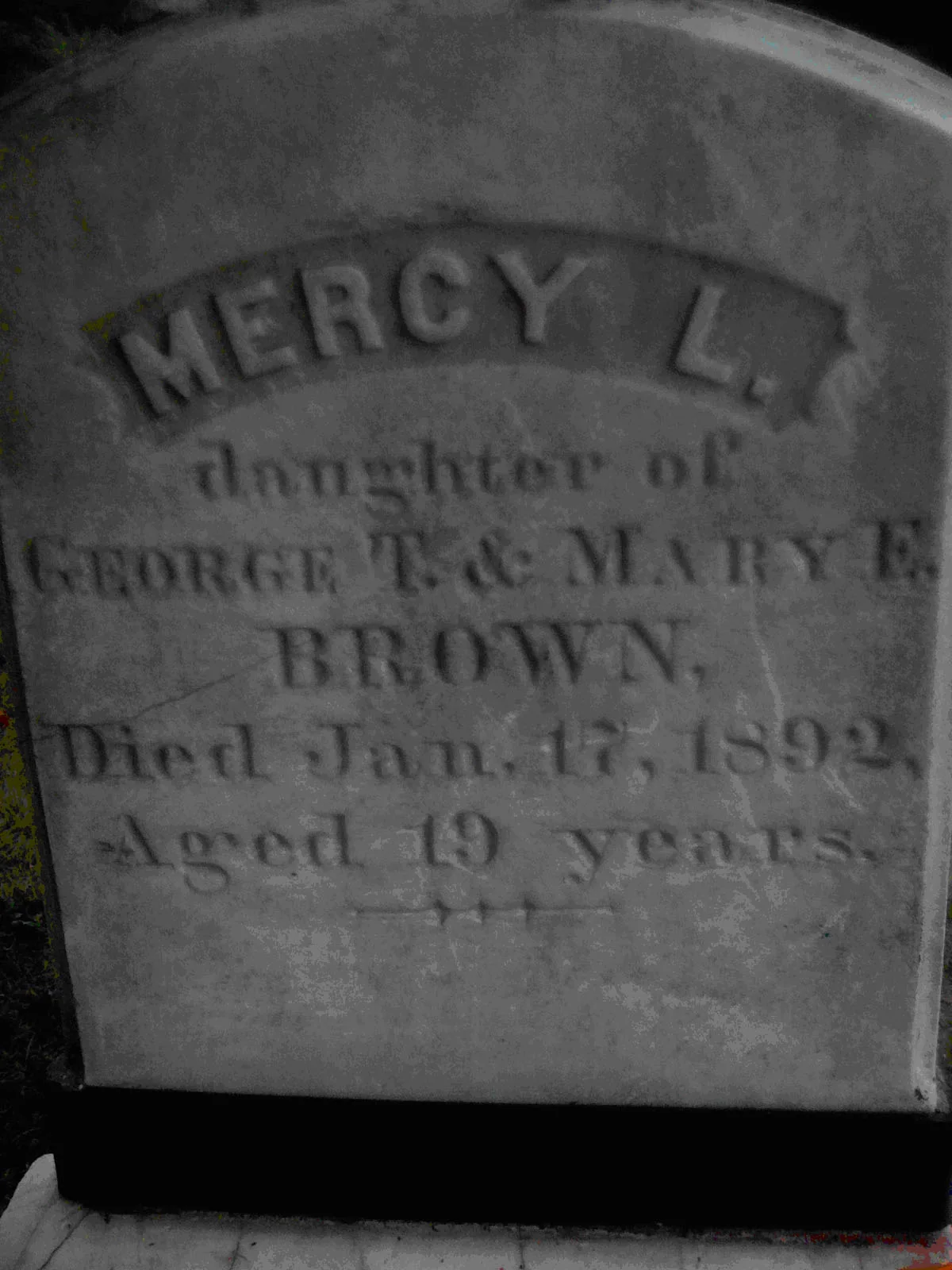
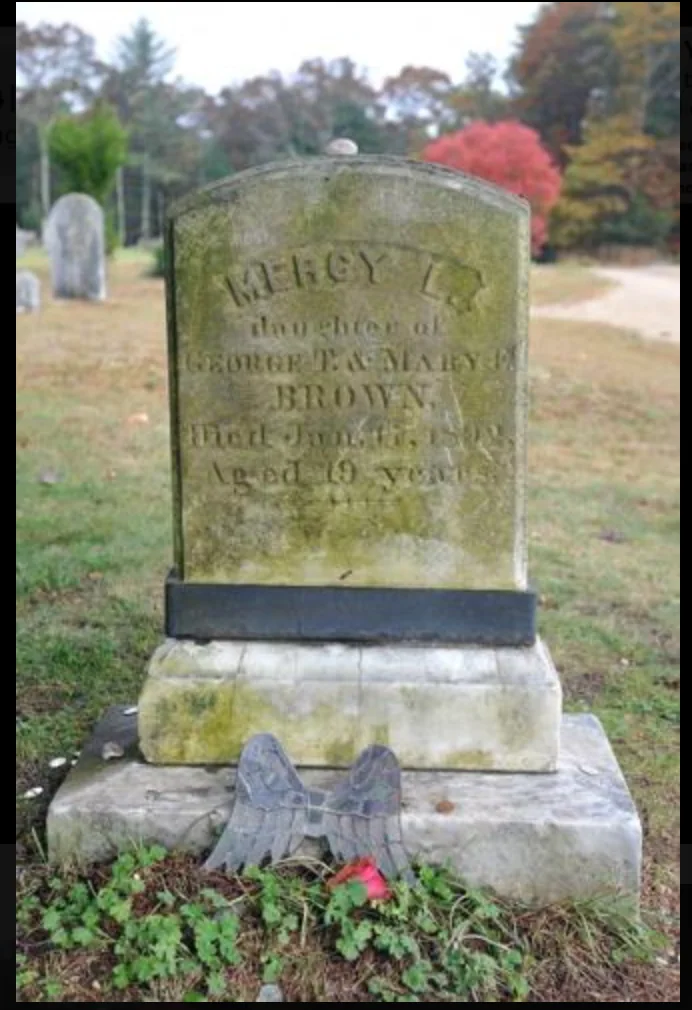
The inscription records Mercy’s death on 17 January 1892, aged nineteen; the stone is a memorial, not evidence of a haunting. Source. Cbarry123. Public domain. Resized and converted to WebP.
Was Mercy Brown the inspiration for Dracula?
The connection is often repeated more confidently than the evidence permits. Smithsonian discusses a newspaper clipping in Bram Stoker’s papers and disagreement about whether the Brown case influenced Lucy’s story. That is a reason to examine a possible connection, not to announce a proven one-to-one model.
There are also older literary vampires. Carmilla, published in 1872, predates both Mercy’s death and Stoker’s Dracula. A resemblance between a real exhumation and a fictional vampire scene cannot establish which source supplied every detail.
What makes this a New England vampire story?
The central fear concerns a dead family member supposedly draining a living relative’s vitality. It does not require a caped stranger, aristocratic castle or visibly walking corpse. Our broader history of vampire folklore before Dracula explains why the popular screen vampire is only one version of the idea.
The most disturbing feature here is the reversal of family care. A woman who died of illness became the suspected cause of somebody else’s illness. People trying to save the living interfered with the dead, and the hoped-for rescue failed.
How should the cemetery be understood?
The grave is a memorial to a real person, not proof of a haunting. Photographs document the stone, church and setting; they cannot verify stories about a presence returning there.
Reading the records alongside the legend changes the emphasis. Mercy’s story belongs to the history of disease, grief and belief, with supernatural claims clearly identified as claims. That is more revealing than treating her name as a confirmed entry in a catalogue of monsters.