Lore & Explained
Hyakki Yagyō Explained: Japan's Night Parade of One Hundred Demons
What is hyakki yagyō? Trace Japan's night parade of demons from Heian tales to Muromachi scrolls, tsukumogami, Toriyama Sekien and Kawanabe Kyōsai.
Topics: Hyakki Yagyō, Night Parade of One Hundred Demons, Tsukumogami, Yokai, Japanese Folklore, Kawanabe Kyōsai
Hyakki yagyō (百鬼夜行), the “night parade of one hundred demons,” is a motif in which a crowd of demons and strange beings marches through the night, and it is one of the oldest and most copied subjects in Japanese yōkai art. Accounts of demons parading through Kyoto’s streets appear in sources as far back as the early twelfth century. The picture most people imagine comes from medieval scrolls and the many later copies made from them. The “hundred” is a way of saying “a great many,” not a head count.
What is the Night Parade of One Hundred Demons?
A Princeton University Library exhibition note describes it as a nocturnal procession of demons and yōkai that originated in Heian-period tales. In those tales, meeting the parade was feared to bring death, and people often escape harm through Buddhist prayers or protective chants. The same note points out that although “hyakki” suggests one hundred demons, the number symbolizes abundance.
That is a different spirit from the playful figures in later scrolls. The motif started as a danger to avoid and became a parade to look at. For where it sits in the wider tradition, see our field guide to yōkai.
Who painted the famous scroll?
The University of Oregon’s Yōkai Senjafuda project traces the modern visual imagination of the parade to a painted scroll at the temple Daitokuji, known as the Daitokuji Shinjuan scroll or Hyakki yagyō emaki. It is traditionally attributed to Tosa Mitsunobu (1434–1525), a phrase that tells you the attribution rests on tradition. The scroll may itself have been based on an earlier model that is now lost, and most later depictions seem to have been made with the Shinjuan scroll in mind. Michael Dylan Foster discusses it in The Book of Yōkai.
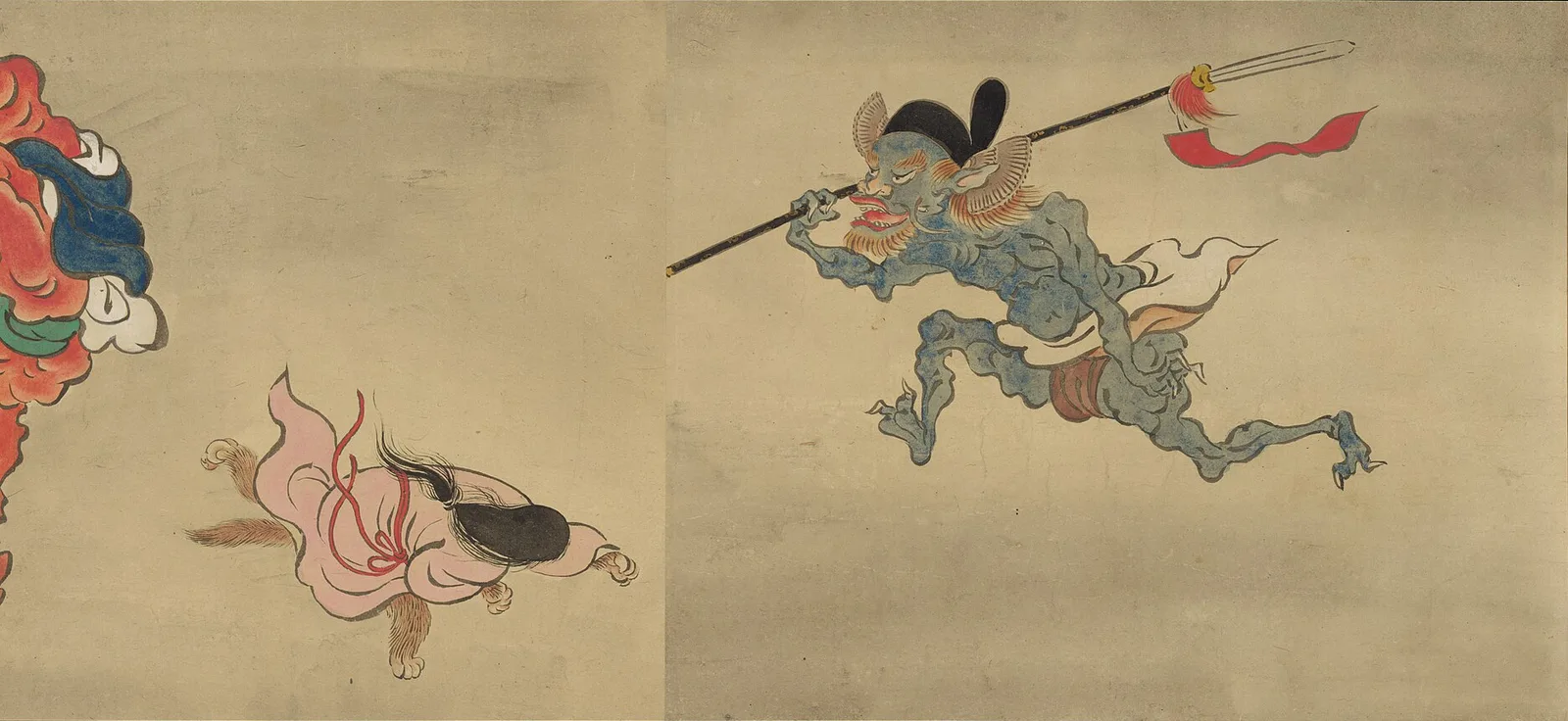
The image at the top of this page is not the Shinjuan scroll itself but an eighteenth-century copy by the artist Mochizuki Gyokusen (1692–1755), now at the Metropolitan Museum of Art. Copies like it are how the scroll’s figures traveled. A demon in a courtier’s hat carrying a spear, like the blue-skinned one in this copy, is described by the Oregon project as “a standard feature of hyakki yagyō scrolls.”
Why are so many of the monsters household objects?
Look closely at a night-parade scroll and many of the marchers are not demons in the usual sense. The Oregon project explains that while a few orthodox-looking demons appear, many of the monsters are tsukumogami, everyday objects that have gained sentience, sprouted limbs and taken to frolicking with the demons. Other figures have no stable identity beyond the scrolls but are recognizable from their medieval costumes. Some people argue the scroll monsters are so distinctive that they should not be counted as yōkai at all.
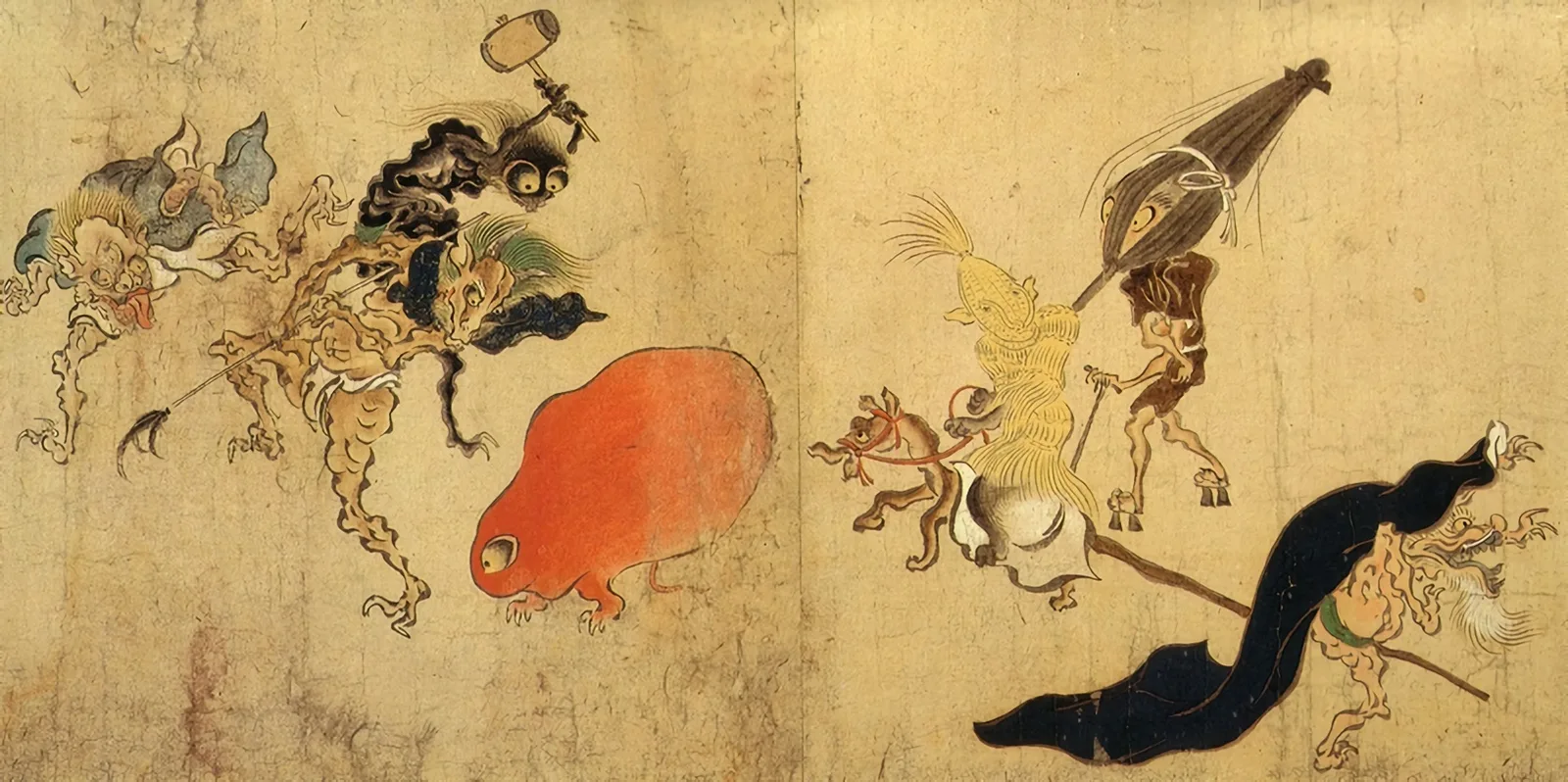
Tsukumogami, animated objects, in a detail from a Muromachi-period Hyakki Yagyō picture scroll. Artist unknown. Source. Public domain. Resized and converted to WebP.
Noriko Reider’s study of the medieval text Tsukumogami ki (“Record of tool specters”) explains the idea behind them. In that Muromachi-period tale, tools and containers receive souls after a service life of nearly one hundred years. Resentful at having been abandoned by the masters they served, the tools become vengeful, until imperial and Buddhist support leads them to repent and, through Shingon Esoteric Buddhism, attain Buddhahood. Reider argues that the authors’ main aim was to spread Shingon teaching by building on existing beliefs about tsukumogami. She also notes that animate tools appear only sporadically in late Heian literature and that the name tsukumogami became attached to them largely in the medieval period. The text belongs to a genre called otogizōshi, short “companion tales” written from the fourteenth to the seventeenth century for both entertainment and moral or religious edification.
The lesson for readers is to keep the stories apart. The Heian-era fear of meeting the parade, the Muromachi tale of discarded tools and the scroll pictures that mix both are different traditions that share a name and a cast.
What happened to the parade in the Edo period?
The Oregon project notes that many scrolls were made during the Edo period and that their imagery moved into woodblock-printed materials. It also describes the period as the one in which the modern conception of yōkai took shape, and observes that hyakki yagyō illustrations seem to have been treated as a special subset of yōkai.
In 1776 Toriyama Sekien published Gazu Hyakki Yagyō, the first of four illustrated yōkai books. He kept the parade’s name but, rather than a single procession, the book generally gave creatures a page each. That turned a scene into a catalogue, which is a large part of why many yōkai now have a standard look. Hiroko Yoda and Matt Alt’s Japandemonium Illustrated (Dover, 2017) translates all four of his books. The Oregon project also points to another Edo-period scroll digitized by the Hyōgo Prefectural Museum, where the horizontal format lets the viewer experience a continuously unrolling panorama of monsters.
What did Kawanabe Kyōsai do with it?
Kawanabe Kyōsai (1831–1889), nicknamed “The Demon of Painting,” lived from the Edo period into the Meiji period. The Public Domain Review calls him the bad boy of his era, considered Japan’s first political caricaturist and one of the first authors of a manga magazine, and says he was arrested by the shogunate three times for his commitment to free expression.
His Kyōsai hyakki gadan (Kyōsai’s Pictures of One Hundred Demons) is an accordion-fold book. The Oregon project explains that when closed it looks like an ordinary book, but when unfolded it gives the reader a scroll’s continuous horizontal sweep, and that it begins and ends with images of rolled-up paper. It opens in a parlor on a rainy night, where people tell scary stories by candlelight. The Public Domain Review notes the second scene, a man who may be Kyōsai himself setting down his brush and putting out the lamp before the demons appear. It quotes the Metropolitan Museum of Art, which holds the book, calling it “a spectacular visual encyclopedia of supernatural creatures of premodern Japanese folklore.”
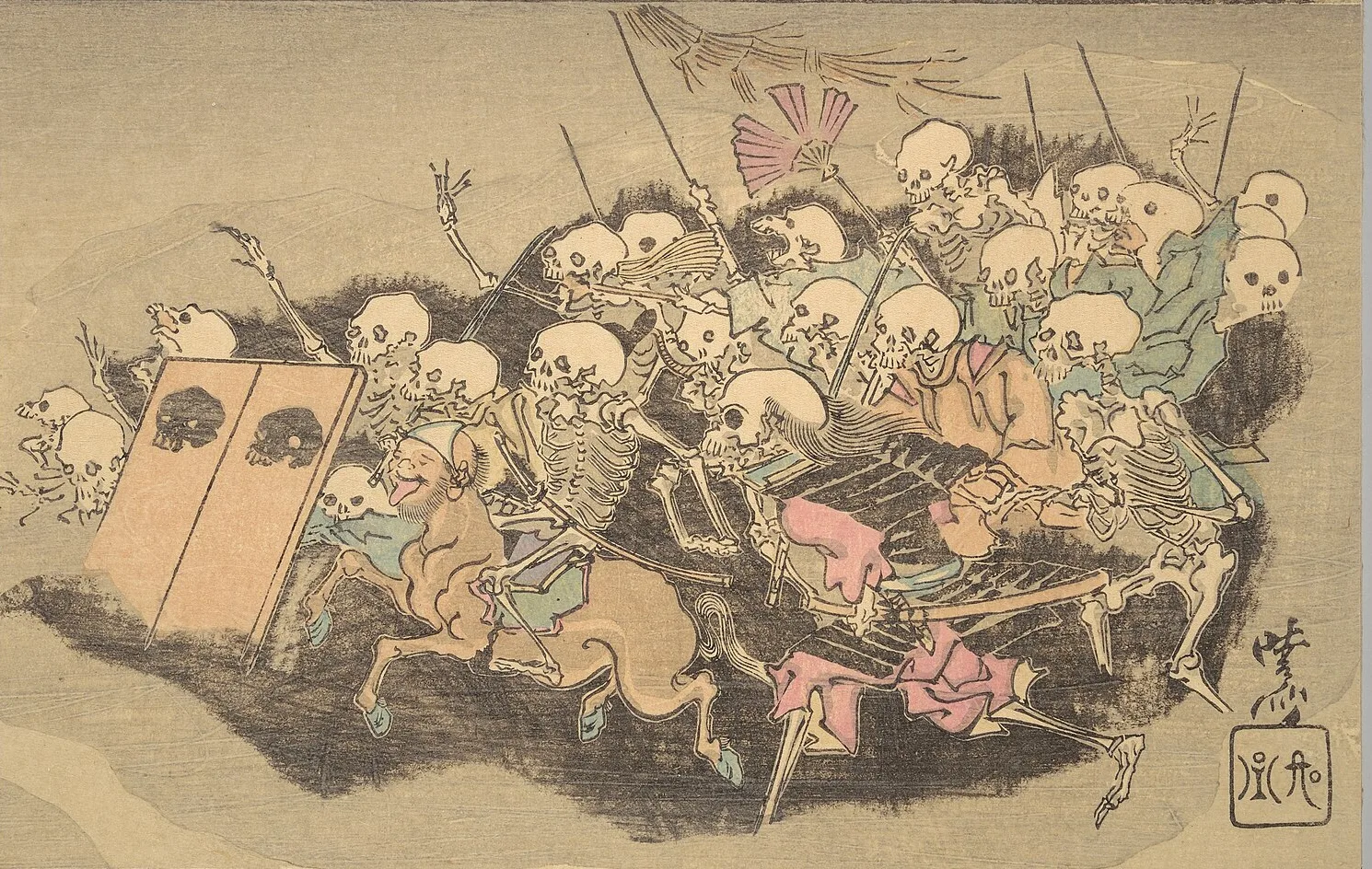
A crowd of skeletons in Kawanabe Kyōsai’s Kyōsai hyakki gadan (1890 edition). The Metropolitan Museum of Art. Source. CC0. Cropped to the printed plate and converted to WebP.
Sources differ on the exact date. The Met dates its copy to 1890 and notes a first edition in 1889, while the Oregon project places publication in 1889, just before Kyōsai’s death. What is not in doubt is that a Meiji-era artist turned an old scroll motif into a mass-produced book.
How should you read night-parade stories and pictures today?
- Separate the layers. A Heian tale of a dangerous procession, a Muromachi story of vengeful tools, an Edo catalogue and a Meiji picture book are separate works with separate purposes.
- Treat “traditionally attributed” literally. Tosa Mitsunobu’s name is attached to the Shinjuan scroll by tradition, and the scroll may rest on an earlier model.
- Do not count the demons. “One hundred” signals abundance.
- Do not read modern characters back into old pages. A creature’s name and outline in a scroll or catalogue does not guarantee that the personality it has in a modern game or anime was part of the original.
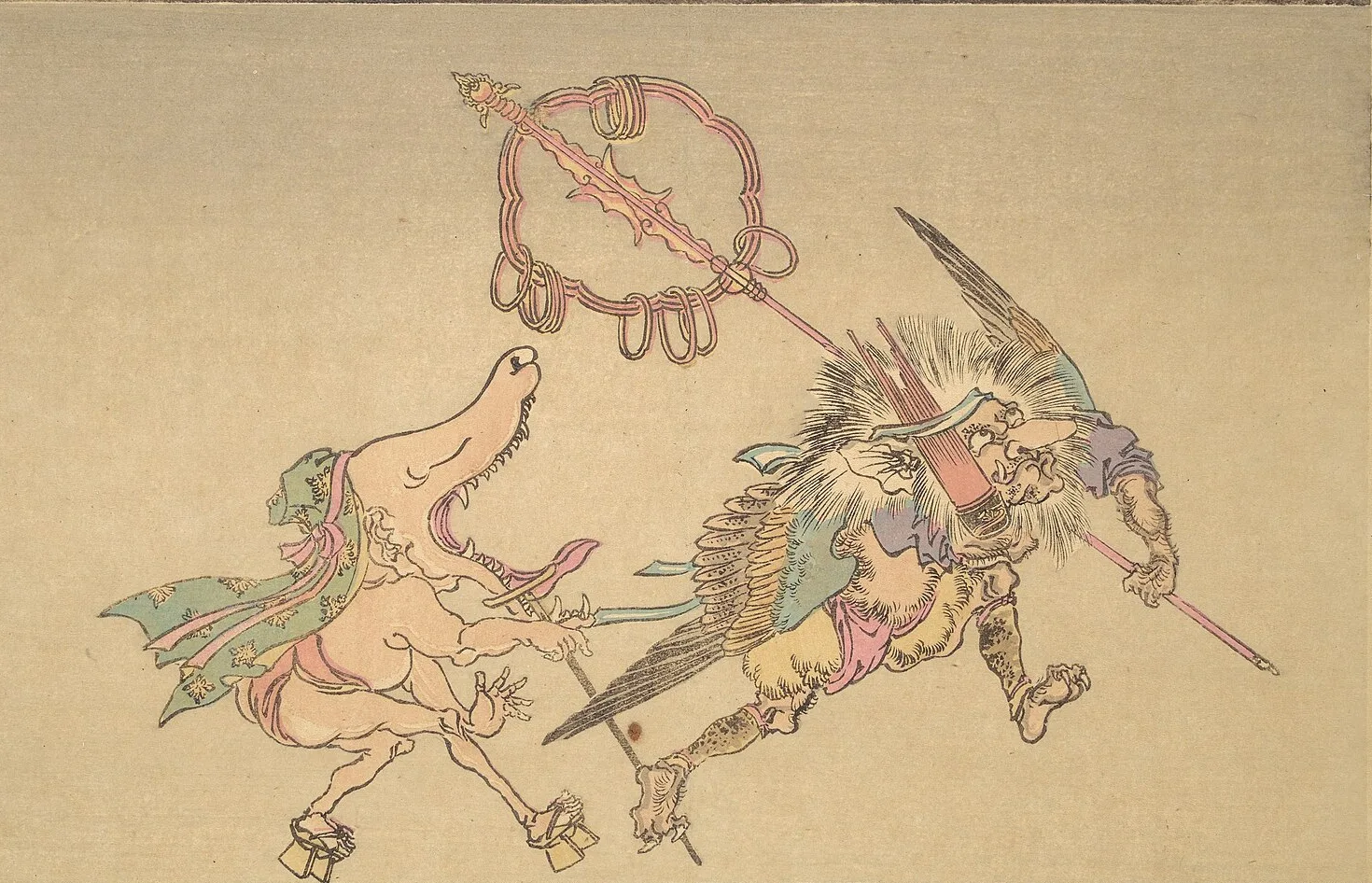
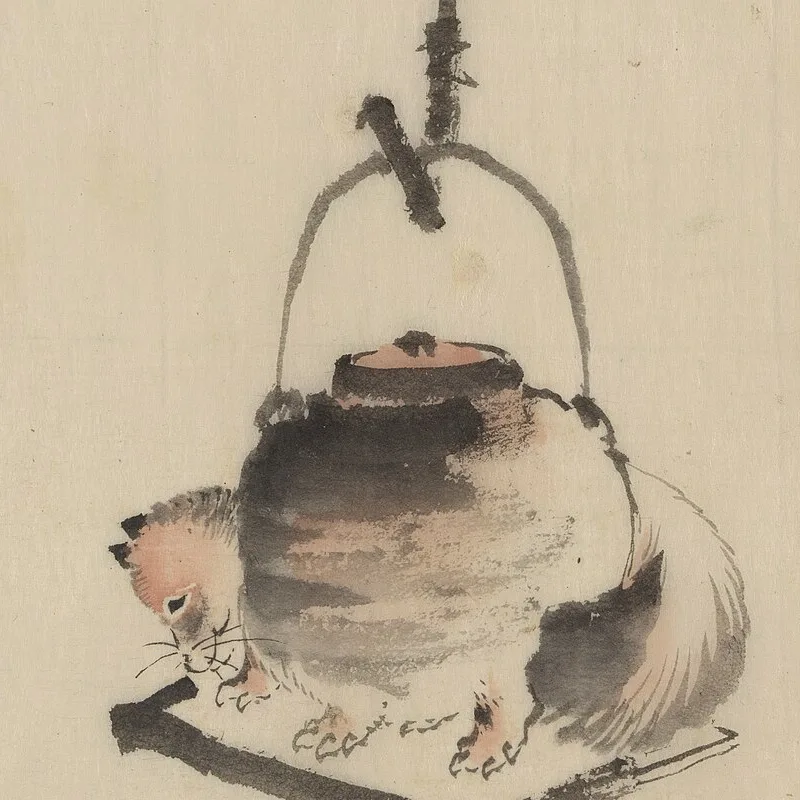
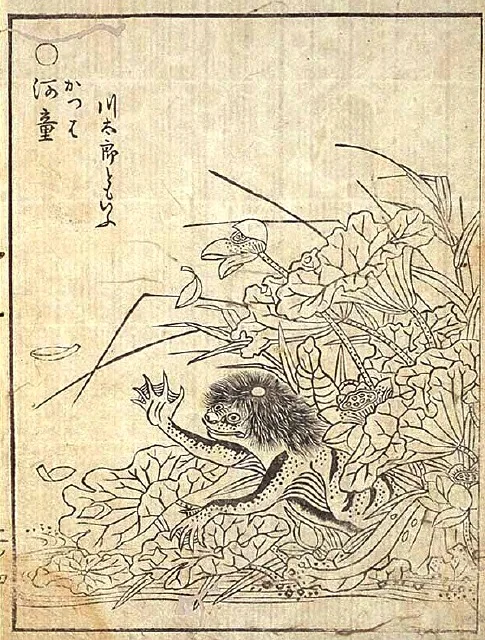
Many of the creatures that march through these pictures have their own guides on Morbid Index, including the kappa, the tengu, the oni and the shape-shifting fox and tanuki.
Frequently asked questions
What does hyakki yagyō mean? It means “night parade of one hundred demons.” The number stands for a great many, not an exact count.
Is the night parade real folklore? It is a recorded motif: the University of Oregon’s project notes accounts of demons parading through Kyoto in sources from as far back as the early twelfth century, and a Princeton University Library note describes Heian-period tales in which meeting the parade could bring death. Whether anyone believed they had seen one is a separate question from whether the stories were told.
Who painted the first night-parade scroll? The best-known one, at the temple Daitokuji’s Shinjuan, is traditionally attributed to Tosa Mitsunobu (1434–1525). It may have been based on an earlier lost model.
What are tsukumogami? Household objects that have come alive. In the Muromachi tale Tsukumogami ki, tools and containers receive souls after nearly one hundred years of service.
Is Toriyama Sekien’s book a scroll? No. Gazu Hyakki Yagyō (1776) borrows the parade’s name but is a book that generally gives each creature its own page.
Sources & further reading
- University of Oregon, Yōkai Senjafuda project: Night parade of a hundred demons
- Princeton University Library exhibition note: Hyakki Yagyo (百鬼夜行), in Spirits Among Us: Yōkai Paintings by Minako Ota (2026)
- Noriko T. Reider, "Animating Objects: Tsukumogami ki and the Medieval Illustration of Shingon Truth," Japanese Journal of Religious Studies 36/2 (2009)
- The Public Domain Review: Kawanabe Kyōsai's Night Parade of One Hundred Demons (1890)
- International Research Center for Japanese Studies (Nichibunken): The Database of Folktales of Mysterious Phenomena and Yōkai, English overview and glossary
- Michael Dylan Foster, The Book of Yokai: Mysterious Creatures of Japanese Folklore (University of California Press, 2015), discussion of the Daitokuji Shinjuan scroll
- Hiroko Yoda and Matt Alt, Japandemonium Illustrated: The Yokai Encyclopedias of Toriyama Sekien (Dover, 2017)