Lore & Explained
Yōkai Explained: A Field Guide to Japan's Folklore Monsters, Spirits and Ghosts
What are yōkai? A source-based guide to Japan's monsters, spirits and ghosts: what the word covers, how Edo artists and scholars shaped it, and where to start.
Topics: Yokai, Japanese Folklore, Japanese Monsters, Toriyama Sekien, Folklore
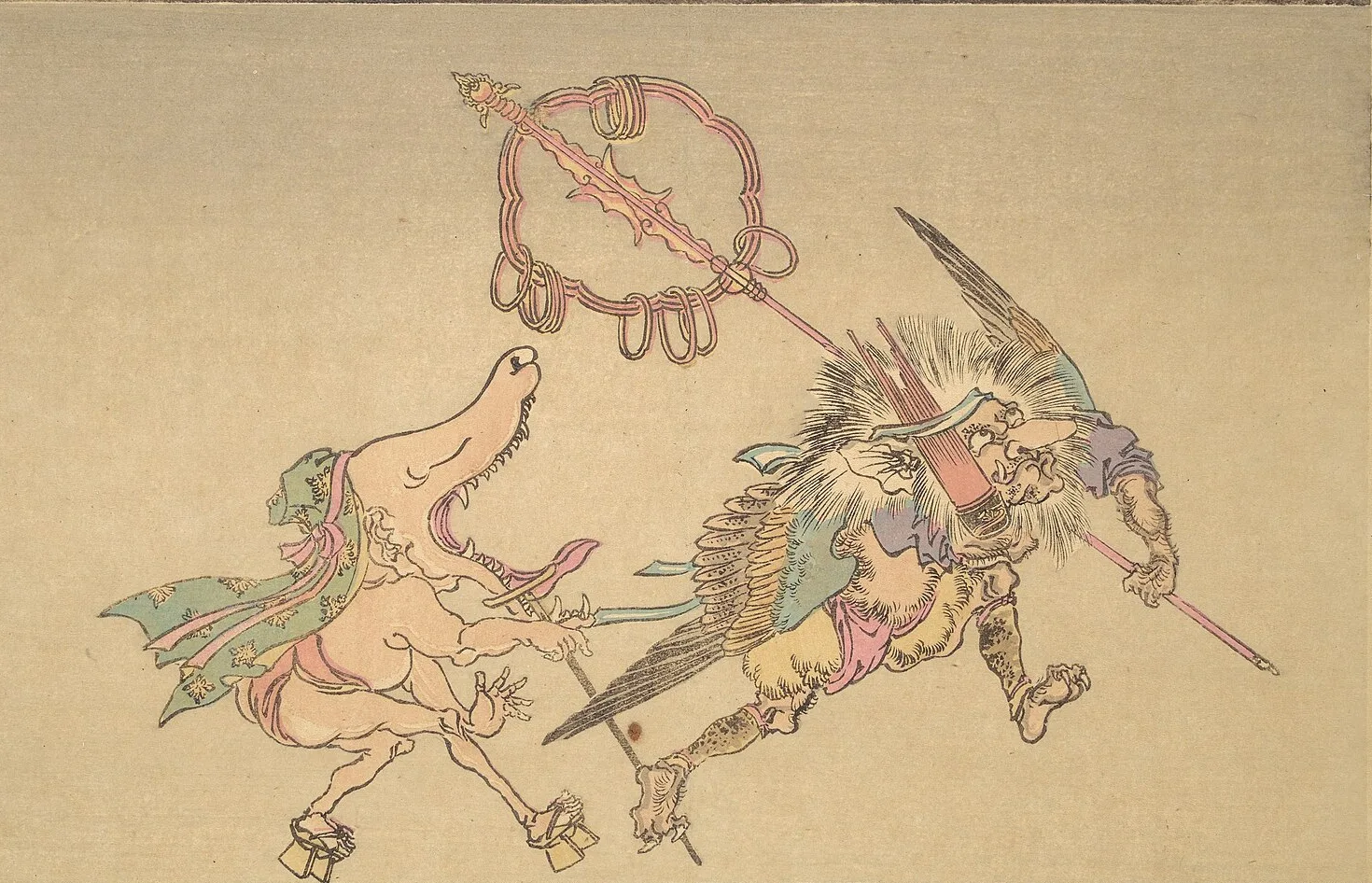
Yōkai (妖怪) is a Japanese word for strange, eerie or mysterious beings, events and images, and it has no single agreed English translation. Scholars gloss it as monster, spirit, goblin, ghost, demon or phantom, and none of those words covers the whole range. This guide explains what the term includes, how today’s familiar creatures took shape across medieval picture scrolls, Edo-period books, Meiji-era scholarship and postwar manga, and where to start with the yōkai we cover one by one.
What does “yōkai” actually mean?
Nichibunken, the International Research Center for Japanese Studies in Kyoto, quotes its sixth director Kazuhiko Komatsu calling yōkai “an ambiguous term among both academics and lay-people.” Its glossary defines the Chinese-derived word as something of strange appearance with unknowable or mysterious powers, and notes that popular culture now uses it much more broadly. The same glossary quotes the folklorist Michael Dylan Foster’s list of translations, which runs from “monster” and “ghost” to “lower-order deity” and “any unexplainable experience or numinous occurrence.”
Komatsu keeps the broad definition but divides it into three domains: yōkai as incidents or phenomena, yōkai as supernatural entities or presences, and yōkai as depictions. That division is useful when reading sources. A strange noise reported in a village, a named creature with a tradition behind it and a picture of a creature drawn by an artist are different kinds of evidence, even when one word covers all three.
How is a yōkai different from an oni, a yūrei or a kami?
The boundaries are porous, and Nichibunken’s glossary shows why.
| Term | What it generally means | What Nichibunken’s glossary adds |
|---|---|---|
| Yōkai | Strange or mysterious beings, phenomena and depictions | The broadest category; Komatsu divides it into incidents, entities and depictions |
| Oni | Demon, ogre, devil, spirit of the dead or plague god | Usually male and not necessarily evil; Komatsu argues an oni can become a kami if worshipped |
| Yūrei | Ghost, wandering or restless spirit | Not widely used until the Muromachi period (15th century), in Noh theater, for spirits of the dead who linger or seek liberation |
| Kami | Superhuman being, divinity, god | Many kinds exist, including small kami in plants and animals such as Inari, the fox god; humans, plants, animals and mountains can become kami |
Do not expect a fixed taxonomy. The same figure can be feared in one telling and worshipped in another. For more detail, see our guides to oni and to onryō and yūrei. For the wider idea of demons across religions, see our demonology field guide.
Where do yōkai stories come from?
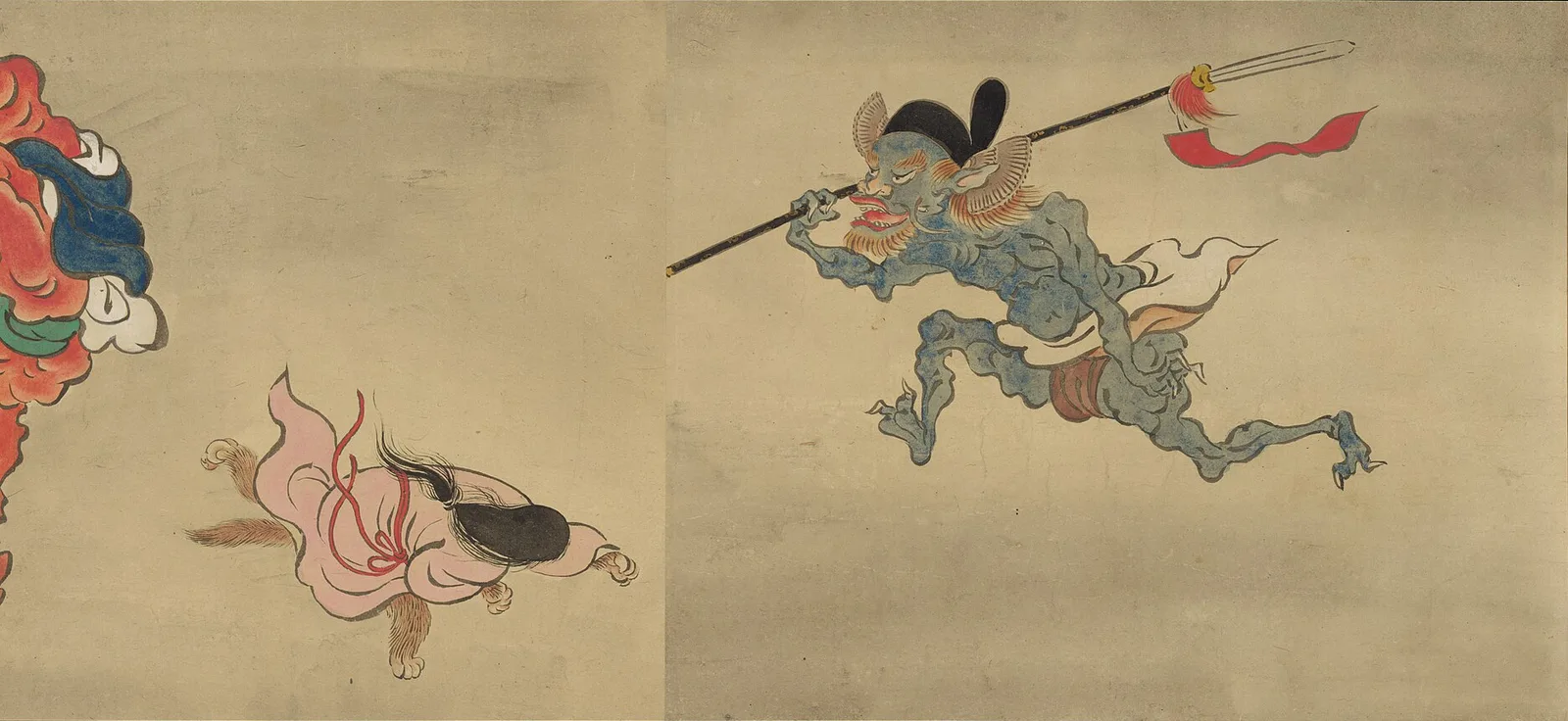
The earliest layer is not pictures but reports. The University of Oregon’s Yōkai Senjafuda project notes that accounts of demons parading through the streets of Kyoto at night appear in sources as far back as the early twelfth century. Picture scrolls of that procession, in which many of the marching figures are household objects that have come alive, belong to the medieval period. Noriko Reider notes that animate tools appear only sporadically in late Heian literature, and that the name tsukumogami became attached to them largely in the medieval period. Our guide to Hyakki Yagyō, the night parade of one hundred demons follows that tradition from tales to scrolls.
What did the Edo period change?
The Yōkai Senjafuda project describes the Edo period as the time when the modern conception of yōkai took shape. Scrolls multiplied, and their imagery moved into woodblock-printed books and other printed material.
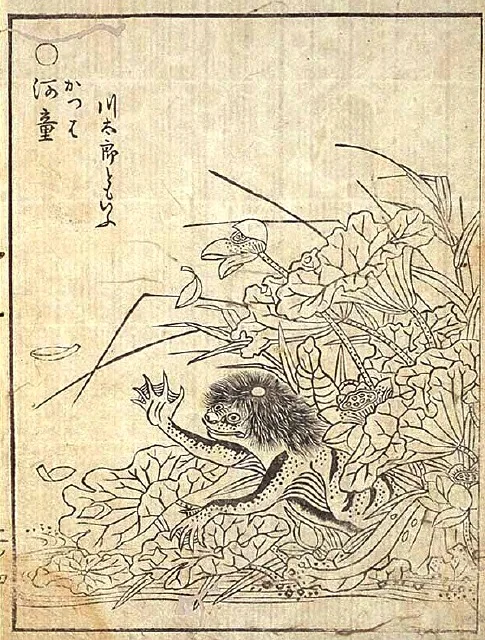
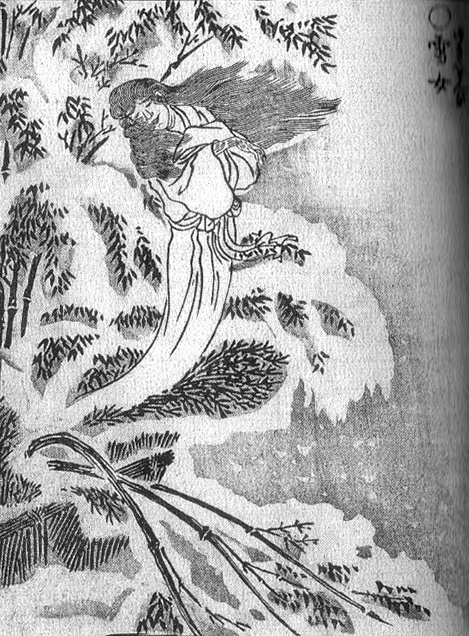
The artist most associated with that shift is Toriyama Sekien (1712–1788), who published four illustrated yōkai books, beginning with Gazu Hyakki Yagyō in 1776. Rather than a single continuous parade, the first book generally gave named creatures a page each, which made them easy to compare, copy and collect. Several creatures in our guides appear in Sekien’s pages, including the kappa, the jorōgumo, the yuki-onna and the rokurokubi. Hiroko Yoda and Matt Alt’s Japandemonium Illustrated (Dover, 2017) translates all four of his books.
Who turned yōkai into a subject of study?
Three developments mattered.
- A Meiji-era debunker. Inoue Enryō (1858–1919), the Buddhist philosopher who founded the school that became Toyo University, studied yōkai in order to dispel superstition. The National Diet Library describes his eight-volume Yōkaigaku kōza as an attempt to eliminate superstitions and modernize people, and Toyo University still remembers him as Yōkai-hakase, the “monster doctor.”
- Folklore fieldwork. In 1910 Yanagita Kunio published Tōno monogatari (The Legends of Tōno), built from stories told to him by the Tōno storyteller Sasaki Kizen about trickster foxes, mountain goblins and river imps. The Japan Times calls it a literary classic that helped make folklore a serious study in Japan.
- A searchable archive. Nichibunken’s Kaii-Yōkai Denshō Database launched on June 20, 2002, and held 35,257 entries as of November 2023. It collects reports from folklore journals, regional histories and essays from the late Edo period to the present, and it excludes works widely regarded as fiction, such as traditional folktales (mukashi banashi). A search for “kitsune” alone returns about 3,300 records. The primary interface is in Japanese, but Nichibunken publishes an English overview.
How did manga and anime reshape them?
Shigeru Mizuki (1922–2015) was born in Sakaiminato, Tottori, and lost his left arm while serving in the Japanese army in Papua New Guinea. The comics reference Lambiek notes that his series GeGeGe no Kitarō drew on folklore yōkai, ran in Shōnen Magazine from 1965 to 1969, and has been turned into a new anime series every decade since 1968. For many readers, Mizuki’s pages and their anime descendants are the first yōkai they meet.
That matters for how to read them. A manga, a game or a film shows how a yōkai is imagined today. It is not a record of historical belief.
A field guide to the yōkai we cover
Water, mountains and animals
- Kappa: a river creature with a water-filled head bowl, a bowing trick and cucumber lore, with many local variants.
- Tengu: bird spirits and long-nosed mountain figures whose roles changed over time.
- Kitsune: fox spirits, separating Inari’s fox messengers from shape-shifting fox tales.
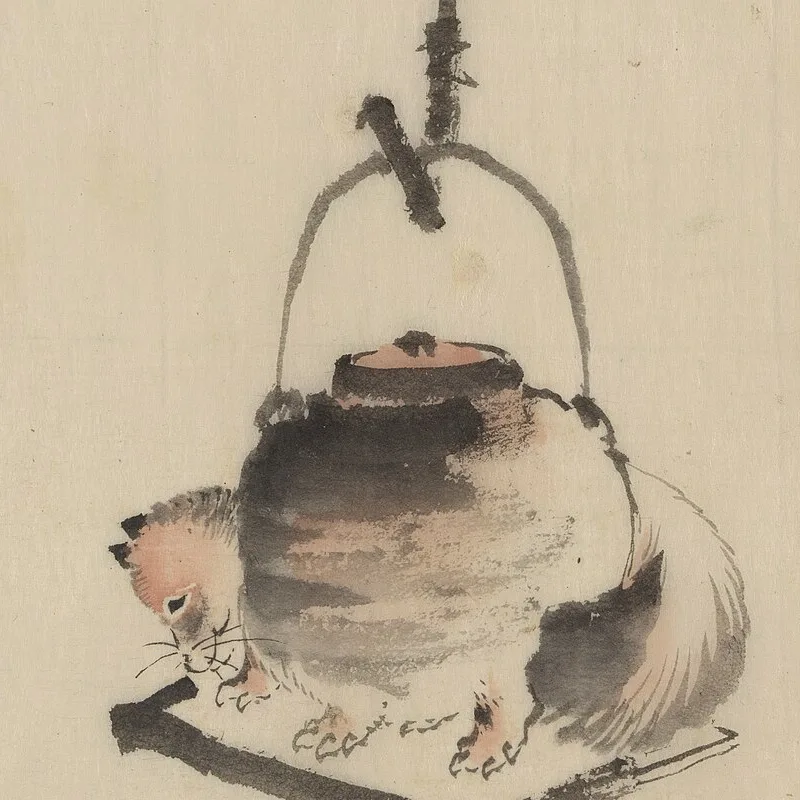
- Tanuki: the real raccoon dog, the Bunbuku Chagama tea kettle tale and the Shigaraki statues.
Demons, ghosts and the dead
- Oni: horns, clubs and the bean-throwing of Setsubun, for figures that can be terrifying, comic or outwitted.
- Onryō and yūrei: why not every Japanese ghost seeks revenge.
Women, transformation and the uncanny
- Jorōgumo: the spider woman and the uncertain source of her best-known story.
- Yuki-onna: the snow woman as Lafcadio Hearn retold her in Kwaidan.
- Rokurokubi: compare Sekien’s image with Hearn’s detached-head tale.
- Shōjō: the sake-loving figure in art and Noh theater, and what a recent film changes.
The parade itself
- Hyakki Yagyō: the night parade of one hundred demons, from Heian tales to Meiji woodblock books.
Modern legends that are not old yōkai
- Kuchisake-onna: a documented 1978–1979 rumor panic, not an ancient tradition.
- Teke Teke: a modern school legend whose supposed railway accident has never been documented.
- Hanako-san: a modern school ghost whose spread through 1990s media shows how living folklore travels.
Which stories are old, and which are modern?
Age and popularity are separate questions. The kappa, the tengu and the jorōgumo have pictures that go back to Sekien’s books or earlier. Kuchisake-onna, Teke Teke and Hanako-san belong to modern school and rumor culture, and our guides to them say so. A modern legend is still folklore, because it is passed along by word of mouth and changes in the telling, but it should not be presented as an ancient yōkai.
How should you read a yōkai source?
- Check the date. A Heian-era report, a Muromachi scroll, an Edo catalogue, a Meiji debunking and a modern manga are not interchangeable.
- Check the kind of source. Komatsu’s three domains are a good test: is this a reported incident, a described entity or a picture?
- Expect variants. One creature can be a feared river attacker in one telling and a comic opponent in another. A single list of “rules” for any yōkai hides that variety.
- Ask who is telling it, and why. Inoue Enryō wrote to dispel superstition. An artist drawing a catalogue is imagining a creature, which is not the same as a villager describing one.
- Do not treat adaptations as evidence. Films, games and anime borrow names and shapes freely.
Frequently asked questions
What does yōkai mean? It is a Japanese word for strange, eerie or mysterious beings, events and images. Scholars at Nichibunken describe it as ambiguous and define it broadly, which is why English words such as monster, ghost and demon each capture only part of it.
Are yōkai gods or demons? Neither by definition. Nichibunken’s glossary says oni are not necessarily evil and can become kami if worshipped, and yōkai covers a still wider range of strange beings and phenomena.
Is a yūrei a yōkai? It depends on the definition. Under a very broad reading, a ghost counts as something mysterious or eerie. Japanese usage also treats yūrei as a distinct term for spirits of the dead, common from the Muromachi period in Noh theater.
Who wrote the best-known yōkai catalogues? Toriyama Sekien’s four illustrated books, starting with Gazu Hyakki Yagyō in 1776, are the best-known Edo-period catalogues. The night-parade scrolls that inspired his title are older.
Where can I search real yōkai records? Nichibunken’s Kaii-Yōkai Denshō Database. Its main search interface is in Japanese, with an English overview page explaining key terms.
Sources & further reading
- International Research Center for Japanese Studies (Nichibunken): The Database of Folktales of Mysterious Phenomena and Yōkai, English overview and glossary
- University of Oregon, Yōkai Senjafuda project: Night parade of a hundred demons
- Noriko T. Reider, "Animating Objects: Tsukumogami ki and the Medieval Illustration of Shingon Truth," Japanese Journal of Religious Studies 36/2 (2009)
- National Diet Library, Japan: Portraits of Modern Japanese Historical Figures, Inoue Enryo
- Toyo University: Enryo Inoue, "a giant of wisdom and action" who learned from the world
- The Japan Times: From Japan's heart of darkness (on Yanagita Kunio's The Legends of Tono)
- Lambiek Comiclopedia: Shigeru Mizuki
- Michael Dylan Foster, The Book of Yokai: Mysterious Creatures of Japanese Folklore (University of California Press, 2015)
- Kazuhiko Komatsu, An Introduction to Yōkai Culture: Monsters, Ghosts, and Outsiders in Japanese History, translated by Hiroko Yoda and Matt Alt (Japan Publishing Industry Foundation for Culture, 2017)
- Hiroko Yoda and Matt Alt, Japandemonium Illustrated: The Yokai Encyclopedias of Toriyama Sekien (Dover, 2017)