Lore & Explained / Modern Folklore
Men in Black Explained: How UFO Witness Stories Became a Modern Paranormal Legend
The Men in Black began as UFO-era stories about Albert Bender and Gray Barker, then became a modern paranormal legend. There is no proven organization behind the myth.
Topics: Men in Black, UFO Folklore, Albert Bender, Gray Barker, John Keel
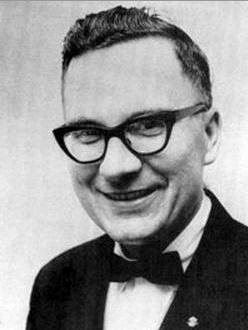
Wikimedia Commons contributor / CC BY-SA 4.0
The Men in Black were not discovered in a government file. They arrived through UFO literature: anonymous visitors in dark suits, supposedly warning witnesses away from the subject. Their resemblance to real investigators has always helped the legend. Their increasingly strange behavior came from storytellers.
Albert Bender and Gray Barker
Albert K. Bender founded the International Flying Saucer Bureau in Bridgeport, Connecticut, in 1952. In 1953, he abruptly shut it down, telling members only that he had learned the truth about flying saucers and had been warned not to share it. Gray Barker made Bender’s experience central to his 1956 book They Knew Too Much About Flying Saucers, built largely on Bender’s vague, secondhand account of a visit from three men who threatened him into silence.
That book did not report a proven secret police unit. It recounted a claim within UFO culture, and Barker was himself a skilled promoter of fantastic material. His archive is valuable precisely because it shows a writer shaping a mythology, not independently verifying every story he printed.
Bender himself said almost nothing more publicly for nine years. Then, in his own 1962 book Flying Saucers and the Three Men, he gave a far more elaborate account than anything Barker had printed: the three visitors, he now said, were extraterrestrials operating from a base in Antarctica, who “floated about a foot off the floor,” dressed like clergymen in dark suits and homburg hats that shadowed their faces, and had eyes that “lit up like flashlight bulbs” when they spoke to him telepathically. That gap and that escalation matter. The specific, almost cinematic details that later versions of the legend rely on — glowing eyes, telepathy, hidden faces — come from Bender’s own retelling nearly a decade after the fact, not from a contemporaneous 1953 report.
Real government UFO investigation made a plausible backdrop for imagined intimidation. This is context for Project Blue Book, not evidence of paranormal Men in Black. U.S. Air Force / Public Domain via Wikimedia Commons.
Why the Legend Felt Plausible
During the Cold War, people really did encounter police, military personnel, intelligence agencies and classified aviation work. A stranger asking questions about a sighting could be ordinary official business, a hoax, a journalist, or a person misremembered under stress. None of those possibilities proves that a coordinated paranormal organization existed.
John Keel later made the figures stranger in books including The Mothman Prophecies, describing witnesses who reported visitors with stiff, mechanical movements, oddly formal or archaic speech, an unfamiliar grasp of everyday objects like silverware, and a habit of asking questions they should already have known the answers to. Keel treated these accounts as evidence of a wider paranormal phenomenon connecting UFOs, cryptids and premonitions rather than a single conspiracy; his framing made the Men in Black stranger and more cosmically significant, but it rests on the same kind of secondhand witness testimony as Bender’s original claim, not independent verification.
The 1997 film Men in Black used the name for a comic science-fiction premise about a secret agency policing alien immigrants on Earth. It did not create the legend and bears little resemblance to Bender’s or Keel’s accounts, but it made a very different, friendlier version of the name globally familiar, to the point that many people now know only the film’s version and are unaware of the 1950s UFO subculture it borrowed its title from.
The Mothman story shows how Keel connected separate mysteries into one paranormal pattern. Read as folklore, the Men in Black are a brilliant image of modern anxiety: secrecy with a human face that may not be human at all.
Frequently Asked Questions
Are the Men in Black a real government agency? No evidence establishes one organization matching the paranormal legend.
Who created the modern myth? Albert Bender’s claims and Gray Barker’s 1956 book were formative; John Keel and later media expanded the image.