The Index
St Edmund and the Wolf: What the Chronicle and Memorial Pennies Tell Us
A medieval legend says a wolf guarded St Edmund’s head. The Anglo-Saxon Chronicle and a set of silver pennies help trace how an East Anglian king became a saint.
Topics: Edmund the Martyr, Great Heathen Army, Anglo-Saxon England, Medieval Folklore, Numismatics
Edmund was king of East Anglia when the Viking Great Army defeated him in the winter of 869–870. The Anglo-Saxon Chronicle records his death. Within a generation, silver pennies were already being issued in his name as a saint. The story of a wolf guarding his severed head comes from a much later account of his martyrdom. See also documented dark history.
The Abbey of St Edmund Heritage Partnership gives November 20 as the traditional date of his death. West Suffolk Council has extended the Moyse’s Hall Museum exhibition on Edmund and the Great Heathen Army through the end of February 2027. The story behind the exhibition survives in records made for very different purposes.
What does the earliest account say?
The Anglo-Saxon Chronicle entry headed 870 places the army at Thetford and says Edmund fought it that winter. The army won, and Edmund was killed. The brief entry names leaders in its account of the defeat. The source leaves the circumstances of his death largely unexplained.
That gap matters because the story most people recognise comes from a text written more than a century later. Abbo of Fleury composed his account around 986. Ælfric of Eynsham subsequently adapted it into Old English. Kenneth Cutler’s translation of Ælfric’s version preserves both the story and the claim about how it reached Abbo, through Archbishop Dunstan and an elderly man said to have served Edmund. That is the text’s account of its own origins.
Why does a wolf appear in the legend?
In Ælfric’s telling, Edmund refuses to submit to the invaders on their terms. They kill him and hide his head. When people search the woods, they hear the head answer their calls. A wolf has guarded it from other animals and follows the group as they carry it back to their settlement.
The text presents the wolf’s behaviour as a miracle. Ælfric also compares the invader Ivar to a wolf near the beginning of the story. Later, the animal itself protects the man Ivar threatened. Reading those two passages together helps explain why the wolf belongs to a story about sanctity.
What can the pennies establish?
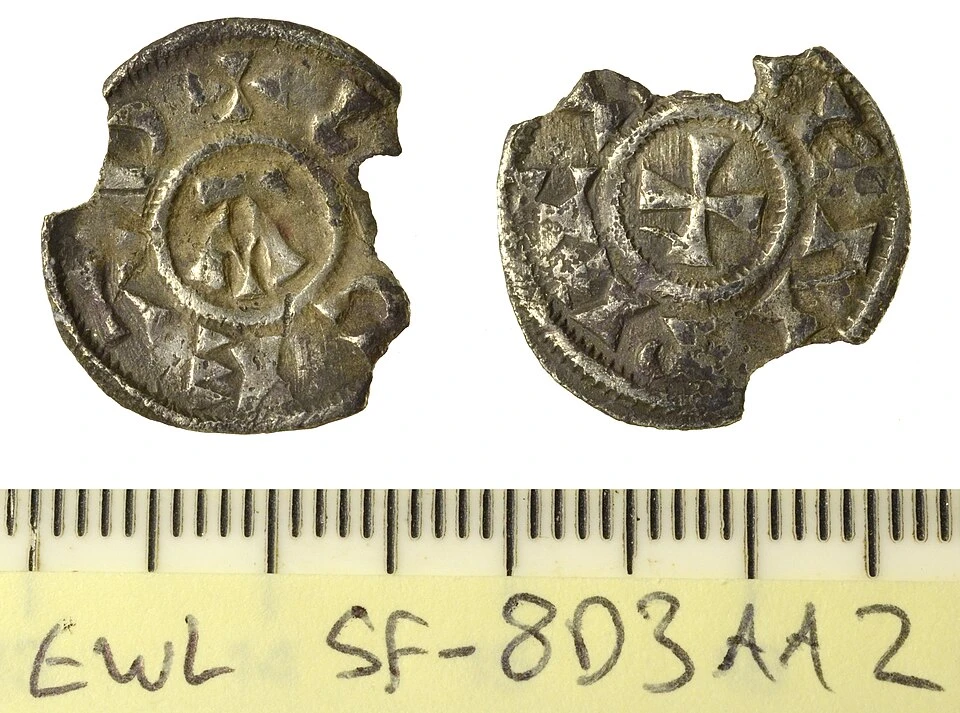
The Portable Antiquities Scheme’s silver penny is part of the St Edmund coinage. Surviving examples name Edmund as a saint. Numismatist Johanne Porter places the appearance of these coins within about thirty years of his death, under Scandinavian rule. They provide early physical evidence that people were invoking Edmund as a saint long before Abbo wrote his account.
The label “memorial penny” describes the class of coin. It leaves open why the coins were made. Porter argues that invoking the local saint could help rulers establish their authority. That interpretation comes from comparing the coins’ inscriptions, designs and distribution. The penny pictured here has a cross and portions of letters, with parts of the edge missing.
Hero photograph: The Portable Antiquities Scheme / The Trustees of the British Museum, find 584276, CC BY-SA 2.0. Resized and converted to WebP.
How did the story become part of Bury St Edmunds?
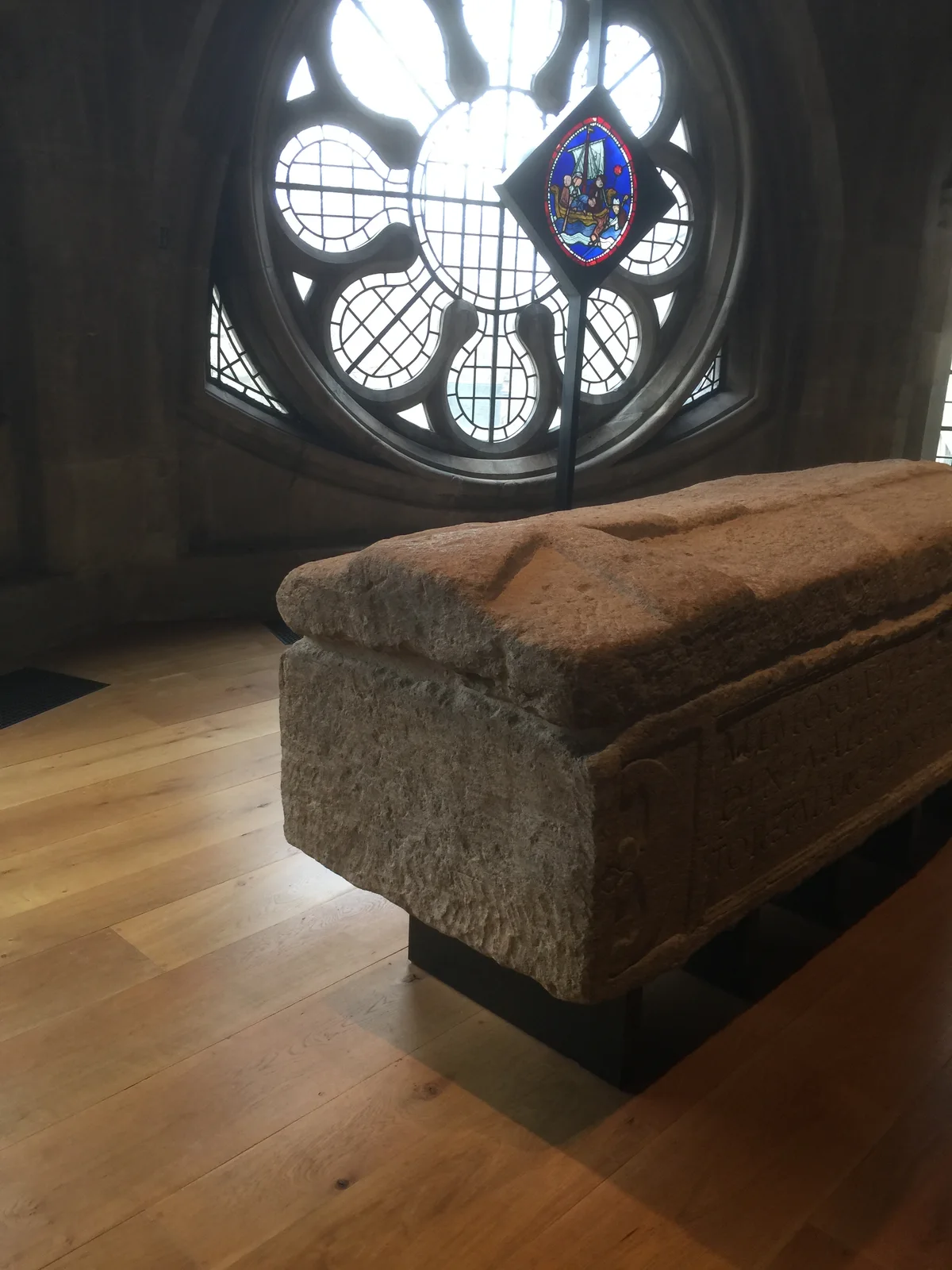
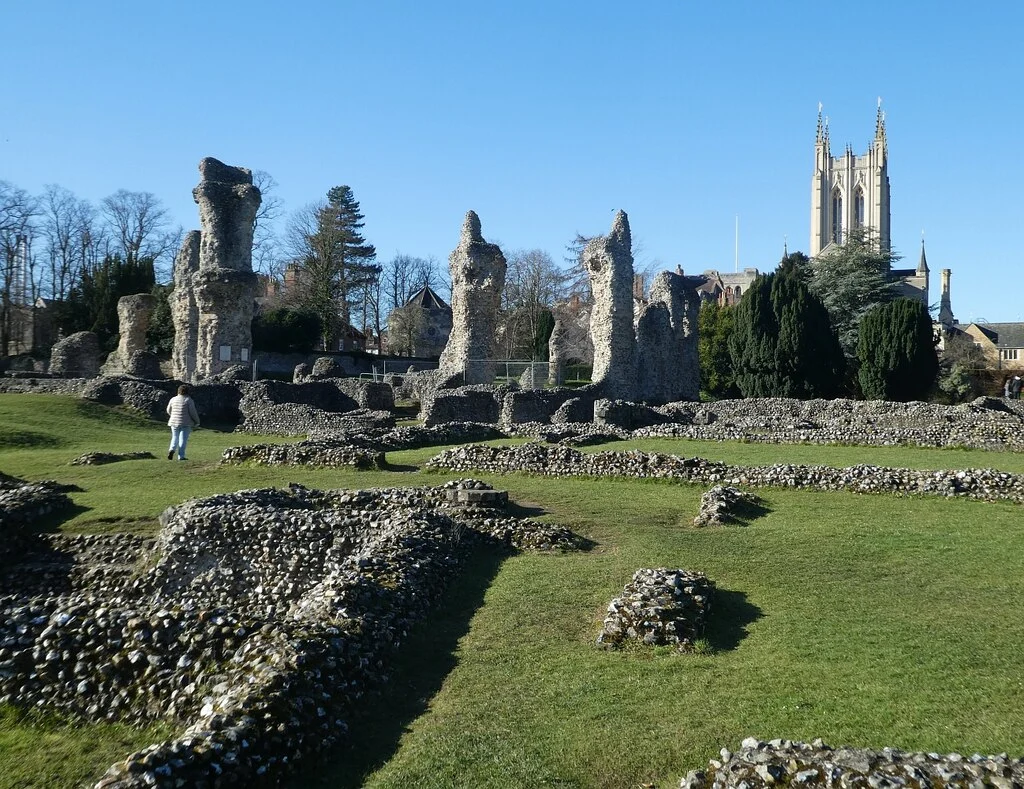
English Heritage traces the town’s medieval abbey to Edmund’s shrine. The abbey became a pilgrimage destination. The masonry in the photograph belongs to that later history, when the town’s religious life grew around the saint’s name. The Chronicle, the pennies and the abbey each tell us something different: how a king died, how soon he was revered and where that reverence eventually took root. See also Werewolves of Ossory: Gerald of Wales and the Irish Legend.
A different kind of physical evidence survived in England’s witch bottles, where what people put into the vessel preserves part of a practice absent from many written accounts.
Frequently asked questions
What does the earliest account say?
The Anglo-Saxon Chronicle entry headed 870 places the army at Thetford and says Edmund fought it that winter. The army won, and Edmund was killed. The brief entry names leaders in its account of the defeat. The source leaves the circumstances of his death largely unexplained.
Why does a wolf appear in the legend?
In Ælfric’s telling, Edmund refuses to submit to the invaders on their terms. They kill him and hide his head. When people search the woods, they hear the head answer their calls. A wolf has guarded it from other animals and follows the group as they carry it back to their settlement.
What can the pennies establish?
The Portable Antiquities Scheme’s silver penny.jpg) is part of the St Edmund coinage. Surviving examples name Edmund as a saint. Numismatist Johanne Porter places the appearance of these coins within about thirty years of his death, under Scandinavian rule. They provide early physical evidence that people were invoking Edmund as a saint long before Abbo wrote his account.
How did the story become part of Bury St Edmunds?
English Heritage traces the town’s medieval abbey to Edmund’s shrine. The abbey became a pilgrimage destination. The masonry in the photograph belongs to that later history, when the town’s religious life grew around the saint’s name. The Chronicle, the pennies and the abbey each tell us something different: how a king died, how soon he was revered and where that reverence eventually took root.
Sources & further reading
- Anglo-Saxon Chronicle, entry for 870 (Ingram translation)
- Ælfric’s version of Abbo’s account, translated by Kenneth Cutler
- Johanne Porter, University of East Anglia, study of St Edmund memorial coinage
- Abbey of St Edmund Heritage Partnership, Edmund’s traditional feast day and the legend
- English Heritage, history of Bury St Edmunds Abbey
- West Suffolk Council, Moyse’s Hall exhibition extension
- Portable Antiquities Scheme, St Edmund penny find 584276
- Rob Farrow, photograph of the abbey ruins