The Index
The Host True Story: The Han River Case and Court Ruling
The Host opens with a real pollution case in Seoul. See what happened in 2000, what the South Korean court ruled in 2005, and what Bong Joon-ho invented.
Topics: Han River, Seoul, South Korea, Environmental History, The Host
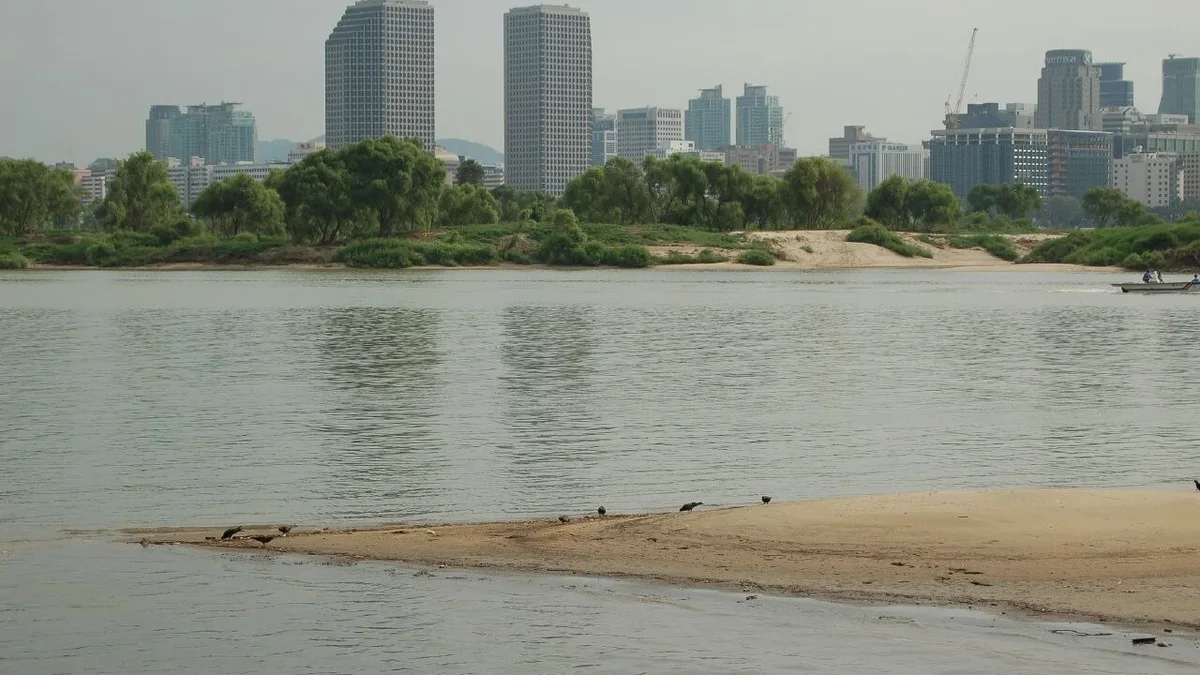
Han River, Seoul, 2006. frakorea / Wikimedia Commons / CC BY 2.0. Cropped and resized.
The opening of Bong Joon-ho’s The Host draws on a real pollution case involving Seoul’s Han River in 2000. A South Korean appeals court found U.S. military civilian employee Albert McFarland guilty in 2005 and suspended his six-month prison sentence for two years. The creature and the family’s search for their daughter are fictional.
What happened at the Han River in 2000?
The case began with an unauthorized release of formaldehyde linked to Yongsan Garrison in Seoul in February 2000. The National Institute of Korean History’s timeline records July 13 as the day Green Korea United and another civic group publicly announced the incident. The National Archives of Korea records Green Korea United’s complaint that July. February dates the incident and July dates its public disclosure.
The distinction matters because headlines about the film often jump straight from the pollution to the monster. The surviving record lets readers follow a separate chain of events involving a civic complaint, a disputed trial and an appeal. The Franklin expedition behind The Terror offers a similar distinction between the events in the record and what a horror story imagines happened next.
What did the South Korean court decide?
McFarland argued that the United States had jurisdiction. The trial proceeded in his absence in December 2003, and the court sentenced him to six months in January 2004. According to contemporary court reporting, he appeared at an appeal hearing in December 2004 and apologized for the incident.
On January 18, 2005, the Seoul Central District Court’s appeals panel found him guilty and suspended the six-month sentence for two years. The case ended in a conviction with a suspended sentence. The archives describe the criminal proceedings and outcome without establishing the extent of the environmental effects. Reading a verdict for what it actually decided also matters in the case that inspired The Exorcism of Emily Rose.
Which part of The Host did Bong take from the case?
Bong told KPBS that he had imagined a creature emerging from the Han River since high school. The McFarland case came later and supplied the basis for the opening scene. The film connects that scene to the creature and the Park family’s ordeal. Those are fictional developments.
The division between a documented event and an invented threat shows up differently in the real history behind The Amityville Horror. In The Host, the clearest point of comparison is the pollution incident at the start. The Korean records follow it into a courtroom, while the film follows it into a monster story.
Frequently asked questions
Did the Han River pollution case happen in 2000 or 2005?
The incident took place in February 2000 and became public that July. The 2005 date refers to the appeal ruling.
Was The Host’s monster based on a real animal?
The creature is fictional. Bong Joon-ho described imagining a river monster before the documented pollution case gave him the basis for the opening scene.