The Index
Why the USS Arizona Identification Project Started With Eight Unknowns
Eight USS Arizona unknowns were disinterred at Honolulu’s Punchbowl cemetery. Here’s why the work began early and what DNA comparisons can establish.
Topics: USS Arizona, Pearl Harbor, World War II, Operation 85, Forensic Identification
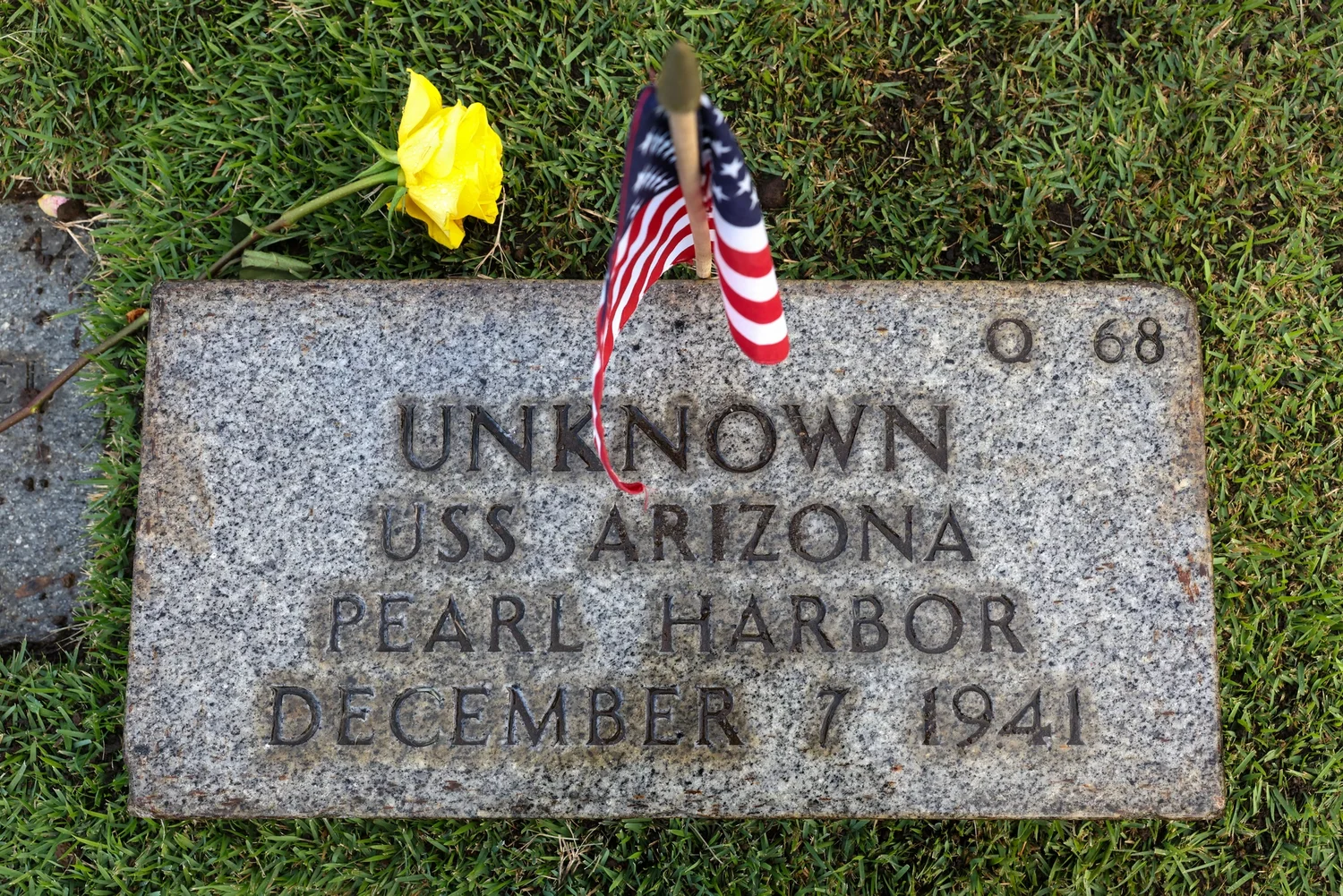
On November 2, 2026, the Defense POW/MIA Accounting Agency (DPAA) disinterred eight caskets associated with the USS Arizona. The first eight caskets came from a cemetery in Honolulu, the National Memorial Cemetery of the Pacific, also called Punchbowl. The agency transferred them to its laboratory in Hawaii for analysis and possible identification. See also documented dark history.
The cemetery graves hold remains recovered after the 1941 Pearl Harbor attack and later buried as unknown. Operation 85, the family-led group supporting the project, says the remains still inside the sunken Arizona will be left undisturbed.
Why did the first eight come out in November?
The first disinterments had been planned around the December 7 anniversary. According to Operation 85’s November account, repeated storms and concerns about aging steel caskets led the DPAA to begin sooner. Moving the caskets to a controlled laboratory gave the agency time to assess their condition and prepare the remains before the planned commemoration.
The National WWII Museum says the eight are expected to be present under military escort at a separate family ceremony on December 7 at Joint Base Pearl Harbor-Hickam. The scheduled ceremony honors the men while the identification work continues.
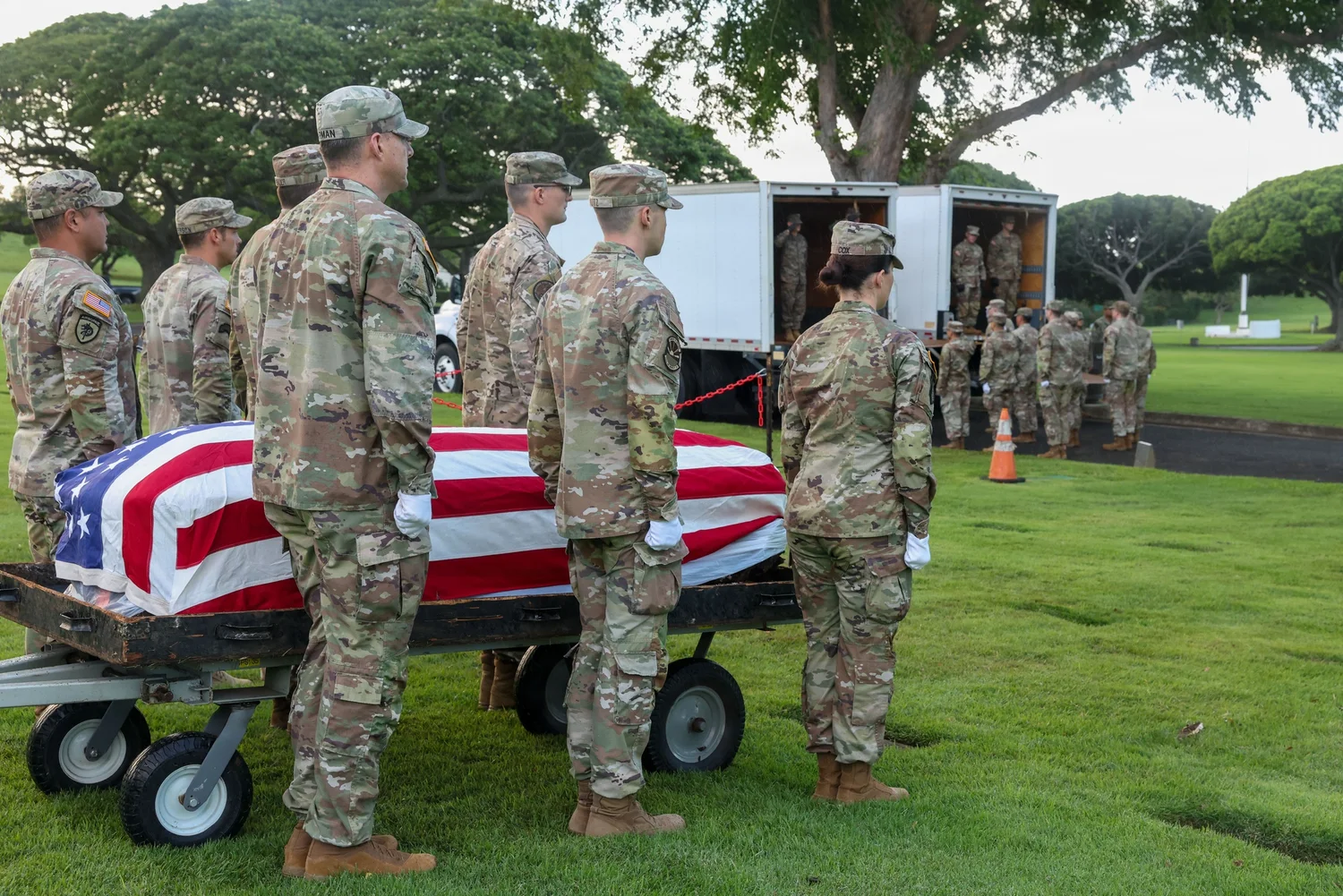
The appearance of U.S. Department of War (DoW) visual information does not imply or constitute DoW endorsement.
What do the 141, 86 and eight figures describe?
The figures describe different parts of the same effort. The DPAA’s April announcement discussed up to 141 Pearl Harbor unknowns buried at Punchbowl. The museum’s November report says 86 are believed to be associated with the Arizona. The eight are the caskets the agency transferred from the cemetery in the first group.
Some graves may contain remains from more than one individual. That adds a separate question for the laboratory: which remains belong together? A cemetery record and a suspected connection to the ship can narrow the search, while a formal identification requires evidence that links the remains to a particular person.
What can family DNA establish?
The DPAA announced in April that the project had reached its 60 percent threshold for family DNA references. The threshold allowed the agency to advance the disinterment request and planning. The laboratory can compare DNA recovered from remains with reference samples that eligible relatives chose to provide. The number measures progress in collecting references, leaving individual identifications to the laboratory’s investigation. See also JonBenét Ramsey DNA: Why Police Are Cautious About New Tests.
Operation 85 and the DPAA continue to seek eligible family members. Details for families are available through Operation 85. The sources describing the November 2 transfer report a step toward restoring names to the deceased. They report no identification for the first eight at the time of transfer.
Morbid Index’s article on the Hunley crew follows a different recovery, in which surviving personal effects shed light on the people aboard a vessel.
Frequently asked questions
Why did the first eight come out in November?
The first disinterments had been planned around the December 7 anniversary. According to Operation 85’s November account, repeated storms and concerns about aging steel caskets led the DPAA to begin sooner. Moving the caskets to a controlled laboratory gave the agency time to assess their condition and prepare the remains before the planned commemoration.
What do the 141, 86 and eight figures describe?
The figures describe different parts of the same effort. The DPAA’s April announcement discussed up to 141 Pearl Harbor unknowns buried at Punchbowl. The museum’s November report says 86 are believed to be associated with the Arizona. The eight are the caskets the agency transferred from the cemetery in the first group.
What can family DNA establish?
The DPAA announced in April that the project had reached its 60 percent threshold for family DNA references. The threshold allowed the agency to advance the disinterment request and planning. The laboratory can compare DNA recovered from remains with reference samples that eligible relatives chose to provide. The number measures progress in collecting references, leaving individual identifications to the laboratory’s investigation.
Sources & further reading
- Operation 85, November 3 account of the first disinterments
- Defense POW/MIA Accounting Agency, April DNA reference threshold announcement
- The National WWII Museum, the anniversary and the scope of the project
- DPAA photograph of an unknown grave marker, released November 13
- DPAA photograph of the November 2 ceremony