The Index / Haunted Places
Borley Rectory: The Real History Behind England's 'Most Haunted House'
Borley Rectory became England's most famous haunting through reports, Harry Price's investigations and a lasting dispute over the evidence.
Topics: Borley Rectory, Harry Price, England
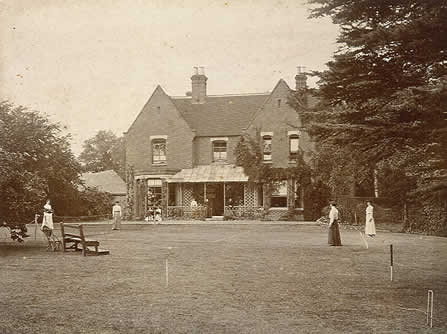
Unknown photographer, via Wikimedia Commons (Public Domain)
Borley Rectory was a Victorian clerical house in Essex, not a proven haunted site. It became known as “the most haunted house in England” through a long sequence of household reports, newspaper coverage and the investigations of Harry Price. The surviving record is valuable precisely because it shows how testimony, expectation and publicity can build a famous haunting. It does not establish that a ghost was present.
The rectory was built in 1863 for the rector of Borley parish. It stood near the church in a small village on the Essex–Suffolk border, and its scale was unusual for the setting: a large brick house with gardens, outbuildings and a prominent approach. The first resident was the Rev. Henry Dawson Ellis Bull, who lived there with his family. Later accounts often make the Bull household sound like the beginning of a fully formed ghost story. The evidence is less tidy. Some reports of footsteps, bells and an apparition were collected or repeated after the fact, and the documentary trail is uneven.
Borley Rectory in 1892, decades before its national publicity. Source. Unknown photographer / Wikimedia Commons, Public Domain.
The nun story and the early household reports
The best-known Borley legend is a supposed nun seen walking near the rectory. Later versions supplied a full backstory: a French nun allegedly eloped with a member of the Waldegrave family, was murdered, and was buried beneath the site. That is a story about the alleged ghost, not a demonstrated seventeenth-century event. Researchers have not found historical evidence that securely confirms the nun’s identity, the murder or the burial. The fact that the tale is often told with precise details does not make those details archival fact.
The Bull family did pass on stories of unexplained sounds and appearances. Harry Bull, Henry Bull’s son, became particularly associated with the house, and reports from people who said they had seen a nun were later used to construct a chronology. The Society for Psychical Research’s later review cautioned that early accounts were hard to assess: many were recorded years after the alleged events, and there was little contemporaneous documentation of an objective phenomenon.
That distinction matters. A resident saying that they saw a figure is evidence that the resident made that report. It is not, by itself, evidence that the figure was supernatural, or that the later nun narrative explains it.
The Smiths, the Foysters and the wall messages
In 1928 the Rev. Guy Eric Smith and his wife moved into the rectory. During their stay they reported noises, bell-ringing, missing objects and other disturbances. In June 1929 they contacted the Daily Mirror, which sent a reporter and put them in touch with Harry Price. The press visit changed the case. It gave the scattered local stories a national audience, and Price’s involvement gave them the language of an investigation.
Price visited Borley in 1929. Accounts from that visit include thrown objects, a reported apparition and unexplained sounds. Those events were contested even at the time. The SPR record notes that the type and frequency of reported phenomena changed sharply around the publicity, which makes it difficult to separate what occurred in the house from the effects of attention, suggestion and performance.
The Rev. Lionel Foyster, his wife Marianne and their adopted daughter Adelaide arrived in 1930. Their five years at Borley produced many of the case’s most frequently repeated claims: bell-ringing, thrown objects, writing on walls and messages apparently directed at Marianne. The wall-writing is central to Borley’s reputation, but it is not independently authenticated. Marianne Foyster later acknowledged responsibility for some phenomena, while other claims remained disputed. Neither an admission about some incidents nor a believer’s recollection resolves every report; it does mean the evidence cannot be treated as a single clean paranormal record.
Harry Price’s second investigation
Price returned in a much more organized way after the Foysters left. He rented the rectory from May 1937 to 1938 and advertised in The Times for observers. The resulting group included people with professional backgrounds, but it was not a controlled scientific experiment. The observers worked in turns, and, as the SPR’s later account points out, no complete official event log was kept.
Reports from the tenancy included knocks, movements of small objects and observations of lights or figures. Planchette sessions conducted by people connected with the investigation produced a purported communicator, “Marie Lairre,” who was said to be a murdered French nun. This was séance-derived material, not independent historical evidence. Price nevertheless used it in the narrative that connected the house to the older nun legend.
Price’s books made Borley famous well beyond psychical-research circles. The Most Haunted House in England appeared in 1940, and The End of Borley Rectory followed after his death. The phrase in the first title was an extraordinarily effective label. It made the building a destination in the popular imagination and encouraged later writers, television programmes and visitors to treat each new report as part of an established supernatural case.
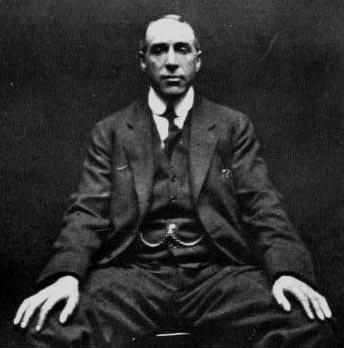
Harry Price, whose Borley books and investigations made the rectory internationally famous. Source. William Hope / Wikimedia Commons, Public Domain.
Fire, demolition and the bones
The rectory’s story did not end with the investigation. William Hart Gregson bought it in late 1938. On 27 February 1939, a fire badly damaged the building after an oil lamp was reported overturned. The ruins remained for several years; the rectory was demolished in 1944.
After the fire, Price excavated at the site and publicized the discovery of bones, which were sometimes presented in popular retellings as confirmation of the murdered-nun legend. They were not such confirmation. The available record did not establish that the bones belonged to the alleged nun, or even that the legend described a real historical person. The episode instead shows how a suggestive find can become attached to an already familiar story.
Later visits, excavations and investigations have kept Borley in circulation, but none has produced evidence sufficient to verify a haunting. The building itself is gone. What remains is a set of testimony, publications, photographs and arguments about how the testimony was gathered.
The physical setting is sometimes treated as though it supplied an answer. A large, aging rectory can certainly generate ordinary noises, difficult sightlines and a sense of isolation, but that observation does not explain every individual report. It does explain why a responsible history should not jump from an atmospheric building to a supernatural conclusion. The accounts came from people with different expectations, at different dates, often after Borley had already become news. Their value lies in what they reveal about belief and recollection, not in their ability to settle the existence of an apparition.
Nor is it accurate to describe every critic as a debunker who ignored evidence, or every witness as a fraud. Some witnesses plainly believed they had experienced something unusual. The historical question is narrower: whether the record lets a reader independently verify the cause. At Borley, it does not. The sources are too entangled with later retelling, selective publication and disputed investigation to carry that weight.
The Society for Psychical Research dispute
After Price died in 1948, Eric Dingwall, Kathleen Goldney and Trevor Hall investigated the case for the Society for Psychical Research. Their 1956 study, The Haunting of Borley Rectory, was strongly critical of Price’s methods and of some evidence he published. It attributed much of the record to ordinary causes, mistaken recollection, suggestion or possible fabrication, and argued that Price had sometimes shaped the material misleadingly.
That verdict was itself debated. Some psychical researchers thought the investigators had treated witnesses and Price too harshly; Robert Hastings later challenged parts of their reasoning. The responsible conclusion is not that one report “proved” Borley false or that a rebuttal “proved” it haunted. The evidence is fragmented and often dependent on interested participants. Criticism of Price is serious and documented; a disputed investigation is not proof of ghosts.
Borley remains useful as a historical case study because it makes the feedback loop visible: reports attract publicity, publicity brings investigators and visitors, and the enlarged audience generates a more durable legend. For other reported hauntings with their own evidentiary problems, see the Enfield Poltergeist and our guide to poltergeists.
Questions readers ask
Was Borley Rectory really haunted? There is no verified evidence establishing that it was. There are many claims, collected across decades under conditions that make them difficult to evaluate.
Who was Harry Price? He was a prominent British psychical researcher and writer. His Borley work made the case famous, and later SPR investigators raised substantial questions about his methods and presentation.
What happened to the rectory? It was severely damaged by fire in 1939, left as ruins and demolished in 1944.