The Index / Dark History
The DeFeo Murders: What Happened Before the Amityville Horror?
Six members of the DeFeo family were shot dead in their Amityville home in November 1974. Here is the documented criminal case, before any haunting story existed.
Topics: Ronald DeFeo Jr., Amityville Murders, True Crime, 1974, Suffolk County
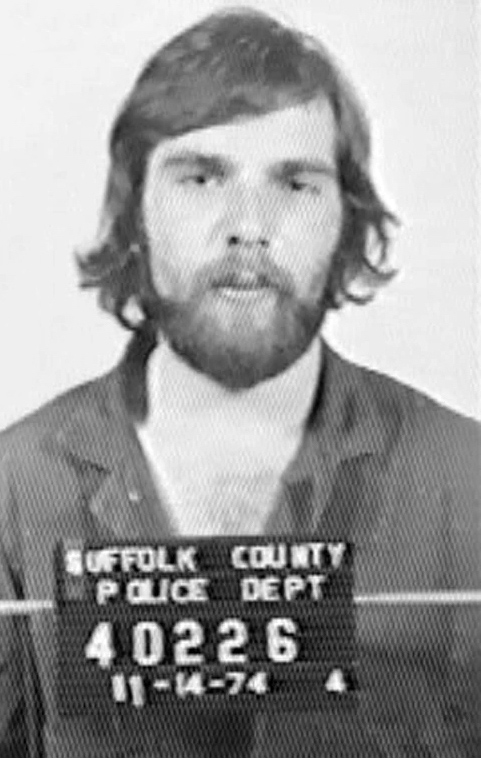
Suffolk County Police Department / Wikimedia Commons (Public Domain)
Before there was a book, a film franchise, or a family claiming their new house wanted them gone, there was a crime scene. Six people died in their beds in a house on Ocean Avenue in Amityville, New York, on November 13, 1974. Their killer was identified, tried, and convicted within about a year. None of that required a demon.
This article covers the documented criminal case: the victims, the investigation, the trial, and the questions that were never fully answered in court. The haunting claims that later made the address famous belong to a separate story, one that begins after this one ends. For that side of the case, see our Amityville Horror overview.
Who Were the DeFeo Family?
Ronald DeFeo Sr., 43, and his wife Louise, 42, lived at 112 Ocean Avenue with four of their children: Dawn, 18; Allison, 13; Marc, 12; and John Matthew, 9. Their eldest son, Ronald Jr. — known to family and friends as Butch — was 23 and no longer living full-time in the house, though he worked at the family’s car dealership and remained closely tied to the household.
By most accounts, the DeFeo home was not a peaceful one. Ronald Sr. worked for his wife’s family’s Brooklyn auto dealership and had a reputation, according to people who knew the family, for a volatile temper. Butch had a history of drug use, theft from the family business, and a strained, sometimes openly hostile relationship with his father. None of that explains what happened on November 13. It’s background, not justification, and it matters here only because investigators and later writers have pointed to it while trying to understand motive.
What Happened on November 13, 1974?
Sometime before 3 a.m., someone walked through the house with a .35-caliber lever-action Marlin rifle and shot all six family members as they lay in their beds. Ronald Sr. and Louise were killed in the master bedroom. Dawn and Allison were killed in one upstairs bedroom, Marc and John Matthew in another.
Later autopsy findings complicated the simplest version of the story. Louise’s body position suggested she may have been rising from bed when she was shot, and evidence pointed to Allison also being in the process of waking. That detail matters because it undercuts the popular idea that the entire family was killed instantly in their sleep without stirring — at least two of them appear to have had some awareness that something was happening before they died.
Toxicology testing later found no sedatives in any of the six victims, despite DeFeo’s own claim, made after his arrest, that he had drugged the family beforehand. That claim did not hold up.
Just before 6:30 that evening, Ronald DeFeo Jr. ran into Henry’s Bar in Amityville and told the people inside that his parents had been shot. Several patrons went back to the house with him, and one called the Suffolk County Police.
How Ronald DeFeo Jr. Became the Suspect
Investigators initially treated DeFeo as a grieving survivor. That didn’t last. DeFeo first told police that a Mafia associate named Louis Falini had killed his family over a business dispute involving the dealership. Detectives checked the claim quickly and found Falini had a solid, verifiable alibi placing him elsewhere.
A search of DeFeo’s room turned up an empty box for a .35-caliber Marlin rifle, matching the murder weapon. Confronted with the discrepancy, DeFeo changed his account. Under questioning the day after the killings, he admitted to shooting his family.
DeFeo’s Confession and Changing Stories
DeFeo’s own explanation of what happened, and why, shifted substantially and repeatedly over the following decades, and none of the later versions carries the weight of sworn courtroom testimony.
At the time of his arrest and through his trial, his defense centered on an insanity claim: that he heard voices he could not control and acted under a break from reality rather than clear intent. That’s a specific legal claim made in service of an insanity defense, not an independently documented account of demonic influence, and it should be read that way. A criminal defendant’s testimony about hearing voices is evidence of what he said in court, not evidence of what actually caused the killings.
Years into his imprisonment, DeFeo began offering different accounts, at various points claiming his sister Dawn had participated in the killings, that he had struggled with her over the rifle, and in still later interviews describing other people entirely as involved. None of these later claims were made under oath in a proceeding that tested them, and DeFeo had an obvious, ongoing incentive — parole hearings, media attention, book deals — to keep revising his story. Investigative writer Ric Osuna interviewed DeFeo at length for a 2002 book and argued that unburned gunpowder residue reportedly found on Dawn’s nightgown was consistent with her having fired a weapon. That residue claim was never tested in a proceeding that produced a legal finding, and it has not been independently corroborated to a standard that would support a formal conclusion.
What Happened at the Trial?
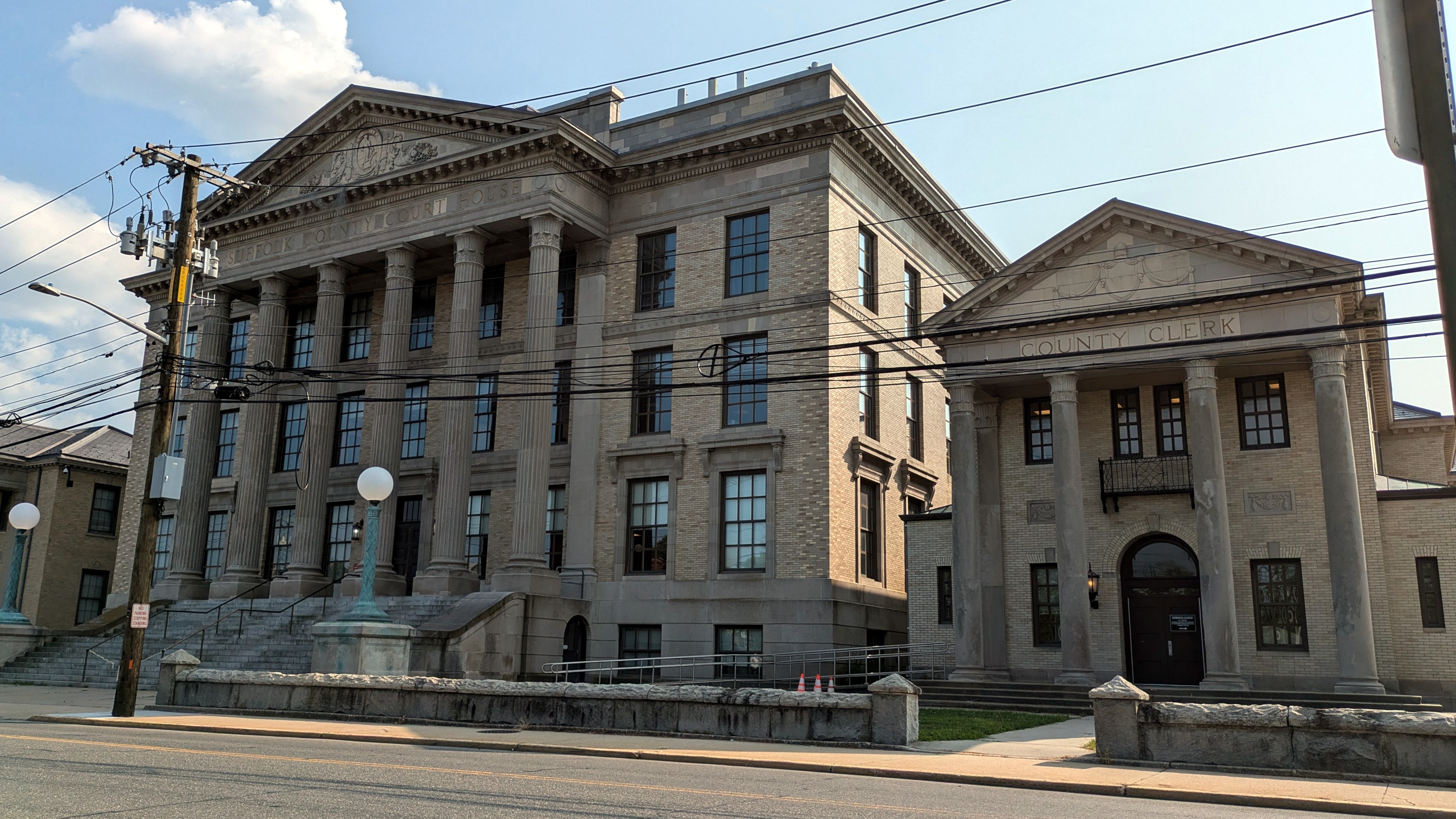
The Suffolk County Supreme Court in Riverhead, where DeFeo’s 1975 trial took place. ComplexRational, Wikimedia Commons (CC BY-SA 4.0).
DeFeo’s trial opened on October 14, 1975, in Suffolk County Supreme Court before Justice Thomas Stark. Assistant District Attorney Gerard Sullivan led the prosecution. Defense attorney William Weber — a name that would later become central to the separate haunting controversy — mounted an insanity defense, supported by psychiatric testimony from Dr. Daniel Schwartz, who argued DeFeo had suffered a psychotic episode. The prosecution’s psychiatric witness, Dr. Harold Zolan, testified that while DeFeo used heroin and LSD, he showed signs of antisocial personality disorder rather than a break from reality, and that he understood what he was doing at the time of the murders.
The jury rejected the insanity defense. On November 21, 1975, DeFeo was convicted on six counts of second-degree murder. Stark, sentencing him, reportedly described the crime as among the most heinous in the county’s history. DeFeo received six sentences of 25 years to life and remained incarcerated until his death in March 2021, at age 69.
Why Didn’t Anyone Wake Up?
This is the question that has driven the most speculation, and the honest answer is that it was never fully resolved in court.
Suffolk County police conducted a test firing of the same rifle model and found it could be heard up to five city blocks away. None of the immediate neighbors reported hearing gunshots that night — only the DeFeo family’s dog barking, repeatedly, through the early morning hours. That absence of reported gunfire, set against a weapon loud enough to be heard blocks away, has never been fully explained. There’s no credible evidence the rifle was fitted with a suppressor; it wasn’t, and claims to the contrary don’t hold up against the ballistics record. The likelier, if unsatisfying, explanation is some combination of a heavy sleeping household, close-together shots fired in quick succession, and neighbors who heard something unusual but didn’t immediately register it as gunfire, layered on top of the fact that at least two victims were rising or stirring when they were killed rather than fully unconscious. The prosecutor who tried the case later said publicly that he still had unanswered questions about exactly this — whether the victims woke, why none of them appeared to fight back, and why the gunfire apparently wasn’t heard outside the house.
That’s a rare and useful admission. The case that put a man in prison for life still left its own prosecutor with open questions about the mechanics of the crime.
Was There a Second Killer?
DeFeo was convicted as the sole perpetrator, and no other person has ever been charged in connection with the murders. The theory that his sister Dawn or another accomplice participated rests on DeFeo’s own later, inconsistent statements and on the unburned-residue claim raised by Osuna’s book — neither of which was tested through a legal process capable of confirming or refuting it. That doesn’t make the theory impossible. It does mean it remains speculative, built on the word of a convicted murderer with every incentive to reshape the story over 46 years of imprisonment, rather than on independently verified forensic conclusions.
Did DeFeo Really Claim Voices Made Him Kill?
Yes, in the specific and limited sense that this was the substance of his insanity defense at trial: that he heard voices commanding him and could not resist them. That claim was made in service of avoiding a murder conviction, tested against opposing psychiatric testimony, and rejected by a jury that found him legally sane and responsible for his actions.
It’s worth being precise about what that claim is and isn’t. It’s a documented legal argument a defendant made in 1975. It is not independent evidence of supernatural or demonic influence, and treating it as an early clue to a later haunting story gets the chronology backward — the voices claim came from a courtroom insanity defense, not from any paranormal investigation, and the Lutz family’s haunting claims wouldn’t emerge for another year.
How the Murders Became Part of the Amityville Horror
The DeFeo killings gave the house its grim reputation before the Lutz family ever set foot inside it, and that history is precisely why their later claims found such a receptive audience. A family reporting strange phenomena in an ordinary house is one kind of story. A family reporting strange phenomena in a house where six people were shot in their beds thirteen months earlier is a very different, far more marketable one.
That’s where this case ends and a separate, much more contested one begins. For the full account of what the Lutz family said happened, how the story became a bestselling book, and why critics have called parts of it fabricated, see our complete Amityville Horror history and our closer look at the hoax allegations.
Frequently Asked Questions
Who killed the DeFeo family? Ronald DeFeo Jr. was convicted on six counts of second-degree murder in November 1975. No one else has ever been charged.
How many people died in the Amityville murders? Six: Ronald DeFeo Sr., Louise DeFeo, and their children Dawn, Allison, Marc, and John Matthew.
Why did Ronald DeFeo kill his family? No single motive was proven at trial. Investigators and later writers have pointed to a volatile household, drug use, and a life-insurance payout as possible factors, but the prosecution’s case rested on establishing that DeFeo committed the murders, not on proving one definitive motive.
Did anyone help Ronald DeFeo? No one else was charged. DeFeo made later, inconsistent claims implicating his sister Dawn and others, but these came years after his conviction and were never tested in court.
Why didn’t the DeFeo family wake up? It’s not fully clear that they didn’t. Evidence suggests at least two victims were stirring or rising when they were shot. Why neighbors didn’t report hearing gunfire from a rifle later shown to be audible for blocks remains an open question that the original prosecutor himself acknowledged was never fully answered.
Did Ronald DeFeo hear voices? He claimed so as part of his insanity defense at trial. The jury rejected that defense and found him criminally responsible.
What time did the murders happen? The estimated time was shortly before 3 a.m. That estimate later became attached to supernatural significance in the separate Lutz haunting story, discussed in our Amityville Horror article.