The Index / Dark History
H.H. Holmes and the Murder Castle: Fact vs. Legend
H.H. Holmes was convicted of one murder, in Philadelphia. The Chicago 'Murder Castle,' its torture chambers, and its 200 victims are a legend built mostly after his death.
Topics: H.H. Holmes, Murder Castle, Herman Webster Mudgett, Benjamin Pitezel, True Crime
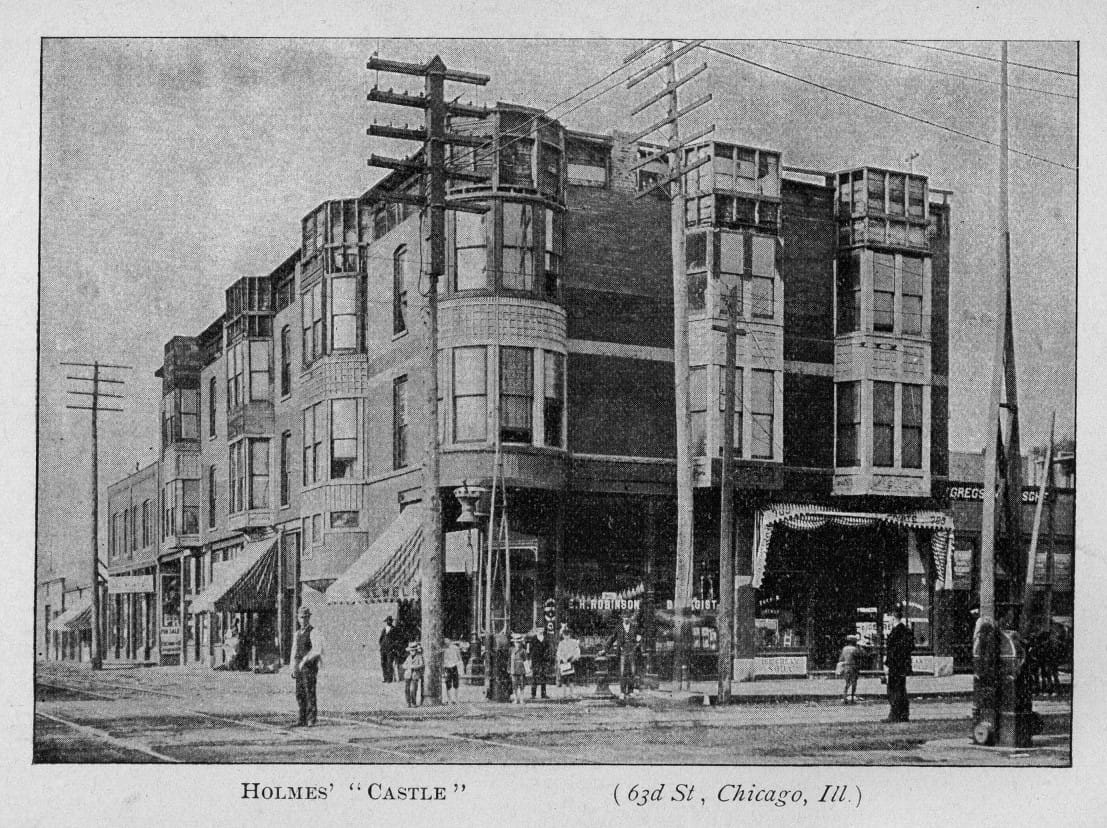
Unknown photographer, via History.com (Public Domain)
H.H. Holmes was convicted of exactly one murder, in Philadelphia, in a case built on insurance fraud. He was never tried for anything that happened inside the Chicago building tabloids nicknamed the “Murder Castle,” and investigators at the time said outright that they had found no evidence there that could have convicted him. The torture chambers, gas chambers, and body chutes that define the popular version of the story were invented by newspapers, largely after the building had already survived a fire and Holmes was sitting in a Philadelphia jail cell. What’s documented is still disturbing enough without the embellishment: a trained physician who used insurance fraud, chloroform, and a genuine talent for deception to kill at least a handful of people, including three children. Unlike Jack the Ripper, whose identity has never been established, there’s no mystery about who Holmes was or what he was convicted of — the mystery is how much of the rest of his story got invented afterward.
Who Was H.H. Holmes?
He was born Herman Webster Mudgett in Gilmanton, New Hampshire, in 1861. In 1884 he earned a medical degree from the University of Michigan Medical School, where he was, by most accounts, an unremarkable student — except for a scheme he was already running: stealing cadavers from the school’s laboratory, disfiguring them, and using fraudulent insurance policies to claim they were people who had died accidentally, then collecting the payouts.
He carried that pattern into adulthood. After leaving New Hampshire — where he’d left behind a wife and child, and reportedly outrun accusations of fraud — he adopted the name Henry Howard Holmes, said to be a nod to Sherlock Holmes, and moved to the Chicago area in the mid-1880s. He took work as a pharmacist in the neighborhood of Englewood, married multiple times without ever legally ending his previous marriages, and began building the reputation, and the building, that would eventually make him infamous.
The Building in Englewood
Construction started in 1887 on a lot at the northwest corner of West 63rd Street and South Wallace Avenue. Holmes built a two-story structure with retail space on the ground floor, including his own pharmacy. In 1892, with the World’s Columbian Exposition approaching, he added a third floor, telling people it would serve as a hotel for the crowds the fair was expected to bring to Chicago.
Holmes’s building at 63rd and Wallace in Englewood, later dubbed the “Murder Castle” by newspapers — a name Holmes never used himself. Source. Public domain.
What actually made the building strange was documented, and it was mundane compared to the legend: Holmes repeatedly hired and fired contractors, changed plans mid-construction, and left many of them unpaid, which produced a genuinely irregular, maze-like layout. When investigators searched the building after his arrest, they reported finding some hidden rooms — but these were tied to another of Holmes’s habits, hiding furniture he had purchased on credit and never paid for, not to any device built for killing people. No evidence was found inside the building that could have supported a murder charge against him in Chicago.
Where the “Murder Castle” Legend Came From
The building never burned to the ground, and it wasn’t torn apart by investigators uncovering secret machinery. In August 1895, while Holmes was already in custody in Philadelphia awaiting trial, the building was damaged by a suspicious fire. It survived, was repaired, and continued operating for decades afterward. It was finally demolished in 1938, and a United States Post Office was built on the same site — the Englewood branch, which still stands and operates at 63rd and Wallace today.
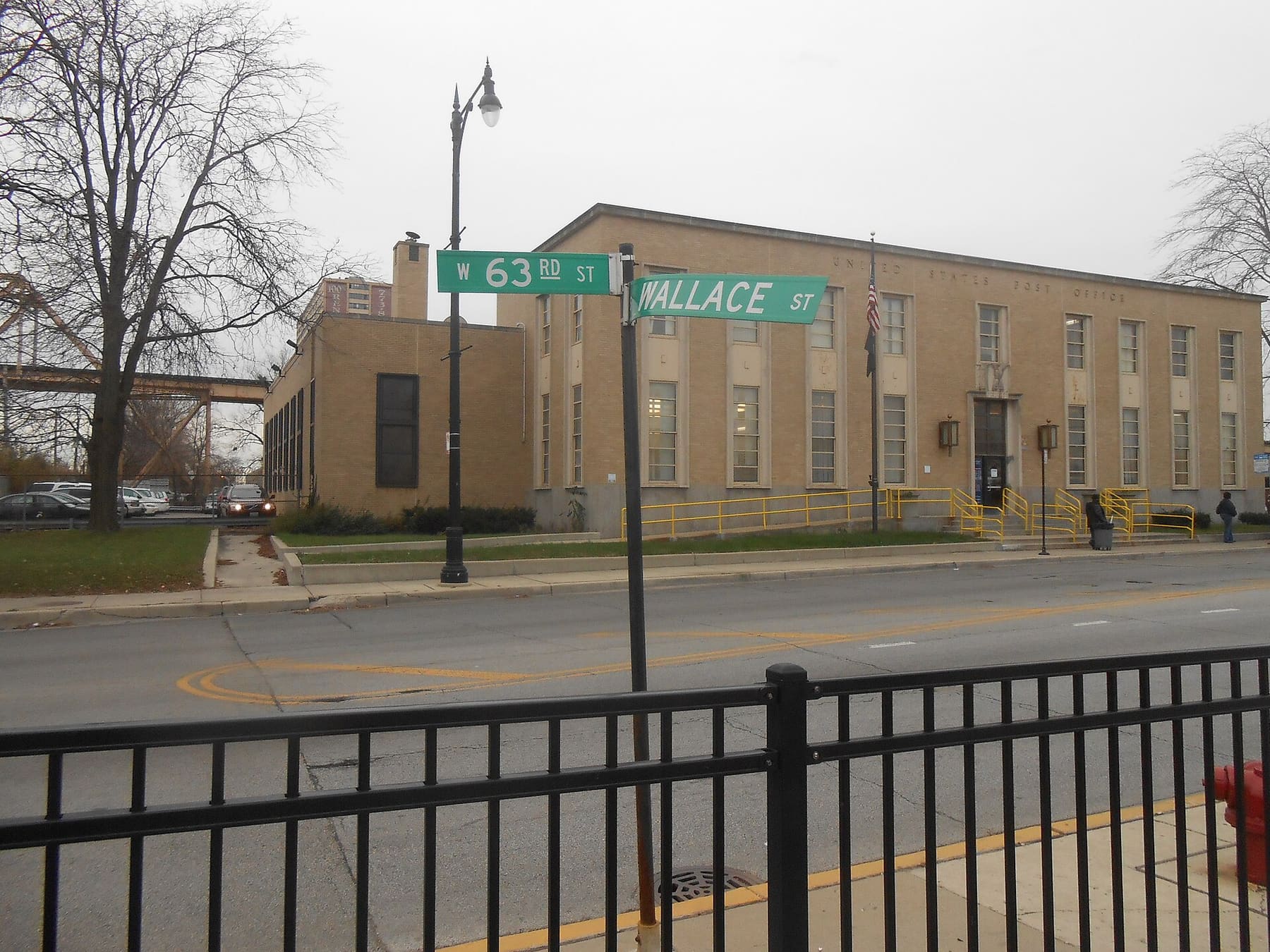
The Englewood Post Office now occupies the site at 63rd and Wallace where Holmes’s building once stood. Source. Marlin Keesler, Wikimedia Commons, CC BY 2.0.
The claims that made Holmes a legend — hidden gas chambers, trapdoors, a chute to a basement crematorium built specifically to murder World’s Fair visitors — trace back to sensationalized newspaper coverage from the 1890s, later recycled and expanded by pulp true-crime writers across the 20th century. There’s no physical evidence or contemporary investigative record supporting the torture-chamber version of the building. It was profitable copy, and it stuck.
What He Was Actually Convicted Of
Holmes’s one confirmed murder conviction had nothing to do with the Englewood building. It centered on Benjamin Pitezel, his longtime associate in a series of insurance-fraud schemes. The two men devised a plan for Pitezel to fake his own death so his family could collect a $10,000 life insurance policy. Instead, on September 4, 1894, in Philadelphia, Holmes killed Pitezel for real, using chloroform and then setting the body on fire to support the accidental-death story.
Holmes then told Pitezel’s widow that her husband was alive and in hiding, and persuaded her to let him take custody of three of her children — Alice, Nellie, and Howard — supposedly to reunite them with their father. He murdered all three. Howard was killed in Indianapolis on October 10, 1894. Alice and Nellie were killed in Toronto on October 25, 1894, forced into a trunk connected to a gas line. Holmes was arrested in November 1894, tried in Philadelphia — where prosecutors had their strongest, most direct evidence — and convicted in the fall of 1895. He was hanged at Moyamensing Prison on May 7, 1896. The pattern of a real, documented crime later reshaped into something far more sensational than the court record supports also runs through our coverage of the DeFeo Murders, a killing that became famous for a haunting claim that came only after the trial was over.
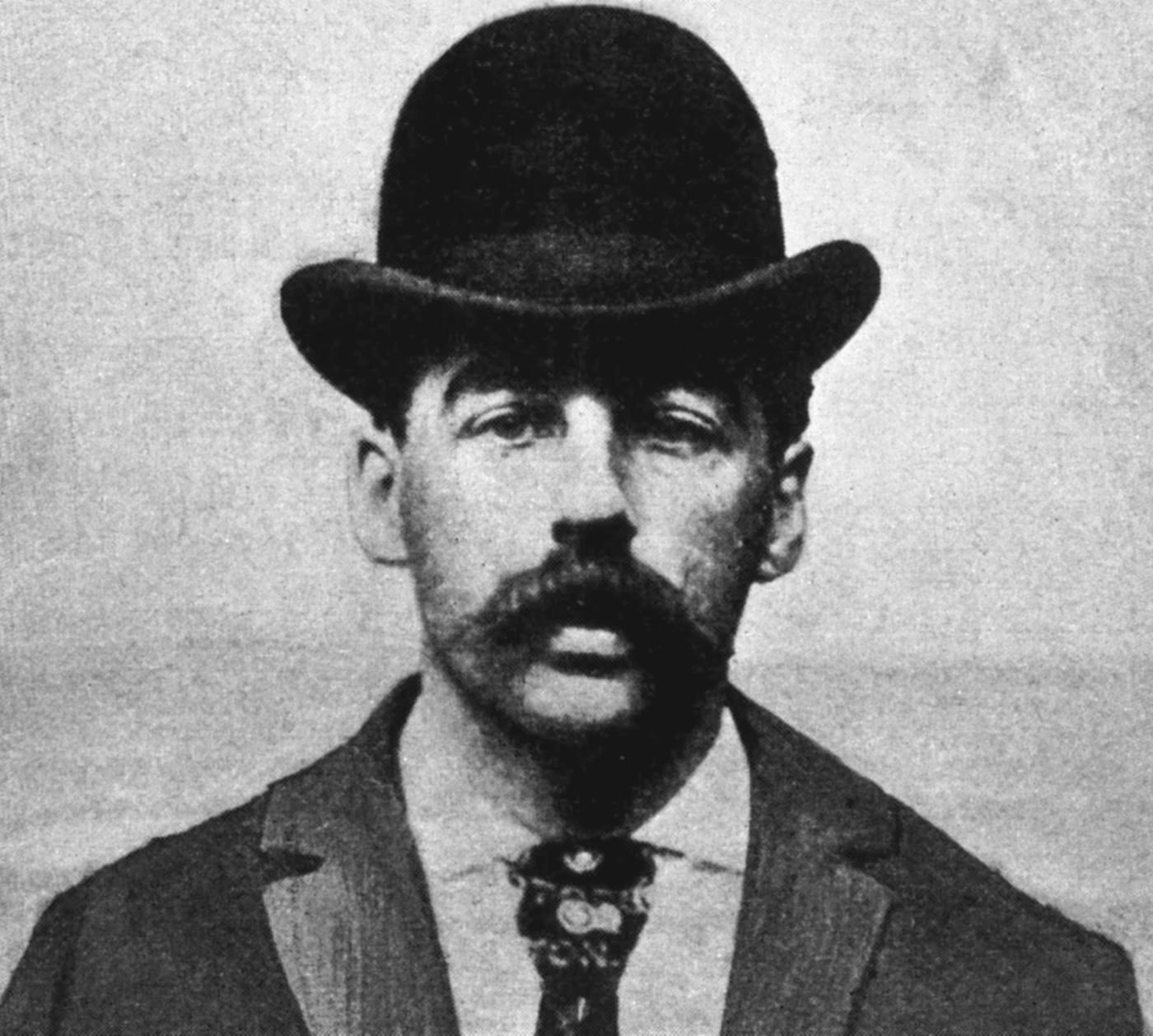
H.H. Holmes, the identity Herman Webster Mudgett adopted in Chicago. Source. Public domain.
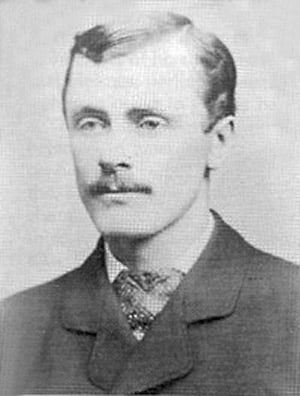
Benjamin Pitezel, Holmes’s longtime associate. Pitezel’s murder — not anything alleged about the Englewood building — is what actually convicted Holmes. Source. Public domain.
The 200-Victims Claim
After his conviction, Holmes sold a confession to a newspaper in which he claimed to have killed 27 people. It did not hold up well to scrutiny even at the time: several of his named “victims” were later found alive, and at least one, a Dr. Robert Leacock, whom Holmes claimed to have killed in 1886, is documented to have actually died of natural causes years later, in October 1889, in Watford, Ontario. A confession written partly for money, by a man with an established habit of lying for profit, is not a reliable body count.
Modern researchers who have gone back through the documented record, including historian Adam Selzer, generally put the number of murders that can actually be substantiated at around nine — Pitezel, the three Pitezel children, and a handful of others tied to Holmes through more solid evidence. The figure of 200 or more victims, still repeated constantly online and in tabloid retrospectives, has no documented basis. It comes from 19th-century tabloids, pulp crime novels published long after Holmes’s death, and the self-serving unreliability of his own confession — not from any verified count of bodies or missing persons. It’s a familiar pattern on this site: Ed Gein’s documented crimes were also inflated well beyond the trial record by decades of films and retellings.
The Devil in the White City and the Modern Myth
Much of the current wave of interest in Holmes traces to Erik Larson’s 2003 book The Devil in the White City, a work of narrative nonfiction that interweaves Holmes’s crimes with the story of the 1893 World’s Columbian Exposition. The book reintroduced Holmes to a mass audience, but it is not a primary historical source, and Larson himself has acknowledged in the book’s own endnotes that some scenes — including a victim’s imagined final moments — are labeled as merely “plausible” reconstructions rather than documented fact. At least one frequently repeated anecdote about Holmes has no surviving record to support it at all. Treating the book’s dramatized passages as established history is a large part of how the exaggerated version of Holmes’s story keeps circulating.
Frequently Asked Questions
Was H.H. Holmes really the “Murder Castle” killer people describe online? The building was real and genuinely strange, but the torture chambers, gas chambers, and body chutes commonly described are not supported by any documented evidence. Holmes was never charged with a murder connected to the building.
What was H.H. Holmes actually convicted of? The murder of Benjamin Pitezel, his insurance-fraud partner, committed in Philadelphia in September 1894. He was also responsible for the deaths of Pitezel’s three children, though he was executed before facing separate trials for those killings.
How many people did H.H. Holmes actually kill? Historians who have reviewed the documented record generally place the confirmed number at around nine. The commonly repeated figure of 200 or more has no evidentiary basis and comes from tabloid coverage, pulp fiction, and Holmes’s own unreliable confession.
What happened to the Murder Castle building? It survived a suspicious fire in August 1895 while Holmes was already in custody, remained standing for decades afterward, and was demolished in 1938. A U.S. Post Office branch was built on the site and still operates there today.
Is The Devil in the White City historically accurate? It’s narrative nonfiction, not a primary source. Author Erik Larson has acknowledged that some passages are speculative reconstructions rather than documented fact, even though the book is often treated as a factual account.
When was H.H. Holmes executed? He was hanged at Moyamensing Prison in Philadelphia on May 7, 1896.