The Index
The Flannan Isles Lighthouse Mystery: Records, Waves and Invented Details
What happened to the three Flannan Isles keepers in 1900? Compare the official reports, wave explanation and missing evidence with later invented details.
Topics: Flannan Isles, Lighthouse Mystery, Scotland, Disappearances
Three lighthouse keepers disappeared from Eilean Mòr in the Flannan Isles in December 1900. The official investigation considered a powerful wave near the west landing the most likely explanation. The precise sequence was not witnessed, but the surviving reports are far less supernatural than many later versions of the story.
James Ducat, Thomas Marshall and Donald McArthur were real men doing demanding work at an isolated station. Their disappearance became a mystery without requiring the invented logbook entries and theatrical scenes attached to it afterward.
When were the keepers found missing?
The lighthouse tender Hesperus arrived for relief on 26 December 1900. Signals brought no response. Relieving keeper Joseph Moore landed and went up to the station, where he found the men absent.
Moore’s letter describes closed outer entrances, an unlit fire and empty beds. A further search found the lamp prepared and its equipment in order. Moore and volunteers remained to keep the light operating.
The Northern Lighthouse Board publishes the contemporary telegram, Moore’s letter and superintendent Robert Muirhead’s report. They provide a better starting point than a modern retelling that combines every alarming detail into one scene.
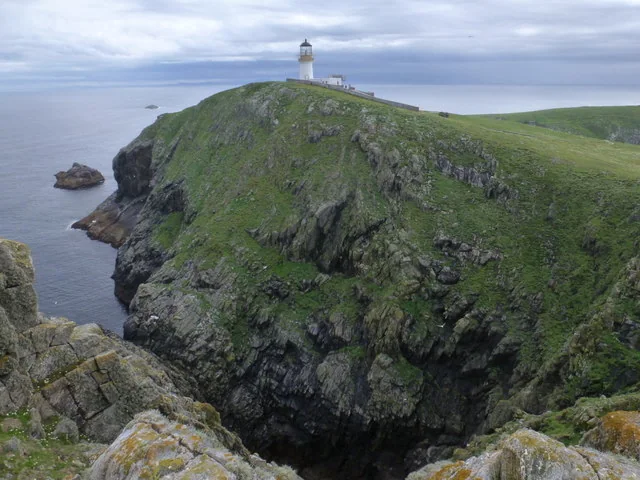
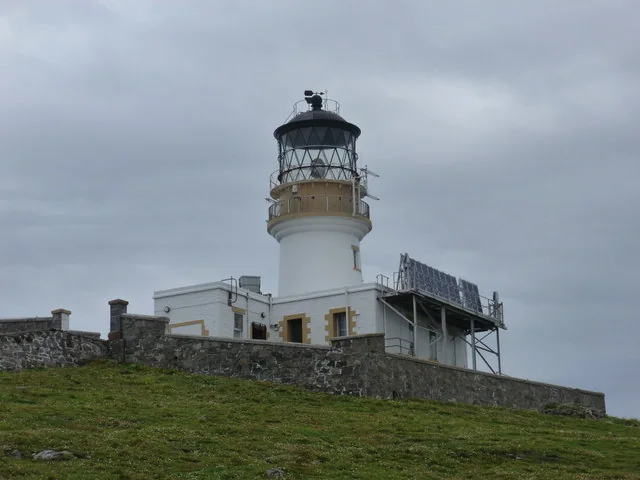
The lighthouse and northern cliffs. This is not a photograph of the west landing’s damage in 1900. Source. Chris Downer. CC BY-SA 2.0. Resized and converted to WebP.
What does the record say about 15 December?
The investigation placed the probable disappearance on the afternoon of 15 December. Written log entries had been made through the 13th, while subsequent details had been noted on a slate awaiting transfer. The state of the lamp indicated that the day’s preparatory work had been done.
That is an inference from recorded observations, not a witnessed time of death. The distinction matters because the mystery concerns what happened after routine work had apparently continued.
Stories about terrified men writing that the storm had ended and God was over all should not be presented as quotations from a verified surviving log. The reports reproduced by the board do not supply those dramatic entries. National Records of Scotland’s lighthouse guide also notes the absence of the original log from its deposited records.
Why did investigators suspect a wave?
The west landing showed substantial damage. Ropes and equipment had been displaced, railings were twisted, and the sea had torn away a life buoy high above the ordinary water level. Muirhead considered the pattern of damage alongside the men’s missing outdoor clothing.
His proposed explanation was that they had gone toward the west landing to secure equipment and were overwhelmed by an unusually large body of water. He preferred this to the idea that the wind alone had blown them away, taking account of its direction and the island’s shape.
This was a reasoned conclusion drawn from the scene. It was not a recovery of the bodies or a reconstruction witnessed by a survivor. Calling it probable preserves both the evidence and the uncertainty.
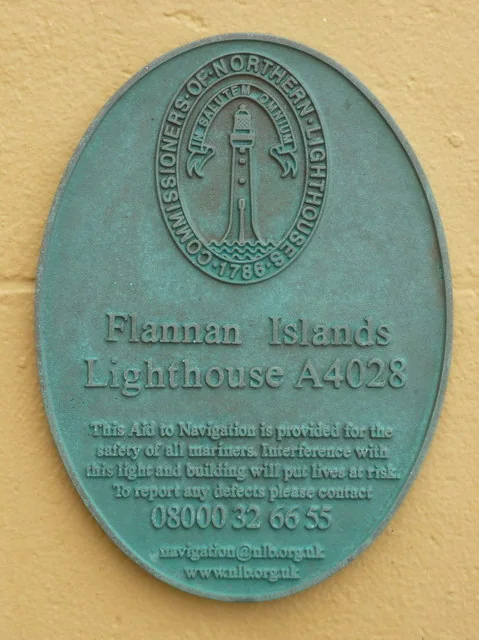
A modern lighthouse plaque, documenting the station rather than the keepers’ final movements. Source. Chris Downer. CC BY-SA 2.0. Resized and converted to WebP.
Why did all three go outside?
That remains one of the unresolved practical questions. Moore reported that McArthur’s coat was still at the station, suggesting he had gone out without it. The other men’s missing protective clothing helped support the inference that they had headed toward the landing.
It is possible to imagine an urgent task or an attempt to help another man, but the reports do not establish a complete sequence. Giving each keeper a motive and a final action would turn a plausible reconstruction into fiction.
The coat is therefore a clue with limits. It does not by itself prove a rescue, a quarrel, an abduction or a supernatural emergency.
What is genuinely mysterious?
We do not have a witnessed account of the final moments or a definitive explanation for every decision. We do have a deserted working station, a date inferred from routine records, evidence of powerful seas and an investigator’s assessment.
Those categories should remain separate. Missing evidence does not give every imaginable explanation equal support. Nor does a strong natural explanation erase the loss or make the unanswered details uninteresting. The same caution applies to Overtoun Bridge near Dumbarton, where a plausible natural explanation for the dog incidents sits alongside a much louder ghost story.
The Franklin expedition and Mary Celeste case offer similar lessons in maritime storytelling: start with the records, label later additions and leave genuine gaps open. The same discipline applies in the air: Amelia Earhart’s 1937 disappearance has a radio log that stops at 8:43 a.m. and three competing endings built on top of it.
A case where the disappearance itself is not documented is the Lake Anjikuni vanished village, which the RCMP says is not true.